Space Stories: More Artemis II Delays, Starliner a Type A Mishap, and James Webb Space Telescope Studies Atmosphere of Uranus

Credit; NASA

Here are some recent space-related stories of interest.

NPR:NASA’s Artemis II Lunar Mission May Not Launch in March After All

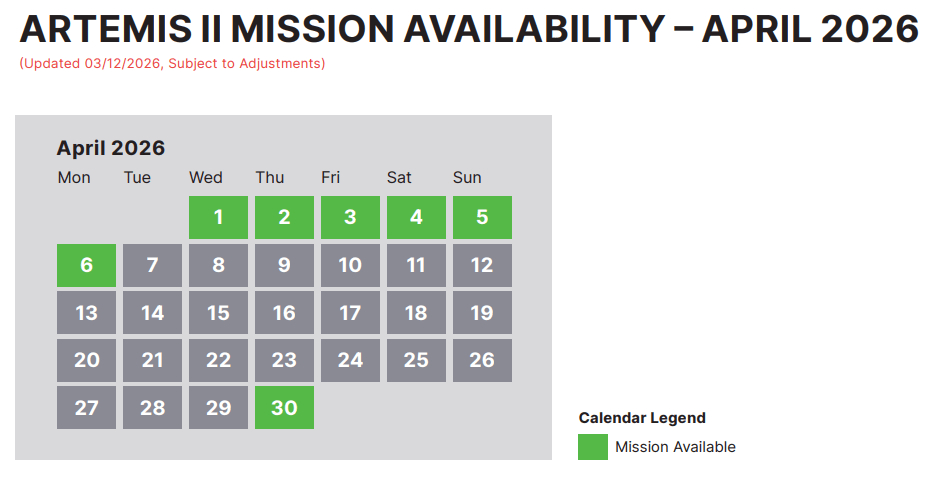
Just one day after NASA said it was eyeing a potential March 6 launch date for the Artemis II lunar mission, the space agency said Saturday that complications with the rocket could delay all launch attempts in March from the Kennedy Space Center in Florida...In a blog post, NASA said it is “taking steps to potentially roll back the Artemis II rocket and Orion spacecraft to the Vehicle Assembly Building,” after technicians observed an “interrupted flow of helium” to the rocket system. NASA says its teams are “actively reviewing data” and taking steps to “address the issue as soon as possible while engineers determine the best path forward.”

Astronomy Magazine:NASA Report Declares Starliner Incident a Type A Mishap

On Thursday, NASA released sobering results from an independent investigation into the 2024 crewed Boeing Starliner test flight that left two astronauts stranded in space for months, placing blame not only on hardware failures, but the agency’s own leadership and culture. In a press conference, NASA Administrator Jared Isaacman said the agency had now categorized the incident as a type A mishap — the same classification applied to the Columbia and Challenger shuttle disasters — something he believes should have happened from the start.

European Space Agency: Webb Maps Uranus’s Mysterious Upper Atmosphere

For the first time, an international team of astronomers have mapped the vertical structure of Uranus’s upper atmosphere, uncovering how temperature and charged particles vary with height across the planet. Using NASA/ESA/CSA James Webb Space Telescope’s NIRSpec instrument, the team observed Uranus for nearly a full rotation, detecting the faint glow from molecules high above the clouds. The results offer a new window into how ice-giant planets distribute energy in their upper layers.

Pic of the Week: A Protostar in the Cepheus A Region

Image (Credit): The Cepheus A region, including a protostar causing much of this region’s illumination. (NASA, ESA, and R. Fedriani (Instituto de Astrofisica de Andalucia); Processing: Gladys Kober (NASA/Catholic University of America))

This week’s image was taken by the Hubble Space Telescope. It shows the star-forming region Cepheus A in the constellation of Cepheus. This region is about 2,400 light-years away.

Here is more from NASA about this region:

The high-mass star-forming region Cepheus A hosts a collection of baby stars, including one large and luminous protostar, which accounts for about half of the region’s brightness. While much of the region is shrouded in opaque dust, light from hidden stars breaks through outflow cavities to illuminate and energize areas of gas and dust, creating pink and white nebulae. The pink area is an HII region, where the intense ultraviolet radiation of the nearby stars has converted the surrounding clouds of gas into glowing, ionized hydrogen.

Space Stories: NASA Probes the Northern Lights, India Announces New Telescopes, and Titan May Be a Moon Merger

Image (Credit): The northern lights from October 2013 as captured by Astronaut Mike Hopkins aboard the International Space Station. (NASA)

Here are some recent space-related stories of interest.

Space.com NASA Launches Twin Rocket Missions from Alaska to Study Mysterious Black Auroras

NASA launched two rockets from Alaska this week to learn more about the electrical “circuitry” within auroras, the colorful light shows that occur when solar wind collides with Earth’s atmosphere. The missions saw two suborbital sounding rockets launch from the Poker Flat Research Range near Fairbanks, Alaska loaded with scientific equipment that will fly into the atmosphere for a short period of time to gather data. The destination for the rockets in both missions was the northern lights, or aurora borealis.

Physics World: India Announces Three New Telescopes in the Himalayan Desert

India has unveiled plans to build two new optical-infrared telescopes and a dedicated solar telescope in the Himalayan desert region of Ladakh. The three new facilities, expected to cost INR 35bn (about £284m), were announced by the Indian finance minister Nirmala Sitharaman on 1 February.

SETI Institute: Saturn’s Moon Titan Could Have Formed in a Merger of Two Old Moons

Recent research suggests that Saturn’s bright rings and its largest moon, Titan, may have both originated in collisions among its moons. While Cassini’s 13-year mission expanded our understanding of Saturn, the discoveries of its young rings and Titan’s rapidly shifting orbit raised new questions. Now, a study led by SETI Institute scientist Matija Ćuk proposes an explanation linking the formation of the moons and rings, centering on the possibility that Titan is the product of a moon merger.

Launch of Crew-12 to ISS Goes Without a Hitch

Image (Credit): NASA’s Crew-12 launches toward the ISS via a SpaceX Falcon 9 rocket on February 13, 2026. (NASA)

The International Space Station’s (ISS) Crew-12 is safely on its way. As NASA Administrator Isaacman noted:

With Crew-12 safely on orbit, America and our international partners once again demonstrated the professionalism, preparation, and teamwork required for human spaceflight.

The launch carried NASA astronauts Jessica Meir and Jack Hathaway, European Space Agency (ESA) astronaut Sophie Adenot, and Roscosmos cosmonaut Andrey Fedyaev. The four crew members should climb aboard the ISS tomorrow afternoon.

This crew replaces Crew-11, which left the space station earlier than expected last month due to a medical emergency.

Image (Credit): Crew-12 sitting in the SpaceX Dragon capsule in preparation for this week’s launch. From left to right you have Roscosmos cosmonaut Andrey Fedyaev, NASA astronauts Jack Hathaway and Jessica Mier, and ESA astronaut Sophie Adenot. (NASA)

Update: The four member Crew-12 are now safely aboard the ISS.

When is the Next Starship Launch?

Image (Credit): Artist’s rendering of SpaceX’s Starship HLS preparing for a Moon landing. (SpaceX)

Mr. Musk seems to move like a weather vane regarding where SpaceX is going next, but whether SpaceX is heading for the Moon or Mars it still needs a functioning Starship.

First the confusion. For all of Musk’s ongoing criticism of a Moon mission, it appears he is finally focusing on Artemis III. On Sunday, he tweeted:

For those unaware, SpaceX has already shifted focus to building a self-growing city on the Moon, as we can potentially achieve that in less than 10 years, whereas Mars would take 20+ years.

The mission of SpaceX remains the same: extend consciousness and life as we know it to the stars.

It is only possible to travel to Mars when the planets align every 26 months (six month trip time), whereas we can launch to the Moon every 10 days (2 day trip time). This means we can iterate much faster to complete a Moon city than a Mars city.

That said, SpaceX will also strive to build a Mars city and begin doing so in about 5 to 7 years, but the overriding priority is securing the future of civilization and the Moon is faster.

It seems that someone explained planetary alignment to him over the weekend, but that’s a point for another day.

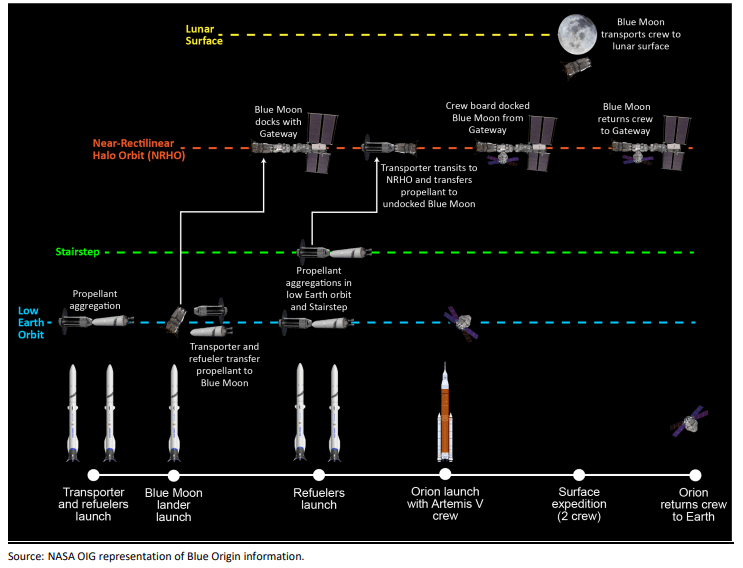
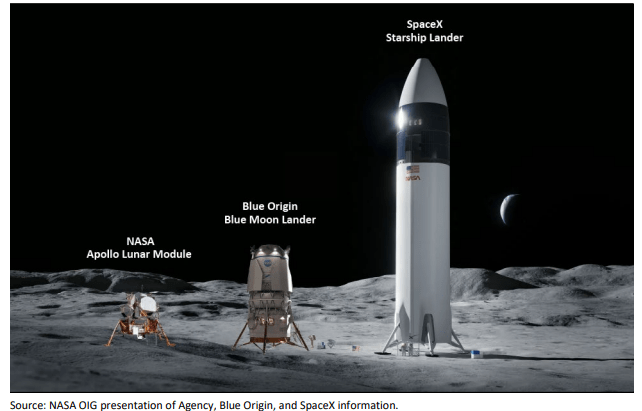
So the target this week will be the Moon. But a crewed landing on the Moon depends on SpaceX’s Human Landing System (HLS) at the moment, which is where the Starship comes in. Or, more to the point, this is where a multitude of Starships come into play between the refueling in orbit as well and the HLS.

Given that SpaceX planned for 25 Starship launches in 2025 yet achieved only 5, we have an issue Houston (or should I say “Starbase”?).

All indications are that the first launch in 2026 will be early next month (based on one sentence from Musk on January 26th stating “Starship launch in six weeks”), following the last launch of October 13th. Five months between launches is not a very robust schedule given that the Starship not only needs to work but also needs to test the idea of fueling in space before landing a crew on the Moon in 2028.

So far the only parts of Artemis that have proven to work are the Space Launch System and Orion capsule, which are also the two most demonized components said to be substandard based on what the private sector can provide. However, waiting on SpaceX for a workable Moon model is becoming about as logical as waiting for Twitter to become profitable.

Remember, Musk was supposed to have a crew on Mars two years ago. As the Planetary Society noted in 2017:

SpaceX’s previous plan called for landing its first transport ship on Mars in 2022. The timeline Musk gave today was similar; two cargo landers would land on Mars in 2022, with four vehicles launching in 2024. Two of those 2024 ships would be crewed, meaning, in Musk’s timeline, humans could walk on Mars in just seven years.

It now seems like 50/50 that SpaceX can get a crew on the Moon before the Chinese. NASA may need the help of Blue Origin before it has a workable plan.

It may be time to ignore SpaceX’s promises and plan for some new players without tossing out the older technology just yet.