Image (Credit): The official Artemis II mission crew patch. (NASA)
“We’ve got spacecraft that are going around the moon with Artemis II, III, IV and V. One way or another, we’re going to make sure that Johnson Space Center gets their historic spacecraft.”
–Statement by NASA Administrator Jared Isaacman to CNBC when asked about the planned move of the Discovery space shuttle from the Smithsonian Museum in Chantilly, VA to the Space Center Houston museum. He said this after highlighting the costs and risks related to this proposed move. Some in Congress have opposed the move for these very reasons, in addition to it being a political gimmick by the White House that makes little sense.
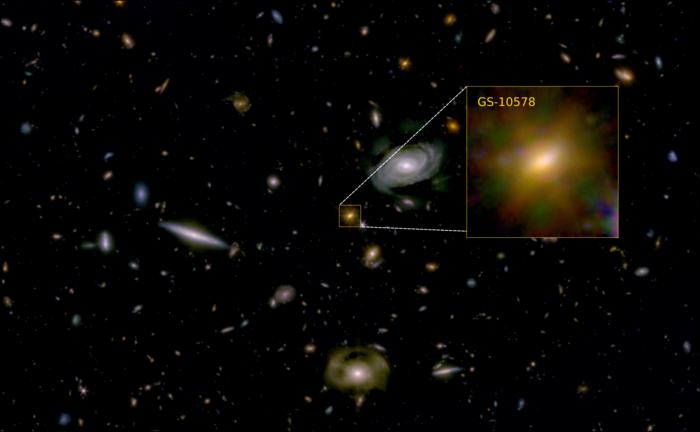
The shape of the universe is not something we often think about. My colleagues and I have published a new study that suggests it could be asymmetric or lopsided, meaning not the same in every direction. Should we care about this? Well, today’s “standard cosmological model”—which describes the dynamics and structure of the entire cosmos—rests squarely on the assumption that it is isotropic (looks the same in all directions), and homogeneous when averaged on large scales.
A groundbreaking discovery published in Nature Astronomy has revealed a cosmic phenomenon that may finally settle a 30-year-old mystery surrounding the early life cycles of stars. Astronomers observing the binary system SVS 13 within the NGC 1333 reflection nebula, located 1,000 light-years away in the constellation Perseus, have identified more than 400 bow-shaped rings created by violent ejections from a newborn star.
The Southwest Research Institute-led Ultraviolet Spectrograph (UVS) aboard NASA’s Europa Clipper spacecraft has made valuable observations of the interstellar comet 3I/ATLAS, which in July became the third officially recognized interstellar object to cross into our solar system. UVS had a unique view of the object during a period when Mars- and Earth-based observations were impractical or impossible. “We’re excited that this opportunity to view another target on the way to Jupiter was completely unexpected,” said SwRI’s Dr. Kurt Retherford, the principal investigator for Europa-UVS. “Our observations have allowed for a unique and nuanced view of the comet.”
Image (Credit): Hermann Julius Oberth. (European Space Agency)
On this day in 1989, rocket pioneer Hermann Julius Oberth died. He was born in Austria-Hungary in 1894 and at a young age was inspired by the rockets in the fictional stories by Jules Verne, such as From the Earth to the Moon.
Oberth’s interest in the stories of Verne led him to build his first rocket at the age of 14. His doctoral dissertation was on rocketry, he wrote books on rocketry, and he later joined an amateur rocketry group called the “Spaceflight Society” where he mentored other rocket enthusiasts, including Wernher von Braun.
Oberth was unable to get a security clearance to work on the Nazis V-2 rocket, thereby limiting his value to Americans following World War II, unlike Wernher von Braun and others who came to the United States under Project Paperclip and later assisted with NASA’s Apollo program.
Wernher von Braun was still able to get Oberth a position with the U.S. Army after the war and paid tribute to his mentor by stating:
I have a boundless admiration for the solitary genius which enabled him to bring into focus all of the essential elements of a gigantic concept, together with the human greatness which allowed him, in shy reserve, to bear with equanimity the “crucify him” as well as the “hosannas” of public opinion. I myself owe him a debt of gratitude not only for being the guiding light of my life but also for my first contact with the theoretical and practical aspects of rocket technology and space travel.
Oberth continues to be known today as the “Father of Space Travel.”
Image (Credit): Astronauts aboard the ISS showing the boots ready for Santa. (NASA)
Santa’s gift-giving territory is pretty wide, but it is not clear whether he will make it to the International Space Station (ISS). However, the astronauts are ready if he does show up. They have hung their space boots by the airlock with cheer.
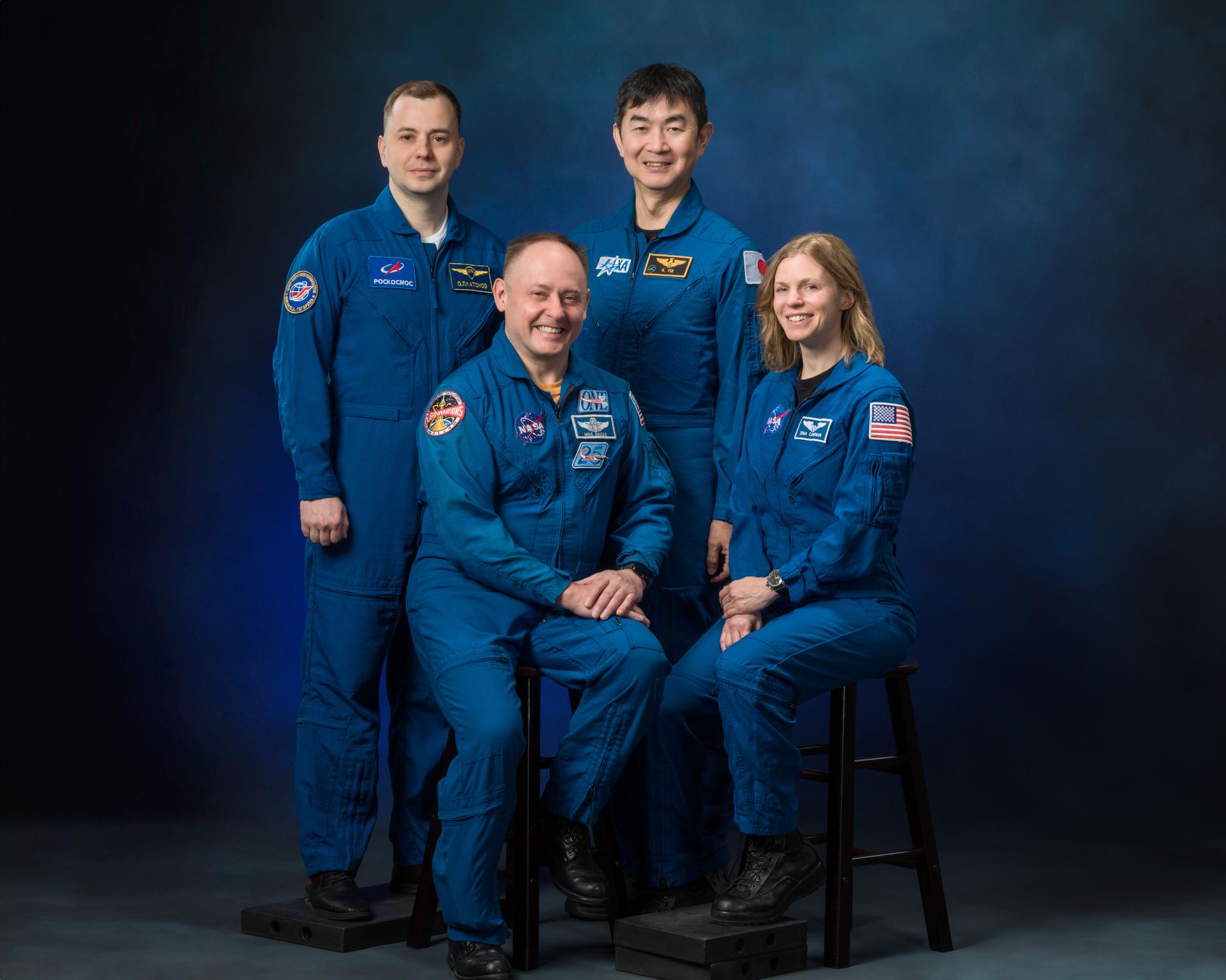
For the complete ISS holiday message, play this video from NASA astronauts Mike Fincke, Zena Cardman, and Chris Williams, along with Japan Aerospace Exploration Agency (JAXA) astronaut Kimiya Yui. The message was recorded on December 17, 2025.