Space Stories: Artemis II to Launch February 2026, 10 New Astronauts Selected, and Plans to Destroy an Incoming Asteroid

Image (Credit): Artemis II mission map. (NASA)

Here are some recent space-related stories of interest.

BBC News: Nasa Plans First Crewed Moon Mission in 50 years for February 2026

Nasa has said it hopes to send astronauts on a ten-day trip around the Moon as soon as February. The US space agency had previously committed to launching no later than the end of April but said it aims to bring the mission forward…Artemis Launch Director, Charlie Blackwell-Thompson explained that the powerful rocket system built to take the astronauts to the Moon, the Space Launch System (SLS) was “pretty much stacked and ready to go”. All that remained was to complete the crew capsule, called Orion, connected to SLS and to complete ground tests.

CNN: NASA Selects 10 New Astronauts as it Chases Bold Plans for the Moon and Mars

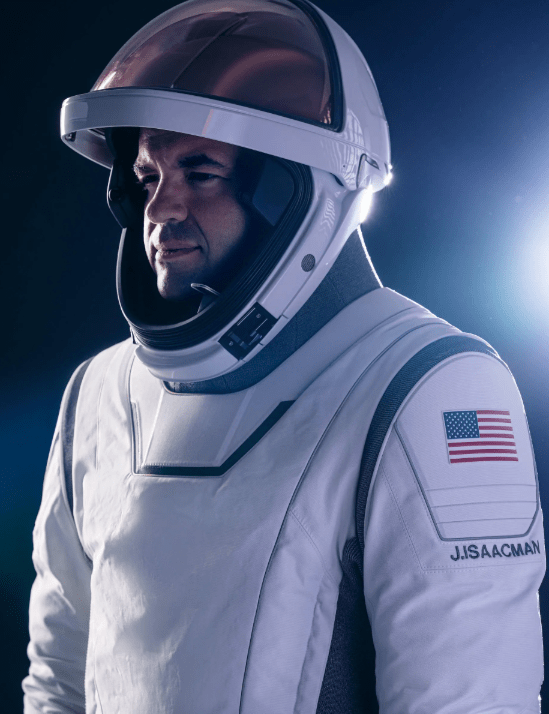
NASA on Monday introduced the 10 people — selected from a pool of 8,000 applicants — who will join the agency’s astronaut corps as it races to return to the moon before attempting an unprecedented crewed mission to Mars. The group includes six women and four men, whom acting NASA Administrator Sean Duffy called “America’s best and brightest.”…This astronaut class marks the first in which there are more women than men, according to NASA.

IFLScience: “Forget Saving Earth, NASA Wants Us To Save The Moon From Asteroid 2024 YR4

A large asteroid strike on the Moon could have negative consequences for the artificial satellites we now depend on. That being the case, a NASA-led team has looked into the options for preventing Asteroid 2024 YR4 from making such an impact in 2032. Contrary to the usual conclusions that asteroids should be diverted, not destroyed, they think this is a time for a Hollywood-approved demolition event.

Space Quote: SpaceX Delays May Sink Efforts to Beat China to the Moon

Image (Credit): Artist’s rendering of SpaceX’s Starship HLS on the Moon. (SpaceX)

“The HLS schedule is significantly challenged and, in our estimation, could be years late for a 2027 Artemis 3 moon landing.”

-Statement by Aerospace Safety Advisory Panel (ASAP) member Paul Sean Hill, as quoted by Space News. NASA contracted with SpaceX to develop the Human Landing System (HLS) for the astronauts landing on the Moon as part of Artemis III and later missions. While Blue Origin has also been tapped by NASA to assist with later missions, SpaceX was expected to provide the initial HLS. Maybe NASA should have picked two companies to provide the initial HLS, with the second in place still assisting with later landings. The ASAP’s 2024 Annual Report highlighted the many risks related to Artemis III, including several related to the HLS (shown below). Everyone knew this was going to be difficult, and no one wants to be asked to answer “Who Lost the Moon?” Also, it is good we still have a few advisory panels left after the recent purge.

Image (Credit): Figure 1, “First-time milestones for the Artemis III mission,” contained in the ASAP’s 2024 Annual Report. (ASAP)

The VIPER Lives!

Image (Credit): The VIPER outside a testing chamber in the fall of 2024. (NASA/JSC David DeHoyos)

It was only last year that NASA gave up on its $450 million Volatiles Investigating Polar Exploration Rover (VIPER) project, but things have changed for the better.

Blue Origin has been selected by NASA to bring the rover to the Moon as part of a $190 million task order under the agency’s Commercial Lunar Payload Services program. Blue Origin’s Blue Moon Mark 1 robotic lander, which is scheduled to land on the Moon later this year, will include the VIPER was part of its future cargo in 2027.

As NASA has noted on its VIPER mission page, the rover was part of the Artemis program:

NASA’s Artemis lunar rover, the Volatiles Investigating Polar Exploration Rover, or VIPER, was designed to explore the relatively nearby but extreme environment of the Moon in search of ice and other potential resources. This mobile robot was slated to land at the South Pole of the Moon on a 100-day mission, in order to teach us about the origin and distribution of water on the Moon and help determine how we can harvest the Moon’s resources for future human space exploration.

While the VIPER mission was cancelled last summer, NASA continued to look for a partner to bring it to the Moon. Fortunately, Blue Origin was already going that way.

This is good news for scientists everywhere. It made no sense to turn a half billion dollar piece of equipment into a museum piece. We need more boots and tires on the lunar surface, and VIPER is fortunately part of those plans again.

NASA Delivery to the ISS Delayed

Image (Credit): Northrop Grumman’s insignia for the flight of its first Cygnus XL. (Northrop Grumman)

The Russian’s cargo spaceship arrived without incident at the International Space Station (ISS) over the weekend, but the NASA cargo spaceship has not been as smooth. The Northrop Grumman Cygnus XL cargo ship has experienced engine issues, which will delay its arrival. It was originally supposed to unload its cargo tomorrow morning (September 17).

This latest mission, labeled NG-23, is the first to use the Cygnus XL spacecraft, which has 33 percent more cargo capacity than the spacecraft it replaces.

Northrop Grumman’s vice president of civil space systems, Ryan Tintner, stated:

Our Cygnus XL is another step towards a thriving commercial space economy. The spacecraft carries more cargo, making each mission more efficient. We’ve supported NASA and the space station for decades, and we know what it takes to develop advanced capabilities for exploring space.

This is not a good start for the new spacecraft. Hopefully, the glitch will be quickly resolved. The spacecraft carries 11,000 pounds of needed supplies.

Update: The Cygnus XL mission is back on track. The spaceship is expected to arrive at the ISS on Thursday morning.

Second Update: The Cygnus XL mission was a success with supplies delivered successully to the ISS.

NASA’s 2026 Student Launch Challenge is Underway

Credit: NASA

If you are a student looking for an opportunity to be part of the space program, you have until September 22nd to provide NASA with plans to design, build, and launch high-powered rockets containing a scientific or engineering payload. This is part of the 2026 Student Launch challenge. The challenge is open to students from middle school, high school, and college. The final launches of these rockets are scheduled for April 25, to be held at Bragg Farms in Toney, Alabama.

First started in 2000, the competition in 2025 brought together almost 1,000 students. The winning team came from James Madison University (pictured below), closely followed by North Carolina State University and The University of Alabama in Huntsville.

This is a great opportunity for those with a love of space rockets. All of the details for entry can be found on NASA’s competition website.

Image (Credit): 2025 winning team participants from James Madison University with their high-powered rocket prior to launch. (NASA/Krisdon Manecke)