If you are a student looking for an opportunity to be part of the space program, you have until September 22nd to provide NASA with plans to design, build, and launch high-powered rockets containing a scientific or engineering payload. This is part of the 2026 Student Launch challenge. The challenge is open to students from middle school, high school, and college. The final launches of these rockets are scheduled for April 25, to be held at Bragg Farms in Toney, Alabama.
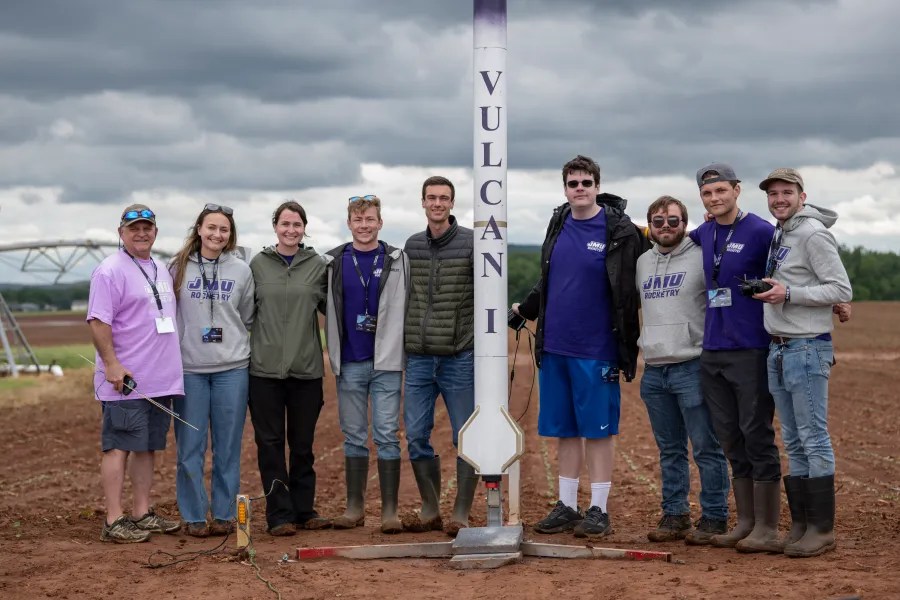
First started in 2000, the competition in 2025 brought together almost 1,000 students. The winning team came from James Madison University (pictured below), closely followed by North Carolina State University and The University of Alabama in Huntsville.
This is a great opportunity for those with a love of space rockets. All of the details for entry can be found on NASA’s competition website.
Image (Credit): 2025 winning team participants from James Madison University with their high-powered rocket prior to launch. (NASA/Krisdon Manecke)
Image (Credit): Russia’sProgress 93 cargo spacecraft launches from the Baikonur Cosmodrome in Kazakhstan. (NASA+)
Even with the recent Russian drones invading Polish airspace, things are on schedule at the International Space Station (ISS). A Russian Soyuz rocket successfully launched the Progress 93 cargo spaceship into orbit yesterday to resupply the ISS on Saturday.
Things may still be a bit crazy here on Earth, but the ISS mission continues.
Update: The Grumman Cygnus XL cargo spacecraft safely launched on Sunday, September 14. The spacecraft is scheduled to dock with the ISS on Wednesday, September 17.
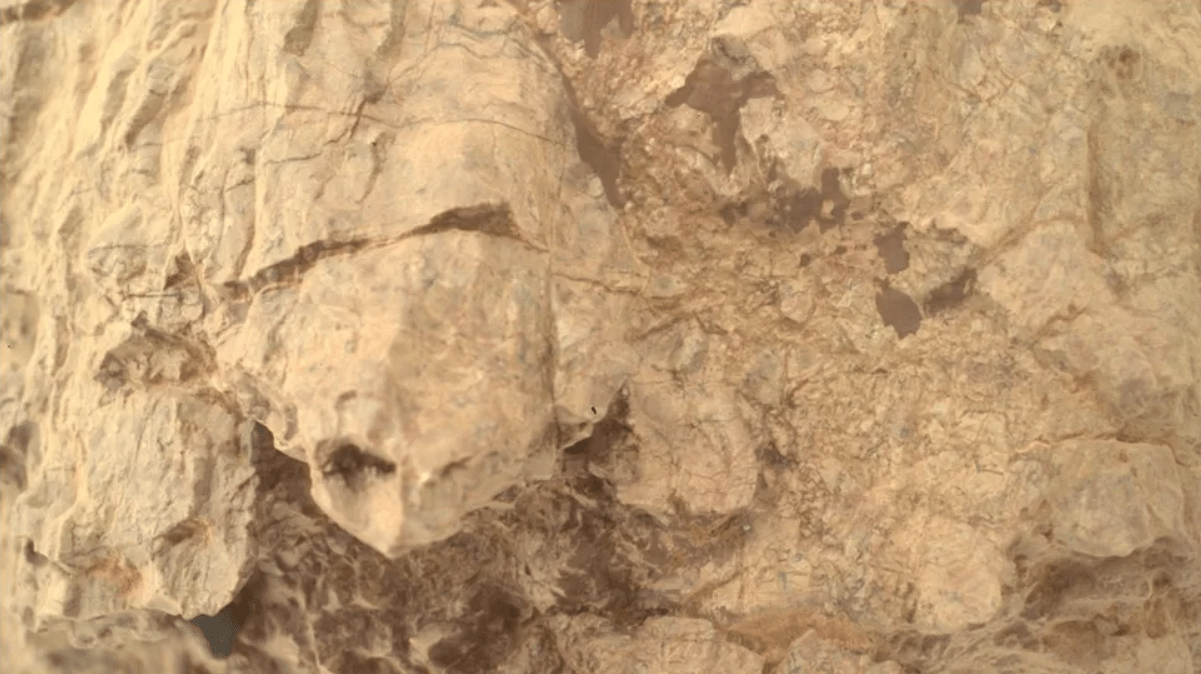
Image (Credit): Turtle-like Martian rock formation in Jezero Crater photographed by the Preservation rover. (NASA/JPL-Caltech)
While the Preservation rover on Mars has been busy looking for signs of life in Jezero Crater, it still had time to take a few fun photos as well, including the turtle image above (see the outline of the turtle below if you cannot find it). The rover captured the picture on August 31.
Image (Credit): Outline of turtle-like Martian rock formation in Jezero Crater photographed by the Preservation rover. (NASA/JPL-Caltech)
Image (Credit): The Martian rock nicknamed “Cheyava Falls” found in Jezero Crater last year. (NASA/JPL-Caltech/MSSS)
““The discovery of a potential biosignature, or a feature or signature that could be consistent with biological processes, but that requires further work and study to confirm a biological origin is something that we’re sharing with you all today that grows from years of hard work, dedication and collaboration between over 1,000 scientists and engineers here at the (NASA) Jet Propulsion Laboratory and our partner institutions around the country and internationally.”
–Statement by Katie Stack Morgan, Perseverance project scientist at the Jet Propulsion Laboratory (JPL), at a news conference earlier on Wednesday. The rock in question, found in an ancient dry riverbed in Jezero Crater, was sampled by the Perseverance rover last year. For more on the findings you can visit the NASA site here.
NASA expects to spend up to $1.5 billion to support at least two companies to demonstrate crew-tended space stations as part of the agency’s revised approach to transition from the International Space Station. NASA released Sept. 5 a draft version of an announcement for partnership proposal, or AFPP, for the second phase of its Commercial Low Earth Orbit Development Program. NASA is seeking comments on the draft through Sept. 12. The draft reflects a new approach for supporting development of commercial space stations outlined in a July 31 policy directive by Acting Administrator Sean Duffy. Rather than award fixed-price contracts to cover certification of commercial space stations for use by NASA astronauts, it called for the use of funded Space Act Agreements for continued support of the design and development of such stations.
When stellar-mass black holes—”small” black holes that are still a few times more massive than the sun—are actively gobbling up matter, they’re even more of a hot mess than scientists expected. That’s according to an international research team, led by Jon Miller of the University of Michigan, that uncovered this surprise that could have galactic implications. What researchers learn from stellar-mass black holes can help them better understand supermassive black holes, the behemoths that steer the evolution of galaxies like our Milky Way.
For nearly five decades, NASA’s twin Voyager probes have plumbed the cosmos in search of answers to some of astronomy’s most perplexing mysteries about our solar system and its place in the wider universe. And now, both of the pioneering spacecraft – which launched two weeks apart in the late-1970s into space – have officially turned 48 years old. Voyager 2 was the first to have its birthday in August, followed now by Voyager 1, which marked its anniversary early in September.