Free E-book From NASA on Dark Matter & Dark Energy

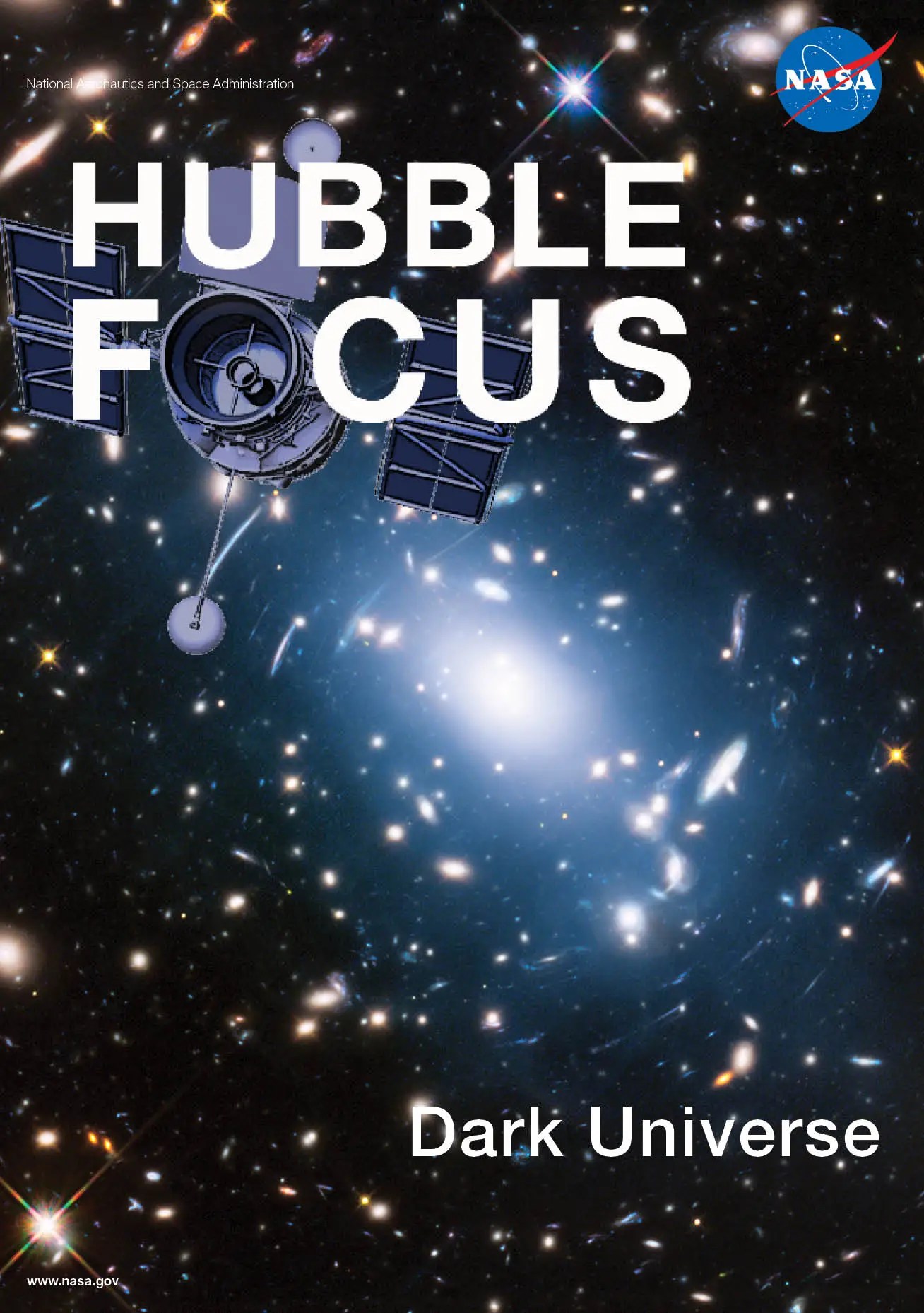
NASA has released a free e-book titled Hubble Focus: The Dark Universe. You can download the book at the NASA site in one of two formats – PDF or EPUB. This is the fifth edition of this book.

You cannot argue with the price, while the content is an impressive story about how the Hubble Space Telescope has helped to study both dark matter and dark energy. In addition to the text and images, the book contains links to numerous videos that further illustrate the points in the book. It is a multimedia experience that can only enhance your understanding of the topic.

Hubble is just the beginning, as the James Webb Space Telescope and other instruments are coming online to assist with the research. The book notes:

Hubble continues to be a vital tool to address questions about the underlying workings of the universe . Scientists will pair its wide wavelength coverage with James Webb Space Telescope’s powerful vision, the upcoming Nancy Grace Roman Space Telescope’s panoramic view, and a fleet of additional space- and ground-based telescopes to explore the cosmos as never before . We have far more left to learn among the stars

Oops – Sorry About That, Mars

Image (Credit): Illustration of how DART’s impact altered the orbit of Dimorphos about Didymos. (https://dart.jhuapl.edu/)

You may remember how NASA’s Double Asteroid Redirection Test (DART) mission was a great success in that it demonstrated that we can divert an asteroid, should it be necessary.

Well, that’s not the whole story. A new study has found that the redirected asteroid debris may threaten Mars in the future. How far into the future? In one case, it will be 6,000 years into the future, and the second about 15,000 years into the future.

It would be nice to think that we will have habitats if not cities on Mars at that point (and maybe even a Musk Mountain looming over one of the cities), so this could be relevant. So maybe today’s practice run will be tomorrow’s disaster. Then again, I am pretty sure that such a future society will also have the ability to deflect these asteroids, possible building on what we learned from DART.

All of this does make you think about other areas where our tampering may come back to bite us.

A UFO on the Moon?

Image (Credit): View of the KPLO above the lunar surface. (NASA/GSFC/Arizona State University)

The grainy image above may remind you of some of the UFO images that circulated years ago. However, in this case, the image is from the Moon as captured by NASA’s Lunar Reconnaissance Orbiter.

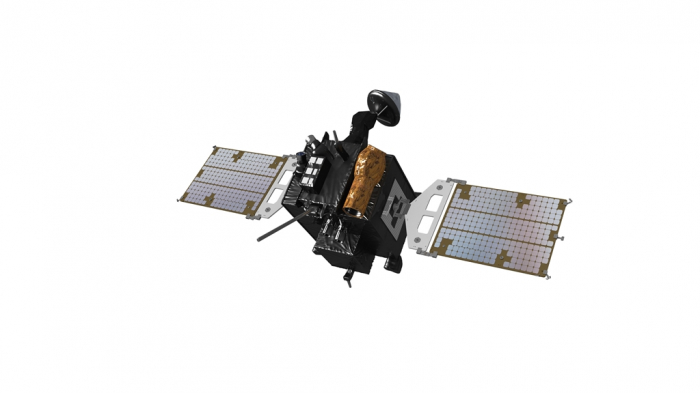
What you are seeing is a Korean spacecraft going thousands of miles per hour (hence the blurred, elongated image). Named the Korea Pathfinder Lunar Orbiter (KPLO), or the Danuri, the spacecraft is part of South Korea’s first lunar mission launched in August 2022. Korea is the seventh nation to send an orbiter to the Moon.

Below is an image of the KPLO minus the blurring speed. The spacecraft was designed to orbit the Moon for one year collecting data, though it is still going strong after hitting its year anniversary back in December. As part of its mission, it is carrying a NASA camera, the ShadowCam, to observe shadowed areas on the Moon.

The Moon is a busy place these days.

Image (Credit): Illustration of the KPLO. (The Korean Economic Daily)

Space Stories: Voyager 1 Gibberish, Lunar Rovers Underway, and the Largest Digital Camera

Image (Credit): Artist’s rendering of the Voyager 1 spacecraft. (NASA)

Here are some recent stories of interest.

ScienceAlert: NASA Has Finally Identified The Reason Behind Voyager 1’s Gibberish

For months now, the most distant spacecraft to Earth – Voyager 1 – has been talking gibberish on the interplanetary ‘radio’. The repetitive jumble of 1s and 0s it’s sending back to our planet, 24 billion kilometers (15 billion miles) away, has made no sense to scientists until now. Turns out, officials at NASA just needed to give the oh-so-distant craft a bit of a ‘poke’ to ask it how it was feeling. The system returned a software readout to Earth that scientists have now used to confirm about 3 percent of its memory is corrupted. Which is why turning the FDS on and off didn’t resolve the issue back in November of 2023.

CBS News: 3 Companies Win NASA Contracts to Develop New Artemis Moon Rover Designs

Along with funding the commercial development of new rockets, Artemis moon landers and new spacesuits, NASA is pressing ahead with plans to buy an unpressurized moon rover that can carry astronauts, science payloads — or both — across the rugged terrain of the lunar south pole, officials said Wednesday. The agency announced contract awards to three companies to develop competing designs for a Lunar Terrain Vehicle, or LTV, similar in concept to the rovers that carried the last three Apollo crews across the moon’s surface more than 50 years ago.

NOIRLab: Construction of Largest Digital Camera Ever Built for Astronomy Completed

After two decades of work, scientists and engineers at the Department of Energy’s SLAC National Accelerator Laboratory and their collaborators are celebrating the completion of the LSST Camera. Once mounted on Vera C. Observatory’s Simonyi Survey Telescope, the 3200-megapixel camera will help researchers observe our Universe in unprecedented detail. During its ten-year Legacy Survey of Space and Time, the LSST Camera will generate an enormous trove of data on the southern night sky that researchers will mine for new insights into dark energy, dark matter, the changing night sky, the Milky Way and our Solar System.

Telescopes Caught the Eclipse From Across the Country

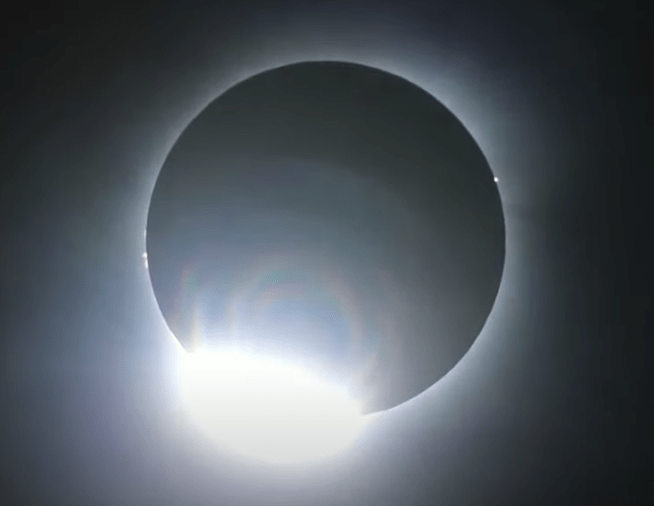
Image (Credit): TheTotal Solar Eclipse as seen in Houlton, Maine. (David Bowman of NASA Langley Research Center)

If you missed the Total Solar Eclipse or just want to see what it looked like in other parts of the country, NASA and other observatories have you covered. Check out the NASA video, “2024 Total Solar Eclipse: Through the Eyes of NASA (Telescope Feed),” showing the eclipse from Texas to Maine.