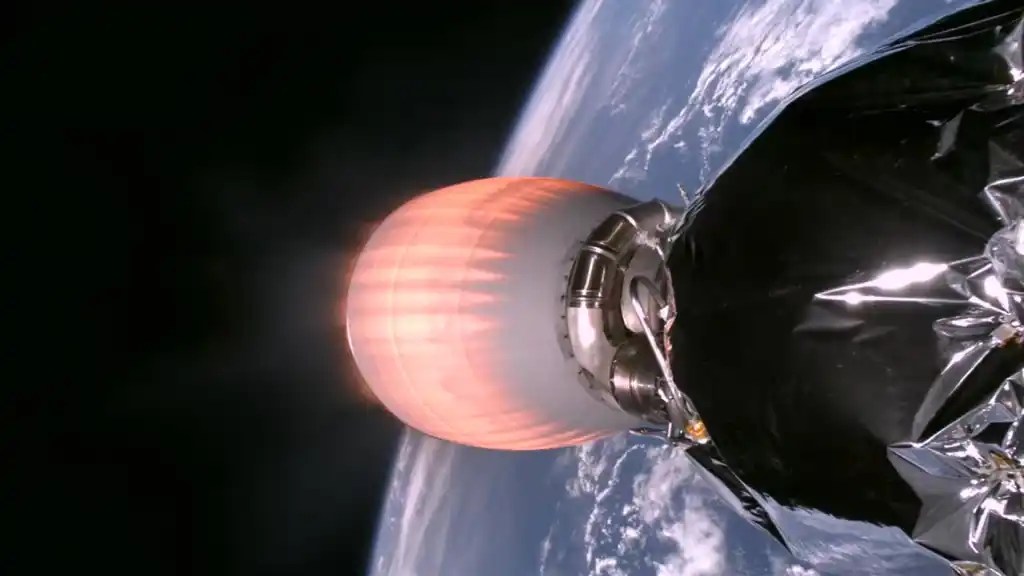
Delayed Launch of the Europa Clipper Mission

Credit: NASA

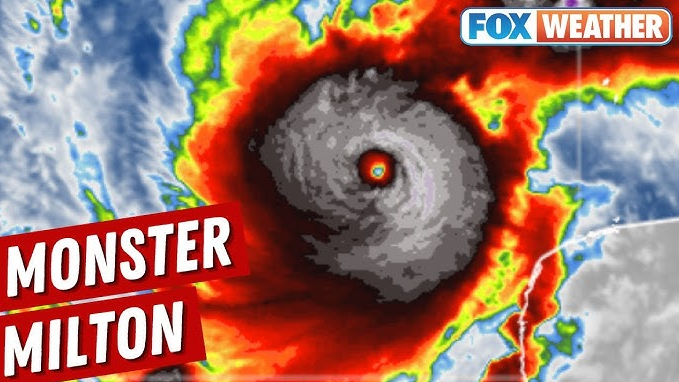
This week we expected to see the launch of NASA’s Europa Clipper, but an approaching hurricane has again thrown NASA’s plans into the wind. The original launch was scheduled for October 10.

NASA’s blog has stated the following:

NASA and SpaceX are standing down from the Thursday, Oct. 10, launch attempt of the agency’s Europa Clipper mission due to anticipated hurricane conditions in the area. Hurricane Milton is expected to move from the Gulf of Mexico this week moving east to the Space Coast. High winds and heavy rain are expected in the Cape Canaveral and Merritt Island regions on Florida’s east coast. Launch teams have secured NASA’s Europa Clipper spacecraft in SpaceX’s hangar at Launch Complex 39A at the agency’s Kennedy Space Center in Florida ahead of the severe weather, and the center began hurricane preparations Sunday.

I just hope hurricane season comes to an early close after this.

Stay tuned for a new launch date.

Update: As of October 12, NASA’s target launch date of the Europa Clipper is now October 14.

Voyager 2 Still Operating, But With One Less Instrument

Image (Credit): Instruments on the Voyager spacecraft. (NASA/JPL-Caltech)

Last week, NASA announced its decision to turn off one of Voyager 2’s scientific instruments to save energy. The plasma science instrument is now silent. It was used to measure the amount of plasma, or electrically charged atoms, as well as the direction it is flowing. The same instrument on Voyager 1 stopped working in 1980.

It is just amazing that the two Voyagers continue on their voyage beyond our solar system while sharing the experience with us. As of a few minutes ago, Voyager 1 was about 15.4 billion miles away (Voyager 2 is a little closer) and it took about 22 hours and 54 minutes for light to travel from the Voyager 1 spacecraft to Earth.

You can go to this NASA site to learn more about the mission as well as the status of the various scientific instruments.

How Do Astronauts Vote While in Orbit?

Credit: Jackie Ramirez from Pixabay

Earlier this week, NASA issued an article on how astronauts on the International Space Station (ISS) can vote in the upcoming election. Yes, they need to make arrangements like anyone planning to be out of town, but we have a least two astronauts (from Boeing) who did not plan to be on the station during the election.

The process as explained by NASA (and shown below) is as follows:

Just like any other American away from home, astronauts may fill out a Federal Post Card Application to request an absentee ballot. After an astronaut fills out an electronic ballot aboard the orbiting laboratory, the document flows through NASA’s Tracking and Data Relay Satellite System to a ground antenna at the agency’s White Sands Test Facility in Las Cruces, New Mexico.

From New Mexico, NASA transfers the ballot to the Mission Control Center at NASA Johnson and then on to the county clerk responsible for casting the ballot. To preserve the vote’s integrity, the ballot is encrypted and accessible only by the astronaut and the clerk.

According to the Pew Research Center, about 66 percent of voting-eligible population cast a ballot in the 2020 election.

If astronauts can find a way to vote, the rest of us here on Earth have no excuse to miss the election.

Please remember to vote.

Credit: NASA

Outside Group with Political Agenda Taxing NASA

As if things could not get more troublesome, the Heritage Foundation appears to be doing a lot of dirty work on behalf of the Trump campaign to obtain internal conversations by NASA employees. According to Reuters, the focus of the campaign against NASA appears to be looking for comments involving Donald Trump and Elon Musk.

The requests are likely to bog down the NASA’s employees while the Heritage Foundation pursues its agenda to eliminate any “disloyal” federal employees, all part of its earlier, now toxic, Project 2025 mission. You might think we were talking about the Soviet Union, but these are the tactics today of the far right.

SpaceX has done very well under the NASA program, but some may want to continue to tip the scales in his favor now that he has come out and supported Trump for president.

NASA is not alone. The Heritage Foundation has been sending tens of thousands of requests to federal agencies in the past two years building up a case against federal employees, most likely in the hope of putting its own selected staff into these same positions.

This is not the way to run a government or win a campaign. Whoever wins the presidential election will have amply opportunity to place its own managers in all of the federal agencies, including NASA. That in itself is tough enough, with a new president needing to fill more than 4,000 positions under normal circumstances, something the last Trump administration struggled to do.

Space Quote: Can China Win the Lunar Race This Time?

Image (Credit): Image of Apollo 17 astronaut Eugene Cernan on the Moon’s surface. (NASA)

“As the U.S. has flailed, China and its partners have marched forward, notching one success after another. There is no reason to believe they will not be first to send a crewed mission to the lunar south pole, where only a half dozen or so promising regions exist to safely land. Depending on how the currently vague noninterference rules are interpreted and enforced by the Chinese (and others), significant parts of the moon might end up off-limits for anyone else to explore or mine. We do not know for certain how China might behave on the lunar surface—this is part of the conundrum—but terrestrial conflicts in the South China Sea and China’s regular infractions of sovereign airspace give scant rationale for optimism.”

-Quote from an article in Scientific American titled “NASA Needs a ‘Lunar Marathon’ to Match China on the Moon.” The author of the piece is Thomas Zurbuchen, who previously worked at NASA and is now is professor and director of the Swiss Federal Institute of Technology’s ETH Zürich | Space. For another take on where the US is with its Artemis lunar program, you can read an ARS Technica article titled “The Politically Incorrect Guide to Saving NASA’s Floundering Artemis Program.”