You might think a company would love to be on the front page of the Wall Street Journal, and that is generally true, but not when the headline is this one: “Some Tesla, SpaceX Leaders Worried by Musk Drug Use.”
The article states:
…they fear the Tesla and SpaceX chief executive’s drug use could have major consequences not just for his health, but also the six companies and billions in assets he oversees…The world’s wealthiest person has used LSD, cocaine, ecstasy and psychedelic mushrooms…
That is not a story that investors, nor Uncle Sam, wants to be reading with the morning oatmeal.
NASA is already dealing with one Moon-size disaster today. It does not need the frat antics of a CEO to further damage the move towards a more commercial-oriented space program.
Note: The online version of the story cited above was released earlier and had a modified title.
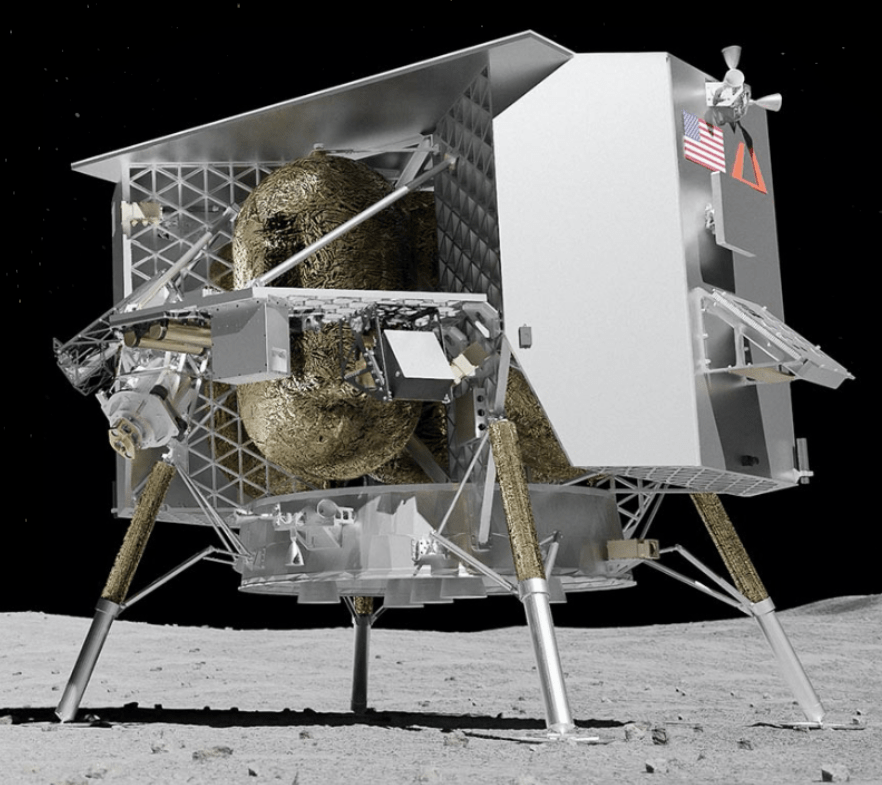
After ending launches to the Moon’s surface more than 50 years, NASA is funding a lunar mission that launches tomorrow morning. United Launch Alliance (ULA) will be using its new Vulcan rocket to launch the Astrobotic mission towards the Moon. ULA, as noted earlier, has a lot riding on this new rocket as it seeks a buyer. Blue Origin will also be watching events closely as the manufacturer of the Vulcan rocket engines.
This is a milestone for the U.S. as well as Astrobotic, which will be the first private company to reach the Moon’s surface if everything goes without a hitch. The Pittsburgh-based company plans to place its Peregrine lunar lander on the Moon’s surface at Sinus Viscositatis (Bay of Stickiness). The company notes that the Peregrine Mission One (PM1) “…is carrying 20 payloads (cargo) from governments, companies, universities, and NASA’s Commercial Lunar Payload Services (CLPS) initiative.” The NASA payloads are shown below.
The Peregrine lunar lander is not expected to land on the Moon’s surface until February 23rd. The delay will allow sufficient sunlight to be present at the landing site.
Fingers crossed that all goes well tomorrow morning.
Image (Credit): The Moon as seen from the International Space Station. (NASA)
“No one, and no religion, owns the moon, and, were the beliefs of the world’s multitude of religions considered, it’s quite likely that no missions would ever be approved…Simply, we do not and never have let religious beliefs dictate humanity’s space efforts — there is not and should not be a religious test.”
-Statement by Celestis CEO and co-founder Charles Chafer in an email to Space.com regarding Native American concerns about a NASA -funded rocket taking human remains to the Moon next week. A second company, Elysium Space, will also be placing human remains on the Moon as part of this same mission. NASA separately noted in response to the Native American concerns, “We don’t have the framework for telling [private companies] what they can and can’t fly.”
Image (Credit): JunoCam image of Jupiter’s moon Io during its close encounter. The image was taken at an altitude of about 1,500 miles. (NASA JPL and Southwest Research Institute)
NASA’s spacecraft Juno just had a super-close encounter with the most volcanic world in the solar system—but its stunning first image could be among its last after 56 orbits of Jupiter. On December 30, the bus-sized spacecraft—orbiting Jupiter since 2016—got very close to Io, the giant moon of Jupiter. It reached a mere 930 miles (1,500 kilometers) from the moon’s surface. However, the spacecraft’s camera has suffered radiation damage and may not last much longer.
India began 2024 with the launch of an X-ray astronomy satellite aboard the sixtieth flight of its Polar Satellite Launch Vehicle. The PSLV C58 mission lifted off at 9:10 AM local time (03:40 UTC) on Monday, Jan. 1, from the Satish Dhawan Space Centre. XPoSat, or X-ray Polarimeter Satellite, carries a pair of instruments that will be used to study X-ray emissions from astronomical sources. After deploying XPoSat, PSLV C58’s upper stage has remained in orbit as the third flight of the PSLV Orbital Experimental Module (POEM-3), serving as a free-flying platform hosting a range of attached payloads.
The first satellite for a second planned Chinese low Earth orbit communications megaconstellation has been produced in new facilities in Shanghai. A new generation flat-panel satellite rolled off the assembly at the G60 digital satellite production factory in Shanghai’s Songjiang District Tuesday, Dec. 27, according to Chinese press reports. The satellite is the first for the G60 Starlink low Earth orbit communications megaconstellation. An initial 108 satellites of a total of around 12,000 G60 Starlink satellites are to be launched across 2024.
Image (Credit): Chart showing the planned travel of the JUICE spacecraft. (ESA, work performed by ATG under contract to ESA)
I wanted to start out the new year by first remembering all of the great missions from 2023. I also decided to group this work rather than focus on single missions.
NASA Asteroid Missions: Asteroids were the big news this year, with Lucy encountering a surprise pair of asteroids, OSIRIS-REx bringing back a sample from the asteroid Bennu, and NASA launching the Psyche mission.
JWST Discoveries: This year we celebrated the anniversary of the James Webb Space Telescope (JWST), which has been better than ever imaged. It is helping to change our understanding of the origin of the universe while poking and prodding at exoplanets to review their secrets.
ESA Missions: The European Space Agency (ESA) has also been very busy in 2023. For instance, the launch of the Euclid mission to study dark matter and dark energy, as well as the JUICE mission to study Jupiter and its moons, will assist with our understanding of the big picture as well as our own neighborhood.
That’s an impressive record, and I look forward to even more great news in 2024.




 Our Awesome Universe