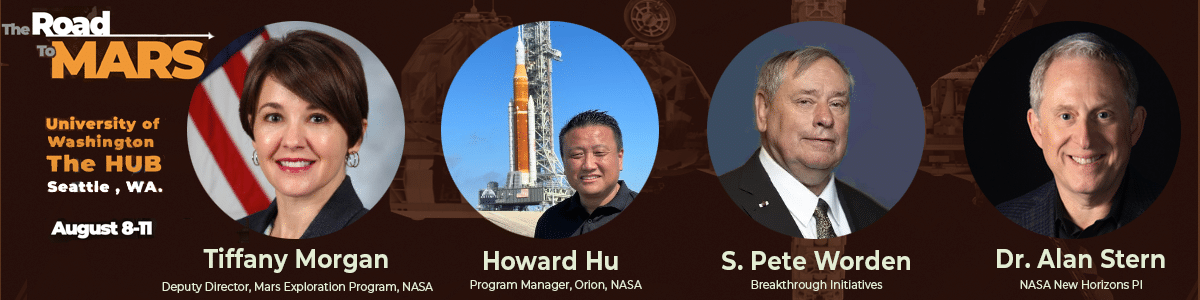
You still have time to sign up for the Mars Society’s 27th Annual International Mars Society Convention, happening from August 8-11 in Seattle, WA.
Some of the guests include:
Tiffany M. Morgan, Deputy Director of the Mars Exploration Program in NASA’s Science Directorate, who will give an address about “Exploring Mars Together, DRAFT Plan for a Sustainable Future for Science at Mars.”
Howard Hu, the Orion Program Director at NASA, who will give an address about “NASA’s Artemis plans for returning to the Moon and beyond,”
Brig. General (Ret.) Dr. S. Pete Worden, Chairman of the Breakthrough Prize Foundation, who will give an address about “Life in the Universe and Private Sector Space Science Initiatives.”
Dr. Alan Stern, a renowned planetary scientist and commercial astronaut, who will give an address about “The Other Red Planet” focusing on Pluto.
These are just a few of the names and presenters this year. You can also watch the presentations from prior conventions if you want to see what you missed.
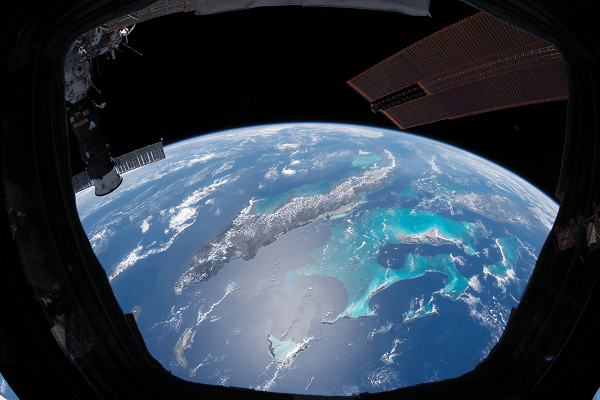
Two astronauts aboard Boeing’s Starliner remain stuck in space as the mission exceeded its 45-day battery window being docked at the International Space Station. The capsule, which arrived at the space station on June 6, was initially approved to stay for up to 45 days but with no return date set, the astronauts’ stay has been “extended indefinitely,” NBC affiliate WESH reported. NASA and Boeing said the capsule’s batteries are performing well despite the extended stay. Tuesday marked 47 days since they’ve been at the ISS.
NASA says its next spacewalk will be delayed indefinitely until engineers understand more about what caused a coolant leak on June 24. Tracy Dyson, a NASA astronaut, had a brief spacesuit leak a month ago while still in the hatch of the International Space Station (ISS). She and Mike Barrett had just opened the door for a 6.5-hour spacewalk for maintenance activities, when showers of ice particles erupted from a spacesuit connection to the ISS. The spacewalk was suspended, but the astronauts were never in any danger, NASA has emphasized.
Two years after stating there were no plans to save artifacts from the destructive end of the International Space Station (ISS), NASA is now in the early stages of identifying what small parts of the orbiting laboratory to preserve. Agency officials on Wednesday (July 17) shared the preliminary details during a media briefing about the space station’s end of life in 2030 and the selection of SpaceX to build the vehicle that will move the massive complex out of orbit such that it mostly burns up in Earth’s atmosphere and plunge any surviving fragments into a remote area of the ocean.
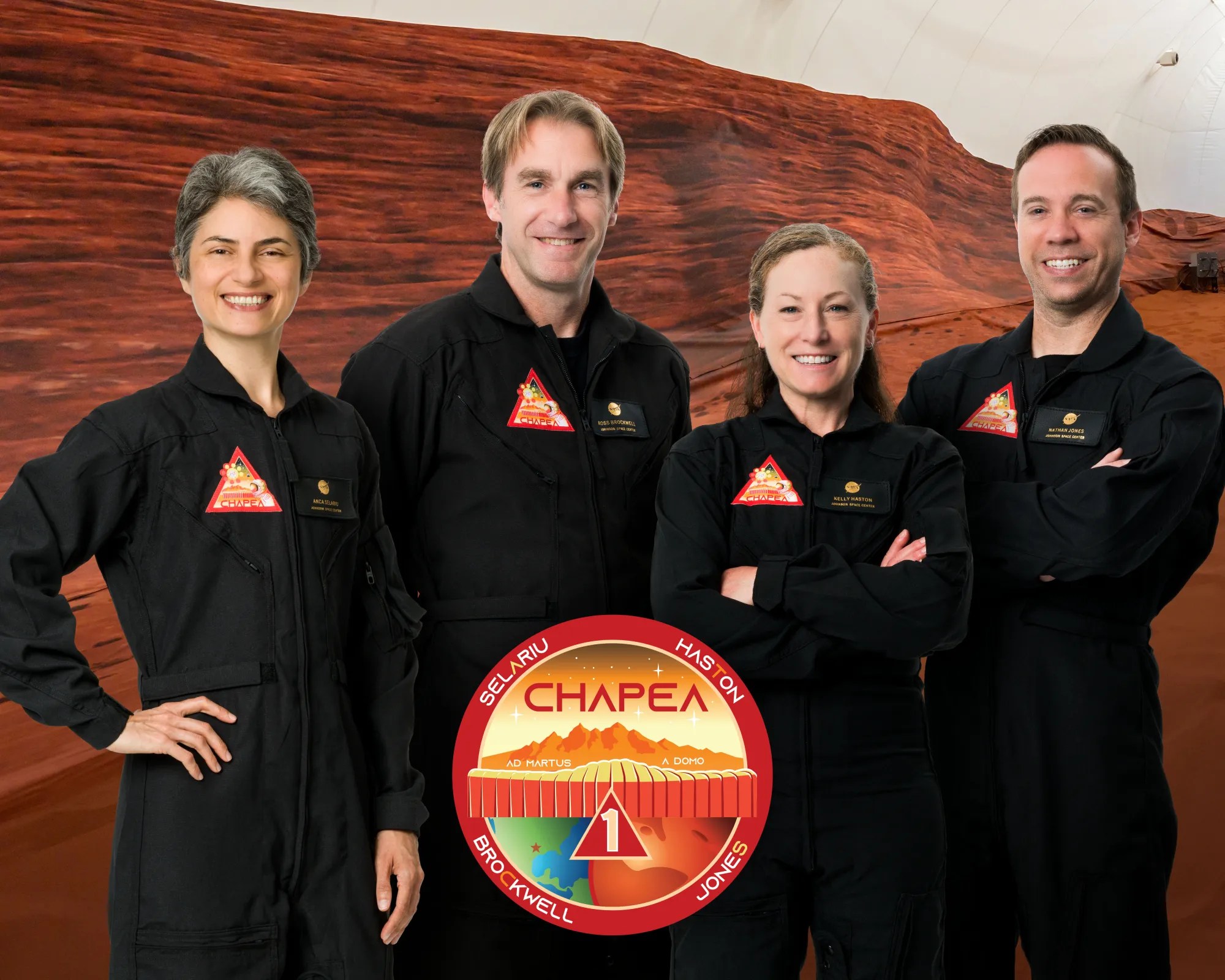
Image (Credit): Official mission 1 CHAPEA crew portrait (from left to right: Anca Selariu, Ross Brockwell, Kelly Haston, Nathan Jones). (NASA)
“”It would still cause me a great deal of thought, but I think my answer now is it would be very difficult to leave my partner, to leave my people, for that amount of time, because it would be far more than a year…That commitment, it’s going to be a tremendous effort when people go, and I really applaud whoever gets to do that. But I’m not sure it’ll be me.”
–Statement by Kelly Haston, a Canadian research scientist, after spending 378 days as part of NASA’s yearlong Mars simulation project. She was part of a team of four individuals who lived together during this period at the Johnson Space Center in Houston in what is called the Crew Health and Performance Exploration Analog (CHAPEA) project. The next simulation mission is planned for next year.
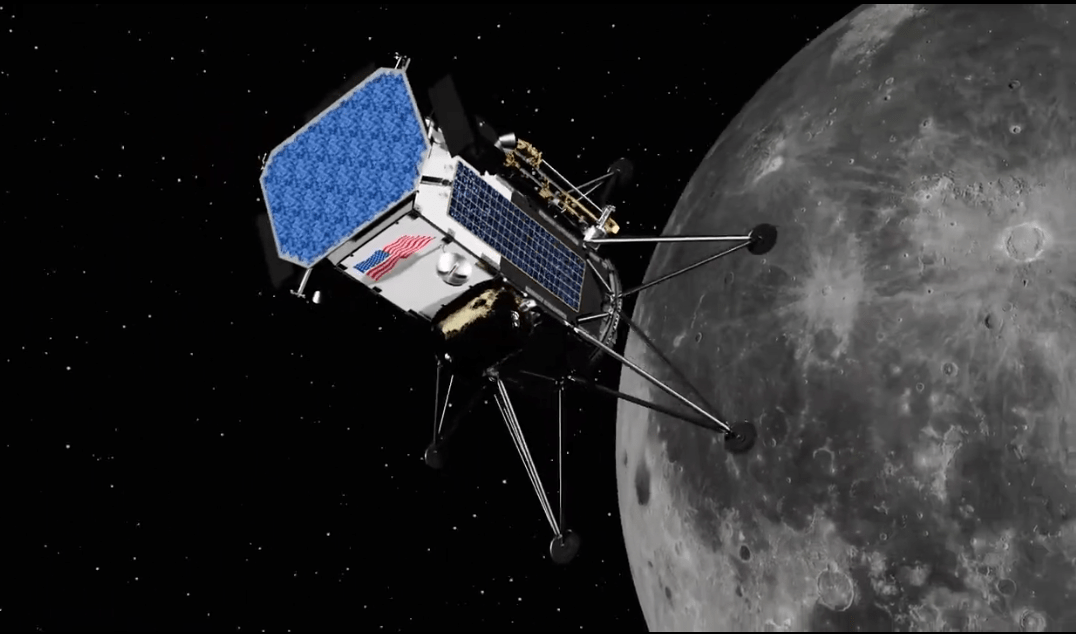
Image (Credit): An artist’s rendering of the NASA’s PRIME-1 spacecraft approaching the Moon. The mission will need to accomplish some of the work previously assigned to the VIPER mission. (NASA)
Am I missing anything? Oh yeah, and NASA has decided to cancel its Moon rover, the Volatiles Investigating Polar Exploration Rover (VIPER) project, after spending $450 million. Cost overruns and multiple delays had made the mission too expensive and too late in the game to be useful.
Nicola Fox, associate administrator, Science Mission Directorate, NASA Headquarters in Washington, stated:
We are committed to studying and exploring the Moon for the benefit of humanity through the [Commercial Lunar Payload Services] program…The agency has an array of missions planned to look for ice and other resources on the Moon over the next five years. Our path forward will make maximum use of the technology and work that went into VIPER, while preserving critical funds to support our robust lunar portfolio.
Fortunately, VIPER was one of a number of missions designed to seek water on the lunar surface. For example, NASA has the Polar Resources Ice Mining Experiment-1 (PRIME-1) , which is still scheduled to land at the South Pole later this year.
It has been a rough year for NASA, but the multiple missions planned for the Moon provide more opportunities to get it right, while the ISS issues do not appear insurmountable. NASA just needs a break, and its commercial partners need to prove they can meet the goals that were set for them.
Note: If you were one of the people who added your name to the VIPER mission, maybe NASA will open up another opportunity for your name on the Moon.
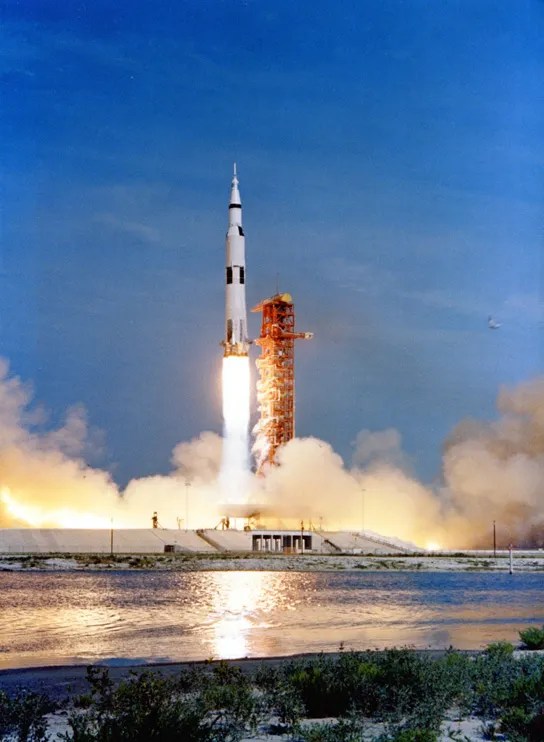
Image (Credit): The launch of the Apollo 11 space vehicle from the launch pad on July 16, 1969. (NASA/ Kipp Teague)
On this day in 1969, NASA launched the Saturn V rocket that carried astronauts Armstrong, Edwin “Buzz” Aldrin, and Michael Collins on the first manned lunar landing. The 363-feet tall Saturn V rocket was launched from Pad A, Launch Complex 39, Kennedy Space Center, at 9:32 a.m. EDT.
While this was the most significant use of the Saturn V at that point in time, it was the backbone of the Apollo program. The first crewed Saturn V to launch was Apollo 8, which orbited the Moon without landing.
You can listen in on the control room chatter surrounding the launch at this NASA launch history site.
NASA has a number of events planned for this month to celebrate the 55th anniversary of the Moon landing. You can read about the planned activities at this NASA anniversary site.