Rain and Wind Delays in Space Force Orbital Test Vehicle Launch

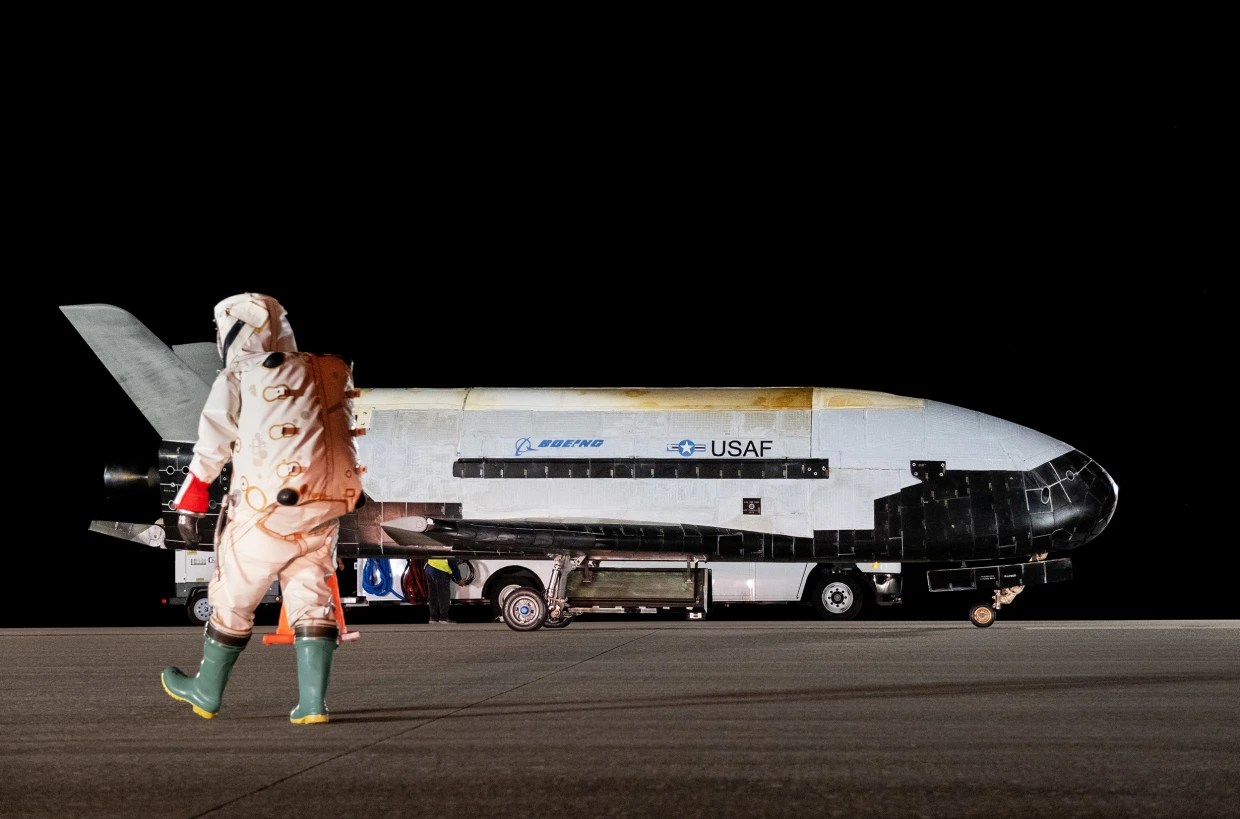
Image (Credit): The X-37B orbital test vehicle on the tarmac. (US Space Force)

SpaceX was scheduled to launch the US Space Forces’ secretive X-37B orbital test vehicle (OTV) from NASA’s Kennedy Space Center earlier today, but stormy weather postponed the launch until tomorrow.

What does this spacecraft do? Given it is with the Space Force and not NASA, it clearly has a national defense mission, yet it has also worked with NASA on scientific missions. This seventh launch of the spacecraft, designated OTV-7,  will be “…operating in new orbital regimes, experimenting with space domain awareness technologies and investigating the radiation effects to NASA materials” according to a Space Force press release.

That’s about as clear as mud, and also the way the US Government wants to keep it. If this means the Chinese and Russians are scratching their heads, then that is all the better for our defense officials.

By the way, it is not clear why it is still called a “test vehicle” given it has been around since 2010 and already served multiple missions. Maybe this relates to the mission contents, though I expect the International Space Station is conducting many more tests.

I guess this will just have to be one more mystery.

Update: The spacecraft is still on the ground at the moment after numerous delays. The launch is now planned for December 13.

Second Update: The mission has been scrubbed for now. SpaceX stated the following:

We are standing down from tomorrow’s Falcon Heavy launch of USSF-52 to perform additional system checkouts. The payload remains healthy while teams work toward the next best launch opportunity. We’re also keeping an eye on the weather and will announce a new launch date once confirmed with the Range.

Space Quote: JPL Struggles to Remain Fully Staffed

Image (Credit): Artist’s rendering of NASA’s Perseverance rover on the surface of Mars. (NASA/JPL-Caltech)

“It was clear that upper management expected us to push through regardless of any challenges happening outside the lab because the robot was the first priority…It resulted in incredible burnout across all the teams. Many of us are honestly still recovering from it.”

-Statement by one of the NASA Jet Propulsion Laboratory employees working on the Mars Perseverence rover mission as quoted in a Scientific American article, “NASA Lab’s Workforce Woes Threaten Major Space Missions.” The article notes that JPL is dealing with employee shortages as overworked employees depart for better pay more more life balance at private space firms.

Happy Hanukkah from the ISS

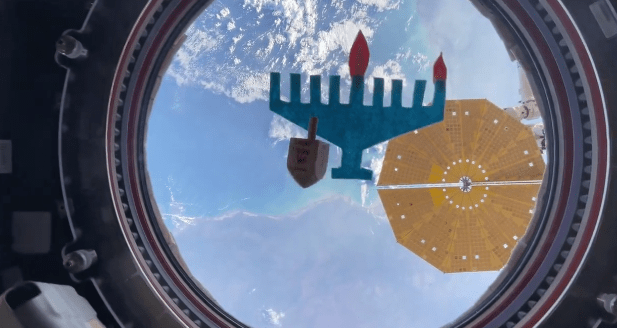
Image (Credit): Hanukkah display on the ISS. (NASA)

Astronaut Jasmin Moghbeli did her part to celebrate the Hanukkah holiday while on board the International Space Station (ISS). The Iranian-American NASA astronaut created the window display shown above as well as a video of a spinning dreidel.

In the ABC7 story accompanying the video, Ms. Moghbeli stated:

In my household, we celebrate both Christmas and Hanukkah so I’ve brought some items for both to celebrate with my family.

I challenge anyone here on Earth to match this window display. It is out of this world.

Pic of the Week: Progress 86 Approaches the ISS

Image (Credit): The Progress 86 resupply ship approaches the ISS. (NASA)

This week’s image shows the Roscosmos Progress 86 cargo craft approaching the International Space Station (ISS) last Sunday with three tons of needed supplies. The space craft almost appears to be performing ballet. I expect everyone one on board the station was happy to see it arriving, hopefully loaded with some holiday treats.

The Russian cargo craft needed to be guided in manually by cosmonauts after the auto system failed. Backup systems are great, but fully functioning space systems are better. I guess the Russians got some practice that day.

A Day in Astronomy: First Operation of the International Space Station

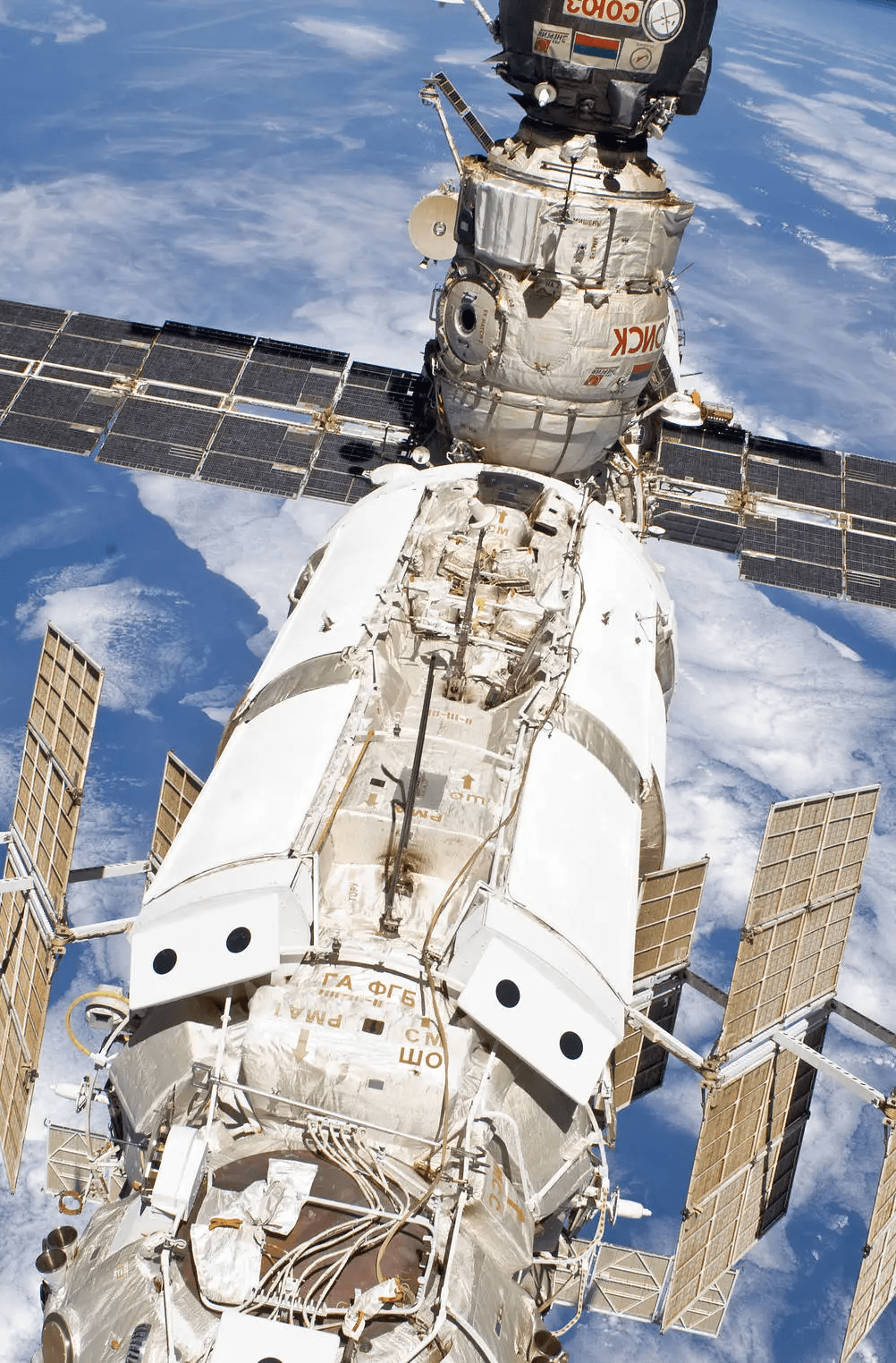
Image (Credit): The ISS’s Zarya module (in the image bottom to center). (NASA)

On this day in 1998, two modules, the Russian Zarya and American Unity, were joined in Earth orbit to create the International Space Station (ISS).

The ISS was built by five space agencies involving 15 nations. NASA notes that 273 people from 21 countries have visited the ISS over the years to assist with more than 3,300 research and educational investigations. The station has been busy, and pretty expensive at more than $150 billion to design and build.

Back in 2012, Astrophysicist Neil DeGrasse Tyson stated:

If the United States commits to the goal of reaching Mars, it will almost certainly do so in reaction to the progress of other nations – as was the case with NASA, the Apollo program, and the project that became the International Space Station.

Eleven years later, the ISS continues to orbit the Earth while plans are still being made to return to the Moon and visit Mars. Maybe Dr. Tyson was right given our current race with China to the Moon. We sometimes need that extra push to move towards the stars (as least in terms of crewed flights).