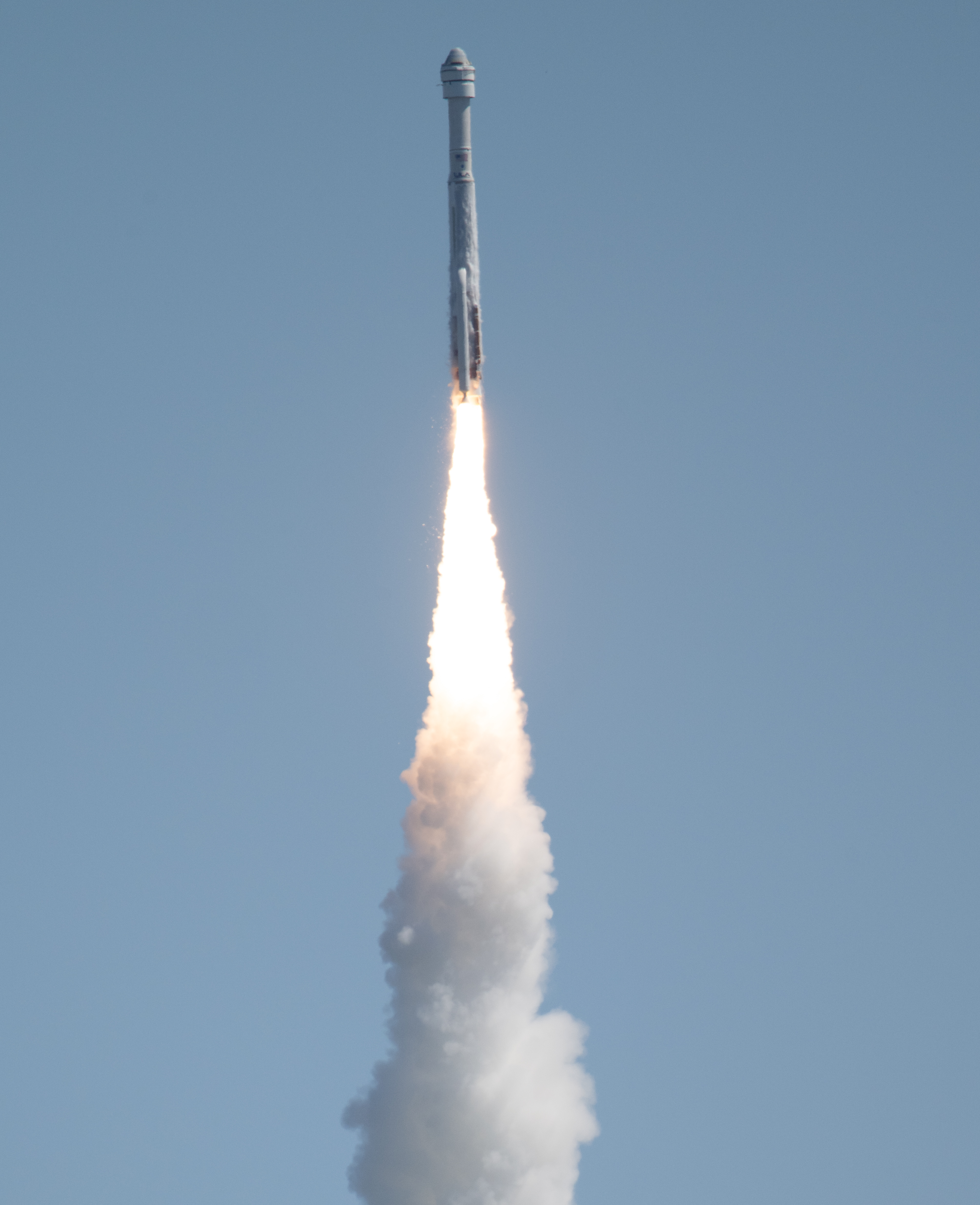
Image (Credit): The launch of Boeing’s Starliner earlier today from Cape Canaveral Space Force Station. (NASA/Joel Kowsky)
Boeing’s CST-100 Starliner launched earlier today (June 5) on a United Launch Alliance Atlas V rocket from Space Launch Complex-41 at Cape Canaveral Space Force Station in Florida.
Astronauts Butch Wilmore and Suni Williams are now safe in orbit on their way to the International Space Station (ISS). They will dock at the ISS tomorrow afternoon.
Boeing’s Starliner is the second graduate from NASA’s Commercial Crew Program, which also includes SpaceX.
You can read more about the Starliner mission and upcoming events at this NASA site.
Update: The two astronauts arrived safely at the ISS safely on Thursday (June 6), though there were some issues with the Starliner’s thrusters.
Image (Credit):Logo for NASA’s Commercial Crew Program. (NASA)
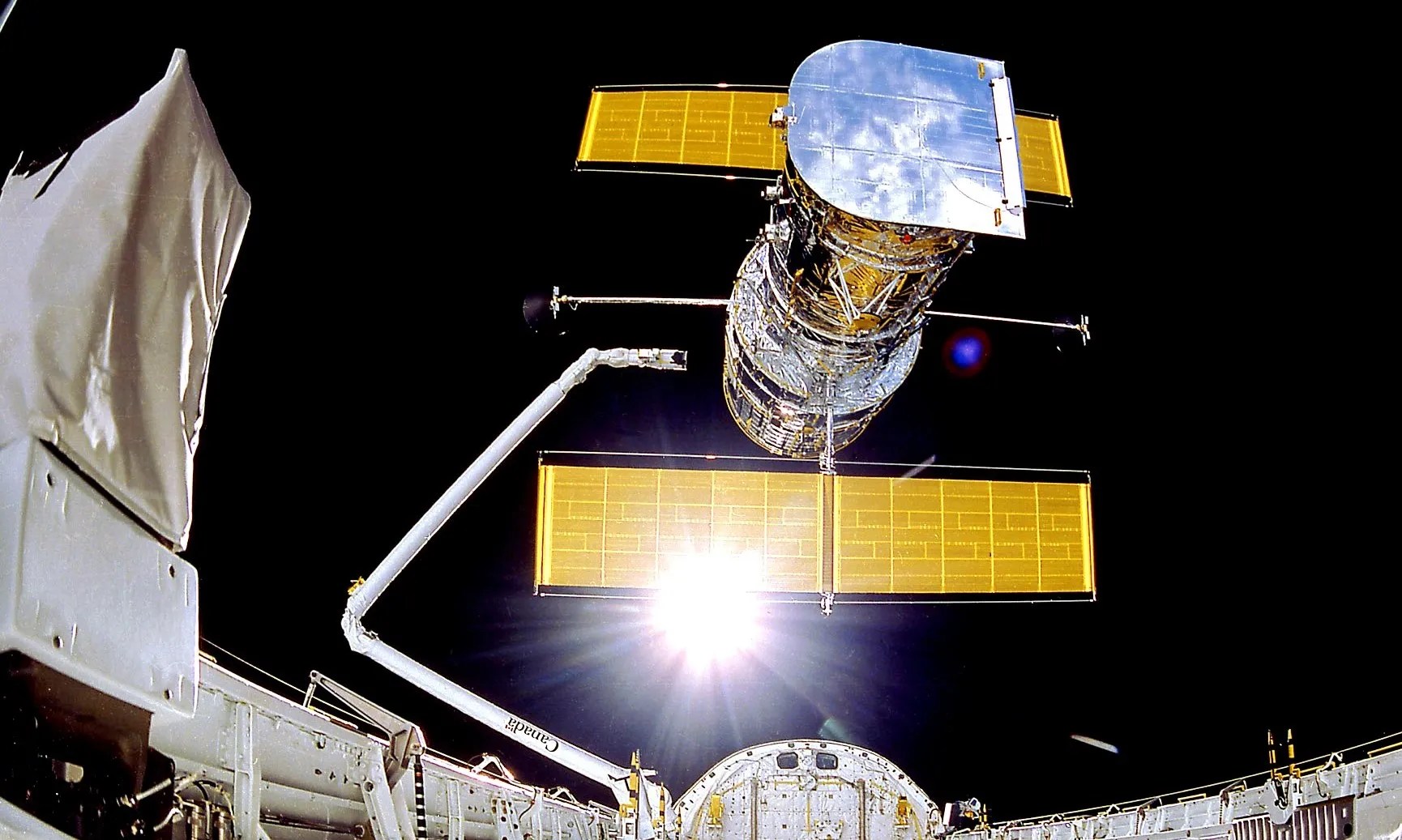
Image (Credit): The deployment of the Hubble Space Telescope on April 25, 1990 from the space shuttle Discovery. (NASA/Smithsonian Institution/Lockheed Corporation)
The Hubble Space Telescope is suffering the kinds of aches and pains that can come with being old, and NASA officials say they’re shifting into a new way of pointing the telescope in order to work around a piece of hardware that’s become intolerably glitchy. Officials also announced that, for now, they’ve decided not to pursue a plan put forward by a wealthy private astronaut who wanted to go to Hubble in a SpaceX capsule, in a mission aimed at extending the telescope’s lifespan by boosting it up into a higher orbit and perhaps even adding new technology to enhance its operations.
NASA announced Friday it selected three industry proposals to help develop technologies for future large space telescopes and plan for the agency’s Habitable Worlds Observatory mission concept, which could be the first space telescope designed to search for life outside our solar system. The mission would directly image Earth-like planets around stars like our Sun and study their atmospheres for the chemical signatures of life, as well as enable other investigations about our solar system and universe. NASA is currently in the early planning stages for this mission concept, with community-wide working groups exploring its fundamental science goals and how best to pursue them. The agency is also in the process of establishing a Habitable Worlds Observatory Technology Maturation project office at NASA’s Goddard Space Flight Center in Greenbelt, Maryland.
When NASA’s Lucy spacecraft flew past the tiny main belt asteroid Dinkinesh last November, the Southwest Research Institute-led mission discovered a trough and ridge structure on the main asteroid as well as the first-ever-encountered contact binary satellite. The flyby data of this half-mile-wide object revealed a dramatic history of sudden breakups and transformation. Scientists think a big chunk of Dinkinesh suddenly shifted, excavating the trough and flinging debris into its vicinity. Some materials fell back to the asteroid body, forming the ridge, while others coalesced to form a contact binary satellite known as Selam. The complex shapes show that Dinkinesh and Selam have significant internal strength and a complex, dynamic history.
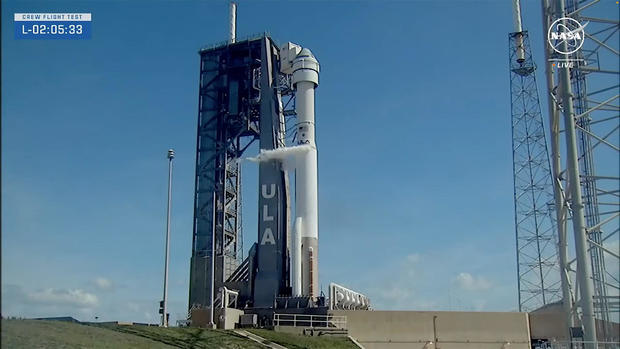
Image (Credit): The Starliner awaiting launch, should it ever happen. (NASA)
Nothing to report about the Boeing Starliner, again. This time it was a computer glitch that stopped the countdown earlier today only a few minutes before the planned launch.
While a launch tomorrow was initially proposed, Boeing stating:
NASA, Boeing, and ULA (United Launch Alliance) are forgoing a Starliner Crew Flight Test launch attempt Sunday, June 2, to give the team additional time to assess a ground support equipment issue at Cape Canaveral Space Force Station’s Space Launch Complex-41 in Florida.
The launch of the crewed capsule towards the International Space Station will be delayed until at least the middle of next week.
After years of waiting, I guess we should not be surprised. However, we can be disappointed. Boeing has a long list of accomplishments in the space industry. We are at the edge of the next great space race. This is no time to stumble.
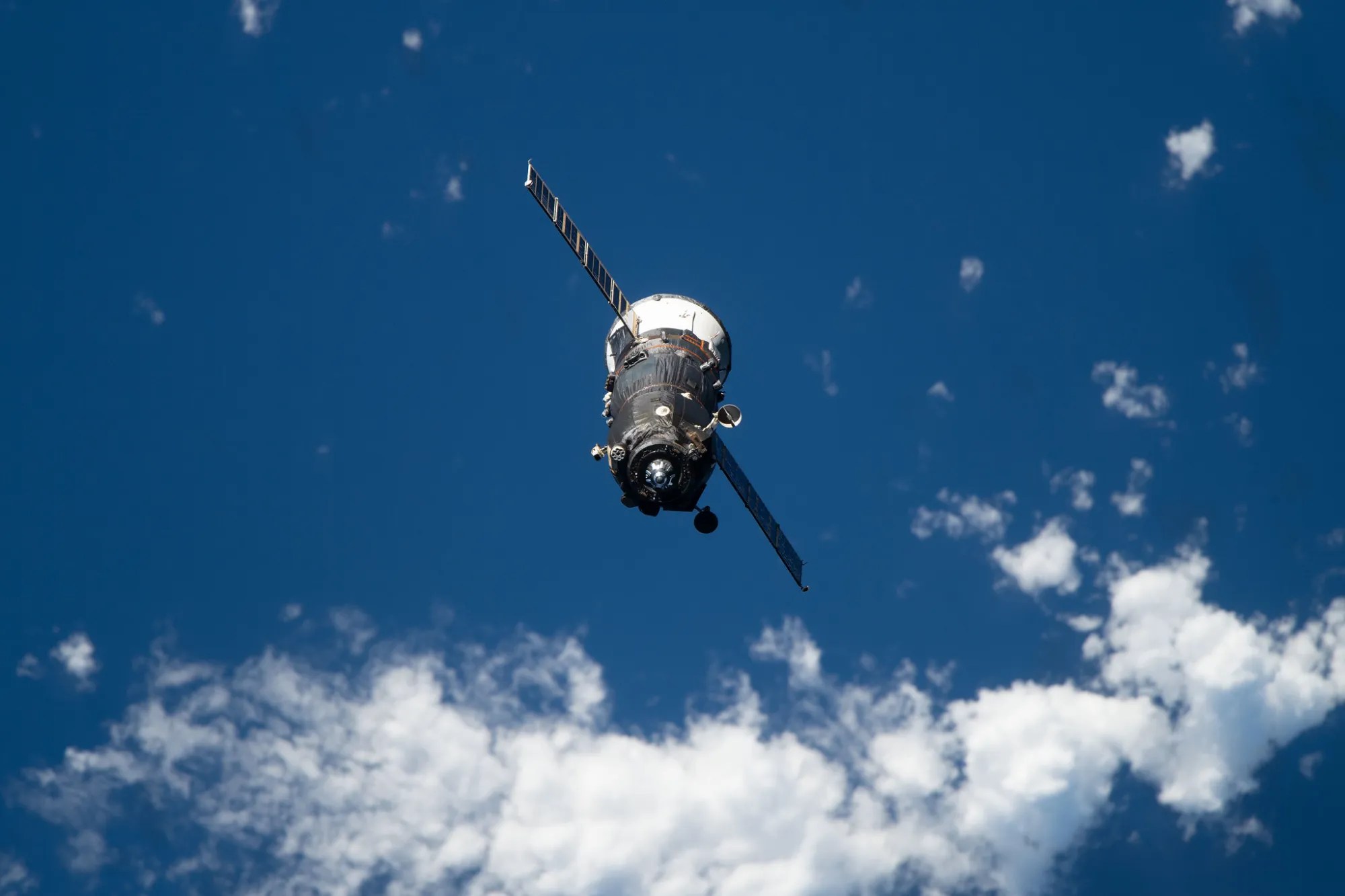
Image (Credit): The Progress 85 cargo craft after undocking from International Space Station on Feb. 12. (NASA)
Yesterday saw another successful resupply launch towards the International Space Station (ISS). The Russian Progress 88 uncrewed spacecraft attached to a Soyuz rocket left Kazakhstan early Thursday morning. It will dock with the ISS Saturday morning (which you can watch on NASA TV).
These missions have become so routine that you generally see few if any stories about such missions. That is a sign of an efficient system. The residents on the ISS like boring efficiency as long as it gets them the supplies they need.
Stay tuned for a little more drama when the Boeing Starliner heads to the ISS tomorrow.
Image (Credit): The Dorado group in the southern hemisphere. (ESA/Euclid/Euclid Consortium/NASA)
This week’s image was captured by the European Space Agency’s (ESA) Euclid space telescope. Launched last summer to create a 3D map of the universe, it has been pretty busy sending back some impressive images. This particular image shows the Dorado group of galaxies, one of the richest group of galaxies in the southern hemisphere. The grouping of approximately 70 galaxies is about 62 million light-years away.