Pic of the Week: The New Glenn Rocket Booster Returns

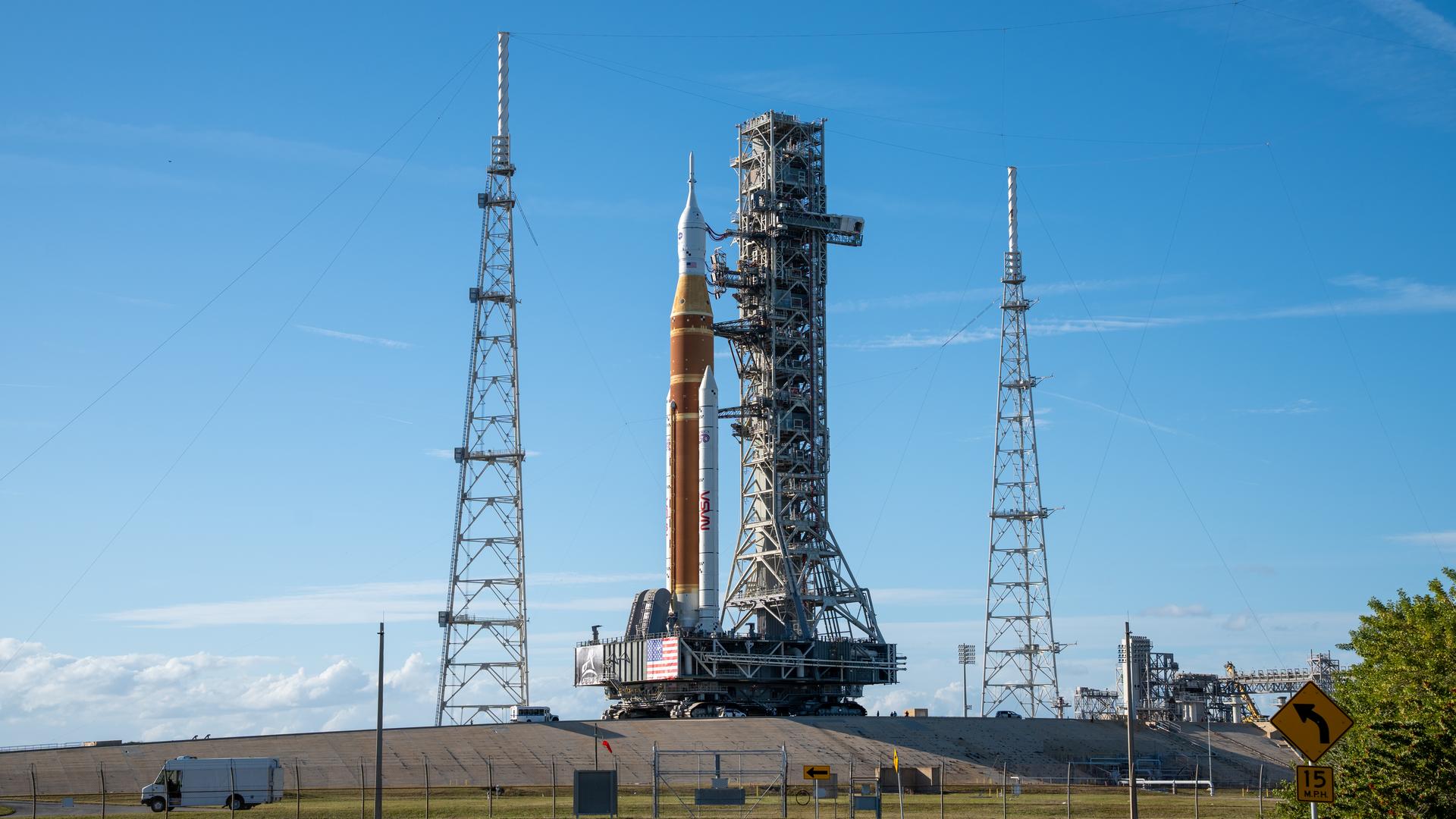
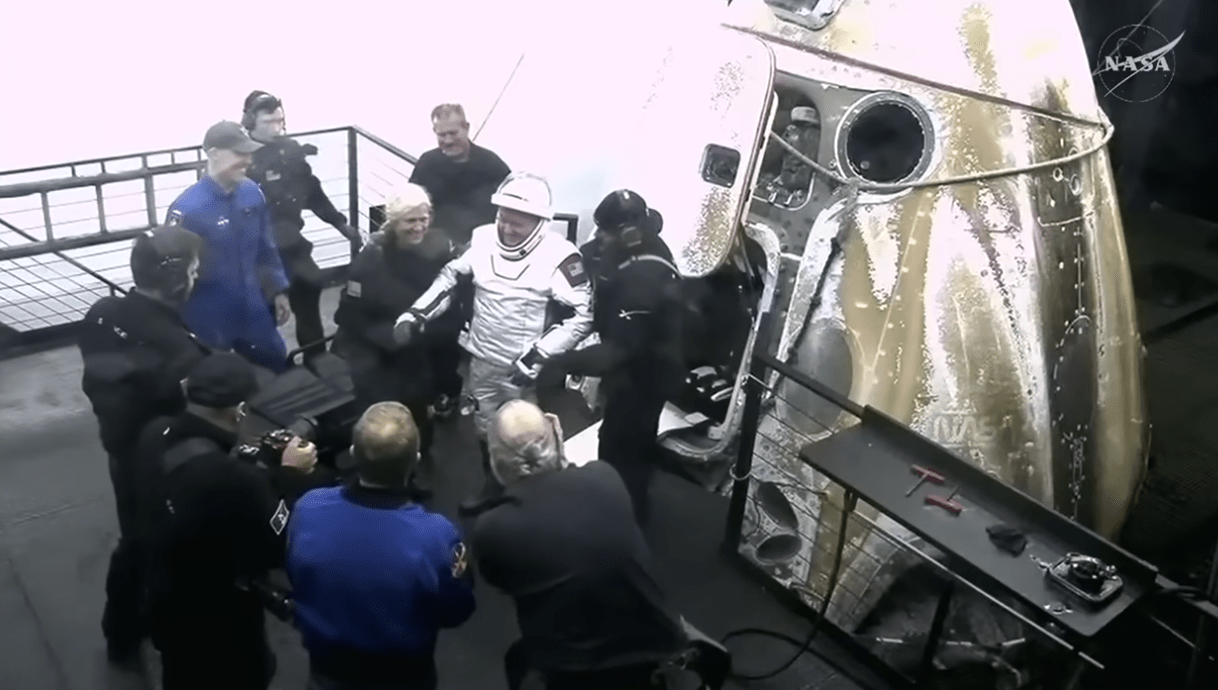
Image (Credit): The New Glenn booster after it landed on a platform in the Atlantic Ocean. (Blue Origin)

Today’s image comes from Blue Origin, which successfully completed it second launch of it New Glenn rockets, sending two NASA Martian probes into orbit. The image shows the reusable rocket booster right after it landed on a platform in the Atlantic Ocean.

Acting NASA Administrator Sean Duffy stated:

Congratulations to Blue Origin, Rocket Lab, UC Berkeley, and all of our partners on the successful launch of ESCAPADE…This heliophysics mission will help reveal how Mars became a desert planet, and how solar eruptions affect the Martian surface. Every launch of New Glenn provides data that will be essential when we launch MK-1 through Artemis. All of this information will be critical to protect future NASA explorers and invaluable as we evaluate how to deliver on President Trump’s vision of planting the Stars and Stripes on Mars.

SpaceX now has another competitor for military and space missions, which is good for everyone (including SpaceX since it will keep them focused).

Pic of the Week: Pismis 24

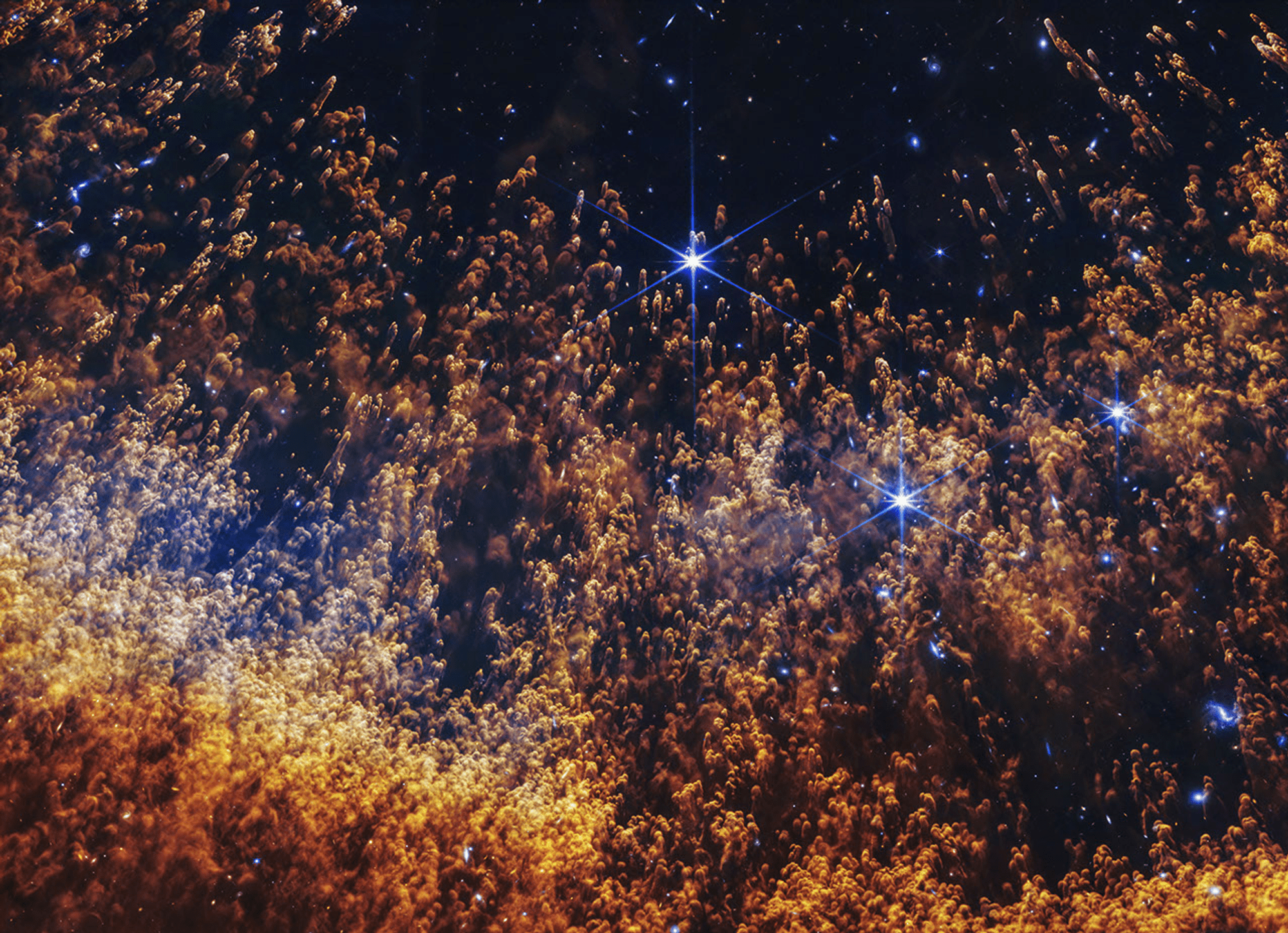
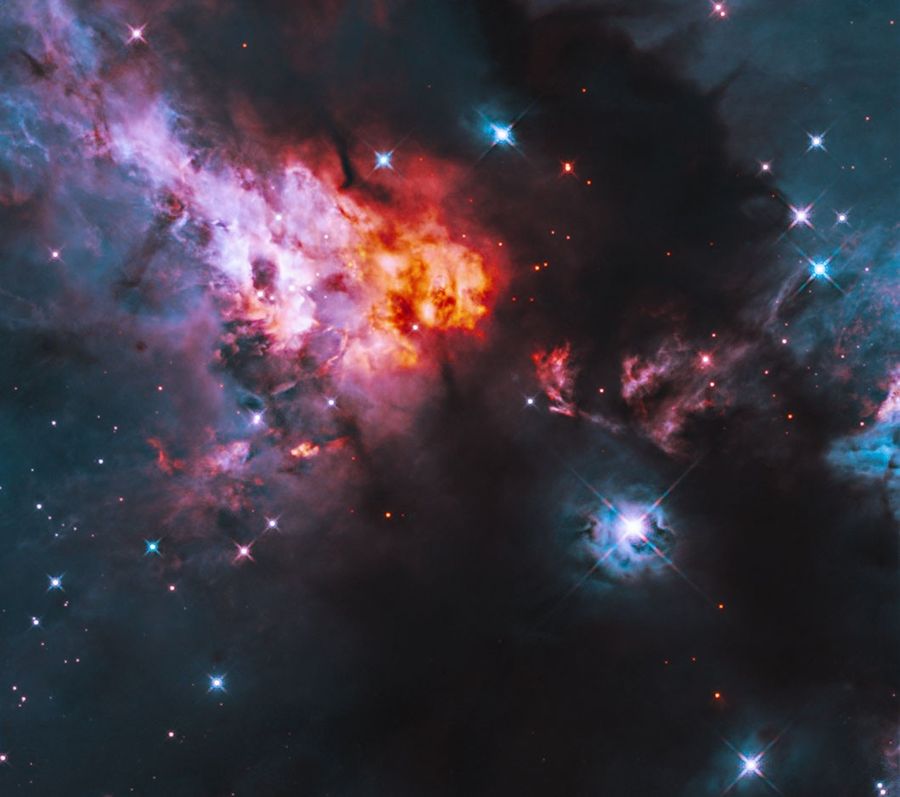
Image (Credit): The Pismis 24 star cluster as captured by the JWST. (NASA, ESA, CSA, and STScI, A. Pagan (STScI))

This week’s amazingly vibrant image was captured by the James Webb Space Telescope (JWST). It shows a young star cluster, called Pismis 24, which is approximately 5,500 light-years away.

Here is the rest of the story from the European Space Agency (ESA):

What appears to be a craggy, starlit mountaintop kissed by wispy clouds is actually a cosmic dust-scape being eaten away by the blistering winds and radiation of nearby, massive, infant stars. Home to a vibrant stellar nursery and one of the closest sites of massive star birth, Pismis 24 provides rare insight into large and massive stars. This region is one of the best places to explore the properties of hot young stars and how they evolve.

Pic of the Week: Dead Comet From Halloween Past

Image (Credit): Asteroid 2015 TB145 as captured by the Arecibo Observatory in Puerto Rico on October 30, 2015. (NAIC-Arecibo/NSF)

This spooky image of a dead comet was captured 10 years ago, but it still serves this purpose this time of year. It passed the Earth on Halloween evening that year at a distance of about 302,000 miles.

Here is more from NASA’s Jet Propulsion Laboratory:

Scientists observing asteroid 2015 TB145 with NASA’s Infrared Telescope Facility (IRTF) on Mauna Kea, Hawaii, have determined that the celestial object is more than likely a dead comet that has shed its volatiles after numerous passes around the sun.

The belated comet has also been observed by optical and radar observatories around the world, providing even more data, including our first close-up views of its surface…

The first radar images of the dead comet were generated by the National Science Foundation’s 305-meter (1,000-foot) Arecibo Observatory in Puerto Rico. The radar images from Arecibo indicate the object is spherical in shape and approximately 2,000 feet (600 meters) in diameter and completes a rotation about once every five hours.

“The IRTF data may indicate that the object might be a dead comet, but in the Arecibo images it appears to have donned a skull costume for its Halloween flyby,” said Kelly Fast, IRTF program scientist at NASA Headquarters and acting program manager for NASA’s NEO Observations Program.

Pic of the Week: Cat’s Paw Nebula

Image (Credit): NASA’s JWST poster showing the Cat’s Paw Nebula. (NASA, ESA, CSA, STScI; Designer: Elizabeth Wheatley (STScI))

This week’s image highlights a NASA poster that you can download (in a variety of versions). It shows the Cat’s Paw Nebula (NGC 6334) as captured by the James Webb Space Telescope (JWST).

Here is a short summary of what you are seeing from NASA:

Located approximately 4,000 light-years away in the constellation Scorpius, the Cat’s Paw Nebula offers scientists the opportunity to study the turbulent cloud-to-star process in great detail. Webb’s observation of the nebula in near-infrared light builds upon previous studies by NASA’s Hubble and retired Spitzer Space Telescope in visible- and infrared-light, respectively.

With its sharp resolution, Webb shows never-before-seen structural details and features: Massive young stars are carving away at nearby gas and dust, while their bright starlight is producing a bright nebulous glow represented in blue. It’s a temporary scene where the disruptive young stars, with their relatively short lives and luminosity, have a brief but important role in the region’s larger story. As a consequence of these massive stars’ lively behavior, the local star formation process will eventually come to a stop.

For more details and videos, visits the NASA page on the Cat’s Paw Nebula, which helps to commemorate the third anniversary of the JWST.

Pic of the Week: The Sculptor Galaxy

Image (Credit): The Sculptor Galaxy. (ESO/VLT)

This week’s image is from the European Southern Observatory’s (ESO) Very Large Telescope (VLT) in northern Chile. It shows the Sculptor Galaxy, which is about 11 million light-years away.

Here is a description of what you are seeing:

This image shows a detailed, thousand-colour image of the Sculptor Galaxy captured with the MUSE instrument at ESO’s Very Large Telescope (VLT). Regions of pink light are spread throughout this whole galactic snapshot, which come from ionised hydrogen in star-forming regions. These areas have been overlaid on a map of already formed stars in Sculptor to create the mix of pinks and blues seen here...

To create this map of the Sculptor Galaxy, which is 11 million light-years away and is also known as NGC 253, the researchers observed it for over 50 hours with the Multi Unit Spectroscopic Explorer (MUSE) instrument on ESO’s VLT. The team had to stitch together over 100 exposures to cover an area of the galaxy about 65 000 light-years wide.

According to co-author Kathryn Kreckel from Heidelberg University, Germany, this makes the map a potent tool: “We can zoom in to study individual regions where stars form at nearly the scale of individual stars, but we can also zoom out to study the galaxy as a whole.”