Pic of the Week: Exposed Cranium Nebula

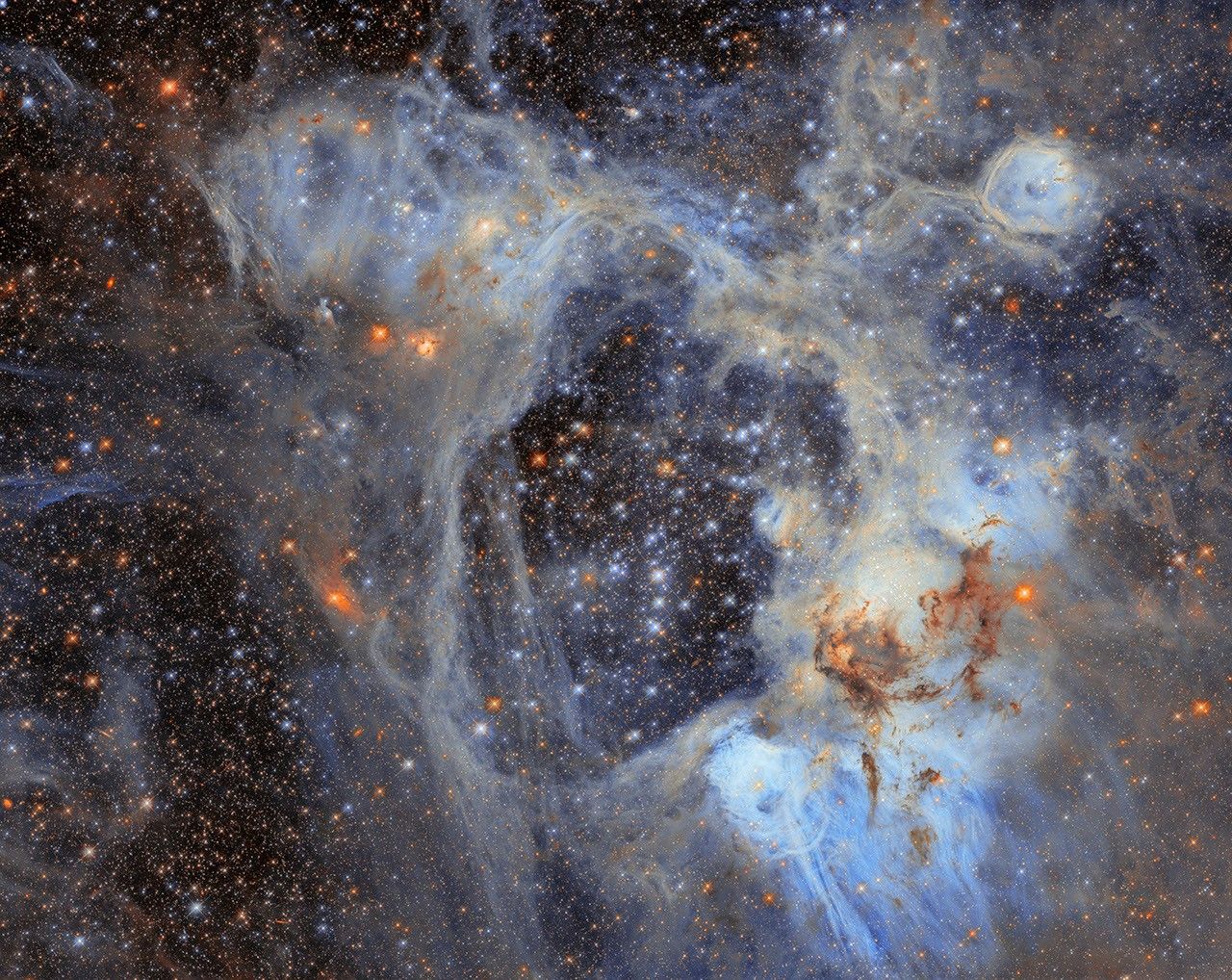
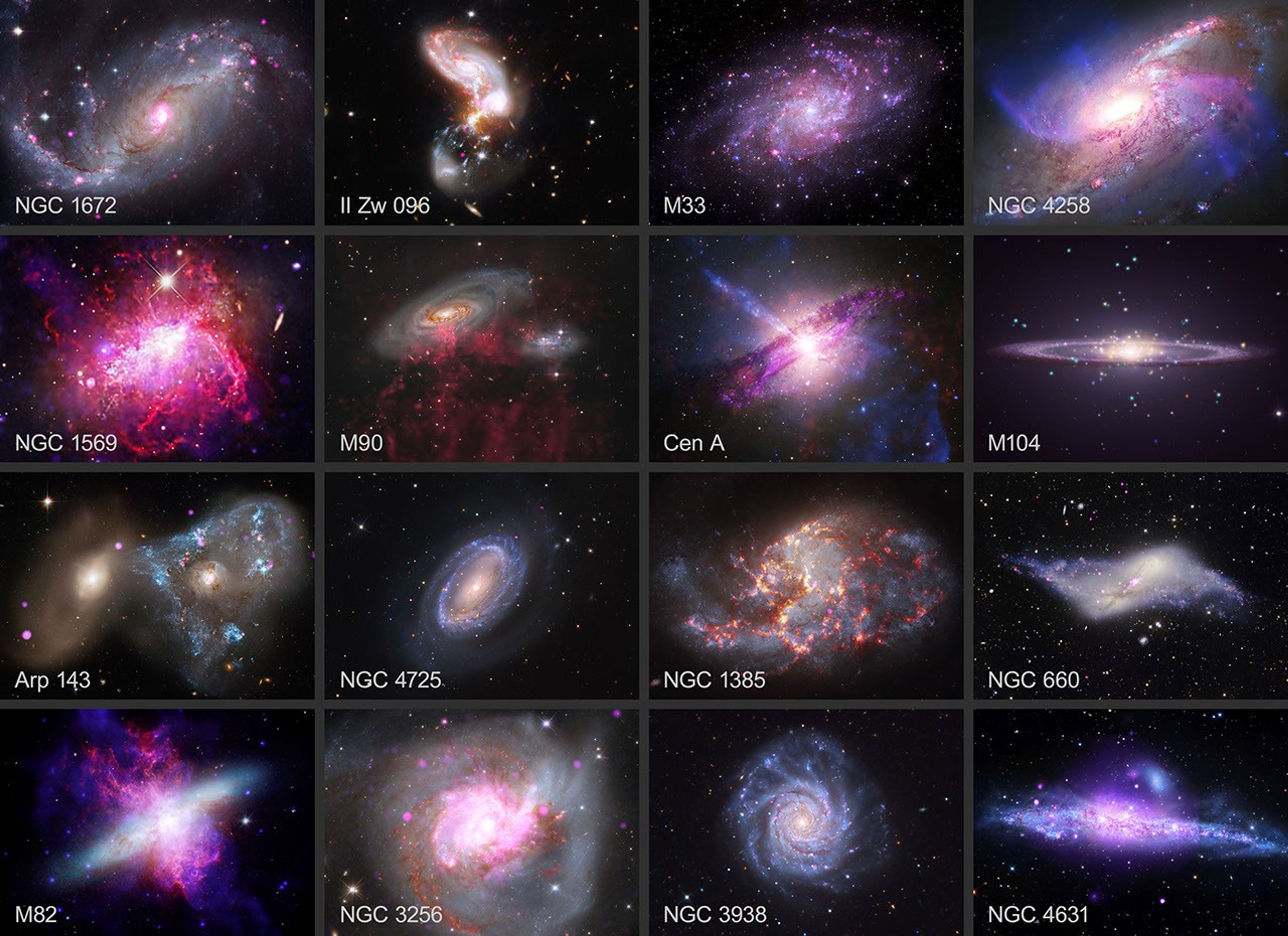
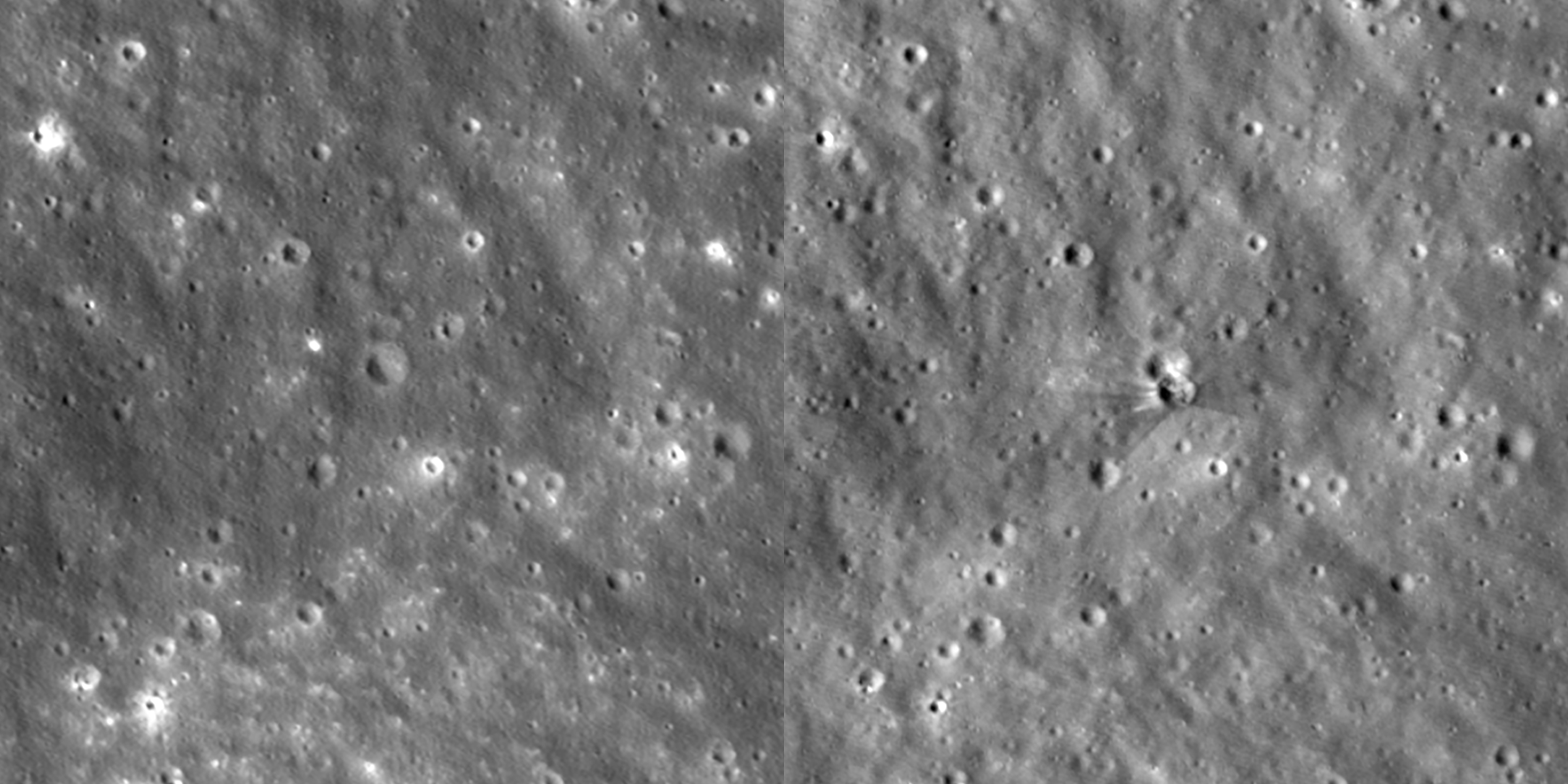
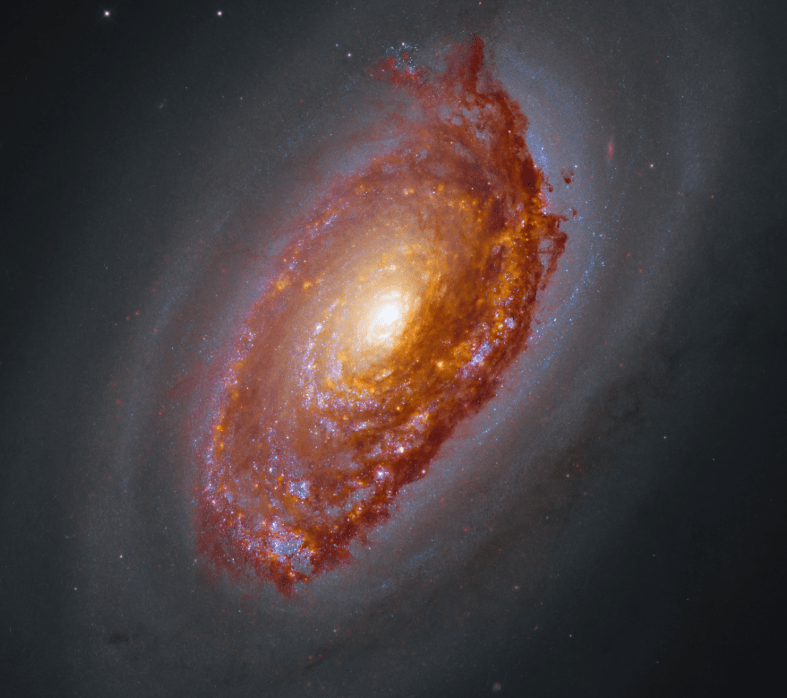
Image (Credit): Side-by-side view of the Cranium nebula using two instruments on the JWST. You can see more stars and galaxies shining through with the NIRCam’s view, but you get a nice cosmic dust glows with the MIRI’s mid-infrared. (NASA, ESA, CSA, STScI; Image Processing: Joseph DePasquale (STScI))

This week’s images come from the James Webb Space Telescope (JWST). Each image shows a different view of the Cranium nebula depending on the JWST instrument being used. It is also called the “Exposed Cranium” Nebula because it looks like a brain in a see-through skull.

Here is a little more from NASA on what you are seeing above:

The nebula appears to have distinct regions that capture different phases of its evolution — an outer shell of gas that was blown off first and consists mostly of hydrogen, and an inner cloud with more structure that contains a mix of different gases. Both Webb’s NIRCam (Near-Infrared Camera) and MIRI (Mid-Infrared Instrument) show a distinctive dark lane running vertically through the middle of the nebula that defines its brain-like look of left and right hemispheres. Webb’s resolution shows that this lane could be related to an outburst or outflow from the central star, which typically occurs as twin jets burst out in opposite directions. Evidence for this is particularly notable at the top of the nebula in Webb’s MIRI image, where it looks like the inner gas is being ejected outward.

Pic of the Week: Blue Origin Moon Landing

The image above is from a NASA Office of the Inspector General audit report on the Human Landing System. It shows the complexity of the Blue Origin process for getting a crew on the Moon. It is complex, and has one more step than the SpaceX plan, which already seems close to impossible.

This is how the audit report explained the graphic you see above:

For the Artemis V mission, Blue Origin is developing its Blue Moon lander. Standing 52 feet tall, Blue Moon will launch on Blue Origin’s reusable New Glenn heavy-lift rocket from Cape Canaveral Space Force Station in Florida. The lander will utilize Blue Origin’s BE-7 engines, which are fueled by liquid oxygen and liquid hydrogen. Prior to the Artemis V mission, Blue Origin will launch a transporter to low Earth orbit, essentially serving as a propellant depot. From there a fleet of refuelers will launch, rendezvous with the transporter, and transfer propellant. The Blue Moon lander will then launch to low Earth orbit to receive fuel from both a refueler and the transporter before traveling to NRHO to dock with Gateway for the Lunar Orbit Checkout Review. The transporter, left in low Earth orbit, will receive additional propellant there before traveling to a higher “stairstep” orbit for final propellant aggregation.14 Once the transporter has traveled to NRHO, Blue Moon will undock with Gateway to receive its final propellant transfer and then dock with Gateway a second time. Next, Orion will deliver the astronauts to Gateway, who will then transfer to Blue Moon for transit to the lunar surface and back to the station. At the end of the mission, Orion will return the astronauts to Earth and the lander will transition to another orbit for disposal or later reuse.

Pic of the Week: Martian Highlands

Image (Credit): (ESA/DLR/FU Berlin)

This week’s image comes from the the European Space Agency (ESA). Captured by ESA’s orbiting Mars Express, you are looking at a portion of the crater-covered Arabia Terra, which is a large plain in Mars’s ancient highlands. You can read more about this Martian region by visiting this site.

Here is the ESA’s description of what you are viewing:

A high‑resolution overhead view of a rocky, desert‑like landscape on Mars. The surface is mostly reddish‑brown with patches of darker blue‑grey tones. Many circular impact craters of different sizes are scattered across the scene, some with raised rims and shadowed interiors. Subtle ridges, eroded valleys, and textured terrain patterns run diagonally through the image, giving a sense of ancient geological activity. The overall impression is of a dry, rugged, and heavily cratered Martian surface.

Pic of the Week: Annular Solar Eclipse Over Antarctica

Image (Credit): The’ solar eclipse as seen from the Concordia research station in Antarctica on February 17, 2026. (ESA/IPEV/PNRA-A. Traverso)

This week’s image comes from the European Space Agency (ESA). It shows the “Ring of Fire” solar eclipse earlier this month from Antarctica. It was captured over the French and Italian Concordia research station.

Here is more from ESA on this image and the Concordia research station:

Peaking at 19:47 local time (12:47 CET), the Moon passed directly in front of the Sun’s centre, leaving only a thin, glowing annulus of sunlight visible. Astronomers call this moment annularity, and it lasted just two minutes, though the full partial eclipse spanned around two hours…Concordia sits 1100 km inland at an altitude of 3200 m. It is currently summer at the station: today, the Sun stayed above the horizon for nearly 20 hours, with temperatures reaching a comparatively mild –29 °C. But soon the light will fade: from May to August, the Sun will not rise at all, plunging the station into four months of continuous darkness where temperatures can fall below –80 °C. During this polar winter, the crew must live in complete isolation and full autonomy.

Pic of the Week: A Protostar in the Cepheus A Region

Image (Credit): The Cepheus A region, including a protostar causing much of this region’s illumination. (NASA, ESA, and R. Fedriani (Instituto de Astrofisica de Andalucia); Processing: Gladys Kober (NASA/Catholic University of America))

This week’s image was taken by the Hubble Space Telescope. It shows the star-forming region Cepheus A in the constellation of Cepheus. This region is about 2,400 light-years away.

Here is more from NASA about this region:

The high-mass star-forming region Cepheus A hosts a collection of baby stars, including one large and luminous protostar, which accounts for about half of the region’s brightness. While much of the region is shrouded in opaque dust, light from hidden stars breaks through outflow cavities to illuminate and energize areas of gas and dust, creating pink and white nebulae. The pink area is an HII region, where the intense ultraviolet radiation of the nearby stars has converted the surrounding clouds of gas into glowing, ionized hydrogen.