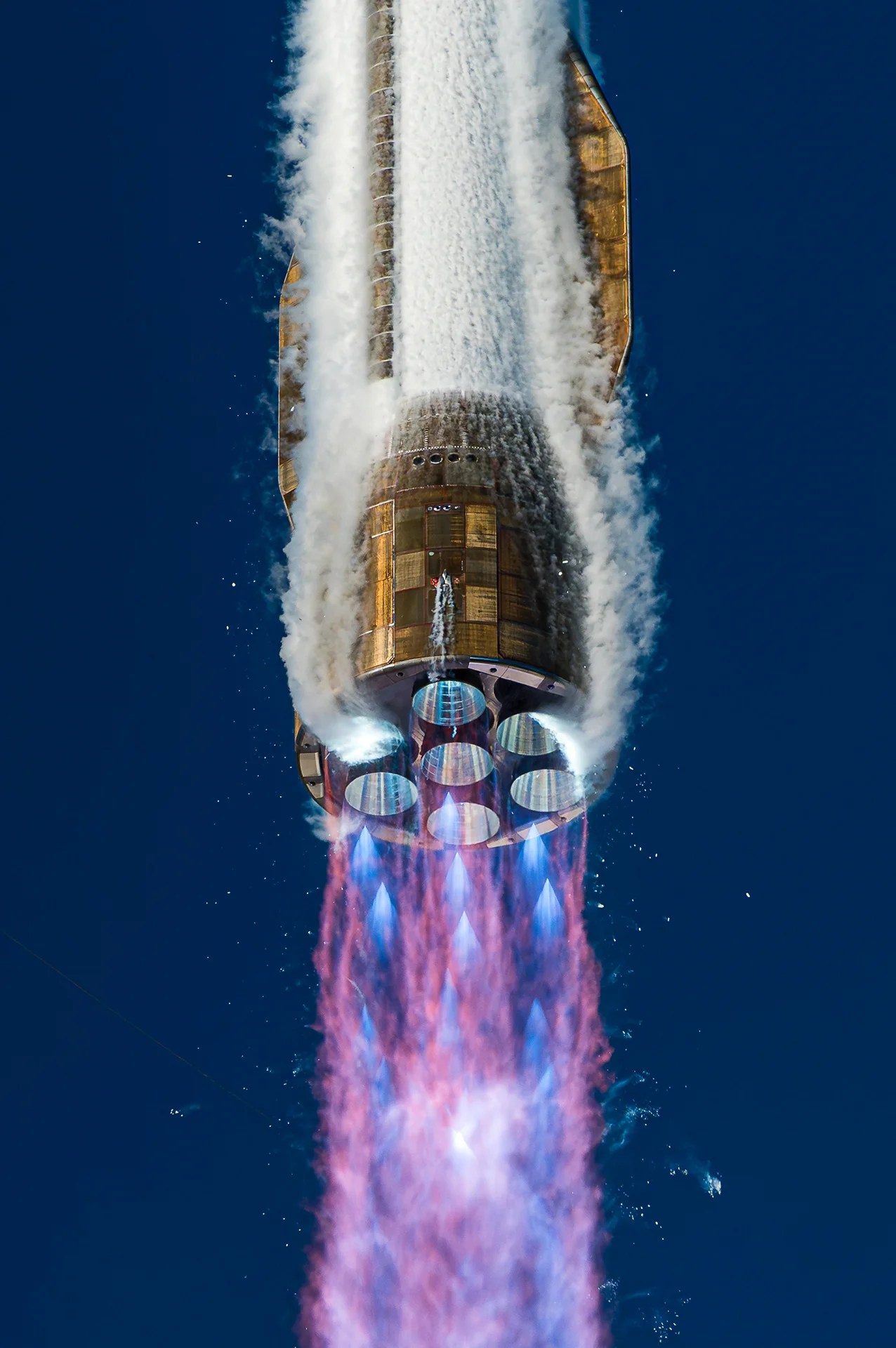
Image (Credit): Blue Origin’s New Glenn rocket as it launched from Launch Complex 36 at Cape Canaveral Space Force Station in Florida on November 13, 2025. (Blue Origin)
This week’s image comes from Scientific American magazine’s best space photos of 2025. It shows Blue Origin’s New Glenn rocket lifting off from Launch Complex 36 at Cape Canaveral Space Force Station in Florida on November 13, 2025. It was carrying NASA’s twin Escape and Plasma Acceleration and Dynamics Explorers (ESCAPADE) spacecraft, which are destined for Mars. The two identical spacecraft will investigate how the solar wind interacts with Mars’ magnetic environment and how this interaction drives the planet’s atmospheric escape.
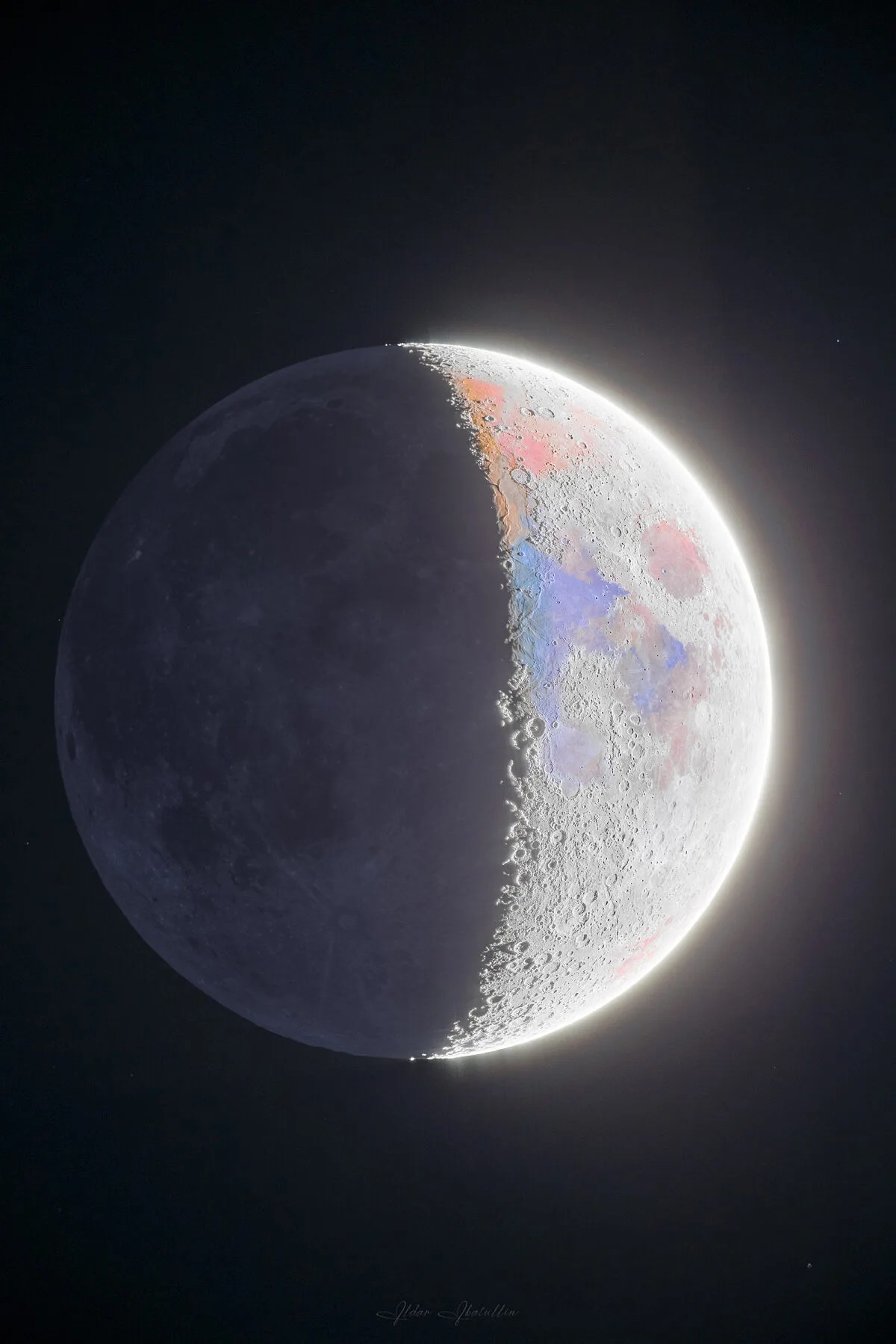
Image (Credit): Ildar Ibotullin’s “The Moon from Kyiv.” (Planetary Society)
This week’s image is from the Planetary Society’s magazine called ThePlanetary Report, which had a series of great photos in an article titled “The Year in Pictures.” This image is from 19-year-old student and amateur astrophotographer Ildar Ibatullin who lives in Kyiv, Ukraine. It is titled “The Moon from Kyiv.”
Here is the story behind the image taken from the website:
Ildar captured the photo in the midst of an air raid alert, an event that has become common in Kyiv since Russia’s invasion of Ukraine. “Even as air raid sirens sounded throughout the city,” Ildar told The Planetary Society, “I was able to document the beauty above us, creating a powerful contrast between the realities of war on the ground and the unchanging celestial landscape. I believe it demonstrates how astronomy and astrophotography can provide moments of wonder and perspective even in the most challenging circumstances.”
Image (Credit): “Moonrise Perfection over the Dolomites” by Fabian Dalpiaz. (Royal Observatory Greenwich)
This week’s image is one of the winning photographs in the Royal Observatory Greenwich’s Astronomy Photographer of the Year 2025 contest. The photograph, ranked as highly commended under Skyscapes, was submitted by Fabian Dalpiaz and is titled “Moonrise Perfection over the Dolomites.” It was taken on November 15, 2024 in Santuario di Pietralba, Deutschnofen, South Tyrol, Italy.
This is a perfectly planned shot of the Full Moon rising above the rugged peaks of the Dolomites. With no clouds in sight and in flawless conditions, the golden light of sunset bathes the mountains, creating harmony between Earth and sky. All it takes is being in the right place at the right time and pressing the shutter button.
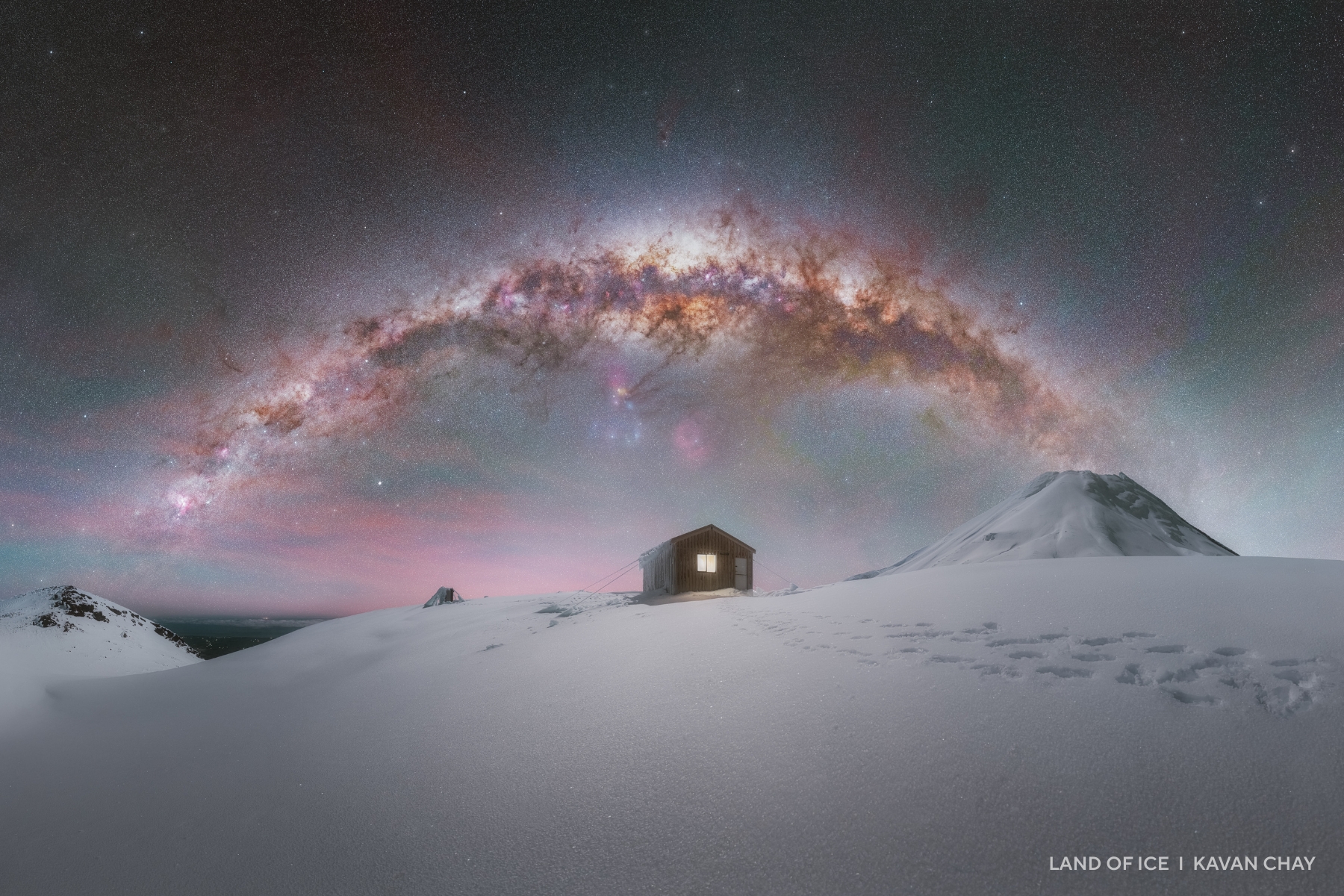
Image (Credit): “Land of Ice” by Kavan Chay. (darksky.org/)
This week’s image is from the Capture the Dark 2025 contest sponsored by Dark Sky International. The third place winning photo is “Land of Ice” by Kavan Chay. The photo was taken in Te Papa-Kura-o-Taranaki, New Zealand.
The 2025 contest had over 2,200 entries from over 22 countries. You can see the other winning images here.
Stay tuned for the 2026 contest, which has yet to be announced.



 Our Awesome Universe