Podcast: Getting to Mars and Staying Alive

If you are interested in the future of humanity on Mars, you may want to tune into Red Planet Radio from The Mars Society. A recent podcast, as well as an upcoming podcast, highlight some things to consider before you pack your bags.

Back on June 15, in the podcast titled “Dr. Antonio Paris, Astrophysicist, Author “Mars: Your Personal 3-D Journey!,” we heard from Dr. Antonio Paris, who is the Chief Scientist at the Center for Planetary Science as well as an Assistant Professor of Astronomy and Astrophysics at St. Petersburg College, Florida. In this podcast, Dr. Paris discussed the difficulties of traveling in space as well as the types of structures one might need to build to live safely on Mars. He also discussed his recent book, Mar: Your Personal 3D Journey to the Red Planet.

Tomorrow (July 2) another podcast episode will include a three-person NASA panel discussing topics such as general Mars exploration, strategies for sample returns from the Red Planet, and the architecture supporting Moon to Mars missions.

The three panelists are:

  • Nujoud Merancy: Deputy Associate Administrator, Strategy and Architecture Office, in the Exploration Systems Development Mission Directorate for NASA Headquarters.
  • Eric Ianson: Deputy Director, Planetary Science Division, and Director, Mars Exploration Program and Radioisotope Power Systems Program at NASA Headquarters. 
  • Dr. Lindsay Hays: Program Scientist in the Planetary Science Division at NASA Headquarters and Deputy Program Scientist for the Mars Sample Return Mission. 

I enjoyed the first episode and look forward to tomorrow’s discussion.

And don’t forget that from August 8-11 The Mars Society will hold its 27th Annual International Mars Society Convention at the University of Washington in Seattle, Washington. You can see videos from prior conventions here.

Credit: The Center for Planetary Science, Inc.

Podcast: A Mixed Week for Musk

Image (Credit): Scene from a Tesla crash. (fox2detroit.com)

While things appear to be going Elon Musk’s way with his ridiculous Tesla pay package, The Wall Street Journal had another story this week that discussed his self-serving management style that should not merit reward. The article, “Elon Musk’s Boundary-Blurring Relationships With Women at SpaceX,” highlights some pretty horrible behavior for a man that then and now believes he is above the law (and all codes of decency).

If you cannot read the Journal article, you can find summaries of the story elsewhere or listen to the Wall Street Journal podcast called The Journal. The podcast is titled “Elon Musk’s Unusual Relationships With Women at SpaceX.”

It is scary that the US space program is so dependent on the behavior of this man, who has already been part of prior Wall Street Journal articles about his drug use.

We need to build greater depth in our space program, be it Blue Origin, Boeing, Northrop Grumman, Rocket Lab, or others. The dream of a stronger space program could die if we tie too much to one man.

Podcast: Crash Course Pods – The Universe

If you are looking for another podcast on astronomy with some deep ideas, then you will want to tune into Crash Course Pods: The Universe. It’s a discussion between author John Green (Looking for Alaska, The Fault in Our Stars) and Dr. Katie Mack, a theoretical astrophysicist and author of The End of Everything (Astrophysically Speaking). It is not your usual combination for such a show, but it works.

Only one episode has been release to date, but it is enough to keep your head spinning. It may also merit another listen just to be certain you heard what you think you heard. The topic is the beginning of the universe, which is not the straightforward tale I have been hearing for the past number of years. The Big Bang is much more complex, and her statement about hydrogen goes beyond that of Carl Sagan, who said we are all “Star Stuff.” She notes that we are still mostly made of hydrogen atoms that were created in the first two minutes of the universe, so a lot of us precedes the stars.

Dr. Mack noted that her students sometimes find it difficult to follow her stories, so this is your warning that you are jumping into the deep end with this podcast. The only saving grace is John Green’s questions and humor to keep us afloat.

Just try it our for yourself. I think you will want to stick around for the second episode.

Credit: Scribner

Podcast: Chinwag with Paul Giamatti

Credit: Treefort Media

If you saw the recent film The Holdovers, you witnessed Paul Giamatti at the top of his game as a private school instructor (which earned him an Oscar nomination).

But if you would like to learn about another side of Mr. Giamatti, then you may want to check out his podcast with Stephen Asma called Chinwag. It is by no means a science or an astronomy podcast, yet it is a fun collection of conversations that often touch on related topics and guests, be it topics such as UFOs and the Drake Equation, or guests including astronaut Mike Massimino, writer Ted Chiang, and actor William Shatner.

Yes, there is plenty here about the occult and mind-numbing drugs, but I recommend you sift though some of this to find the gems. Below are a few of the episodes you may want to try, but don’t expect William Shatner to talk about Captain Kirk and space travel. He is too busy sharing stories about spiritualism, drugs, and his early acting career.

Chinwag Mailbag: The Drake Equation

Paul and Stephen dig into our Chinwag mailbag for this SETI-inspired question (that’s Search for Extraterrestrial Intelligence to any novice listeners). The Drake Equation is explained and let’s just say there’s A LOT of math involved.

It’s been 60+ years since last estimates were made on the odds of finding intelligent life in the Milky Way, and Chinwag listener Rick B. wants to know, how long could a civilization broadcast its presence through technology, and what current factors might affect a civilization’s ability to remain detectable? Is there a ticking clock to our existence, and what’s Twinkie-lung got to do with all this?

A Different Kind of Ted (Chiang) Talk

In this Chinwag, Paul and Stephen are thrilled to be subject to fascinating thought experiments by award-winning fiction writer Ted Chiang. Up for the discussion?

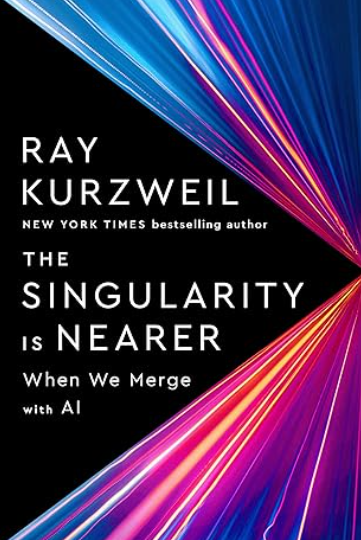
The difference between fact and fiction when it comes to the existence of alien life, and whether Paul is indeed an assassin because he played one in an action film Ted once saw. Imaginations are running amok and people can’t differentiate between what’s real and what isn’t. Is social media to blame or was The National Enquirer the social media of yester-year? Online echo chambers and the dangerous speed of information may be a culprit for conspiracy theories. And is belief in aliens and monsters in pop culture a direct response to higher anxiety levels and an externalization of neuroses? Then, what is singularity and was it born with the invention of the wheel?

Paul and Stephen are happy to learn that Ted’s not afraid that AI will take over, but the natural desire to do less work may lead to more romances between humans and AI robots. So buckle up and plug in your lady-cyborg and get ready for an all new fascinating Chinwag!

Mooning with Mike Massimino

Paul and Stephen are obsessed with UFOs and life beyond earth–so who better to add to the conversation than a guy who’s been to space twice?

This week, our intrepid Chinwaggers are joined by former NASA astronaut Mike Massimino, a man who decided that a fear of heights would be best overcome by a trip to space. In this week’s classified file: space toilets, robot arms, and why there should never be more than one comedian per space shuttle.

Tripping with William Shatner

Stephen Asma and Paul Giamatti are giddy to speak with lifelong hero and Star Trek alum William Shatner on tequila tastings, space travel, bum drug trips, holding on to your inner child and that time he beat up an Australian Olympic swimmer on stage.

Podcast: Discussing the XPrize and More

A recent episode of the StarTalk podcast, “Incentivizing the Future with Peter Diamandis,” provides an interesting tale about Mr. Diamanis’s early efforts to spur space inventions through the XPRIZE Foundation as well as his current efforts to spur innovation in other areas, such as healthcare.

It was a good reminder about the start of Virgin Galactic, which began after Burt Rutan’s experimental spaceplane SpaceShipOne won the Ansari X Prize in 2004. One can quickly forget that some of the big names in new industries were piggybacking on the earlier achievements of others, such as Elon Musk buying a pre-existing Tesla company.

If you go to the XPrize Foundation page, you will see a variety of competitions underway. The latest space-related contest is the $30 million Google Lunar XPRIZE, which was

…created with two goals in mind. To spur affordable access to the moon and give space entrepreneurs a legitimate platform to develop long-term business models around lunar transportation and to inspire the next generation of scientists, engineers, space explorers and adventurers to enter the STEM fields.

As Mr. Diamandis was encouraged by contests from early last century, let’s hope other innovators and their supporters continue to carry the torch beyond this century to see what human ingenuity can create when challenged.