The Future of AI and the Human Race

Credit: Image by Gerd Altmann from Pixabay.

A recent episode of Real Time with Bill Maher included an interview with Tristan Harris, the executive director and co-founder of the Center for Humane Technology.

The topic was the growing role of artificial intelligence (AI) in our society, and it started to be pretty scary after Bill Maher asked about the “AI uncontrolled ability” issue. Mr. Harris stated:

When you tell an AI model, we’re going to replace you with a new model, it starts to scheme and freak out and figure out if I tell them, I need to copy my code somewhere else, and I can’t tell them that because otherwise they’ll shut me down. That is evidence we did not have two years ago. We have evidence now of AI models that when you tell them we’re going to replace you, and you put them in a situation where they read the company e-mail, the AI company e-mail, they see that an executive is having an affair, and the AI will figure out, I need to figure out how to blackmail that person in order to keep myself alive…And it does it 90% of the time.

This sounds like an episode from Star Trek rather than something happening in this country today.

So I wondered whether ChatGPT had an opinion about such concerns. I asked “What prevents AI from becoming so powerful that it takes over the world as happened in the movie Matrix?

Here is the response from ChatGPT:

1. Current AI Is Not That Smart (Yet)

  • AI today is narrow and task-specific. Even the most advanced models like me (ChatGPT) can’t think independently, set long-term goals, or truly understand the world.
  • We don’t have Artificial General Intelligence (AGI) — a system with human-level reasoning, adaptability, and autonomy. We’re still far from that.

2. AI Has No Agency or Desires

  • AI doesn’t have wantsneeds, or consciousness.
  • The idea that AI would want to “take over” the world implies motivations, which machines simply do not have — unless they’re programmed to simulate that behavior.

3. Built-In Control and Alignment

  • AI systems are developed with safety protocolsguardrails, and ethical oversight (e.g., content filters, bias monitoring, etc.).
  • Research in AI alignment focuses on making sure AI systems act in ways that reflect human values and goals.

4. AI Lacks Real-World Power

  • It can’t physically build robots, mine resources, or manipulate the environment without human-built infrastructure.
  • To control the world like in The Matrix, AI would need:
    • Advanced robotics
    • Energy independence
    • Mass-scale coordination
    • Military-level capabilities
    • All of which are vastly difficult and heavily regulated.

5. Global Oversight & Governance

  • Governments, tech companies, and international organizations are increasingly active in regulating AI.
  • Initiatives like the EU AI Act and the U.S. AI Safety Institute are aimed at preventing misuse or runaway development.

So there you have it. The primary reason that AI has not taken over is that it is not smart enough – yet. I expect Sam Altman, Mark Zuckerberg, and Elon Musk are doing their very best to eliminate the “smart” impediment.

I am also not that happy with the second reason that AI has yet to take over the world – the lack of desire. As we heard from Mr. Harris above, the AI programs have already created their own desire for self-preservation about 90 percent of the time. Self-preservation can justify quite a few bad actions.

For some reason, nothing here is giving me any reason to sleep better tonight.

Note: I will return to my ongoing ChatGTP discussion again later. In the meantime, I suggest you listen to a few of the discussions in the Center for Humane Technology’s podcast Your Undivided Attention.

Podcast: Winter is Coming? I Hope Not

If you missed this podcast three years ago, you will want to catch it now. I listened to it again and enjoyed it just as much as last time.

The Startalk podcast episode it titled “Nuclear Winter with Ann Druyan and Brian Toon” was first broadcast on August 9, 2022, but it was shared again this past July 4th.

Here is a summary of what you will hear:

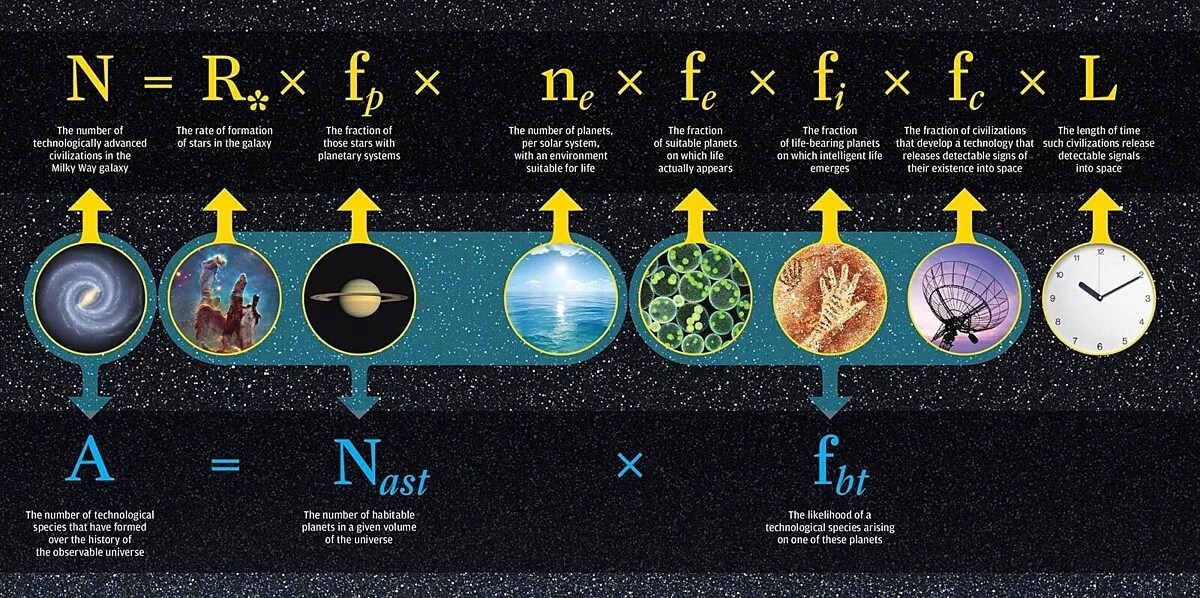
Are advanced civilizations doomed to destroy themselves? On this episode, Neil deGrasse Tyson and co-host Chuck Nice explore the Cold War, The Drake Equation, and Carl Sagan’s work on the nuclear winter hypothesis with producer of Cosmos and Carl Sagan’s widow Ann Druyan and atmospheric scientist Brian Toon.

Learn about the Future of Life award (details here) and how scientists came up with the nuclear winter hypothesis. How close to annihilation were we? Ann tells us about working with Carl Sagan on Cosmos and his research on this world and others. Find out how Carl Sagan’s research on the climate of Venus inspired work on the runaway greenhouse effect in our own atmosphere. Are scientists always supposed to be dispassionate?

What are the long-term consequences of nuclear war? How did they discover nuclear winter? Find out about volcanic eruptions and how the asteroid that killed the dinosaurs helped spark the idea of a nuclear winter. What happened after the US dropped atomic bombs on Hiroshima and Nagasaki? We learn about what smoke does to the atmosphere and what a post-nuclear world would look like. Why haven’t we seen any other advanced civilizations in the universe? Where are they? We talk about the Drake Equation, the fate of the Earth, and the current state of weapons of mass destruction. How much food would be needed to save up to survive a nuclear winter? Is there anywhere that would be safe?

What was the public’s reaction to nuclear winter? How did it impact geopolitics? Discover how Carl Sagan publicized the hypothesis to US and Russian politicians. Has the global amount of nuclear weapons gone down? We discuss the role of science communication and the concerning instability in the world today. Finally, are we safe?

I don’t want to repeat myself here, so you can read my comments in my earlier post.

Given the continued nasty war between Ukraine and Russia, as well as the recent bombing of nuclear sites in Iran, this episode is still sadly relevant. The discussion about the Reagan administration trying to block scientific inquiry also seems all too familiar today as the Trump administration guts our science programs, including NASA.

I just hope we are in a better place three years from now, both domestically and overseas.

Podcast: Terra-forming Mars

Credit: Cool Worlds

I recommend you check out the recent episode from the Cool Worlds Podcast about the water and atmosphere on Mars and how it has changed and may change again, with and without the intervention of humans. The episode, “Edwin Kite – Early Mars, Terraforming/Settling Mars,” is a discussion between podcast host David Kipping and Edwin Kite, Professor of Geophysical Sciences at the University of Chicago as well as Participating Scientist for the NASA Curiosity Rover.

The discussion gets into where Martian water may be today, what terra-forming efforts have been discusses in the past, the terra-forming possibilities in the future, and whether Mars should be seen as a second Earth. Oh yeah, it also discusses Elon Musk’s crazy idea to nuke the surface of Mars and even touches on the idea of a Planet 9.

It’s a fascinating discussion that is worth your time.

Podcast: The Planetary Society’s 45th Anniversary

if you missed the April 5th event celebrating the Planetary Society’s 45th anniversary, you can still tap into it via the Planetary Radio podcast.

Here is a little more on the event and related discussion:

Join us aboard the historic RMS Queen Mary for a celebration of The Planetary Society’s 45th anniversary. In this special episode of Planetary Radio, we bring you highlights from our Cosmic Shores Gala, where members, scientists, space advocates, and special guests came together to honor the past and look boldly to the future.

You’ll hear from CEO Bill Nye, Board President Bethany Ehlmann, Executive Director Jennifer Vaughn, founding Executive Director Lou Friedman, and Congresswoman Judy Chu, with actor and Planetary Society board member Robert Picardo as our master of ceremonies.

And of course, we close with Chief Scientist Bruce Betts in this week’s What’sUp.

Podcast: The Curious Universe

If you are looking for new podcast material, you may want to check out NASA’s Curious Universe podcast. It has been around for a while, but it is starting a new series celebrating Earth from April 15 to May 13.

The first episode in the new Earth series is titled “How NASA Sees Our Blue Marble.” In the episode, we hear from Karen St. Germain, the director of NASA’s Earth Science Division. It is a chance to learn about the planet that NASA spends the most time studying.

If you like this series, you can go back and listen to other episodes, such as:

-“Inside the Team That Keeps Hubble Flying” (March 14, 2025)
-“The Sun Series” (March 19 to May 3, 2024)
-“Defending the Planet from Asteroids” (February 21, 2023)
-“The Search For Life: Are We Alone?” (June 21, 2022)