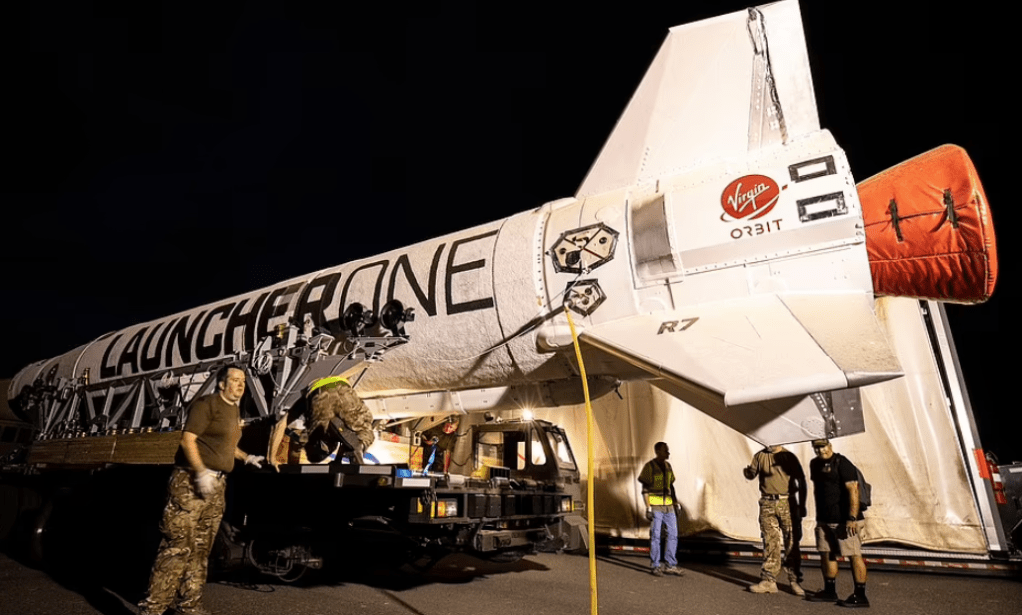
Image (Credit): LauncherOne rocket after arriving in Cornwall, England. (UK Space Command)
Later this year, the United Kingdom (UK) is getting into the commercial space business with Virgin Orbit’s launch of the LauncherOne rocket. The 70-foot long rocket stuffed with a satellites will be loaded onto Virgin Orbit’s Boeing 747 (called the “Cosmic Girl”) for a mid-air launch. It will be the first satellite launch from the UK.
While the launch was planned for earlier this year, Virgin Orbit is still dealing with some bureaucratic delays. Nonetheless, the use of Space Cornwall is an achievement for the UK and Europe as they plan more space missions from the continent.
Late last year, the Guardian wrote about planned space missions from the UK. The article, “The Great British Race to Space,” highlights plans for rocket launches from England, Wales, and Scotland. For instance, B2Space in Wales has plans to launch rockets from a helium balloon floating 20 miles up. The balloon could save about 70 percent of fuel and other costs related to a typical satellite launch.
It seems reusable rockets are just one of many innovations for lowering the cost of satellite launches. Watch out, SpaceX.
Image (Credit): A test flight for the B2Space balloon. Picture: (B2Space)
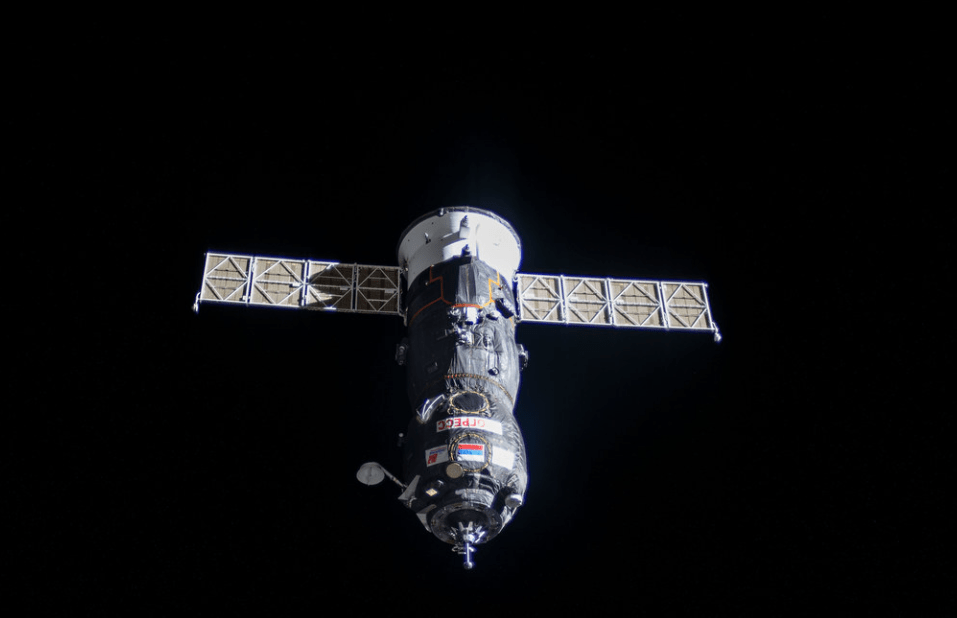
Image (Credit): Russia’s Progress 76 resupply ship approaching the ISS in July 2020. (NASA)
Marina Koren’s article in TheAtlantic, titled “The Russian Space Program Is Falling Back to Earth,” has plenty to say about the state of Russia’s space program. Her assessment is pretty bleak outside of the continued collaboration related to the International Space Station (ISS).
She notes:
Beyond the ISS, though, Russia’s space portfolio isn’t all that grandiose these days. Although cosmonauts fly into orbit regularly, Russia does not have a rover on the far side of the moon, as China has, or orbiters around Mars, as India and the United Arab Emirates have. It does not have a fleet of space telescopes like the U.S has. The Soviet Union was the first to send a human being to space, decades ago, and its early accomplishments are a distinct point of national pride. But the Russian space program has stalled for years, plagued by sparse budgets. And that was before Vladimir Putin’s onslaught on Ukraine: Some of the space plans the country still had in the works are falling apart. Now the Russian space effort may be more adrift than ever.
The Russian invasion of Ukraine may be the last straw. It led to the cancellation of various collaborative space projects with other nations. For instance, back in March the European Space Agency (ESA) was forced to suspend its joint ESA/Roscosmos ExoMars Rover mission to Mars.
China seems to be pulling ahead of Russia in the space race, with Russia taking a back seat on future projects, such as a Moon base or new space station. On the ground, Russia has shown it is not up to a war with Ukraine, making its role as a military power questionable. The article notes that Russia’s status as a space power is now also in question.
And shooting down another nation’s satellites will not be seen as a sign of strength in either the military or space arena.
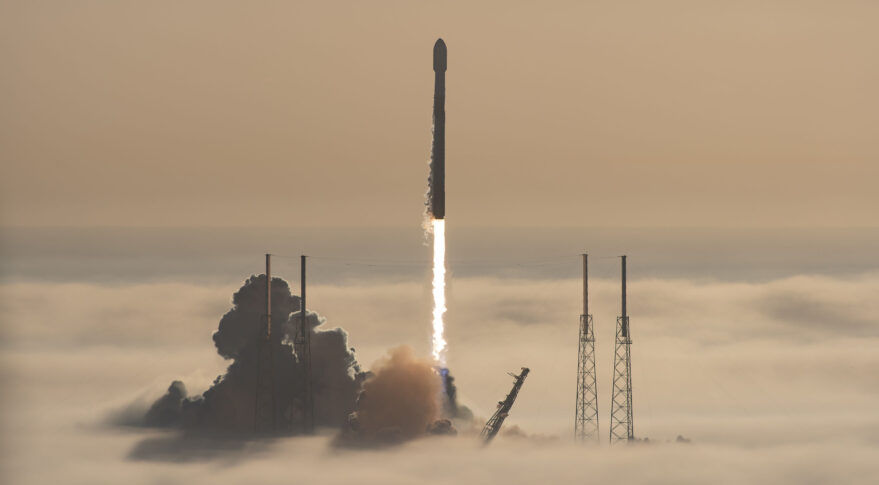
Image (Credit): November 13, 2021 SpaceX launch of 53 Starlink satellites. (SpaceX)
“Quasi-civilian infrastructure may be a legitimate target for a retaliatory strike.”
-Statement to the United Nations by Russian senior foreign ministry official Konstantin Vorontsov in reference to attacking SpaceX’s Starlink satellites being used by the Ukrainian military as it pushes back the Russian invasion. In a Reuters article, “Russia’s Anti-satellite Threat Tests Laws of War in Space,” Iridium chief executive Matt Desch stated, “If somebody starts shooting satellites in space, I’d imagine it would quickly make space unusable.”
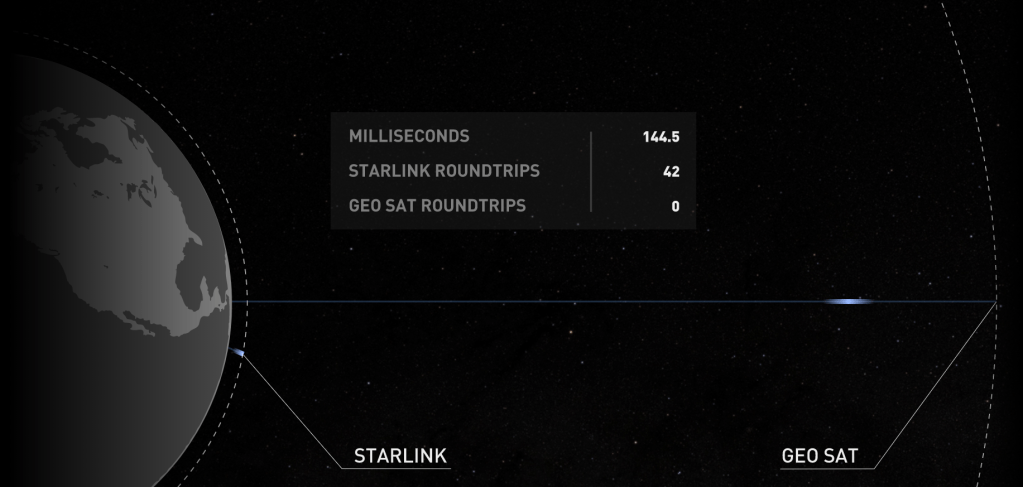
Image (Credit): Starlink page explaining why Starlink satellites are better then geostationary satellites. (SpaceX)
As if Elon Musk doesn’t have enough problems with his Twitter purchase and declining shares at Tesla, now the Ukranians are reporting that SpaceX’s Starlink internet service failed to work during a critical point in their battle to push the Russians out of Ukranian territory. This problem has been going on for weeks, but we are hearing about it now.
SpaceX was silent when these reports came out, but some suggested this may have been a feature rather than a bug in the Starlink system to prevent it from being used by Russians.
Mr. Musk later tweeted on this matter, stating:
Bad reporting by [The Financial Times]. This article falsely claims that Starlink terminals & service were paid for, when only a small percentage have been. This operation has cost SpaceX $80M & will exceed $100M by end of year. As for what’s happening on the battlefield, that’s classified.
Sadly, Mr. Musk did not clear the air but rather boasted about his company and attacked the media. But another media story from The Eurasian Times shed more light on the issue. The newspaper reports that Russia may be using its Tirada-2S satellite communications electronic jamming system to interrupt Starlink signals.
I would rather SpaceX is the cause of the problem rather than the Russians, but whatever it is we can only hope the Ukrainians, SpaceX, and Ukraine’s allies have a quick fix. Mr. Musk should received accolades for adding a novel asset to this war, yet his entire Starlink enterprise, and not just his donated equipment, is now at risk.
Update: Elon Musk is now asking the Pentagon to assume the costs of the Ukrainian Starlink program, expected to cost SpaceX about $100 million by the end of the year. Given the ongoing Twitter battle between Elon Musk and the Ukrainians related to Mr. Musk’s proposed peace plan for the region, the Ukrainians should probably be looking for another funding partner rather than continuing to count on the generosity of Mr. Musk.
Further Update: Elon Musk is now backing off on his attempts to seek more funding for Starlink, but as usual he is not very graceful about it. Here is his recent tweet:
The hell with it … even though Starlink is still losing money & other companies are getting billions of taxpayer $, we’ll just keep funding Ukraine govt for free.
Image (Credit): Artist’s rendering of the orbiting Sputnik 1. (thegravitywell.org/)
On this day in 1957, the Soviet Union launched Sputnik 1, humanity’s first artificial satellite, setting of a space race that continues to this day. The U.S. National Archives has a copy of minutes from an October 9 meeting between President Eisenhower and his advisors to discuss Sputnik I. The text accompanying the minutes demonstrates the shock this event caused:
At first, some in the Eisenhower administration downplayed the satellite as a “useless hunk of iron.” As David Halberstam wrote in The Fifties, “The success of Sputnik seemed to herald a kind of technological Pearl Harbor, which was exactly what Edward Teller said it was.” Others in America and around the world saw Sputnik as an ominous leap ahead in prestige and military ability, whether or not the new missiles could actually hit a target with nuclear weapons. President Eisenhower and some of his advisors, when they realized the significance of the Soviet achievement, met to discuss the alarming developments.
Of course, Russia is more of a wounded bear at the moment while China tries to take the lead in the latest space race. This is not to diminish what the Soviet Union accomplished in the last century, nor what Russia can accomplish tomorrow if it put its energy into science rather than war.



 Our Awesome Universe