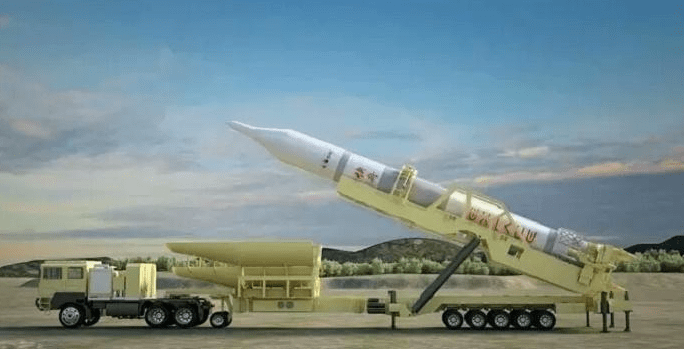
Fortified Rockets? Ask the Pentagon

Image (Credit): China’s KZ-11 transport launch system, which may be a model for an anti-satellite system. (Chinaspaceflight.com)

Earlier this month, The Wall Street Journal published an article, “Space Launches Should Withstand Chinese Challenge, Pentagon Mandate Says,” regarding new rocket requirements being developed by the US Department of Defense (DOD). It appears the Pentagon is worried about both the Russians and Chinese interfering with the launches of spy satellites. It doesn’t help to have an ongoing war in Ukraine where the Russians have already threatened US satellites. As a result, commercial rocket companies will need to meet some new specs on future missions.

DOD has already started the move to smaller satellites with dispersed missions to eliminate big space targets, which also allows for smaller companies to get into the game. More satellites launched from more locations (if not mobile locations) can assist the military with its missions whether it is facing errors or attacks. Even with some recent rocket mishaps, the story on the ground is positive as more companies join the industry while satellites get smaller and smaller.

This is not the space race the astronomy community wants to have, but the militarization of space is nothing new and is the primary reason we even started the space program. If the Blue Marble is not enough for us to understand the cost of war on the ground and in space, I am not sure what will work.

Another Rocket Setback, This Time in Alaska

Credit: ABL Space Systems

Virgin orbit is not the only rocket company having a bad week. CNN reports that on Tuesday U.S. rocket company ABL Space Systems ran problems off the Alaska coast when its RS1 rocket shut down prematurely during its maiden launch. The rocket and the two satellites it was carrying were lost.

It was a bad week, but the space industry is growing and persistence will pay off. It is also important to have deep pockets to cover early failures. SpaceX and Blue Origin benefited from billionaire backers, and ABL is lucky to have Lockheed Martin in its corner. With an initial order of 58 rocket launches, Lockheed Martin has every reason to encourage continued progress.

Update: As of earlier today, ABL Space Systems has not issued a press release on the Alaska incident, but in a Tweet the company stated:

As expected in this scenario, there is damage to the launch facility. All personnel are safe, and fires have subsided. We’ll plan our return to flight after investigations are complete. Thanks to our stakeholders and the space community for the expressions of support.

The Pacific Spaceport Complex – Alaska, earlier called the Kodiak Launch Complex, is a dual-use (commercial/government) facility owned and operated by the Alaska Aerospace Corporation, which is a public corporation of the State of Alaska. Opened in 1998, the spaceport complex is located on Kodiak Island in Alaska.

Virgin Orbit Experiences a Setback

Image (Credit): Virgin Orbit 747 carrying a LauncherOne rocket. (Virgin Orbit)

It was supposed to be the beginning of rocket launches from the England, but we will have to wait a little longer. While Virgin Orbit’s Cosmic Girl, the 747 carrying the LauncherOne rocket, successfully left Spaceport Cornwall, the launch itself from the belly of the plane did not go as planned. Both the rocket and payload were lost.

Virgin Orbit’s CEO, Dan Hart, made this statement:

While we are very proud of the many things that we successfully achieved as part of this mission, we are mindful that we failed to provide our customers with the launch service they deserve. The first-time nature of this mission added layers of complexity that our team professionally managed through; however, in the end a technical failure appears to have prevented us from delivering the final orbit. We will work tirelessly to understand the nature of the failure, make corrective actions, and return to orbit as soon as we have completed a full investigation and mission assurance process.

Here is the list of items lost in yesterday’s “Start Me Up” mission:

  • IOD-3 AMBER (aka IOD-3) – Developed by Satellite Applications Catapult (“SA Catapult”) and Horizon Technologies and built by AAC Clyde Space, all based in the U.K. IOD-3 Amber is expected to be the first of more than 20 Amber satellites to provide space-based Maritime Domain Awareness (MDA) data to users. 
  • Prometheus-2 – Two cubesats owned by the U.K. Ministry of Defense’s (MOD) Defense Science & Technology Laboratory Dstl. These satellites, co-funded with Airbus Defence and Space who are designing them jointly with In-Space Missions, will support MOD science and technology (S&T) activities both in orbit and on the ground through the development of ground systems focused at Dstl’s site near Portsmouth. 
  • CIRCE (Coordinated Ionospheric Reconstruction CubeSat Experiment) – CIRCE is part of a joint mission between the U.K.’s Defense Science and Technology Laboratory and the U.S. Naval Research Laboratory (NRL).   
  • DOVER – Developed by RHEA Group in the UK, it is the company’s first satellite in its 30-year history. The satellite is being co-funded through the European Space Agency’s (ESA) Navigation Program (NAVISP) and built by Open Cosmos of the United Kingdom. DOVER is a SmallSat that was created as a pathfinder for resilient global navigation satellite systems.   
  • ForgeStar-0 – Developed by Space Forge of Wales, the satellite is a fully returnable and reusable platform to enable in-space manufacturing. This launch will be the first for the company’s ForgeStar platform and will test future returns from space technology.     
  • AMAN – Oman’s first orbital mission, it is a single earth observation satellite meant to demonstrate the future feasibility of a larger constellation and was developed after a memorandum of understanding among the Sultanate of Oman, Polish Small Satellite manufacturer and operator SatRev, Poland-originated AI data analytics specialists TUATARA, and Omani-based merging technology innovator ETCO. The agreement includes additional planned small satellites, including this, the first in Oman’s history.
  • STORK-6 – Stork-6 is the next installment of Polish Small Satellite manufacturer and operator SatRev’s STORK constellation. Virgin Orbit previously launched two spacecraft in this constellation on a previous launch and looks forward to continuing to launch SatRev’s STORK spacecraft in the future.

Virgin Orbit had four consecutive launch successes until this latest mishap. An investigation will be necessary to review what happened.

Space Stories: Chinese Space Partnerships, Approaching Comet, and European Rocket Shortage

Image (Credit): Chinese space program poster. (Asia Times)

Here are some recent stories of interest.

—SpaceNews.com: “China Looks to Build Space Partnerships with Gulf Nations“

China is aiming to grow cooperation with emerging space nations including Saudi Arabia and the United Arab Emirates. Space was named as one of a number of priority areas for the next three to five years during the first China-Gulf Cooperation Council (GCC) Summit held in Riyadh earlier this month. “China stands ready to work with GCC countries on remote sensing and communications satellite, space utilization, aerospace infrastructure, and the selection and training of astronauts,” according to the text of the keynote speech made by Chinese President Xi Jinping at the summit, Dec. 9. The GCC intergovernmental group comprises Saudi Arabia, the United Arab Emirates, Bahrain, Kuwait, Oman and Qatar.

—Newsweek: “Once-in-a-Lifetime Cosmic Event Could Be Visible to the Naked Eye“

A comet zooming through the solar system could soon be visible to the naked eye from Earth in what will be a once-in-a-lifetime event. And some astronomical predictions indicate that the object may never return to our cosmic neighborhood. C/2022 E3 (ZTF) is currently located around 100 million miles away from Earth and will make a close approach to our planet in early February 2023.

—Atalayar.com: “Europe Runs out of Rockets for Autonomous Access to Space“

Overnight, the European Space Agency (ESA) headed by Austrian Josef Aschbacher has been left without any capacity to position its own satellites in outer space. Neither Aschbacher nor his director of space transport, the Swiss Daniel Neuenschwander, have any space vector model to fulfil their commitments to the European Union to renew the Copernicus constellation and place their Sentinel environmental monitoring satellites in orbit. Much less is ESA in a position to meet the growing global demand for launch services that is knocking on its doors, those of the United States, China and India.

More Musk Clutter in the Sky

Image (Credit): Artist’s drawing of spacecraft and debris circling the Earth. (Taken from Scientific American’s article, “Relentless Rise of Space Junk Threatens Satellites and Earth.”)

I have written about satellite pollution a few times on this site, and now I need to address it one more time by citing even more bad news. As noted in the news, the Federal Communications Commission (FCC) is allowing SpaceX to place another 7,500 satellites into orbit. SpaceX wanted permission for about 30,000 new satellites, so stay tuned for whining and more pressure on the FCC.

In making its decision, the FCC acknowledged and addressed concerns related to orbital debris and space safety, and required SpaceX to report back on mitigation efforts. You can read the full FCC decision here.

Given that Mr. Musk does not seem to believe in limitations on Twitter or satellite activities, we will need to rely on the regulators to keep an eye on him.