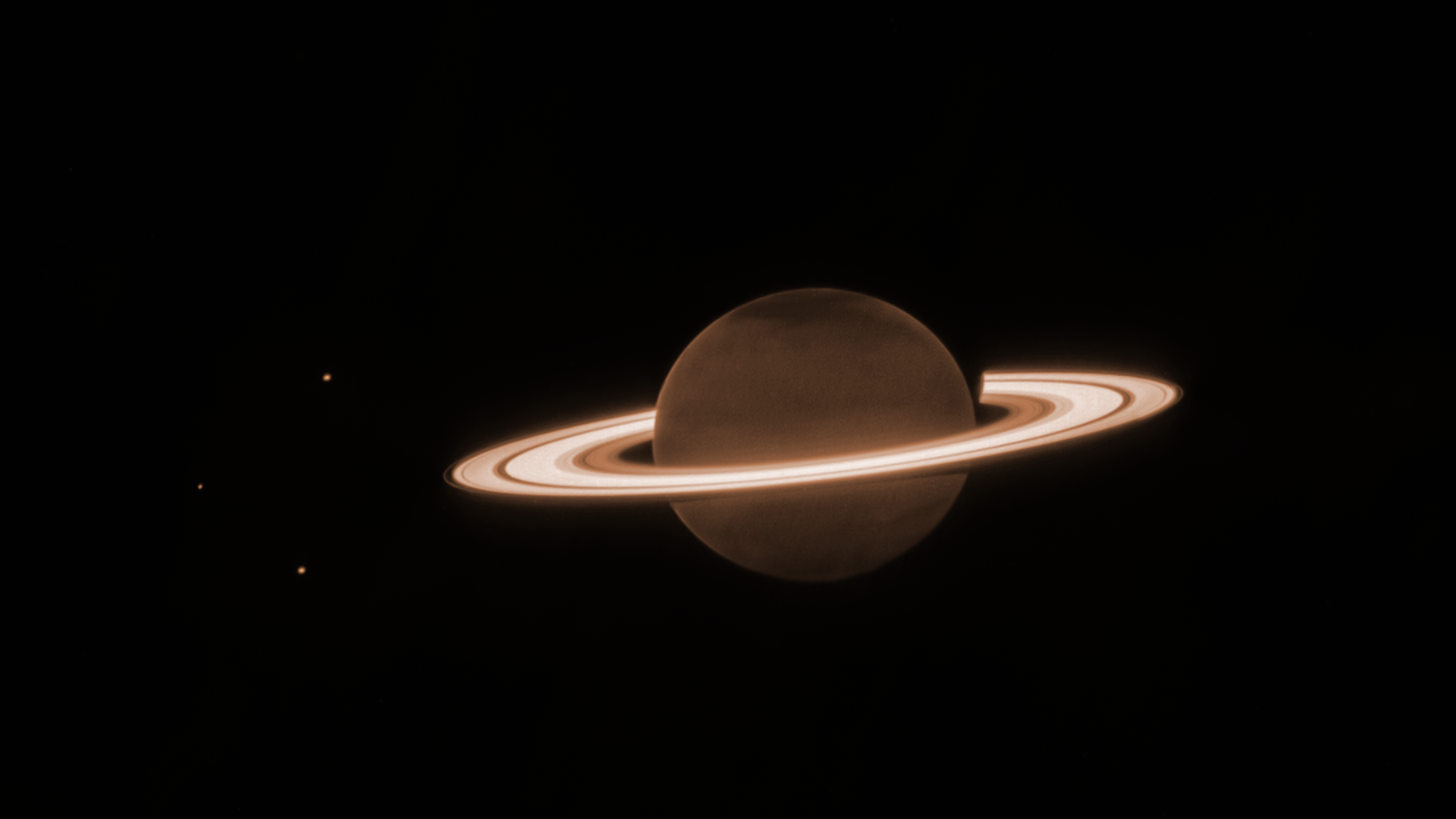
Image (Credit): On June 25, 2023, NASA’s James Webb Space Telescope conducted its first near-infrared observations of Saturn using its Near-Infrared Camera. (NASA, ESA, CSA, Matthew Tiscareno (SETI Institute), Matthew Hedman (University of Idaho), Maryame El Moutamid (Cornell University), Mark Showalter (SETI Institute), Leigh Fletcher (University of Leicester), Heidi Hammel (AURA))
“Physicists and astronomers are starting to get the sense that something may be really wrong. It’s not just that some of us believe we might have to rethink the standard model of cosmology; we might also have to change the way we think about some of the most basic features of our universe — a conceptual revolution that would have implications far beyond the world of science.”
-Statement by guess essayists Adam Frank and Marcelo Gleiser in a New York Times article about the James Webb Space Telescope titled “The Story of Our Universe May Be Starting to Unravel.” Dr. Frank is an astrophysicist at the University of Rochester. Dr. Gleiser is a theoretical physicist at Dartmouth College.
If you are wondering where the James Webb Space Telescope (JWST) will be looking in the future, some of that is known and some has yet to be determined. The approved targets of the space telescope can be found at the Programmatic Categories of JWST Science Observations site.
The site breaks the approved targets into these six categories:
General Observer (GO) Programs: Observations and archival research proposed by the community and selected by peer review.
Guaranteed Time Observations (GTO) Programs: Observations defined by members of the instrument and telescope science teams, as well as a number of interdisciplinary scientists.
Director’s Discretionary Time (DDT): Time-critical observations that cannot be scheduled for a regular proposal cycle.
Director’s Discretionary Early Release Science (DD-ERS) Programs: Observations to be executed within the first five months of science operations and immediately released to the community.
Calibration Programs: Observations used to calibrate the science instruments in support of all the other science programs.
First Image Observations: The first observations following commissioning to demonstrate the observatory’s capabilities.
The GO Programs have been decided through Cycle 2. Earlier this month, the Space Telescope Science Institute put out a call for Cycle 3 Call for Proposals for the GO Programs. Proposals are due by October 25, 2023 and selected proposals will be announced in February 2024.
Take a look at the existing list and you will find plenty of interesting areas of study. For instance, under the Cycle 3 GTO Programs you have areas such as:
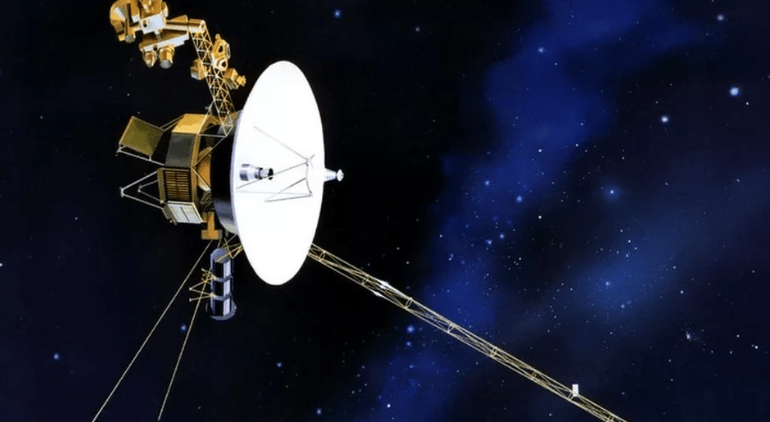
Image (Credit): Artist’s rendering of Voyager 2. (NASA)
After two weeks with no word, Voyager 2 is back to communicating with us as it continues its journey beyond our solar system. The whole incident started when NASA sent a bad command, but all is well.
Voyager 2 first left Earth back in August 1977 and exited the solar system in December 2018. Like Voyager 1, which is also outside the solar system now, Voyager 2 had the initial task of studying the planets. Voyager 2 focused on Jupiter, Saturn, Uranus and Neptune. It has shown it was capable of much more as it dragged the human race to the bleeding edge of space.
You can read all about Voyager 2’s accomplishments at this NASA site, including:
Voyager 2 is the only spacecraft to study all four of the solar system’s giant planets at close range.
Voyager 2 discovered a 14th moon at Jupiter.
Voyager 2 was the first human-made object to fly past Uranus.
At Uranus, Voyager 2 discovered 10 new moons and two new rings.
Voyager 2 was the first human-made object to fly by Neptune.
At Neptune, Voyager 2 discovered five moons, four rings, and a “Great Dark Spot.”
An impressive list of accomplishments, and the spacecraft is still ticking as it goes into the great unknown.
We need to keep these achievements in mind as we battle over this year’s NASA budget. We also need to remember that there was supposed to be four Voyager-like spacecraft rather than two, but budget cuts nixed the second set. Meaning we can still get some great things done even if we don’t have the budget to fund every piece of a grand vision.
Astronomers peering into the night sky always talk about exoplanets located in the “Goldilocks Zone,” or “Habitable Zone,” similar to the Earth’s location from the sun. But what if that is too limited? What if we should also be focusing on colder regions as well as exomoons?
The new study released this week based on data from NASA’s spacecraft Cassini has found that Saturn’s moon Enceladus contains the ingredients for life as we know it. The study states:
Saturn’s moon Enceladus harbours a global ice-covered water ocean. The Cassini spacecraft investigated the composition of the ocean by analysis of material ejected into space by the moon’s cryovolcanic plume. The analysis of salt-rich ice grains by Cassini’s Cosmic Dust Analyzer enabled inference of major solutes in the ocean water (Na+, K+, Cl–, HCO3–, CO32–) and its alkaline pH. Phosphorus, the least abundant of the bio-essential elements, has not yet been detected in an ocean beyond Earth. Earlier geochemical modelling studies suggest that phosphate might be scarce in the ocean of Enceladus and other icy ocean worlds. However, more recent modelling of mineral solubilities in Enceladus’s ocean indicates that phosphate could be relatively abundant.
Again, this represents the building blocks of life and it is the first time all these ingredients have been discovered in our solar system outside of Earth. We did not find it on Venus or Mars, two other planets in the Goldilocks Zone. No, it was found in a much colder part of the solar system on a tiny moon.
This discovery certainly mixes up the situation and provides a much broader region for life to appear in other solar systems. It’s not a new idea, but it has more credibility now that we know a little more about our own neighborhood.
Maybe Goldilock’s concerns about something being too cold was not such a problem after all.
Note: It seems James Cameron figured this out years ago. The planet visited in the Avatar movies, Pandora, is portrayed as a moon (or exomoon) in the Alpha Centauri System.
Image (Credit): Pandora and its host gas giant Polyphemus from the movie Avatar. (20th Century Fox)
On this day in 1975, the European Space Agency (ESA) was founded after the combination of the European Space Research Organisation (ESRO) and the European Launcher Development Organisation (ELDO). Ten countries were part of this new organization, which has since grown to 22 members (noted below). The Agency also has associate members and other cooperating partners.
You can find a list of the ESA’a past, present, and planned space missions here, which includes:
Note: According to the International Astronautical Federation, the ESA member include Austria, Belgium, the Czech Republic, Denmark, Estonia, Finland, France, Germany, Greece, Hungary, Ireland, Italy, Luxembourg, the Netherlands, Norway, Poland, Portugal, Romania, Spain, Sweden, Switzerland and the United Kingdom. Latvia, Lithuania and Slovenia are Associate Members. Canada takes part in certain programmes under a cooperation agreement. ESA has signed European Cooperating States Agreements with Bulgaria, Cyprus and Slovakia, and cooperation agreements with Croatia and Malta.




 Our Awesome Universe
