Final Update to my Top Astronomy Stories in 2022

Image (Credit): Singing in the “Domino” episode on The Orville: New Horizons. (Hulu)

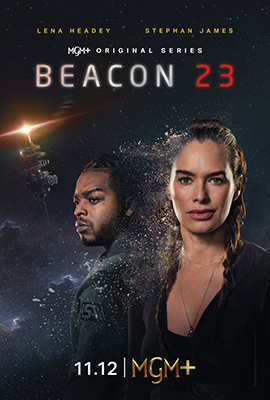
I cannot let January end without making one update to my “Top Astronomy Stories in 2022” list. I really need to add Hulu’s The Orville: New Horizons as number 11 on the list. The third season has been much more polished and enjoyable than the first two. After jumping to Hulu and renaming itself, the show has really found its way to being a great addition to the scifi universe.

The last two episodes in particular – “Domino” and “Future Unknown” – were the best of the season. We go through war, sacrifice, death, reconciliation, and even marriage with a crew that is now part of our family. I am still not sure what I think about the role of Dolly Parton in the series, but the Orville’s crew singing in episode 9 (“Flowers Never Bend with the Rainfall” by Simon & Garfunkel) and episode 10 (“Secret o’ Life” by James Taylor) are reason enough to watch these last two episodes.

So what happens next? Do we see a fourth season? It is unclear, even to creator and actor Seth MacFarlane, who had this to say about the future of the series to Den of Geeks:

If we’re lucky, The Orville reaches a stage where we do multiple uninterrupted seasons, and we can end the season knowing that we’re moving into the next. But this was designed to be a wrap up for the season – a bit of an open-ended piece of narrative that allows the various characters any possible number of futures. At the same time, we wanted to tie things up in a nice little bow as much as we could in case we didn’t get picked up.

I hope we can see a fourth season, but as they said in the very title of the last episode – Future Unknown.

Television: SyFy’s New Series The Ark

Credit: SyFy

If you are looking for a new space series beyond the Star Trek and Star Wars iterations, then SyFy’s The Ark may be for you. Premiering February 1st, it has all of the necessary elements: a long space mission, something going wrong, everyone’s fate hanging in the balance, and a heroic effort saving the day. I hope I did not give anything away.

Here is the full story from SyFy:

The Ark takes place 100 years in the future when planetary colonization missions have begun as a necessity to help secure the survival of the human race. The first of these missions on a spacecraft known as Ark One encounters a catastrophic event causing massive destruction and loss of life. With more than a year left to go before reaching their target planet, a lack of life-sustaining supplies and loss of leadership, the remaining crew must become the best versions of themselves to stay on course and survive.

And don’t miss the trailer, which clearly points out that the ship is off course and the captain is dead. The last space series I watched with with this set up was HBO Max’s Avenue 5, but those passengers were only traveling around the solar system. Here the stakes are more like those in Kim Stanley Robinson’s scifi novel Aurora, which involves a multi generation trip to a distant planet. I recommend both the HBO series and novel, but I will need to wait on the roll-out of The Ark to say more about this new series.

I am looking for my next Expanse series, so I will watch The Ark and hope for the best.

Update: My hopes were dashed. The pilot was so bad that I watched the second episode just to be sure. That episode was bad as well. You cannot look at the crew of the Ark and think this is the best hope for humanity. Throughout both episodes all you had was yelling and dysfunctional behavior. Clearly there was no vetting for this crew. If this is the way we ran out submarine fleet then I would expect every sub to be on the bottom of the sea (about three days after launch). The show even has a turtle-necked founder of the Ark mission chatting away as a hologram. I thought we saw this in the movie Don’t Look Up and basically every other movie after that when you need a stand-in villain. I might have continued if SyFy simply billed the TV show as a comedy, yet even that would have problems since no one on the show can act. Oh well, I will await the next series and hope again. I am not giving up.

Credit: Orbit

Podcast: Discussing Science Fiction and Astronomy with Andy Weir & Rob Manning

Credit: Planetary Society

If you have not yet tapped into The Planetary Society’s podcast Planetary Radio, then now is the time to do so. Host Mat Kaplan and his guests had a great time on the recent podcast, One Last Blast: Author of ‘The Martian’ Andy Weir with JPL Chief Engineer Rob Manning.

Both Andy Weir (author of The Martian, Artemis, and Project Hail Mary) and Rob Manning (Chief Engineer at the Jet Propulsion Laboratory) were shooting the you-know-what as they chatted about science fiction books they read as teenagers, the role of real science in fictional tales, astronomical conspiracy theories, and mankind’s need to expand into the unknown.

It was interesting to hear Andy Weir talk about curiosity being humanity’s survival mechanism. He pointed out that curiosity has allowed humanity to survive disasters here on Earth because we were all spread out rather than clustered on one flood plain. The same applies to expansion beyond the Earth.

Check it out for yourself. You may want to check out some of the earlier podcasts as well, such as:

Credit: Random House Publishing Group

Top Astronomy Stories in 2022

Image (Credit): The stellar nursery 30 Doradus, nickname of the Tarantula Nebula, captured by the James Webb Space Telescope. (webb.nasa.gov)

Given that 2022 was a busy year, I thought I would highlight the top astronomy stories on the site – the good and the bad covering space missions to TV shows. Unlike other websites, I waited until the new year to create the list just in case we were visited by extraterrestrials. In this way, we now have a full catalog of the 2022 happenings.

Here is the list in no particular order other than science first, politics and commercial space second, and entertainment third.

  1. James Webb Space Telescope begins operation – see site link here;
  2. Double Asteroid Redirection Test (DART) successfully shifts the course of an asteroid pair – see site link here;
  3. Artemis I Orion capsule successfully orbits the Moon – see site link here;
  4. Commercial satellites become an increasing threat to Earth-based telescopes – see site link here;
  5. China completes its first space station – see site link here;
  6. Boeing is closer to being the second U.S. company to send astronauts to the International Space Station – see site link here;
  7. Ukraine invasion derails the Russian space program – see site link here;
  8. Russia reconfirms support for International Space Station – see site link here;
  9. Star Trek gets it right by returning to the past with Strange New Worlds – see site link here; and
  10. Star Wars gets it right with its new Andor series. – see site link here.

I cannot wait to see what 2023 will bring.

Podcast: Solar Sailing to the Stars

Image (Credit): NEA Scout sail fully deployed. (NASA)

On a recent episode of the Clear + Vivid podcast, Alan Alda interviewed NASA engineer Les Johnson about his efforts to develop a solar sail that can take us to the stars. He is the Principal Investigator for the NEA Scout, which was launched into space during the Artemis I mission and is now heading towards a near-Earth asteroid via solar sails (see above).

During the interview, Mr. Johnson discussed the NEA Scout as well as his hopes for future human travel to the stars using solar sails, noting that while slow, the sails can outperform modern rocket engines in the long-run. He also pointed out that a solar sail may be able to get us to Proxima Centauri, the closest neighboring star, in hundreds of years versus the 70,000 years it will take the Voyager spacecraft to travel that same distance. I like how he puts such a mission in perspective, pointing out it took hundreds of years to build some of the great cathedrals.

Messrs. Alda and Johnson also discussed the ethics of space travel considering astronauts will be spending generations in space with many humans never seeing either the Earth or the destination in their lifetime. Mr. Johnson said space lasers may be another option for interstellar travel at some point in the future, reducing the travel time to Proxima Centauri to 40-50 years. Given the time spans, he said it may make sense to initially send robots into space first.

Finally, the podcast covered missions closer to Earth, such as mining asteroids for water and minerals, as well as 3D printing to create what we need in space. It sounded a lot like the situation in find in the science fiction TV series The Expanse.

Overall, it was a great conversation worth a few minutes of your day. Check it out.

Extra: Mr. Johnson is also the author of several books, including the co-authored Saving Proxima. Here is a quick summary of that tale:

2072. At the lunar farside radio observatory, an old-school radio broadcast is detected, similar to those broadcast on Earth in the 1940s, but in an unknown language, coming from an impossible source—Proxima Centauri. While the nations of Earth debate making first contact, they learn that the Proximans are facing an extinction-level disaster, forcing a decision: will Earth send a ship on a multiyear trip to render aid? 

Interstellar travel is not easy, and by traveling at the speeds required to arrive before disaster strikes at Proxima, humans will learn firsthand the time-dilating effects of Einstein’s Special Relativity and be forced to ponder ultimate questions: What does it mean to be human? What will it take to share the stars with another form of life? What if I return younger than my own children? The answers are far from academic, for they may determine the fate of not one, but two, civilizations.

Credit: Baen Publishers