Movie: Dune: Part Three Returns in December 2026

Credit: Warner Bros. Pictures

With all eyes on the Moon mission, it is worth revisiting the musings of Frank Herbert as he provided one possible path for mankind.

While the Dune: Part Three movie is not set to premiere until December, the first trailer is out to prepare us for what is to come, and it is a powerful two-and-a-half minutes. You can see bits of our favorite characters as well as new ones, including Timothee Chalamet, Zendaya, Javier Bardem, Rebecca Ferguson, Josh Brolin, Anya Taylor-Joy, Robert Pattinson, Florence Pugh, and Isaach de Bankolé.

This is a mind-bending, beautifully crafted, yet bleak story about the will to power, where one man leads his followers in a war that killed sixty-one billion humans, sterilized ninety planets, and wiped out the followers of forty religions. From this wisp of a teenager in Dune: Part One, we witness him becoming the whirlwind that darkens the galaxy.

Frank Herbert explained his fears in the introduction to his story story collection Eye:

Dune was aimed at this whole idea of the infallible leader because my view of history says mistakes made by a leader (or made in a leader’s name) are amplified by the numbers who follow without question. That’s how 900 people wound up in Guyana drinking poison Kool-Aid. That’s how the U.S. said “Yes, sir, Mister Charismatic John Kennedy!” and found itself embroiled in Vietnam. That’s how Germany said “Sieg Heil!” and murdered more than six million of our fellow human beings.

What Mr. Herbert left for us is an amazing story that continues to live on in the careful work of Denis Villeneuve. He has created a piece of art that not only entertains us but also warns us, like all good story-telling.

One of the comments from someone viewing the trailer was:

[M]y grandfather had the original star wars trilogy, my father had lord of the rings, [I] have dune.

Fortunately, all of us now have all three.

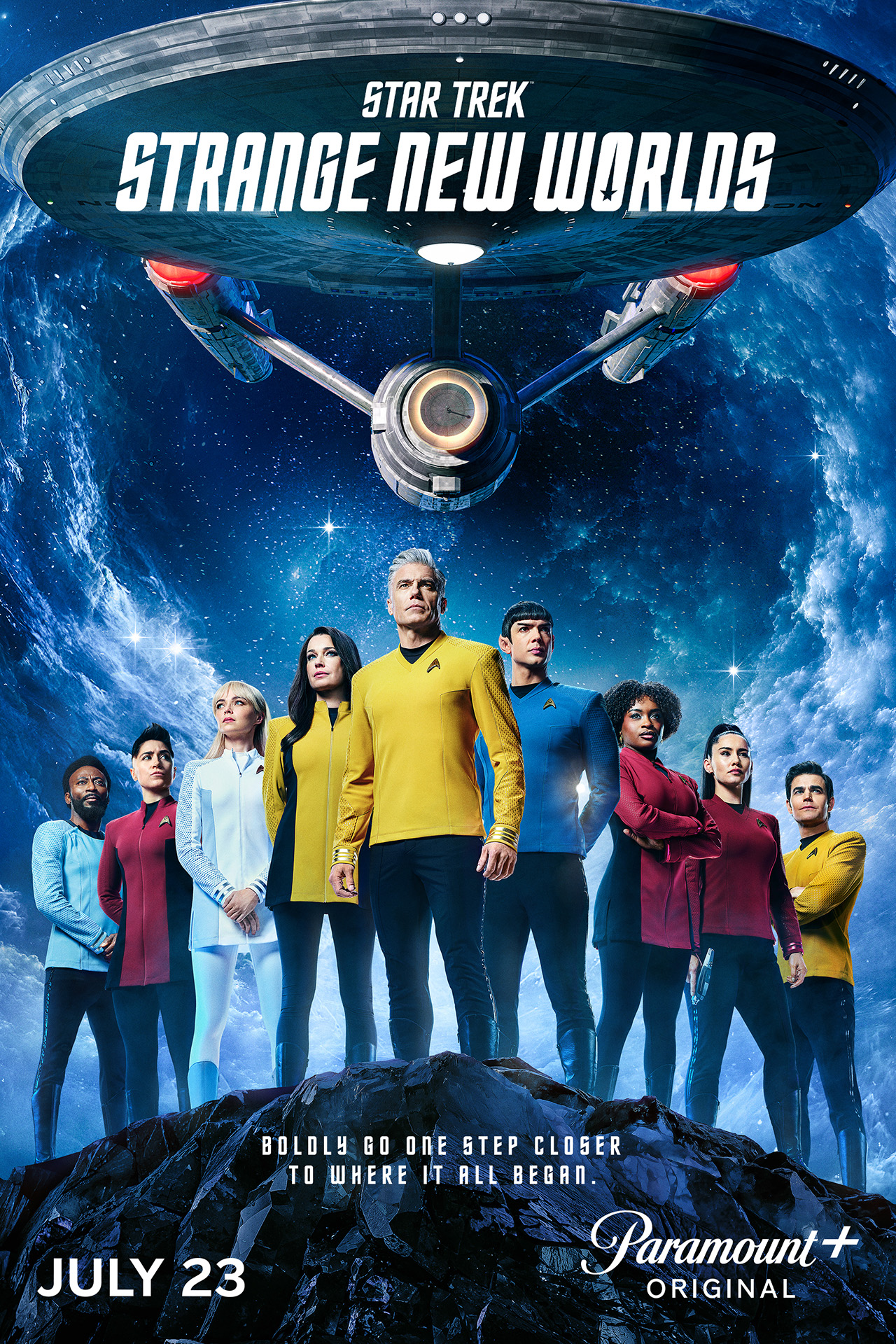
Sci-Fi Quote: William Shatner Defends Starfleet Academy

“Star Trek exists in more than one world. It exists in the fantasy of science fiction – weird and wonderful things that play unimaginable possibilities of exploration and human endeavor. But it also exists in the fantasy of human beings, the perfection of human beings, the exploration that human beings have made since the dawn of time and the continuing exploration – physically mentally and morally. It’s that aspect of Star Trek that I’ve always loved, to look at something physically that doesn’t exist now by these talented writers & designers but also to tackle the eternal human questions the agonies, the ecstasies. Star Trek should exist for a long time to come based on those truths. I for one would love to see its continuity. It’s with sorrow that I hear about the cancellation of the new Star Trek series.”

-William Shatner’s comments on Twitter/X regarding the recent announcement that Star Trek’s Starfleet Academy will end after two seasons. In a follow-up post, highlighting the criticism that the new series was too woke, he continued:

During the first airing of my Star Trek series where a kiss was objectionable; many southern stations pulled the episode & condemned the show. Using today’s vernacular it would absolutely be called “woke DEI crap” because it went against “norms” of society for its time. Not a lot seems to have changed.

Note: Andy Weir, author of Project Hail Mary, is one of the parties criticizing the new series and the direction of Star Trek, but some of it sounds like sour grapes.

Television: Starfleet Academy to End After Two Seasons

Credit: Paramount+

Nothing gold can stay, Robert Frost once wrote. Just enjoy it while it is here.

And so it goes with Star Trek as well. The new television series Starfleet Academy will last for only two seasons and then disappear. While I had originally thought that promising a second season before the first one aired was premature, it turns outs it was brilliant given the fickle habits of today’s viewers. Now the series has a chance to bring some closure.

I have enjoyed the first season. While it was not perfect, it was finding its way to tell a new story to a new generation of Star Trek viewers. At a time that Star Wars seems to have run out of steam, the new series showed that Star Trek still had more to say with a whole new cast of characters rather than endlessly recycling the past. I am hopeful that it can continue to do so even with this ending.

The series co-showrunners and executive producers, Alex Kurtzman and Noga Landau, wrote a few words that also quoted this bit from Gene Roddenberry that says a lot in these times:

Star Trek was an attempt to say that humanity will reach maturity and wisdom on the day that it begins not just to tolerate, but take a special delight in differences in ideas and differences in life forms. […] If we cannot learn to actually enjoy those small differences, to take a positive delight in those small differences between our own kind, here on this planet, then we do not deserve to go out into space and meet the diversity that is almost certainly out there.

Television: Season Five of For All Mankind

Credit: Apple TV

If you thought last season of For All Mankind was hair-raising with the disasters and battles on Mars, wait until you see what happens this season.

This trailer from Apple TV gives you a taste of the drama coming to your television on March 27th. We see the return of many of our favorite characters (those who survived) as well as a few new ones.

The season picks up years after the “Martians” hijack an asteroid intended for Earth, thereby giving the Martian economy plenty of mining revenue. Apple TV states:

Happy Valley has grown into a thriving colony with thousands of residents and a base for new missions that will take us even further into the solar system. But with the nations of Earth now demanding law and order on the Red Planet, friction continues to build between the people who live on Mars and their former home.

It did not take long for the new Martians to seek independence. We may want to keep that in mind as we continue to allow Mr. Musk to be the spokesperson for the colonization of Mars. He does not play well with others on this planet, so good luck with him running the show on Mars.

Anyway, the series offered plenty of ideas regarding a space race for a lunar base followed by a space race for Mars. The only odd part of this series is that while the USSR and North Korea are present on Mars, we hear almost nothing about China and its space program.

As NASA contemplates a whole new approach to the Moon and Mars (as highlighted just today), it’s fun to watch a show where the space travel timetable is faster and the private sector is more engaged with its own separate mission to Mars. Again, I can picture this happening with SpaceX, where Blue Origin takes the lead on the Moon and Musk takes all of his marbles so he can proceed to Mars on his own.

One thing we can bet on with our expansion into space, regardless of the timetable, is that mankind’s foibles will be front and center in any of these space missions. The hardware issues will be easy to solve compared to dealing with the egos and emotions of space-bound humanity.

In the meantime, while we await the real thing, sit back and enjoy Apple TV’s version of our future in space.

Note: Apple TV announced earlier today that the sixth season of the series will be the last.

Another Take on NASA’s Ability to Maneuver an Asteroid

Credit: Random House

While everyone is pretty excited about NASA’s ability to nudge a distant asteroid via its Double Asteroid Redirection Test (DART) mission, there is more than one way to look at this event. While many see this as a new tool to protect the Earth from approaching peril, Carl Sagan saw this it more as a double-edged sword.

In his 1994 book Pale Blue Dot: A Vision of the Human Future in Space, Dr. Sagan wrote:

Can we humans be trusted with civilization-threatening technologies? If the chance is almost one in a thousand that much of the human population will be killed by an impact in the next century, isn’t it more likely that asteroid deflection technology will get into the wrong hands in another century—some misanthropic sociopath like a Hitler or a Stalin eager to kill everybody, a megalomaniac lusting after “greatness” and “glory,” a victim of ethnic violence bent on revenge, someone in the grip of unusually severe testosterone poisoning, some religious fanatic hastening the Day of Judgment, or just technicians incompetent or insufficiently vigilant in handling the controls and safeguards? Such people exist. The risks seem far worse than the benefits, the cure worse than the disease.

You might also remember the stealth asteroids directed at Earth by terrorists in the fifth season of the television series The Expanse. Yes, it is science fiction, but so wasn’t the idea of landing humans on the Moon until it was a fact.

As we watch the Middle East burn again, it is not hard to imagine a battle involving sociopaths, ethnic violence victims, leaders with severe testosterone poisoning, religious fanatics, or even incompetent individuals without guardrails making more of a mess of the Earth and its surroundings.

It’s just a thought.