Delayed Launch of the Europa Clipper Mission

Credit: NASA

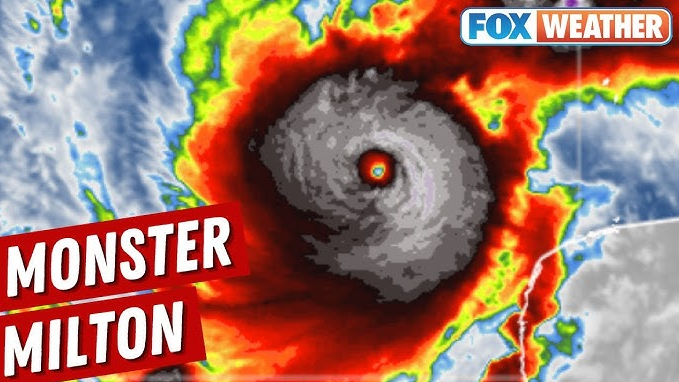
This week we expected to see the launch of NASA’s Europa Clipper, but an approaching hurricane has again thrown NASA’s plans into the wind. The original launch was scheduled for October 10.

NASA’s blog has stated the following:

NASA and SpaceX are standing down from the Thursday, Oct. 10, launch attempt of the agency’s Europa Clipper mission due to anticipated hurricane conditions in the area. Hurricane Milton is expected to move from the Gulf of Mexico this week moving east to the Space Coast. High winds and heavy rain are expected in the Cape Canaveral and Merritt Island regions on Florida’s east coast. Launch teams have secured NASA’s Europa Clipper spacecraft in SpaceX’s hangar at Launch Complex 39A at the agency’s Kennedy Space Center in Florida ahead of the severe weather, and the center began hurricane preparations Sunday.

I just hope hurricane season comes to an early close after this.

Stay tuned for a new launch date.

Update: As of October 12, NASA’s target launch date of the Europa Clipper is now October 14.

Pic of the Week: Spacewalk Outside the Chinese Space Station

Image (Credit): Extravehicular activity on China’s Tiangong space station this past July. (CMSA)

This week’s image is from the China Manned Space Agency (CMSA). It shows taikonaut Li Cong on a spacewalk outside China’s Tiangong station on July 3, 2024. 

The space station was first launched in April 2021 and has been permanently crewed since June 2022. The current crew, called Shenzhou 18, consists of Commander Ye Guangfu, Operator Li Cong, and System Operator Li Guangsu.

NASA’s Crew-9 Mission on its Way to the ISS

Image (Credit): The launch earlier today of a SpaceX Falcon 9 rocket carrying tNASA’s SpaceX Crew-9 mission to the ISS. (NASA/Keegan Barber)

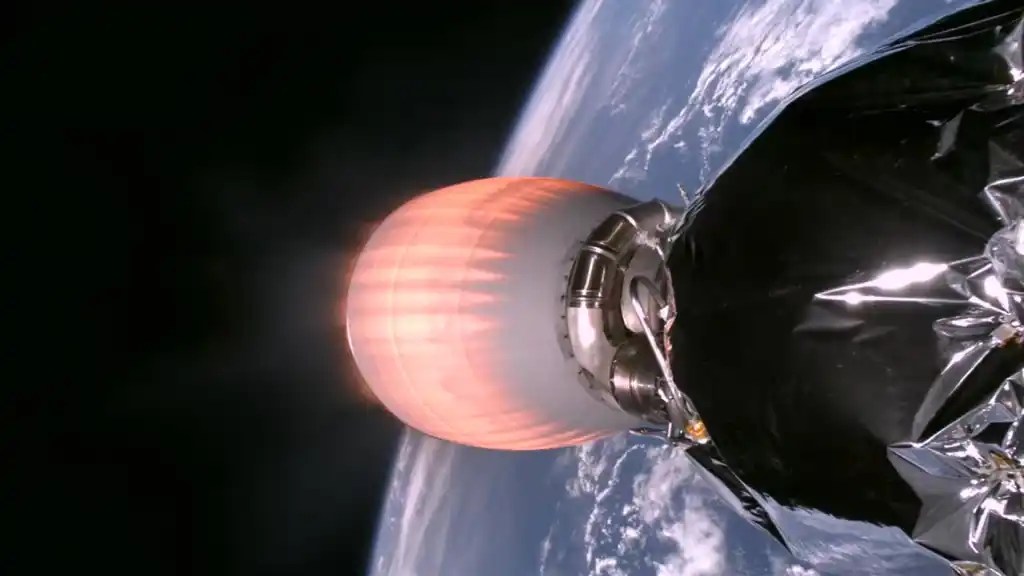
Earlier today, NASA contractor SpaceX successfully launched the Crew-9 mission towards the International Space Station aboard a Falcon 9 rocket. The two crew members should be aboard the station tomorrow to join the rest of the Expedition 72 crew, who arrived at the station as part of two earlier launches.

While some are calling this a “rescue mission,” it is really a planned mission with a truncated crew roster to accommodate the two Boeing Starliner astronauts on the return back to Earth. Nothing to see here folks.

NASA Administrator Bill Nelson said it best:

This mission required a lot of operational and planning flexibility. I congratulate the entire team on a successful launch today, and godspeed to Nick and Aleksandr as they make their way to the space station…Our NASA wizards and our commercial and international partners have shown once again the success that comes from working together and adapting to changing circumstances without sacrificing the safe and professional operations of the International Space Station.

NASA has become quite flexible this year as it works with its commercial partners.

Crew-9 Mission Grounded by Weather in Florida

Image (Credit): Tropical Storm Helene on Sept. 24, 2024 as captured by the NASA/NOAA Suomi NPP satellite. (NASA Worldview)

SpaceX was scheduled to send astronauts to the International Space Station (ISS) tomorrow, but the approaching Hurricane Helene has delayed the launch until Saturday, September 28.

The Crew-9 mission is down to two crew members – NASA astronaut Nick Hague and Roscosmos cosmonaut Aleksandr Gorbunov – as a result of the two Boeing astronauts stuck on the ISS being added to the Crew-9 mission. The new combined crew will stay on the station until February 2025 and then return to Earth together.

NASA is in the process of locking down its Florida launch sites until the hurricane passes.

Patience is always needed with launches this time of year, and NASA seems to need a lot of patience these days for reasons beyond the weather.

Image (Credit): Crew-9 mission patch designed by SpaceX. (SpaceX)

ISS Crew Safely Back from ISS via Russian Spacecraft

Image (Credit): The Soyuz MS-25 crew ship attached to the ISS as an aurora radiates brightly above the Indian Ocean. (NASA)

Astronaut Tracy C. Dyson is now safely back on Earth thanks to the Russian Soyuz MS-25 spacecraft, which also returned cosmonauts Oleg Kononenko and Nikolai Chub. The no drama return from the International Space Station (ISS) was very different from the recent Boeing Starliner return. The press barely paid attention, which is a good thing.

NASA highlighted Dyson’s six-month tour in this way:

Spanning 184 days in space, Dyson’s third spaceflight covered 2,944 orbits of the Earth and a journey of 78 million miles as an Expedition 70/71 flight engineer. Dyson also conducted one spacewalk of 31 minutes, bringing her career total to 23 hours, 20 minutes on four spacewalks.

I just hope that future Starliner’s can intentionally place astronauts in space for six-months or longer and then return to Earth with little attention. That type of clockwork will be success.