Space Stories: Satellite Returns to Earth, Watching the Moon Landing, and Kuiper Belt Surprises

Image (Credit): Artist’s rendering of the European Space Agency’s (ESA) Earth Remote Sensing satellite. (ESA/dpa/picture alliance)

Here are some recent stories of interest.

BBC: Pioneering European ERS-2 Satellite Burns Up Over Pacific

The two-tonne ERS-2 spacecraft burnt up in the atmosphere over the Pacific. So far, there have been no eyewitness accounts of the mission’s demise or of any debris reaching Earth’s surface. ERS-2 was one of a pair of missions launched by the European Space Agency in the 1990s to study the atmosphere, the land and the oceans in novel ways. The duo monitored floods, measured continental and ocean-surface temperatures, traced the movement of ice fields, and sensed the ground buckle during earthquakes.

ForbesNASA To Live-Stream Spacecraft Odie’s Moon Landing Thursday. Here’s How To Watch

Houston-based Intuitive Machines is targeting 5:49 p.m. EST on Thursday, February 22, to put its Odysseus lunar lander on the surface of the moon—and it will be streamed live on NASA TV on YouTube. The first U.S. commercial moon lander, Odysseus—also known by its nickname “Odie”—will touchdown near a crater called Malapert A in the south pole region of the moon. If successful, this IM-1 mission—which is taking a scientific payload to the moon—will be the first spacecraft from the U.S. to land on the moon since Apollo 17 in December 1972.

Science Alert: NASA’s New Horizons Discovered a Large Surprise in The Kuiper Belt

There may be a lot more than we thought to the belt of icy debris that circles the outer Solar System. Data from the New Horizons probe as it sails serenely through the Kuiper Belt hints at unexpected levels of particles where dust ought to be thinning out, suggesting the donut-shaped field extends significantly farther from the Sun than previous estimates suggest.

All Eyes on the Next Moon Mission

Image (Credit): Intuitive Machines IM-1 mission on the launch pad at NASA’s Kennedy Space Center in Florida. (SpaceX)

The second NASA-related commercial Moon mission was set to launch earlier today, but SpaceX called it off at the last moment due to a methane issue with its Falcon 9 rocket. SpaceX is expected to try the launch tomorrow.

The launch of the Intuitive Machines IM-1 mission is related to NASA’s Commercial Lunar Payload Services (CLPS) initiative, and will serve as one of the first lunar-based pieces of the Artemis program.

In terms of the main mission, NASA noted:

Intuitive Machines’ Nova-C lander is expected to land on the Moon Thursday, Feb. 22. Among the items on its lander, the IM-1 mission will carry NASA science and technology instruments focusing on plume-surface interactions, space weather/lunar surface interactions, radio astronomy, precision landing technologies, and a communication and navigation node for future autonomous navigation technologies.

The Moon mission that failed last month was also part of NASA’s CLPS initiative. This program is off to a slow start, but hopefully it can be relied on to be a key component of the lunar space program going forward.

If you are looking for some good news, I can report that Russia’s Progress MS-26 International Space Station resupply mission successfully launched earlier today.

The Goldilocks Zone Turned Awfully Cold for Earth

Image (Credit): Artist’s rendering of a “Snowball Earth.” (NASA)

We point of telescopes at distant solar systems searching for exoplanets in the “Goldilocks Zone,” it being defined as the habitable zone around a star where water can remain in liquid form. But that was not always the case for planet Earth, even if we are the model for this zone.

A recent New York Times article, “How Earth Might Have Turned Into a Snowball,” discusses how the Earth became a frozen ball about 717 million years ago. And it remained in this deep freeze for approximately 56 million years.

While the article goes on to discuss the reasons for this freeze, I am more interested in the idea of what this may mean for our own plans to someday travel to a distant star.

If a civilization on another planet was viewing our solar system from afar 750 million years ago, they too may have mistaken our Earth as a perfectly place planet to support life on its surface. However, they would have needed to wait another 23 million years for our planet to revert back to having a liquid surface.

It appears timing is everything, and the inner workings of a planet can be just as important as its placement in the solar system. I expect our telescopes will be able to tease our more information about each exoplanet in the future, though it also makes sense to send robotic probes before ever attempting to send a human that far.

In the meantime, we have a few moons here in our own solar system with frozen oceans. We can start to learn more about the potential for life in such places and our ability to survive in such climates. NASA’s Europa Clipper, set to launch later this year, is part of that learning process.

Upcoming Exhibits at the Smithsonian National Air and Space Museum

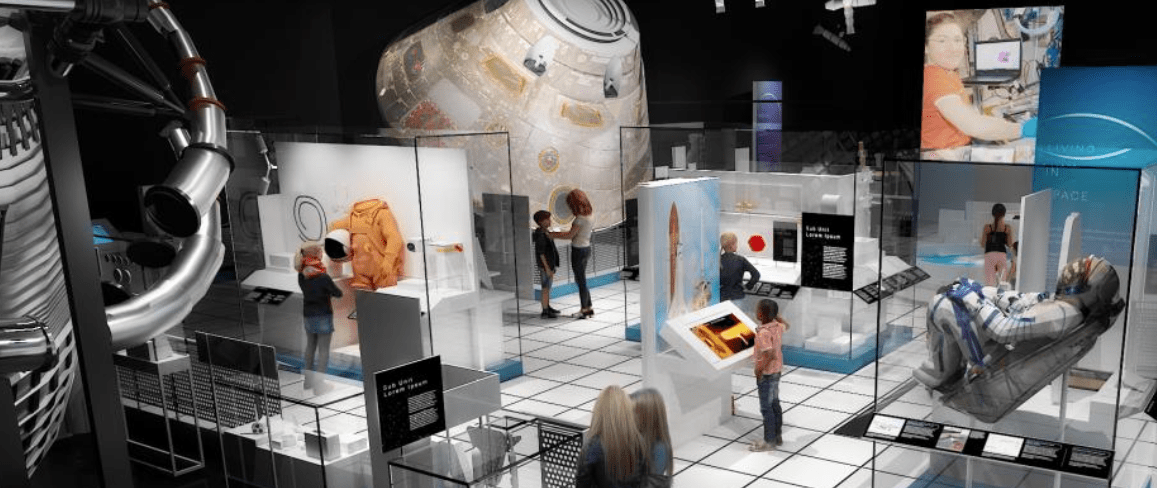
Image (Credit): Artist’s rendering of the planned At Home in Space exhibit. (National Air and Space Museum)

If you are planning your next vacation, keep the Smithsonian Museums in Washington, DC in mind, particularly the National Air and Space Museum. The updated museum has plenty of impressive exhibits to keep you and your family busy and informed. You can also travel to the Steven F. Udvar-Hazy Center in Chantilly, Virginia for even more great exhibits.

Here is a list some of the upcoming exhibits related to the space program:

  • Boeing Milestones of Flight Hall: The Boeing Milestones of Flight Hall will showcase some of the museum’s most iconic objects. With artifacts arrayed along walls and suspended from the ceiling—and interpretive displays that provide background and context—this central gallery of the National Mall building will invite visitors to explore the diverse and rich collections that make up the rest of the Museum’s exhibits, both in Washington, D.C., and at the Steven F. Udvar-Hazy Center in Chantilly, Virginia. Banners featuring important individuals in aviation and spaceflight, as well as a large media screen, will help bring these historic figures to life. (Opening in Spring 2024)

  • At Home in Space: An immersive, highly interactive exhibition, At Home in Space takes visitors along a 40+ year journey of learning how humans can live and work in space continuously and venture beyond Earth orbit. (Opening by 2026)

  • Futures in Space: The Futures in Space exhibition will explore the potential near- and long-term futures that may emerge with advances in space exploration technology and enterprise. The gallery will feature developing technologies that bring down the cost of space, aim to inaugurate the era of commercial and tourist spaceflight, expand robotic planetary exploration and resource extraction, and keep humans alive in new environments. Futures in Space will also explore the as-yet unanswered social, political, and economic questions that emerge along with these new activities: Who decides who goes to space? Why do we go? And what will we do when we get there? (Opening by 2026)

  • National Science Foundation Discovering Our Universe: Discover the history of modern astronomy and where the field is headed. Explore how we find answers in astronomy, how that process has changed over time, and how those answers tend to raise deeper questions. (Opening by 2026)

  • RTX Living in the Space Age Hall: The RTX Living in the Space Age Hall will provide insight into space technologies and infrastructure that are largely invisible to the public but have a profound impact on our daily lives. The exhibition will cover topics from the beginning of the Space Age in the mid-20th century to the present and beyond. Visitors can explore these stories through Space Age objects and the people who build, maintain, and use them. The content will include the development of rocket technology that has enabled access to space, missile development, space systems for Earth observation, communication, and navigation, and the threats to these systems. (Opening by 2026)

Pic of the Week: Launch of the PACE Mission

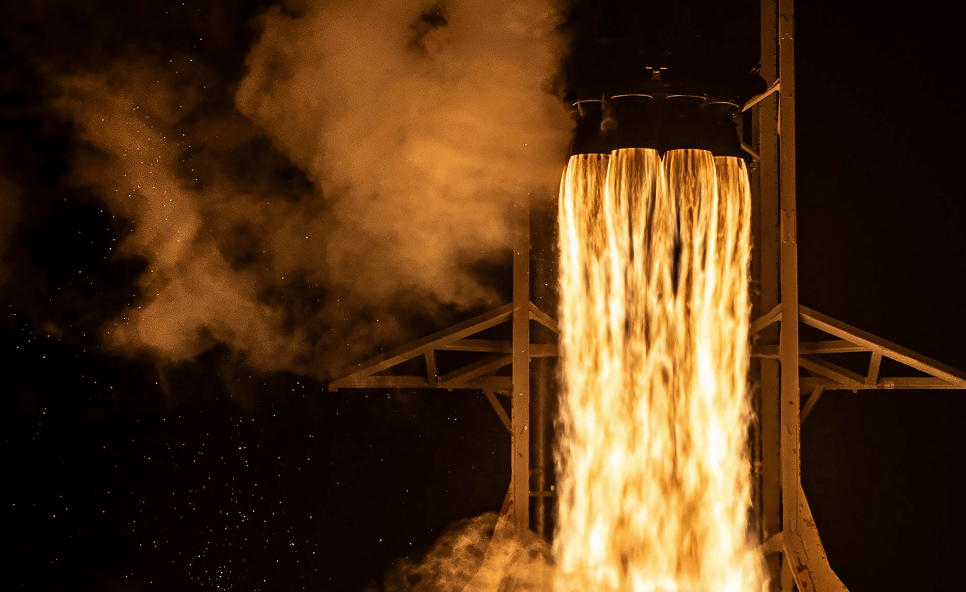
Image (Credit): Engines of the SpaceX rocket carrying the PACE spacecraft into orbit. (SpaceX)

This week’s image is from SpaceX, which launched NASA’s Plankton, Aerosol, Cloud, ocean Ecosystem (PACE) mission into orbit earlier today (the Falcon 9 rocket engines are shown above). 

The spacecraft is designed to monitor the Earth from orbit. NASA explains the mission is this way:

Information collected throughout PACE’s mission will benefit society in the areas of ocean health, harmful algal bloom monitoring, ecological forecasting, and air quality. PACE also will contribute new global measurements of ocean color, cloud properties, and aerosols, which will be essential to understanding the global carbon cycle and ocean ecosystem responses to a changing climate.

The PACE’s mission is designed to last at least three years, though the spacecraft is loaded with enough propellant to expand that timeline more than three times as long.