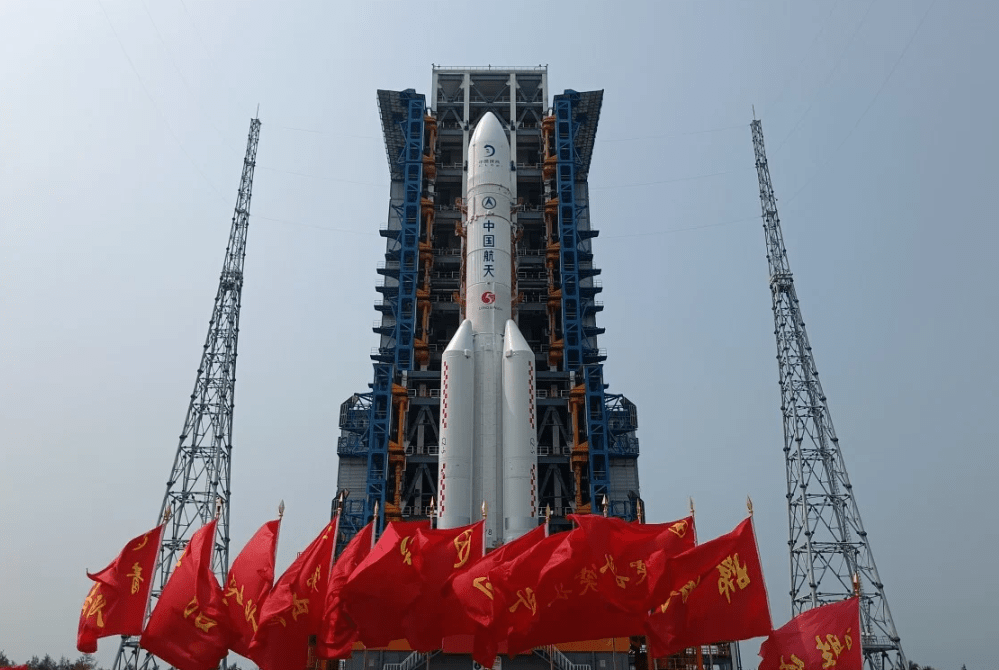
Image (Credit): China’s Chang’e 6 lunar probe at the Wenchang Space Launch Site in Hainan province prior to the launch on Friday. (CNSA)
Last Friday, China launched the Chang’e-6 lunar probe towards the moon with the goal of returning the first lunar soil sample from the far side of the Moon. An earlier mission in 2020, Chang’e-5, successfully returned lunar soil samples from the near side of the Moon for the first time in 44 years. Before that, in 2019, China place a rover on the far side of the Moon via the Chang’e-4 mission.
China is making some bold strides in space with, it might be added, some help from the Europeans. While the US bans any cooperation with the Chinese, France, Italy and Sweden have contributed to the Chang’e-6 mission. For example, Sweden added the Negative Ions at the Lunar Surface (NILS) instrument to the lunar probe.
Maybe one day we can join the Chinese on some of these missions, but that day seems to be far away. That said, we were able to find a way with the Russians, which allowed for the ongoing success of the International Space Station.
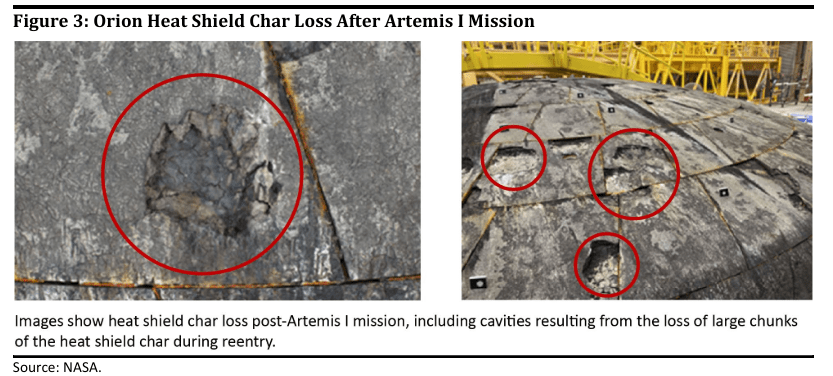
The NASA Office of Inspector General (OIG) issued an audit report earlier this week, NASA’s Readiness for the Artemis II Crewed Mission to Lunar Orbit, that expressed concerns about problems with the Artemis I test flight mission in late 2022. For example, the report noted:
…the Artemis I test flight revealed critical issues that need to be addressed before placing crew on the Artemis II mission. In particular, the test flight revealed anomalies with the Orion heat shield, separation bolts, and power distribution that pose significant risks to the safety of the crew…Specifically, NASA identified more than 100 locations where ablative thermal protective material from Orion’s heat shield wore away differently than expected during reentry into Earth’s atmosphere…Beyond the Orion anomalies, the Artemis I launch-induced environment caused greater than expected damage to ML-1 elevators, electrical equipment, enclosure panel doors, and pneumatic tubing, requiring extensive repairs that will cost more than $26 million, roughly 5 times more than the $5 million the EGS Program had originally set aside for postArtemis I launch repairs.
While NASA is already working on repairs and improvements in each of these areas, it still puts a bit of a damper on NASA’s earlier video about all of the successes of Artemis I. NASA has already lost too many astronauts to heat shield issues in the past, so this is a serious matter that needs to be resolved before putting humans in the Orion capsule.
The OIG auditors made six recommendations to NASA management. NASA concurred with these recommendations, but noted that the audit was conducted at a difficult time, stating:
Being audited in the middle of a development process presents several challenges including disruptions to ongoing workflow and priorities due to the reallocation of resources and the coordination challenges associated with audit activities.
Of course, auditors are never really welcome at any point in the process. If they come too late, they are accused of shooting the dead.
NASA conducted the test flight to learn about such issues, so in that sense it was a success. Hopefully, the space agency can make the necessary improvements while keeping the Artemis II mission on track given that it has already been delayed.
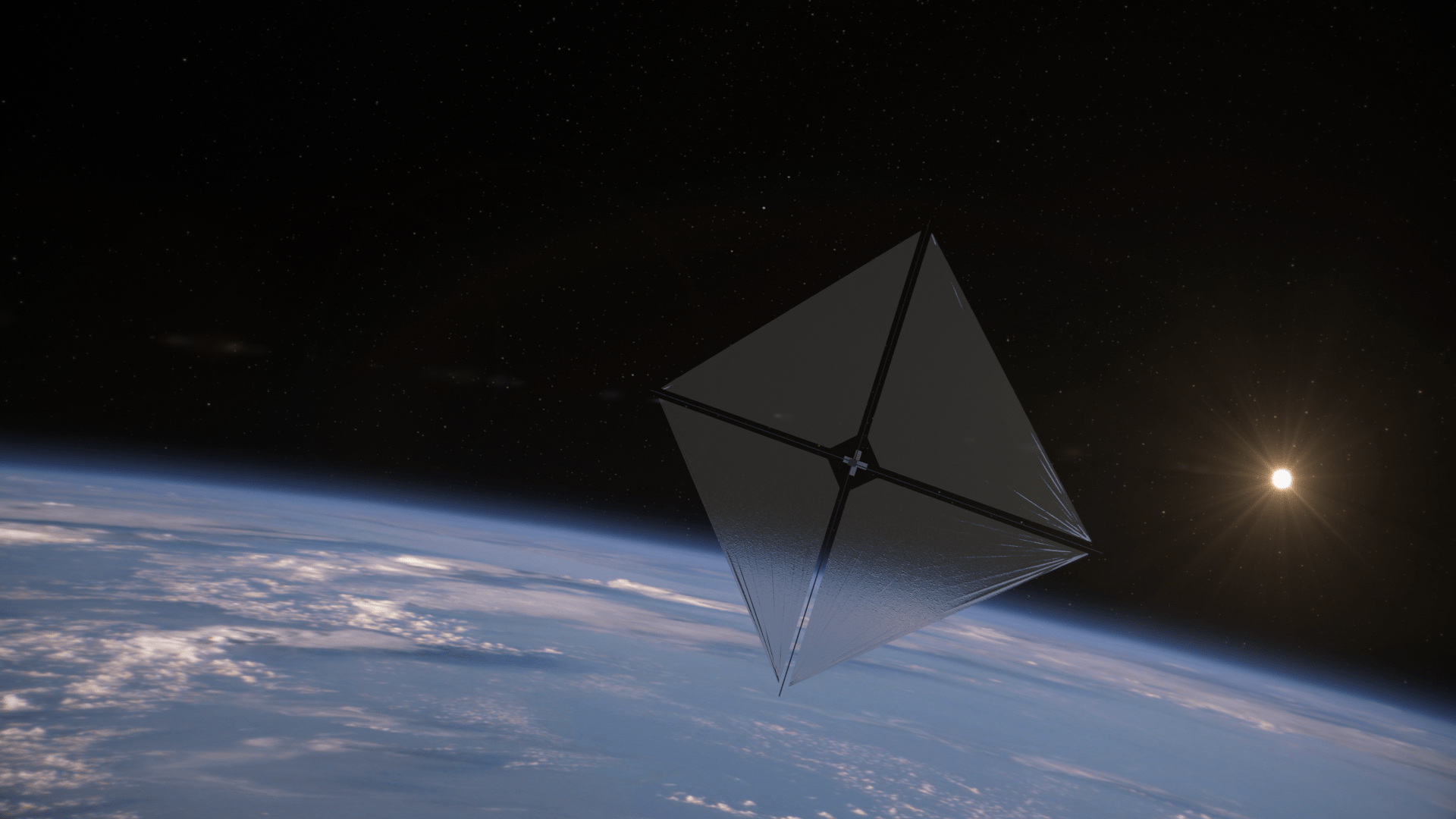
Like a sailboat turning to capture the wind, the solar sail can adjust its orbit by angling its sail. After evaluating the boom deployment, the mission will test a series of maneuvers to change the spacecraft’s orbit and gather data for potential future missions with even larger sails.
If all goes well, larger sails will be developed to potentially replace large rocket engines and accompanying fuel tanks for future trips to the Moon, Mars, other parts of the solar system, and even interstellar locations.
You might be able to see the solar sail in the night sky as it orbits the Earth, so keep looking up.
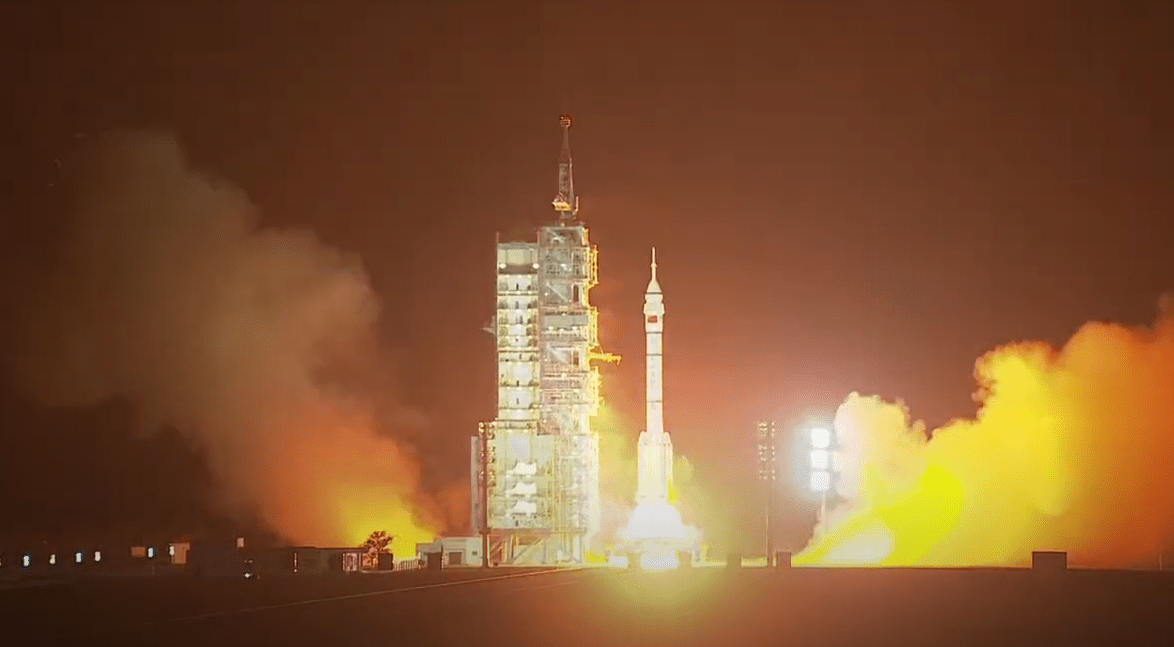
Image (Credit): April 25, 2024 launch of the Shenzhou 18 mission to the Tiangong space station. (CMSA)
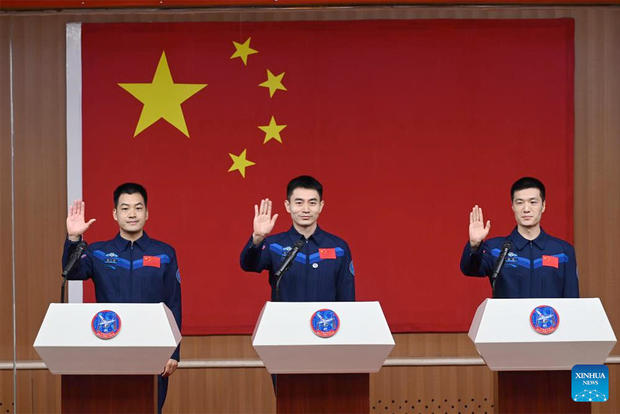
This week’s image shows today’s launch of three astronauts to China’s Tiangong space station on the Shenzhou 18 mission aboard a Long March 2F rocket. The crew successfully reached the space station 6.5 hours after launch.
One of the new crew members has already spent 182 days in orbit aboard the Tiangong space station. The Tiangong space station has been continuously crewed since June 2022.
Image (Credit): Shenzhou 18 crew members Li Cong, commander Ye Guangfu and Li Guangsu. Guangfu has logged 182 days in orbit during a stay aboard the Tiangong space station in 2021-22. (CMSA)
Image (Credit): Soviet cosmonaut Vladimir Komarov. (RIA Novosti)
On this day in 1967, the Soviet Union’s Vladimir Komarov became the first spaceflight fatality when his Soyuz 1 spacecraft crashed during reentry as the result of a failed parachute. The accident occurred during what was his second trip to space, his first being aboard the Voskhod 1. Yuri Gagarin served as the backup cosmonaut on the Soyuz 1 flight.
The Soyuz 1 mission was already experiencing problems before reentry, particularly with its solar panels. These problems were enough to end the mission early and delay the launch of a second Soyuz spacecraft that would have met up with the orbiting Soyuz 1. The spacecraft was not up to the mission. Before the crash, Komarov could be heard stating, “This devil ship! Nothing I lay my hands on works properly.”
This fellow cosmonauts had this to say via Pravda:
For the forerunners it is always more difficult. They tread the unknown paths and these paths are not straight, they have sharp turns, surprises and dangers. But anyone who takes the pathway into orbit never wants to leave it. And no matter what difficulties or obstacles there are, they are never strong enough to deflect such a man from his chosen path. While his heart beats in his chest, a cosmonaut will always continue to challenge the universe. Vladimir Komarov was one of the first on this treacherous path.
Image (Credit): Burkina Faso stamps commemorating cosmonaut Vladimir Komarov.(stamps-world.eu)




 Our Awesome Universe