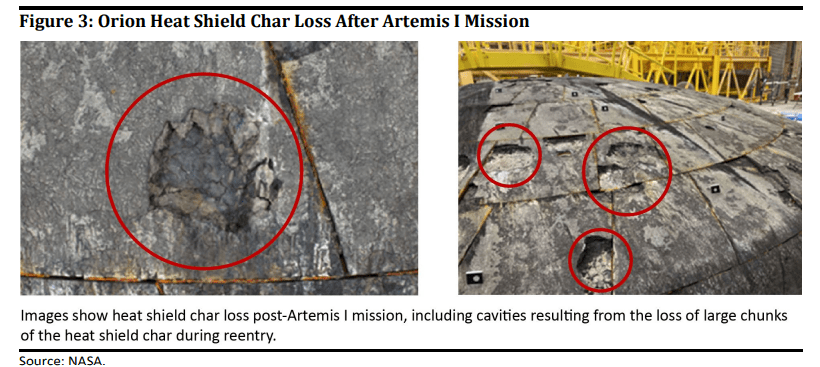
Credit: Taken from a 2024 NASA Office of the Inspector General report – NASA’s Readiness for the Artemis II Crewed Mission to Lunar Orbit (IG-24-011)
“What they’re talking about doing is crazy…We could have solved this problem way back when…Instead, they keep kicking the can down the road.”
-Statement by former astronaut Charlie Camarda, who does not believe the upcoming Artemis II mission is safe for the astronauts given his concerns about the Orion’s heat shield, as quoted by CNN. The news story cites others who state that the Orion heat shield issue has been resolved and the mission is ready to go. The Artemis II mission is set to launch as early as February 6th.
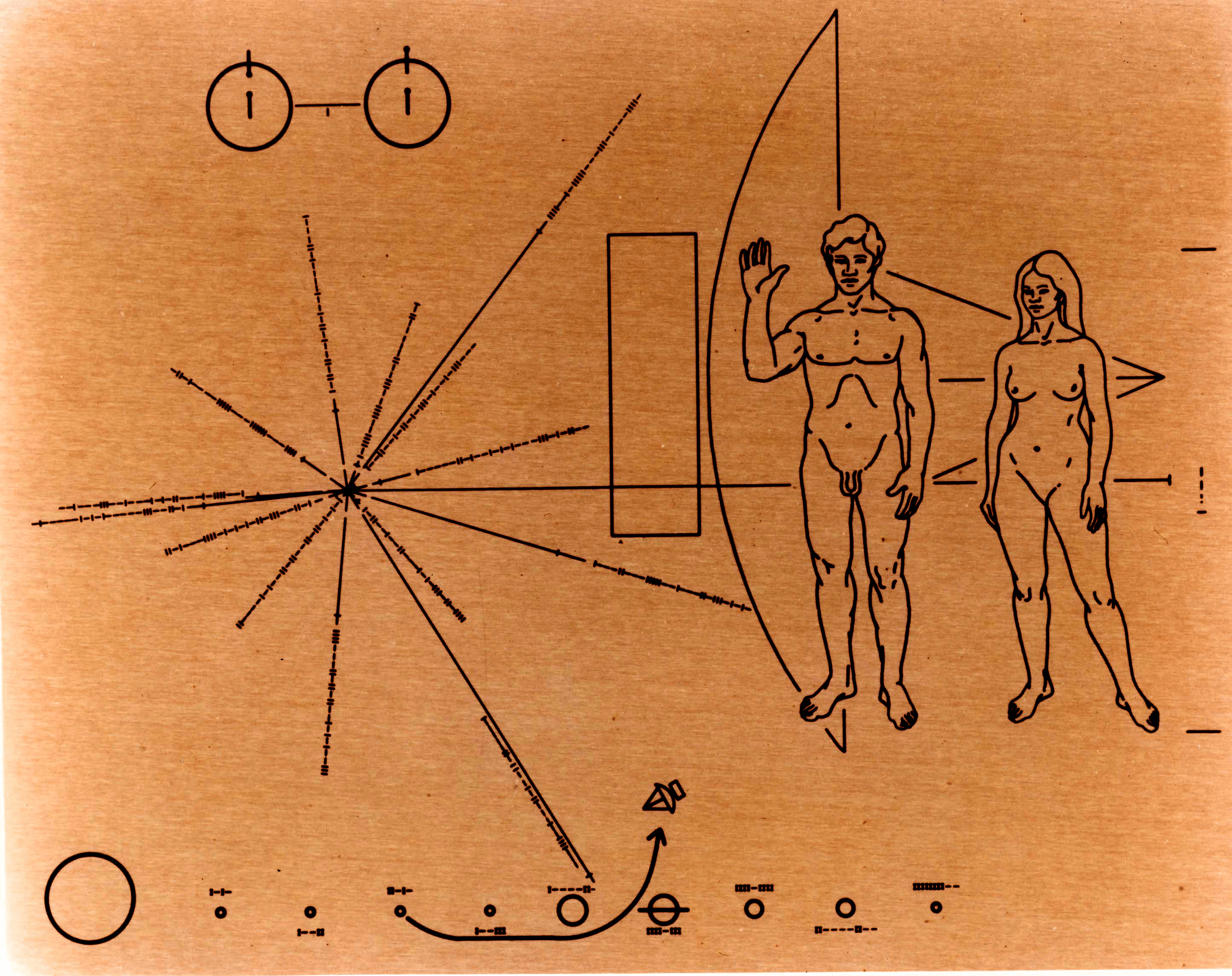
Image (Credit): The visual message on the Pioneer 10 and 11 plaques. (NASA Ames)
On this day in 2003, NASA heard its last message from Pioneer 10, the Jupiter space probe. Launched in 1972, it was the first spacecraft to cross the asteroid belt between Mars and Jupiter on its way to the outer planets. It is also one of only five spacecraft to leave our solar system.
If all goes well, in about 2 million years the Pioneer 10 spacecraft will encounter the star Aldebaran. Maybe some civilization in that solar system will be arguing about this object floating through the neighborhood the way we have argued about the origins of the interstellar object we call 3I/ATLAS.
Image (Credit): Mission patch for Pioneer 10 and 11. (NASA)
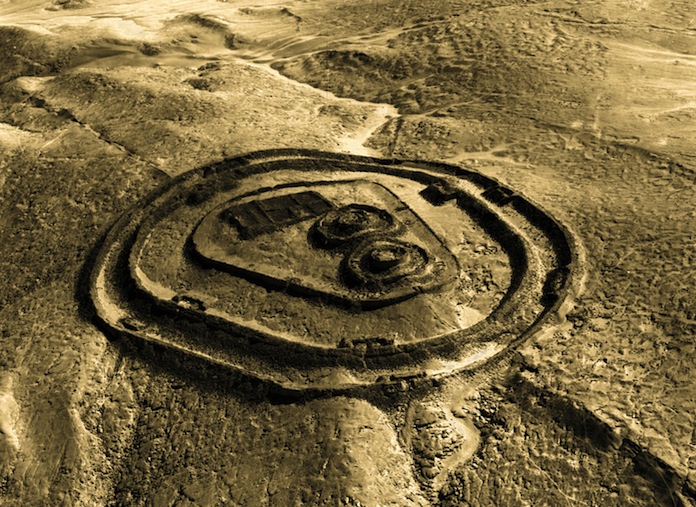
There was a time when Stonehenge was believed to be a kind of “Neolithic computer.” Archaeology has since corrected that misconception. Today, the evidence points strongly in another direction: to an arid hill in the Casma Valley on Peru’s northern coast, about 200 miles north of Lima.There stands Chankillo, a complex built around 250 B.C.E., considered the earliest known solar observatory in the Americas and the clearest known example of a monument designed to track the sun’s position throughout the entire year, according to a study in Science. Modest in appearance and largely absent from tourist posters and classic postcards, Chankillo has renewed attention as archaeologists report preliminary findings from ongoing excavations.
With a space station medical evacuation safely completed, NASA is focused on two challenging missions proceeding in parallel: launching four astronauts on a flight around the moon, at the same time as the agency is planning to send four replacement astronauts to the International Space Station...The Artemis 2 mission and Crew 12’s planned space station flight present a unique challenge for NASA. The agency has not managed two piloted spacecraft at the same time since a pair of two-man Gemini capsules tested rendezvous procedures in low-Earth orbit in 1965. The agency has never flown a deep space mission amid another launch to Earth orbit.
One of the most vivid portraits of “reborn” black hole activity – likened to the eruption of a “cosmic volcano” spreading almost one million light-years across space – has been captured in a gigantic radio galaxy. The dramatic scene was uncovered when astronomers spotted the supermassive black hole at the heart of J1007+3540 restarting its jet emission after nearly 100 million years of silence.
Note: Please ignore the previous posting for today about the Apollo 17 mission. It’s a good story, but I will need to retell it at another time (that is, on December 19th).
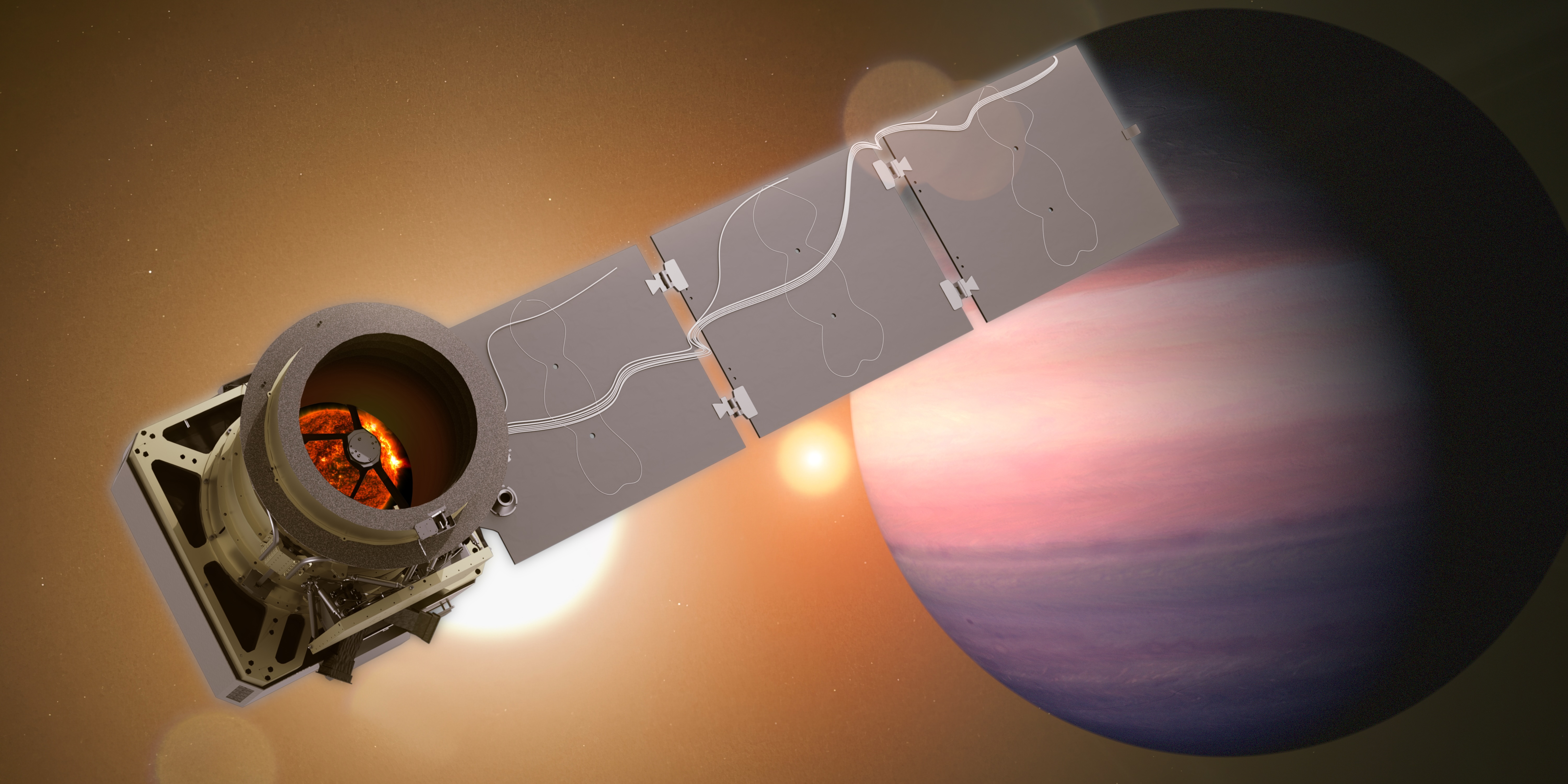
The Pandora satellite, once fully operational, will view exoplanet atmospheres and their host stars to learn more about these exotic worlds. In its first year, the satellite will focus on approximately 20 known exoplanets. This NASA video describes the process.
The 716-pound Pandora satellite is much smaller than the 14,300-pound James Webb Space Telescope (JWST). Of course, the JWST has a much larger mission that expands over a much longer time period.
If you are looking for something small, you might be interested in the two CubeSats launched with Pandora. One is called the Star-Planet Activity Research CubeSat (SPARCS), which will study coronal mass ejections on small stars, while the second is named the Black Hole Coded Aperture Telescope (BlackCAT) with the mission of observing X-ray flares from active galaxies with supermassive black holes as well as gamma-ray bursts.
It was a successful Sunday for NASA and space enthusiasts everywhere.
Image (Credit): Blue Origin’s New Glenn rocket as it launched from Launch Complex 36 at Cape Canaveral Space Force Station in Florida on November 13, 2025. (Blue Origin)
This week’s image comes from Scientific American magazine’s best space photos of 2025. It shows Blue Origin’s New Glenn rocket lifting off from Launch Complex 36 at Cape Canaveral Space Force Station in Florida on November 13, 2025. It was carrying NASA’s twin Escape and Plasma Acceleration and Dynamics Explorers (ESCAPADE) spacecraft, which are destined for Mars. The two identical spacecraft will investigate how the solar wind interacts with Mars’ magnetic environment and how this interaction drives the planet’s atmospheric escape.


 Our Awesome Universe