Image (Credit): View of Jupiter’s moon Io. (NASA/JPL-Caltech/SwRI/MSSS)
Last week, NASA released this video showing the Juno spacecraft’s view of Jupiter and its moon Io as it flew by on May 16, 2023. The clip includes music by Vangelis. It is short but stunning video.
Juno was launched back in 2011 and first started orbiting Jupiter in 2016. Sent to study Jupiter, the current flyby is part of the spacecraft’s extended mission.
Juno’s closest approach to Io will occur today, so you can expect more images shortly.
If you want to read more about Io and the mission, visit this NASA site.
The search for ice at the Moon’s poles has loomed large in the field of lunar science since an instrument on an Indian satellite discovered water molecules inside shadowed crater floors more than a decade ago. NASA is now assembling a golf cart-size rover to drive into the dark polar craters to search for ice deposits that could be used by future astronauts to make their own rocket propellant and breathable air.“A large group of people have been working on this idea for 10-plus years,” said Anthony Colaprete, project scientist for NASA’s Volatiles Investigating Polar Exploration Rover (VIPER) mission.
In a first for white dwarfs, the burnt-out cores of dead stars, astronomers have discovered that at least one member of this cosmic family is two faced. One side of the white dwarf is composed of hydrogen, while the other is made up of helium. “The surface of the white dwarf completely changes from one side to the other,” says Ilaria Caiazzo, a postdoctoral scholar at Caltech who leads a new study on the findings in the journal Nature. “When I show the observations to people, they are blown away.”
A team of scientists, led by the researcher at the IAC and the University of La Laguna (ULL) Sebastién Comerón, has found that the galaxy NGC 1277 does not contain dark matter. This is the first time that a massive galaxy (it has a mass several times that of the Milky Way) has not shown evidence for this invisible component of the universe. “This result does not fit in with the currently accepted cosmological models, which include dark matter,” explains Comerón.
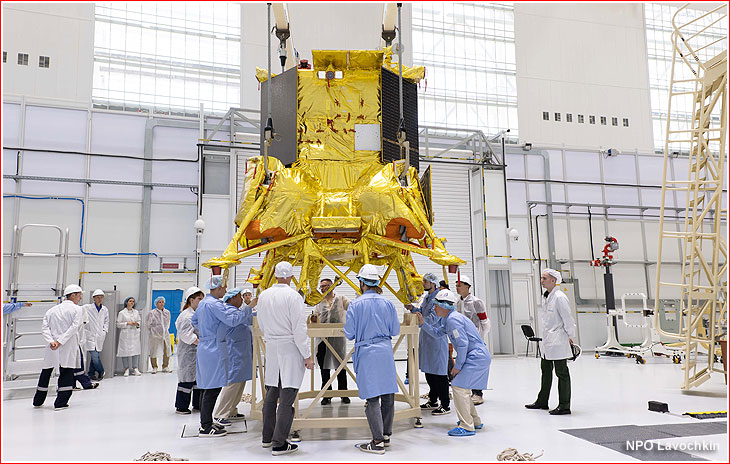
As noted in an earlier post, India left for the moon’s south pole last week, but it won’t be alone for long. Russia is planning to launch its Luna-25 spacecraft, also called the Luna-Glob-Lander, next month. According to NASA, the mission has two primary scientific objectives at the Moon’s south pole:
to study composition of the polar regolith, and
to study the plasma and dust components of the lunar polar exosphere.
The last Luna mission was Luna-24 back in 1976 and involved the return of lunar samples to Earth.
The European Space Agency was planning to be part of this latest mission until the invasion of Ukraine, so Russia is on its own now.
I imagine simpler missions like this will be necessary if Russia plans to eventually build a moon base, though finding a partner may be tough. It is clear that the US and Russia are no longer in a neck-to-neck race back to the Moon. Only China seems to have the stamina to compete with NASA’s Artemis program, though the US is still in the lead for now.
The Luna-25 launch is planned for August 10 if all goes well.
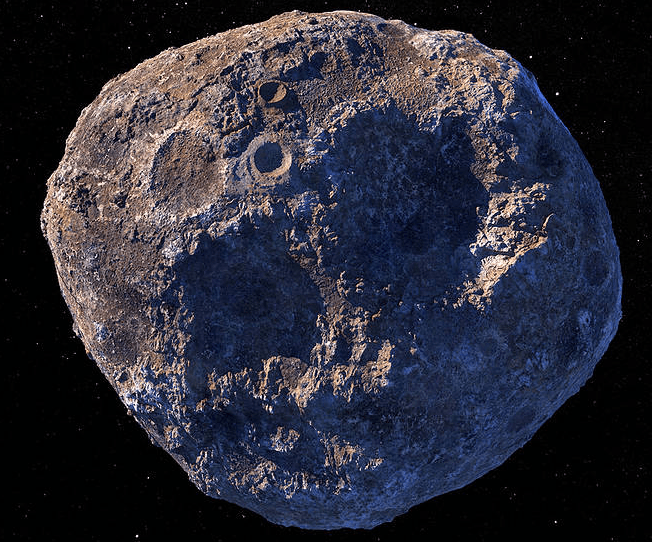
Image (Credit): Illustration of the asteroid Psyche. (NASA)
The delay in the launch of the Psyche spacecraft to visit the asteroid Psyche is having ripple effects on another NASA mission. The $50 million Janus mission with its two probes was supposed to accompany Psyche on the mission to observe two binary asteroid. However, too much time has passed for this separate mission be be accomplished due to the binary asteroids now being too distant from the main mission. Hence, the Janus probes will have to sit this one out. ARSTechnica has a full story on this development.
The good news is that the Psyche spacecraft should be launched this October. So not all is lost.
This will be a tough budget year under this Congress, so NASA will be lucky if it can keep most of its missions on track.
Image (Credit): Chandrayaan-3 launch on July 14, 2023. (Aijaz Rahi/AP)
First, the good news is that India successfully launched a rocket to the Moon last Friday. The Chandrayaan-3 mission, or “moon craft,” includes an orbiter as well as a rover that will explore the southern pole of the Moon. This is India’s second attempt to land on the lunar surface after a failed attempt back in 2019.
The Indian rover is expected to land on the Moon on August 23rd. You can read more about the mission on the Indian government’s mission page.
The other rocket news involves a setback with the United Launch Alliance’s (ULA) new heavy-lift rocket. The launch of the new rocket, the Vulcan Centaur, was delayed until later this year after it was determined that “minor reinforcements” were still needed with the rocket’s upper stage. The upper stage failed back in March.
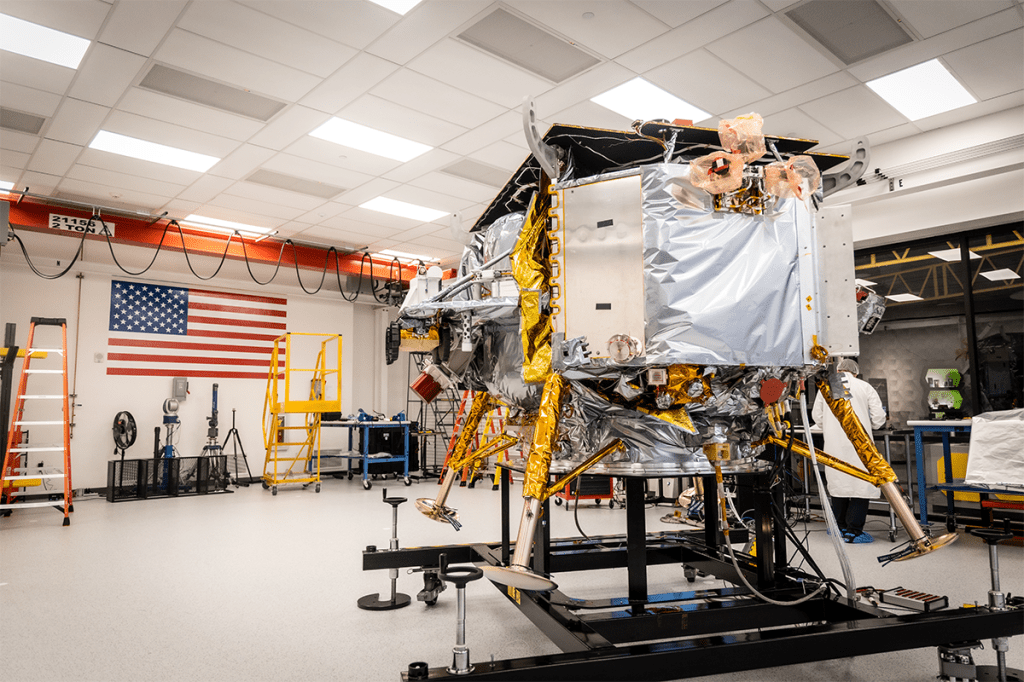
The Vulcan Centaur is the successor to ULA’s Atlas V and Delta IV rockets. It’s planned first launch includes Astrobotic’s Peregrine Lunar Lander (shown below). NASA notes that the lander’s scientific objectives for the upcoming Moon mission include:
…to study the lunar exosphere, thermal properties and hydrogen abundance of the lunar regolith, magnetic fields, and the radiation environment. It will also test advanced solar arrays.
Image (Credit): Newly assembled Peregrine lunar lander being readied for its journey to Florida for integration with the Vulcan Centaur. (Astrobiotic)



 Our Awesome Universe