Space Stories: Aliens Using Black Holes, Fire Approaches JPL, and New Approaches for the Mars Sample

Credit: Image by Gerd Altmann from Pixabay

Here are some recent stories of interest.

Universe TodayScientists Propose New Method to Detect Alien Civilizations via Black Holes

A new paper looks at another way we might be able to detect advanced civilizations, and at its center is the need for energy. The more advanced a civilization becomes, the greater their need for energy and one of the most efficient ways, according to current theories, is to harness the energy from an actively feeding black hole. The paper suggests a civilization feeding matter into a black hole could harvest energy from it; more excitingly perhaps, the process could be detectable within 17,000 light years.

LA TimesFirefighters Battle to Protect NASA’s Jet Propulsion Laboratory, Mt. Wilson

Officials said they are making progress in protecting two key institutions from the Eaton fire. Don Fregulia, an operations section chief for the California Department of Forestry and Fire Protection, which has joined in the Eaton fire response, said that efforts to protect Mt. Wilson had proved successful and he expected that to remain the case. “We’re actively engaged there, and so far, no loss to any values at risk at Mt. Wilson,” Fregulia said. “We’re feeling good about what we have to do up there tonight to keep that site secure.” He said the fire had also spread close to NASA’s Jet Propulsion Laboratory, but he said that’s a priority and crews were “making good progress there as well.”

NASANASA to Explore Two Landing Options for Returning Samples from Mars

To maximize chances of successfully bringing the first Martian rock and sediment samples to Earth for the benefit of humanity, NASA announced Tuesday a new approach to its Mars Sample Return Program. The agency will simultaneously pursue two landing architectures, or strategic plans, during formulation, encouraging competition and innovation, as well as cost and schedule savings. NASA plans to later select a single path forward for the program, which aims to better understand the mysteries of the universe, and to help determine whether the Red Planet ever hosted life. NASA is expected to confirm the program – and its design – in the second half of 2026.
Space Quote: Message in a Bottle to the Universe

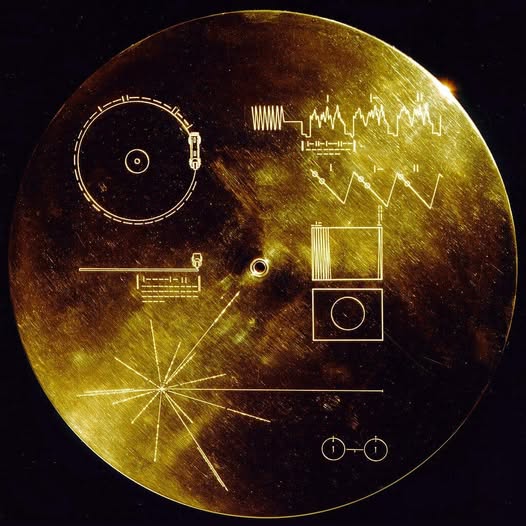
Image (Credit): Golden Record placed on Voyager I and II. (NASA)

“This Voyager spacecraft was constructed by the United States of America. We are a community of 240 million human beings among the more than 4 billion who inhabit the planet Earth. We human beings are still divided into nation states, but these states are rapidly becoming a single global civilization.

We cast this message into the cosmos. It is likely to survive a billion years into our future, when our civilization is profoundly altered and the surface of the Earth may be vastly changed. Of the 200 billion stars in the Milky Way galaxy, some–perhaps many–may have inhabited planets and spacefaring civilizations. If one such civilization intercepts Voyager and can understand these recorded contents, here is our message:

This is a present from a small distant world, a token of our sounds, our science, our images, our music, our thoughts, and our feelings. We are attempting to survive our time so we may live into yours. We hope someday, having solved the problems we face, to join a community of galactic civilizations. This record represents our hope and our determination, and our good will in a vast and awesome universe.”

Statement by then President Jimmy Carter in July 29, 1977 that was placed in both Voyager I and II, both of which are now barreling beyond our solar system. Voyager II was launched on August 20, 1977 followed by Voyager I on September 5, 1977.

Looking Back at What Did Not Work in 2024

Image (Credit): NASA’s new Advanced Composite Solar Sail System. (NASA)

It is worthwhile reflecting on all of the space successes in 2024, though if we believe we learn from our mistakes then it would seem the mission shortcomings are worth highlighting as well.

Fortunately, Live Science has prepared a list for our review. Its article “10 Times Space Missions Went Very Wrong in 2024” includes well known stories, such as the stranded Starliner and SpaceX rocket woes, as well as less covered items, such as:

  • Tumbling Solar Sail – the failure of NASA’s new Advanced Composite Solar Sail System (ACS3);
  • Shattering Spacecraft – multiple cases of new space debris and close calls that could have impacted other space missions; and
  • Multiple Voyager Issues – the continued decline of the two Voyager probes as they reach further into space.

Check out the story for a full list of issues.

Note: This website has also covered a number of flubs, including:

2024 Space Hightlights – Missions

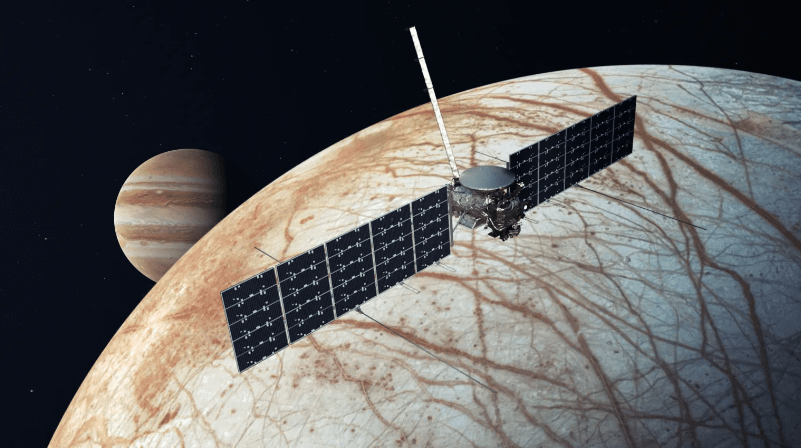
Image (Credit): An artist’s rendering of NASA’s Europa Clipper spacecraft over Europa. (NASA/JPL-Caltech)

Another list worth highlighting at year-end covers all of the space missions from 2024. For example, this list from Freethink, “the top 10 space stories of 2024,” includes the launch of the Europa Clipper, China’s Chang’e 6 round-trip to the Moon, and a successful commercial launch to the Moon (Odysseus lunar lander).

Here are some other lists of missions from 2024:

Note: The Awesome-Universe list of top missions looking back in 2024 include:

Space Quote: The Workings of Our Sun

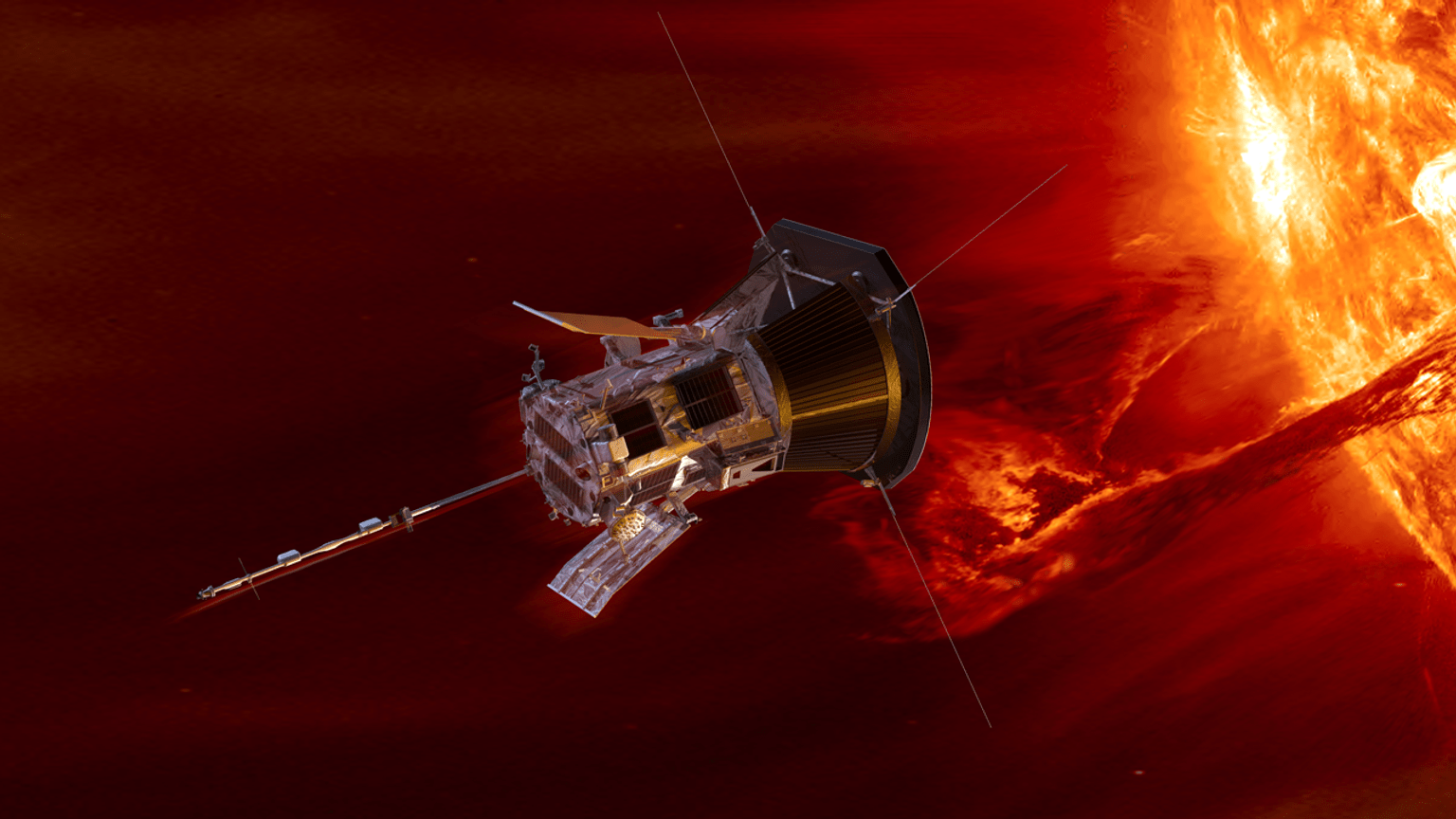
Image (Credit): Artist’s rendering of NASA’s Parker Solar Probe approaching the Sun. (NASA)

“Flying this close to the Sun is a historic moment in humanity’s first mission to a star…By studying the Sun up close, we can better understand its impacts throughout our solar system, including on the technology we use daily on Earth and in space, as well as learn about the workings of stars across the universe to aid in our search for habitable worlds beyond our home planet.”

Statement by Nicky Fox, who leads the Science Mission Directorate at NASA Headquarters in Washington, in reference to NASA’s Parker Solar Probe recent flyby of the Sun.