Space Quote: Lunar Trailblazer Mission May be Over Before it Started

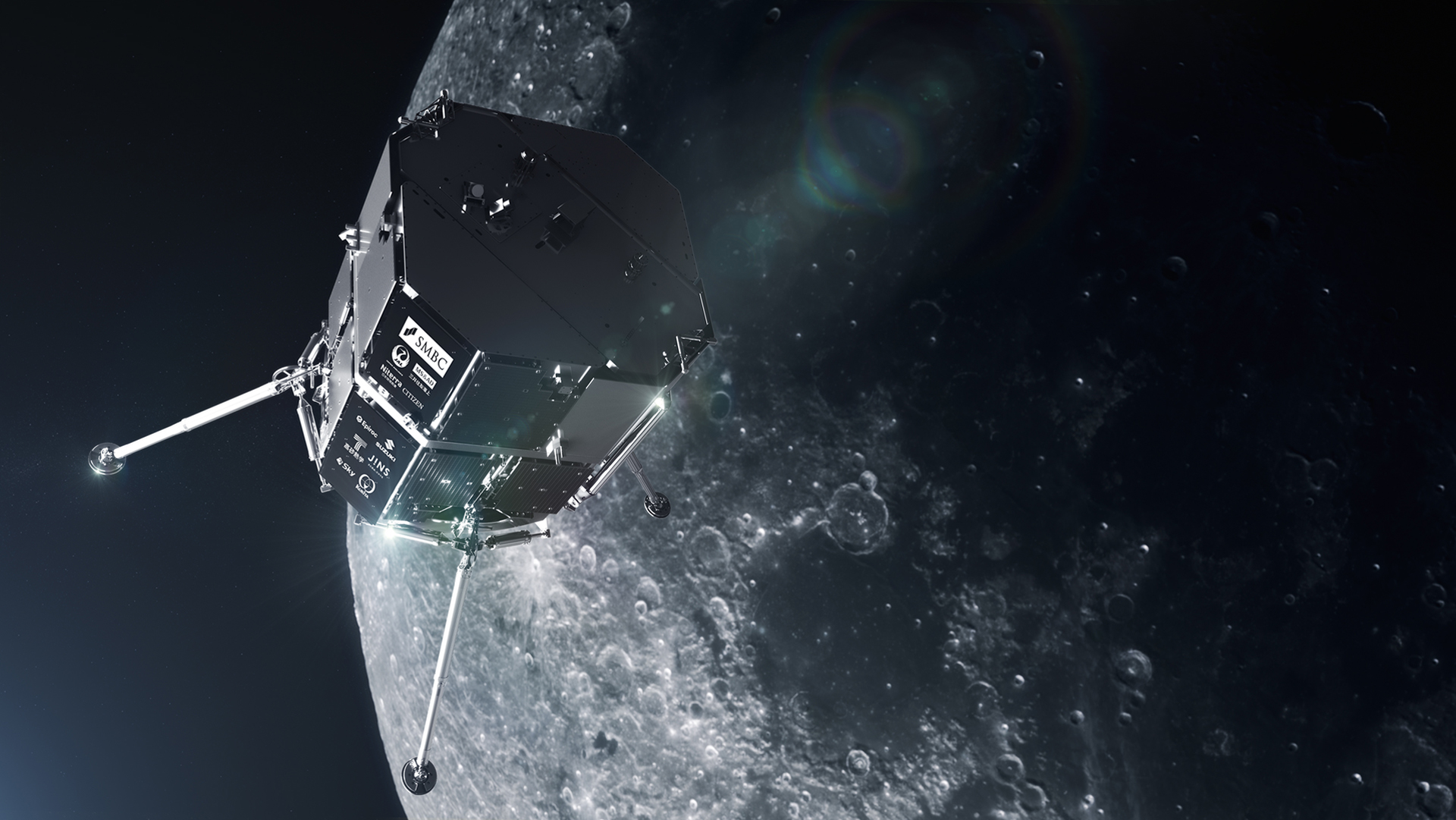
Image (Credit): Artist’s rendering of NASA’s Lunar Trailblazer orbiting the Moon. (NASA)

“The Lunar Trailblazer team has been working around the clock to re-establish communications with the spacecraft…NASA sends up high-risk, high-reward missions like Lunar Trailblazer to do incredible science at a lower cost, and the team truly encapsulates the NASA innovative spirit — if anyone can bring Lunar Trailblazer back, it is them.”

-Statement by Nicky Fox, the associate administrator of the NASA Science Mission Directorate, as quoted by CNET. The Lunar Trailblazer was launched with Intuitive Machines’ Athena lunar lander on March 26th. The satellite was designed to orbit about 60 miles above the Moon’s surface as it mapped potential water on the lunar surface.

SPHEREx and PUNCH Missions Delayed

Image (Credit): NASA’s SPHEREx and PUNCH satellites being prepared for launch inside the Astrotech Space Operations facility at Vandenberg Space Force Base in California, on Thursday, February 27, 2025. (NASA)

While NASA’s Spectro-Photometer for the History of the Universe, Epoch of Reionization and Ices Explorer (SPHEREx) and Polarimeter to Unify the Corona and Heliosphere (PUNCH) missions were expected to launch last weekend, they have been delayed until Thursday, March 6th. The launch will take place from the Vandenberg Space Force Base in California.

SPHEREx will spend two years collecting data on the origins of the universe by studying more than 450 million galaxies as well as more than 100 million stars in the Milky Way. You can learn more about the satellite’s mission by watching this Jet Propulsion Laboratory video.

PUNCH will be focused on events here in our own solar system. Consisting of four small satellites in low Earth orbit, the mission will study the entire inner heliosphere to learn how the Sun’s corona becomes the solar wind. You can learn more about the mission by watching this NASA video.

Thursday should be a busy day with these two satellites being launched and Intuitive Machines’ Athena lunar lander touching down on the Moon.

Blue Ghost Lands on Lunar Surface

Image (Credit): Blue Ghost completed a precision landing in Mare Crisium at 2:34 a.m. CST on March 2 , touching down within its 100-meter landing target next to a volcanic feature called Mons Latreille. (Firefly Aerospace)

Above is the first image shared by the Blue Ghost lunar lander as it touched down on the Moon. Being the first attempt by Firefly Aerospace to land on the Moon, it is an impressive feat. The lunar lander will spend the next 14 days conducting planned experiments on the Moon using the various NASA instruments it is carrying.

In a press release, Jason Kim, CEO of Firefly Aerospace, stated:

Firefly is literally and figuratively over the Moon…Our Blue Ghost lunar lander now has a permanent home on the lunar surface with 10 NASA payloads and a plaque with every Firefly employee’s name. This bold, unstoppable team has proven we’re well equipped to deliver reliable, affordable access to the Moon, and we won’t stop there. With annual lunar missions, Firefly is paving the way for a lasting lunar presence that will help unlock access to the rest of the solar system for our nation, our partners, and the world.

It is a bold statement by a bold company, and hopefully the start of many more such missions down the road. NASA should also be thrilled with what appears to be a solid success for its Commercial Lunar Payload Services program.

NASA acting Administrator Janet Petro shared her enthusiasm, stating:

This incredible achievement demonstrates how NASA and American companies are leading the way in space exploration for the benefit of all…We have already learned many lessons – and the technological and science demonstrations onboard Firefly’s Blue Ghost Mission 1 will improve our ability to not only discover more science, but to ensure the safety of our spacecraft instruments for future human exploration – both in the short term and long term.

Congrats to everyone involved in this mission.

Russian Cargo Heads to the ISS

Image (Credit): Launch of Russia’s Progress MS-30 lifting off from Baikonur Cosmodrome in Kazakhstan. (NASA)

While things are still unstable with the Russians here on Earth, the International Space Station (ISS) resupply missions continue. Yesterday saw the launch of the Progress MS-30 cargo spacecraft from Kazakhstan. The supplies should be at the ISS by late tomorrow.

Whatever is happening between the US and Russia with regards to Ukrainian negotiations, it is good to see that space science is still taking place in the background.

It’s business as usual. Let’s keep it up.he

Update: The Progress MS-30 has successfully arrived at the ISS.

Athena is On Her Way to the Moon

Image (Credit): The launch of Intuitive Machines’ Nova-C lunar lander (IM-2) from Launch Complex 39A at NASA’s Kennedy Space Center in Florida on Wednesday, February 26. (NASA)

Yesterday’s launch of Intuitive Machines’ IM-2 mission carrying the Athena lander was a success. The private sector mission, part of NASA’s Commercial Lunar Payload Services initiative, is heading to the Moon to look for water at the lunar South Pole. The launch follows the less successful IM-1 mission from last year with the Odysseus lander.

Athena is expected to land on the lunar surface on March 6, about four days after the scheduled landing of Firefly Aerospace’s Blue Ghost spacecraft.

NASA instruments aboard the IM-2 mission include:

  • Polar Resources Ice Mining Experiment-1 (PRIME-1): This experiment will explore the Moon’s subsurface and analyze where lunar resources may reside. The experiment’s two key instruments will demonstrate the ability to extract and analyze lunar soil to detect volatile chemical compounds that turn into gas. The two instruments will work in tandem: The Regolith and Ice Drill for Exploring New Terrains will drill into the Moon’s surface to collect samples, while the Mass Spectrometer Observing Lunar Operations will analyze these samples to determine the gas composition released across the sampling depth. The PRIME-1 technology will provide valuable data to better understand the Moon’s surface and how to work with and on it.
  • Laser Retroreflector Array (LRA): This collection of eight retroreflectors will enable precision laser ranging, which is a measurement of the distance between the orbiting or landing spacecraft to the reflector on the lander. The LRA is a passive optical instrument and will function as a permanent location marker on the Moon for decades to come.
  • Micro Nova Hopper: Funded by NASA’s Space Technology Mission Directorate Tipping Point initiative, Intuitive Machines’ Micro Nova hopper, Grace, is designed to enable high-resolution surveying of the lunar surface under its flight path. This autonomous propulsive drone aims to deploy to the surface and hop into a nearby crater to survey the lunar surface and send science data back to the lander. It’s designed to hop in and out of a permanently shadowed region, providing a first look into undiscovered regions that may provide critical information to sustain a human presence on the Moon.
  • Nokia Lunar Surface Communications System (LSCS): Also developed with funding from NASA’s Tipping Point initiative, Nokia’s LSCS 4G/LTE communications system will demonstrate cellular communications between the Intuitive Machines lander, a Lunar Outpost rover, and the Micro Nova hopper. Engineered to transmit high-definition video, command-and-control messages, and sensor and telemetry data, the LSCS aims to demonstrate an ultra-compact advanced communication solution for future infrastructure on the Moon and beyond.

Let’s hope the second mission goes without a hitch. We need a win for NASA and its efforts to expand the commercial space industry.

Credit: Intuitive Machines