Space Quote: Are We Ready for Extended Space Travel by Humans?

Credit: Image by Olena from Pixabay.

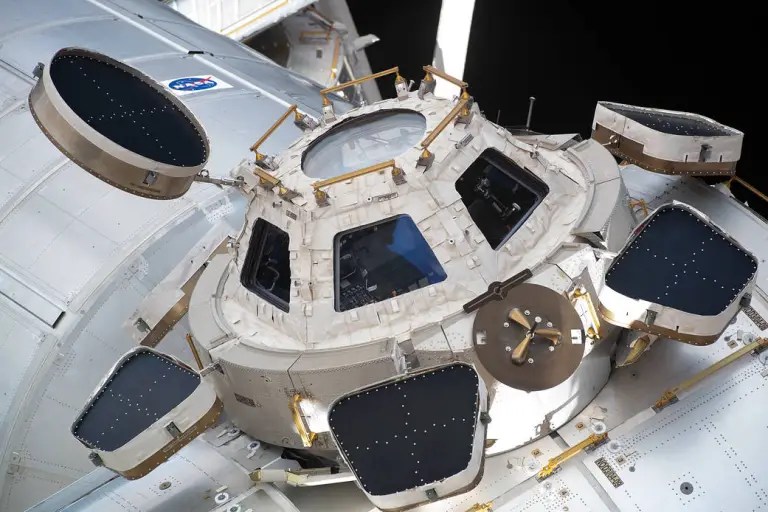
“As an astronaut, I believe our current technology may not have solutions for critical situations we are bound to face moving away from low Earth orbit, and this incident illustrates exactly that. NASA needs to address some urgent and sometimes uncomfortable questions. For example, should a doctor always be on the crew? Should a spaceship heading to Mars have high-tech medical capabilities and facilities — not just a ‘med kit’? A kit consisting of only medications, saline solution, a defibrillator and a few basic instruments places a crew at a serious disadvantage if things really go south.”

-Statement for former NASA astronaut Clayton Anderson in a Washington Post editorial published after this week’s return of four crew members who needed to be evacuated from the International Space Station due to a medical emergency. Had the health issue occurred six months into a trip to Mars the circumstances would have been dire without sufficient health resources. This is more evidence that acquiring the necessary hardware for space travel may be the easy part compared to the software, also known as humans.

Space Quote: Should We Worry About Space Monopolies?

Credit: Image by Jim Cooper from Pixabay

“The comparison I often like to make is with the East India Company: a private British enterprise that became so powerful it could shape the politics of nations and at times had an army twice the size of Britain’s. It began as trade; it ended in domination. Could a similar dynamic unfold locally in our solar system, where a handful of today’s tech giants and billionaires control access to orbit, communications, and eventually, extraterrestrial resources? A monopoly in space would be dangerous for humanity. The challenge is to encourage innovation and investment without ceding ownership of the cosmos to a few individuals or organisations.”

-Taken from a Guardian article titled “There’s a New Space Race – Will the Billionaires Win?” by Maggie Aderin-Pocock. One only needs to read the book series by Daniel Abraham and Ty Franck, starting with Leviathan Wakes, or watch the televised version, The Expanse, to have some idea of what the future may hold.

Space Quote: Another Theory Accounting for the Star of Bethlehem

Credit: Image by Vicki Hamilton from Pixabay

“A comet could stay in one place if it was basically on a ‘collision course’ with Earth,…That’s exactly what you would expect of an object that’s going to pass very, very close to the Earth.”

-Statement by Mark Matney, a planetary scientist at NASA, as quoted in Scientific American. He has proposed in his paper that the Star of Bethlehem cited in the Bible may have been a “broom star,” or comet, spotted by Chinese astronomers in 5 B.C.E. In his paper, he concludes “…it is no longer justifiable to claim that ‘no astronomical event’ could possibly have behaved in the manner described by Matthew.”

Space Quote: China, the Moon, and the Military

Image (Credit): China’s Chang’e-4 Lander on the Moon’s surface, as captured by the Yutu-2 rover in early 2019. (CNSA)

“Politically, China’s lunar program has demonstrated an ability to undertake cutting edge scientific programs, as demonstrated in the innovative Chang’e-4 and Chang’e-6 probes. In terms of direct military benefits, its value is more limited. China is not in a direct space race with any other state, nor is it racing to establish settlements or “space colonies.” While there are theories of how one might employ a lunar base to undertake surveillance or even kinetic operations against terrestrial targets, the costs associated with such ambitions would be enormous. Surveillance platforms on the Moon, for example, would be almost 240,000 miles from Earth. To obtain high resolution images would be enormously costly. It is not at all clear that such efforts would win a cost-benefit analysis against systems in standard earth orbits (LEO, MEO, GEO), or even air-breathing systems. Instead, the most likely military benefits are in terms of improvements in Chinese space support capabilities, thus expanding the volume of space employed for military purposes.”

-Statement by Dean Cheng, Senior Fellow at the Potomac Institute for Policy Studies, from a hearing before the House Science, Space, and Technology Committee, Space and Aeronautics Subcommittee titled “Strategic Trajectories Assessing China’s Space Rise and the Risks to U.S. Leadership.” Mr. Cheng was one of four witnesses at the hearing.

Space Quote: Goddard Space Flight Center Threatened by Cuts

Image (Credit): Sign for NASA’s Goddard Space Flight Center in Greenbelt, Maryland. (NASA)

“…actions taken during the last nine months threaten the workers at Goddard and their ability to lead the world in this science and exploration. Between unnecessary voluntary separations, deferred resignations, reductions in force, and other pressure, thousands of civil servants and contractors are no longer working at GSFC. Other countries with space programs from our political allies to our adversaries have been recruiting our top scientists and researchers with massive salaries, research budgets, and the promise of stability. Where the US has considered stepping back, China has made clear they are eager to step in. We can and must re-invest in the people and centers that make America the global space leader and that starts with Goddard.”

-Statement in a November 13th letter from Maryland’s Senators and Representatives to NASA’s Acting Administrator Sean Duffy regarding recent cuts at NASA’s Goddard Space Flight Center (GSFC) in Greenbelt, Maryland. The letter included four questions to be answered by November 17th.