Space Quote: Google’s Expensive Mistake Regarding the JWST

Image (Credit): Actual image of the exoplanet 2M1207b (red) around its star 2M1207A. (European Southern Observatory)

“What new discoveries from the James Webb space telescope (JWST) can I tell my nine-year old about?”

-The one question put to Google’s Bard AI program, which was designed to rival Microsoft’s ChatGPT. In response, Bard stated the JWST took the very first pictures of an exoplanet, which was incorrect. The first image of an exoplanet can be seen above, taken by the European Southern Observatory’s Very Large Telescope back in 2004. The exoplanet, called 2M1207 b, is a gas giant about five times the mass of Jupiter. Following the erroneous feedback, the stock of Google’s parent Alphabet dropped about $100 billion in value. Below is an image from another exoplanet spotted by the JWST last year, called HIP 65426 b, which is about six to eight times the mass of Jupiter.

Image (Credit): First direct image of an exoplanet by the JWST. The exoplanet, called HIP 65426 b, is about 6 to 8 times the mass of Jupiter and only 15 to 20 million years old. The Earth is about 4.5-billion-year-old Earth. (NASA/ESA/CSA, A Carter (UCSC), the ERS 1386 team, and A. Pagan (STScI))

Space Quote: Nukes in Space

Image (Credit): NASA’s Cassini spacecraft lifts off on Oct. 15, 1997, atop a Titan IVB rocket. (NASA)

“NASA should educate the public about why nuclear propulsion is not only something nice to have, but is a necessity if human civilization is to spread beyond the Earth on a greater scale than a few explorers. Access to the mineral and energy resources of the solar system would be a boon to all humankind and would be worth the infinitesimal risk of launching nuclear fuel into space.”

-Statement by Mark R. Whittington in an editorial in The Hill titled “Will the NASA-DARPA nuclear engine test cause environmental protests?” In his piece, Mr. Whittington discusses plans to build a nuclear-powered rocket for a Mars mission and highlights how protests surrounded the 1997 launch of the nuclear-powered Cassini probe to Saturn, with one scientist estimating that “an explosion on the launch pad could spread radioactive plutonium across Central Florida, potentially cause more than 1 million casualties…” Mr. Whittington is the author of various space exploration studies, such as Why is It So Hard to Go Back to the Moon?

Space Quote: Getting Ready for Mars

Image (Credit): The surface of Mars. (NASA)

“The space domain is critical to modern commerce, scientific discovery, and national security. The ability to accomplish leap-ahead advances in space technology through the DRACO nuclear thermal rocket program will be essential for more efficiently and quickly transporting material to the Moon and eventually, people to Mars.”

Statement by Dr. Stefanie Tompkins, director of the Defense Advanced Research Projects Agency (DARPA), regarding its partnership with NASA on the Demonstration Rocket for Agile Cislunar Operations (DRACO) program to design and develop a nuclear thermal rocket engine that can bring a crewed mission to the Red Planet. It’s another encouraging step as we eventually move from the Moon to Mars.

Space Quote: More From Uncle Sam on UFOs (or UAPs)

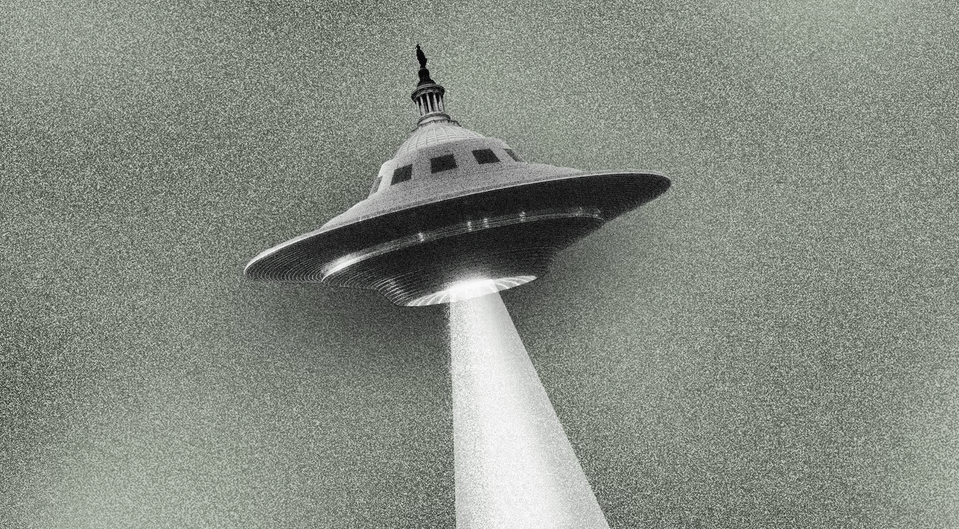
Credit: Getty/The Atlantic

“Since the publication of the ODNI preliminary assessment in June 2021, UAP reporting has increased, partially due to a concentrated effort to destigmatize the topic of UAP and instead recognize the potential risks that it poses as both a safety of flight hazard and potential adversarial activity. Whereas there were previously 144 UAP reports covered during the 17 years of UAP reporting included in the ODNI preliminary assessment on UAP, there have been 247 more UAP reports during the 17 months since. Combined with another 119 reports either discovered or reported late that fell within the original 17 year period but were not included in the preliminary assessment, a total of 510 UAP reports are currently catalogued.”

-Statement from the 2022 Annual Report on Unidentified Aerial Phenomena (UAP), published earlier this week by the Office of the Director of National Intelligence (ODNI). It seems that with greater awareness comes greater reporting, but that does not necessarily equate with green aliens. What is interesting is the source of these reports. They are not your neighbor standing on his deck in his pajamas. Instead, we read, “The majority of new UAP reporting originates from U.S. Navy and U.S. Air Force aviators and operators who witnessed UAP during the course of their operational duties…” Very interesting.

Space Quote: Starlab to Replace the ISS

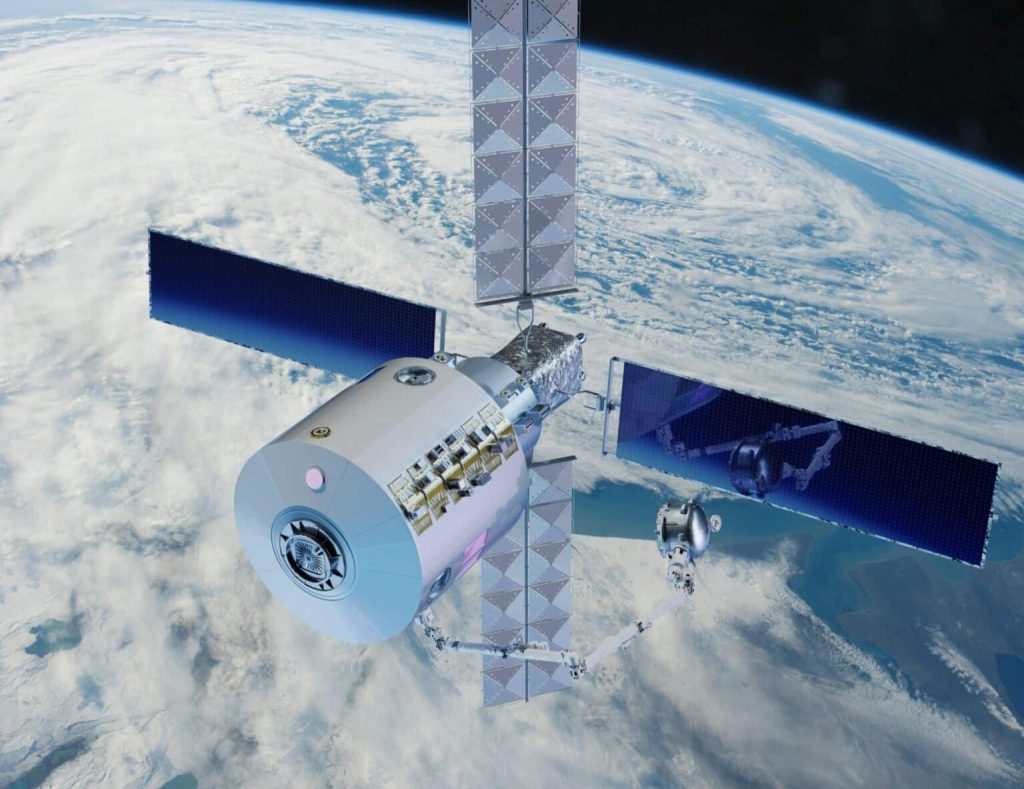
Image (Credit): Image of Starlab from the Voyager Space website. (Voyager Space)

“This partnership with Voyager Space is the first step toward fielding the next generation of space stations to serve international astronauts. We are excited to support a project aimed at changing history…This collaboration is an important step in making Starlab a reality, providing a foundation for long-lasting European and American leadership in space. Our team is looking forward to diving in on the technology and putting our best engineers to work.”

-Statement by Jean-Marc Nasr, Executive Vice President of Space Systems at Airbus Defence and Space, in a press release regarding Voyager Space and Airbus Defence and Space partnering to develop and operate Starlab in 2028. The Low-Earth Orbit space station will serve NASA, ESA, and others in the scientific community following the retirement of the International Space Station. NASA has already awarded $160 million to Voyager and Nanoracks, its operating company, to create the new space station.