Space Stories: More Moon Missions, a Two-Faced Star, and Missing Dark Matter

Image (Credit): An artist’s rendering of NASA’s VIPER Moon rover. (NASA/Daniel Rutter)

Here are some recent stories of interest.

Ars Technica : “NASA Starts Building Ice-hunting Moon Rover

The search for ice at the Moon’s poles has loomed large in the field of lunar science since an instrument on an Indian satellite discovered water molecules inside shadowed crater floors more than a decade ago. NASA is now assembling a golf cart-size rover to drive into the dark polar craters to search for ice deposits that could be used by future astronauts to make their own rocket propellant and breathable air. “A large group of people have been working on this idea for 10-plus years,” said Anthony Colaprete, project scientist for NASA’s Volatiles Investigating Polar Exploration Rover (VIPER) mission.

Caltech: “Two-Faced Star Exposed

In a first for white dwarfs, the burnt-out cores of dead stars, astronomers have discovered that at least one member of this cosmic family is two faced. One side of the white dwarf is composed of hydrogen, while the other is made up of helium. “The surface of the white dwarf completely changes from one side to the other,” says Ilaria Caiazzo, a postdoctoral scholar at Caltech who leads a new study on the findings in the journal Nature. “When I show the observations to people, they are blown away.”

Instituto de Astrofísica de Canarias: “The Puzzle of the Galaxy with No Dark Matter

A team of scientists, led by the researcher at the IAC and the University of La Laguna (ULL) Sebastién Comerón, has found that the galaxy NGC 1277 does not contain dark matter. This is the first time that a massive galaxy (it has a mass several times that of the Milky Way) has not shown evidence for this invisible component of the universe. “This result does not fit in with the currently accepted cosmological models, which include dark matter,” explains Comerón.
Space Stories: Ingenuity Mars Helicopter is Back, Reclaiming More Water on the ISS, and Directly Imaging an Exoplanet

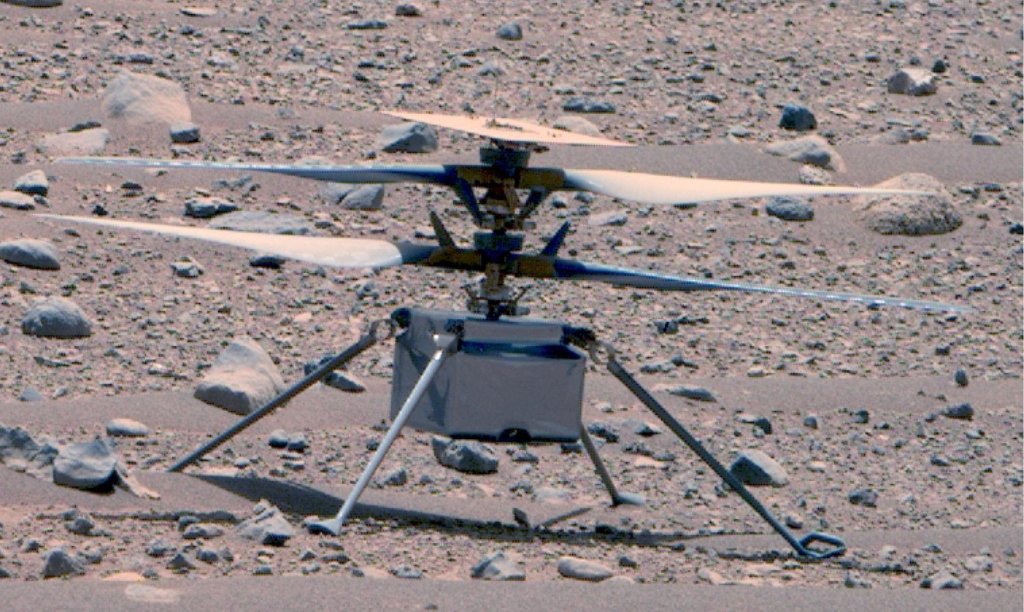
Image (Credit): NASA’s Ingenuity Mars Helicopter. (NASA/JPL-Caltech/ASU/MSSS)

Here are some recent stories of interest.

NASA: “NASA’s Ingenuity Mars Helicopter Phones Home

The 52nd flight of NASA’s Ingenuity Mars Helicopter is now in the official mission logbook as a success. The flight took place back on April 26, but mission controllers at NASA’s Jet Propulsion Laboratory in Southern California lost contact with the helicopter as it descended toward the surface for landing. The Ingenuity team expected the communications dropout because a hill stood between the helicopter’s landing location and the Perseverance rover’s position, blocking communication between the two. 

Phys.org: “NASA Achieves Water Recovery Milestone on International Space Station

Astronauts on interplanetary missions will be a bit less thirsty after a new NASA system succeeded at reclaiming 98% of waste water aboard the International Space Station (ISS) by converting things like urine into a drinkable state. Future crewed deep space missions that will last months or even years will be very different from any that have come before. Until now, astronauts have either carried their own supplies along or relied on regular visits from cargo ships. As to waste products, these were simply disposed of in a variety of ways. Unfortunately, deep space missions don’t have that luxury.

SCI.News: “Astronomers Directly Image Jupiter-Like Exoplanet around Nearby Young Star

AF Leporis is a bright F8V star located about 87.5 light-years away from Earth in the constellation of Lepus. Also known as AF Lep, HD 35850, HIP 25486 and HR 1817, the star has an age of 24 million years and a mass of 1.2 solar masses. The star hosts a young exoplanet, AF Leporis b (AF Lep b), which is located about 8 times the Earth-Sun distance and is among the first ever discovered using a technique called astrometry. This method measures the subtle movements of a host star over many years to help astronomers determine whether hard-to-see orbiting companions, including planets, are gravitationally tugging at it.

Space Stories: Launch of the Euclid Space Telescope, Mercury Flyby, and a Super Hot Brown Dwarf

Image (Credit): Artist’s rendering of the ESA’s Euclid Space Telescope. (ESA, CC BY-SA 3.0 IGO)

Here are some recent stories of interest.

NASA/JPL: “NASA to Provide Coverage for Launch of ESA ‘Dark Universe’ Mission

The ESA (European Space Agency) and SpaceX are targeting no earlier than 11:11 a.m. EDT (8:11 a.m. PDT) Saturday, July 1, to launch the Euclid spacecraft. Euclid is an ESA mission with contributions from NASA that will shed light on the nature of dark matter and dark energy, two of the biggest modern mysteries about the universe.

Sky&Telescope: “BepiColombo Mission Makes Third Mercury Flyby

An intrepid space mission had another brief glimpse of its final destination this week, as the European Space Agency’s BepiColombo flew past Mercury for a third time. The team confirms that the spacecraft is in good health post flyby, and that all instruments performed as planned. “Everything went very smoothly with the flyby and the images from the monitoring cameras taken during the close-approach phase of the flyby have been transmitted to the ground,” said Ignacio Clerigo (ESA) in a recent press release. “While the next Mercury flyby isn’t until September 2024, there are still challenges to tackle in the intervening time.”

Phys.org: “Discovery of a Brown Dwarf Hotter than the Sun

An international team of astronomers has discovered a planet-like object that is hotter than the sun. Their report has been accepted for publication in the journal Nature Astronomy and is currently available on the arXiv pre-print server. Brown dwarfs are sometimes called failed stars and do not qualify for the category of either a planet or a star. In this new effort, the researchers have identified one that orbits a star so closely that its temperature is hotter than our sun.

Space Stories: Mapping with Pulsars, Rocky Exoplanets, and Words from the Pope

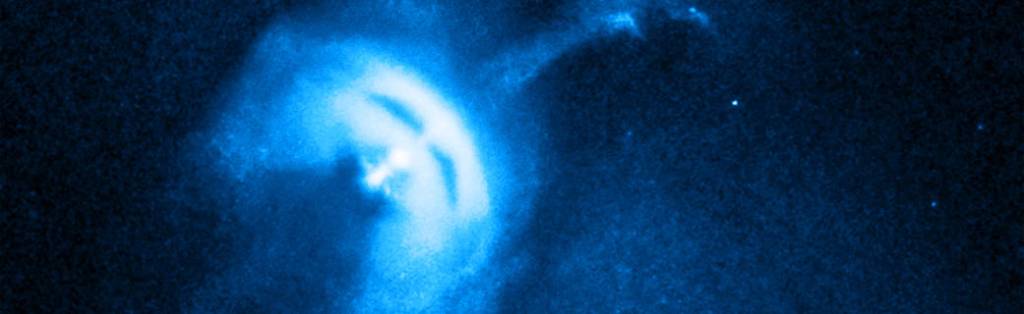
Image (Credit): The Vela pulsar, a neutron star that was formed when a massive star collapsed. (X-ray: NASA/CXC/Univ of Toronto/M.Durant et al; Optical: DSS/Davide De Martin)

Here are some recent stories of interest.

Universe Today: “Pulsars Could Help Map the Black Hole at the Center of the Milky Way

Last year, the Event Horizon Telescope (EHT)—an international consortium of astronomers and observatories—announced they had taken the first images of Sag A*, which came just two years after the release of the first-ever images of an SMBH (M87). In 2014, the European members of the EHT launched another initiative known as BlackHoleCam to gain a better understanding of SMBHs using a combination of radio imaging, pulsar observations, astrometry, and GR. In a recent paper, the BHC initiative described how they tested GR by observing pulsars orbiting Sgr A*.

Max Planck Institute for Astronomy: “Searching for an Atmosphere on the Rocky Exoplanet TRAPPIST-1 c

Using the James Webb Space Telescope, an MPIA-led group of astronomers searched for an atmosphere on rocky exoplanet TRAPPIST-1 c. Although the planet is nearly identical in size and temperature to Venus, its atmosphere has turned out to be very different. By analysing the heat emitted from the planet, they conclude it may only have a tenuous atmosphere with minimal carbon dioxide. However, this measurement is also consistent with a barren rocky planet without any significant atmosphere. This work contributes to our understanding of how the atmospheres of rocky planets orbiting low-mass stars can withstand their strong stellar winds and intense UV radiation.

Catholic News Service: “Pope Francis to Young Astronomers: Keep Love and Wonder Alive

Pope Francis sent a letter to young astronomy scholars Tuesday encouraging them to maintain their “sense of wonder” and surprise throughout their research. While praising the “great discoveries” of astronomy, he urged the researchers never to lose sight of other important realities such as love and friendship.

Space Stories: James Webb’s Partner, the Big Bang Black Holes, and Green Energy on the Red Planet

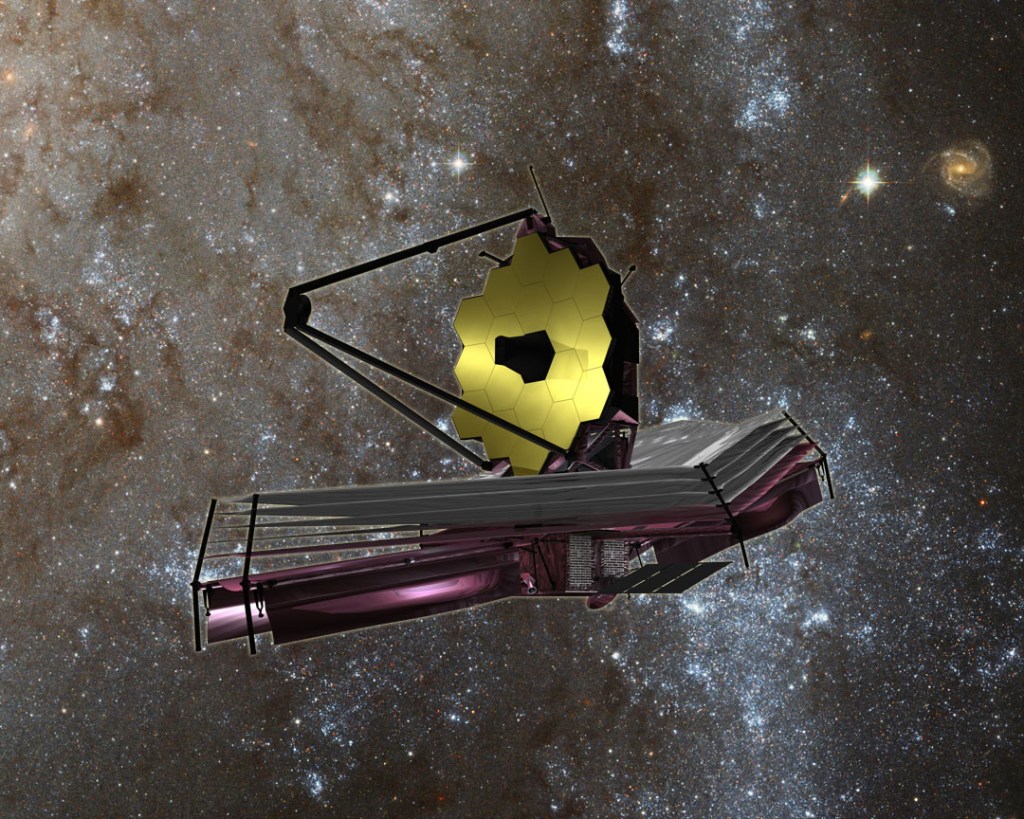
Image (Credit): James Webb Space Telescope. (NASA)

Here are some recent stories of interest.

Futurism: “NASA Sending Adorable Little Buddy to Hang Out Next to the James Webb

The space agency recently selected a toaster-sized cubesat that will become the much bigger telescope’s tiny, adorable “sidekick,” according to a statement. NASA chose the $8.5 million space mission, called the “Monitoring Activity from Nearby sTars with uv Imaging and Spectroscopy” (MANTIS), which will be designed and built by researchers at the University of Colorado Boulder. The diminutive but mighty spacecraft, scheduled to launch sometime in 2026, will make observations of the night sky in the full range of ultraviolet light, including extreme UV (EUV) light, a more energetic form.

Universe Today: “Why Didn’t the Big Bang Collapse in a Giant Black Hole?

Despite the enormous densities, the early universe didn’t collapse into a black hole because, simply put, there was nothing to collapse into…Even though the early universe was incredibly dense, it was also incredibly uniform. The average density throughout the universe was the same from place to place. There weren’t enough differences to trigger the formation of black holes.

University of Warwick: “Using Photosynthesis for Martian Occupation—While Making Space Travel More Sustainable

In a study published in Nature Communications, scientists assess a new technique which could convert renewable, green energy from outside the Earth’s atmosphere. They are taking advantage of photosynthesis—the chemical process plants undergo every day to create energy—to help the space industry become more sustainable. The research led by the University of Warwick evaluates the use of a special device known as semiconductor to absorb sunlight on moon and Mars. It is hoped that the devices could promote Martian life support systems.