Space Stories: Mad Rush for the Moon, An Unusual Exoplanet, and Flinging the Earth

Image (Credit): Crescent Moon as seen from the International Space Station. (NASA)

Here are some recent stories of interest.

Science.org: “Moon’s Scientifically Important Sites could be ‘Lost Forever’ in Mining Rush

Science and commerce may be headed for a clash on remote terrain: the Moon. For the first time in half a century, NASA is sending a craft to the lunar surface, with the launch at the end of this year of Peregrine Mission 1, a lander built by the private company Astrobotic Technology. Dozens of other craft will soon follow, many as part of NASA’s Artemis program to return astronauts to the Moon. Most researchers are looking forward to a new golden age of exploration and science. But some are worried. They foresee that the advent of private landers will lead to a “Moon rush,” as companies race to grab valuable minerals and resources while trampling over scientifically important lunar sites. With space law offering little or no protection to these areas, researchers are starting to lobby governments and international agencies to do something before it’s too late.

SciTechDaily: “Unusually Massive” – Astronomers Discover a Planet That Shouldn’t Exist

Researchers at Penn State have discovered an unusually massive planet, LHS 3154b, orbiting an ultracool dwarf star. This finding, contradicting current theories, prompts a reassessment of star and planet formation processes. The discovery of a planet that is far too massive for its sun is calling into question what was previously understood about the formation of planets and their solar systems, according to Penn State researchers. In a paper published on November 30 in the journal Science, researchers report the discovery of a planet more than 13 times as massive as Earth orbiting the “ultracool” star LHS 3154, which itself is nine times less massive than the sun. The mass ratio of the newly found planet with its host star is more than 100 times higher than that of Earth and the sun.

New Scientist: “Passing Star Could Fling Earth Out Past Pluto into the Oort Cloud

If a passing star came near the solar system, Earth would probably be fine – but there is a small chance our entire world could get thrown to the outer reaches of the solar system, crash into another planet or even get stolen by the wandering star. The other planets in the solar system could suffer similar fates, and Mercury in particular would be at risk of falling into the sun.

Space Stories: Japan Bolsters it Space Investments, The Next Starship, and Russia’s Declining Space Program

Image (Credit): Artist’s rendering of JAXA’s proposed lunar rover with Toyota. (Toyota/JAXA)

Here are some recent stories of interest.

Forbes: “Modern Space Race: Japan Pledges $6.6 Billion For Developing Space Sector As U.S. And China Plan Historic Missions

The Japanese government has said it will establish a $6.6 billion (¥1 trillion) fund to develop the country’s space industry as programs in the U.S., Russia, China and India rush to put men on the moon, build lunar sites and plan for the future of the International Space Station in a renewed race for celestial supremacy...Nikkei, a Japanese newspaper, reported that funding will be given to companies developing technologies that could be used to support national security or those that could rival Elon Musk’s SpaceX by developing rockets and “satellite constellations”—groups of satellites that operate as one system.

PayloadSpace.com: “SpaceX Announces a Starship Version Two is in the Works

With just two Starship integrated test flights under its belt, SpaceX announced last week it is already working on a major overhaul of its second-stage Starship vehicle. The design changes will be significant enough to speciate the ship, giving it the title of Version 2. SpaceX plans to finish and launch four or five additional Starship V1 prototypes before transitioning to its V2 product line, Elon Musk said on X. Insights gained from the upcoming flights will be integrated into the next-gen rocket.

Center for European Policy Analysis: “Russia’s Earthly Aggression Cripples its Celestial Plans

When the US imposed sanctions to degrade Russia’s aerospace industry, including embargoes on semiconductors, lasers, sensors, and navigation equipment, Dmitry Rogozin, then chief of Russia’s space program, warned it might cause the International Space Station to fall on the US or Europe. These comments and others from a supposedly serious scientific organization did cause a crash — the decades-old US-Russia space partnership was effectively ended after decades of joint work, including the Soviet era, that had benefited science, détente, and humanity. The events of 2022-2023 have made it more likely Russia would step away from exploration and, with China, focus on military applications in space. 

Note: The helpful graphic below is used in the Center for European Policy Analysis story.

Space Stories: Space Station Gap, Martian Job Losses, and Canadian Astronauts Announced for Upcoming Missions

Image (Credit): ISS view of Cuba back in December 2013. What you see here is a Russian Soyuz spacecraft is docked to the station. (NASA)

Here are some recent stories of interest.

SpaceNews.com: “NASA Acknowledges Possibility of Short-term Post-ISS Gap

While NASA seeks to maintain an uninterrupted human presence in low Earth orbit, an agency official said a short-term gap between the International Space Station and commercial successors would not be “the end of the world.” NASA’s current approach to its future in LEO counts on supporting development of commercial space stations with the goal of having at least one such station ready to support NASA astronauts and research by 2030, when the ISS is scheduled for retirement. A key question, though, will be whether any of the several companies working on such concepts will be ready by the end of the decade.

KRON4 News: “Hundreds of California Jobs at Stake if NASA Mars Mission Axed

Hundreds of tech and science jobs will be lost in California if NASA moves forward with a plan to cut funding from the Mars Sample Return (MSR) mission, according to state lawmakers. U.S. Senator Alex Padilla (D-Calif.) and Representative Adam Schiff (D-Calif.-30), sent a letter on Wednesday to NASA Administrator Bill Nelson to reverse a decision to slash the mission’s funding. The funding cut would “result in the loss of hundreds of California jobs, prevent the Jet Propulsion Laboratory (JPL) from making its 2030 launch window, and lead to the cancellation of billions of dollars in contracts supporting American businesses,” the lawmakers wrote.

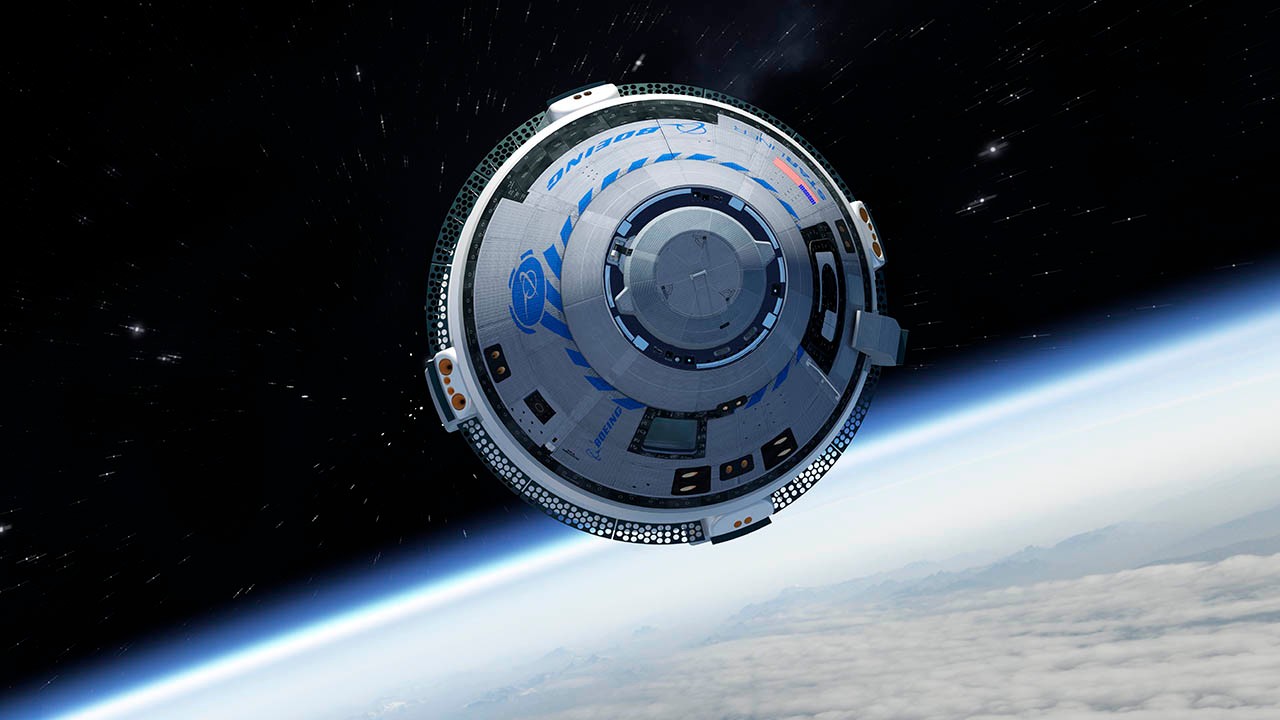
Space.com: “Canada Assigns Astronauts to Launch on Boeing’s Starliner, Back up Artemis 2 Moon Mission

The Canadian Space Agency announced two astronauts will fly to space in the coming years on Wednesday (Nov. 22) as the country continues a historic ramp-up of its human space program in 2023. François-Philippe Champagne, the Minister of Innovation, Science and Industry of Canada, announced the assignments in front of a crowd of hundreds gathered in the lobby of Canadian Space Agency headquarters in Longueuil, Quebec.

Space Stories: Name-dropping on Europa, Flying Toolboxes, and Space Veggies

Image (Credit): NASA’s Europa Clipper. (NASA)

Here are some recent stories of interest.

NASA JPL: “Time is Running Out to Add Your Name to NASA’s Europa Clipper

Six weeks remain for you to add your name to a microchip that will ride aboard the spacecraft as it explores Jupiter’s moon Europa. It’s not every day that members of the public have the chance to send their names into deep space beyond Mars, all the way to Jupiter and its moon Europa. But with NASA’s Europa Clipper, you have that opportunity: Names will ride aboard the spacecraft as it journeys 1.8 billion miles (2.6 billion kilometers) to this icy moon, where an ocean hides beneath a frozen outer shell. The deadline to join the mission’s “Message in a Bottle” campaign is only six weeks away. The campaign closes at 11:59 p.m. EST, Dec. 31, 2023.

NBC News: “Look! Up in the sky! It’s a bird! It’s a plane! It’s … a tool bag?

That’s no moon. An astronaut’s tool bag that accidentally floated away during a routine spacewalk at the International Space Station is now orbiting Earth and may be bright enough to spot by keen-eyed skywatchers. The bag drifted away from the space station this month when NASA astronauts Jasmin Moghbeli and Loral O’Hara were performing maintenance on the exterior of the orbiting outpost.

LiveScience: “China Successfully Grows Lettuce and Tomatoes Aboard Tiangong Space Station

China’s Shenzhou 16 astronauts have been growing vegetables aboard the Tiangong space station, as part of plans for future deep space exploration. Mission commander Jing Haipeng and rookie astros Zhu Yangzhu and Gui Haichao have been aboard Tiangong since late May and are due to return to Earth on Oct. 31, after handing over control of the station to the newly arrived Shenzhou 17 mission crew. Jing and company have spent time cultivating veggies using two sets of specialized equipment. The first started operation in June and has reaped four batches of lettuce. The second one was put into operation in August for growing cherry tomatoes and green onions.

Space Stories: Curiosity Continues, Exoplanets with Dinosaurs, and Nasty Jupiters

Image (Credit): Curiosity’s view of the Martian surface. (NASA)

Here are some recent stories of interest.

NASA JPL: “NASA’s Curiosity Rover Clocks 4,000 Days on Mars

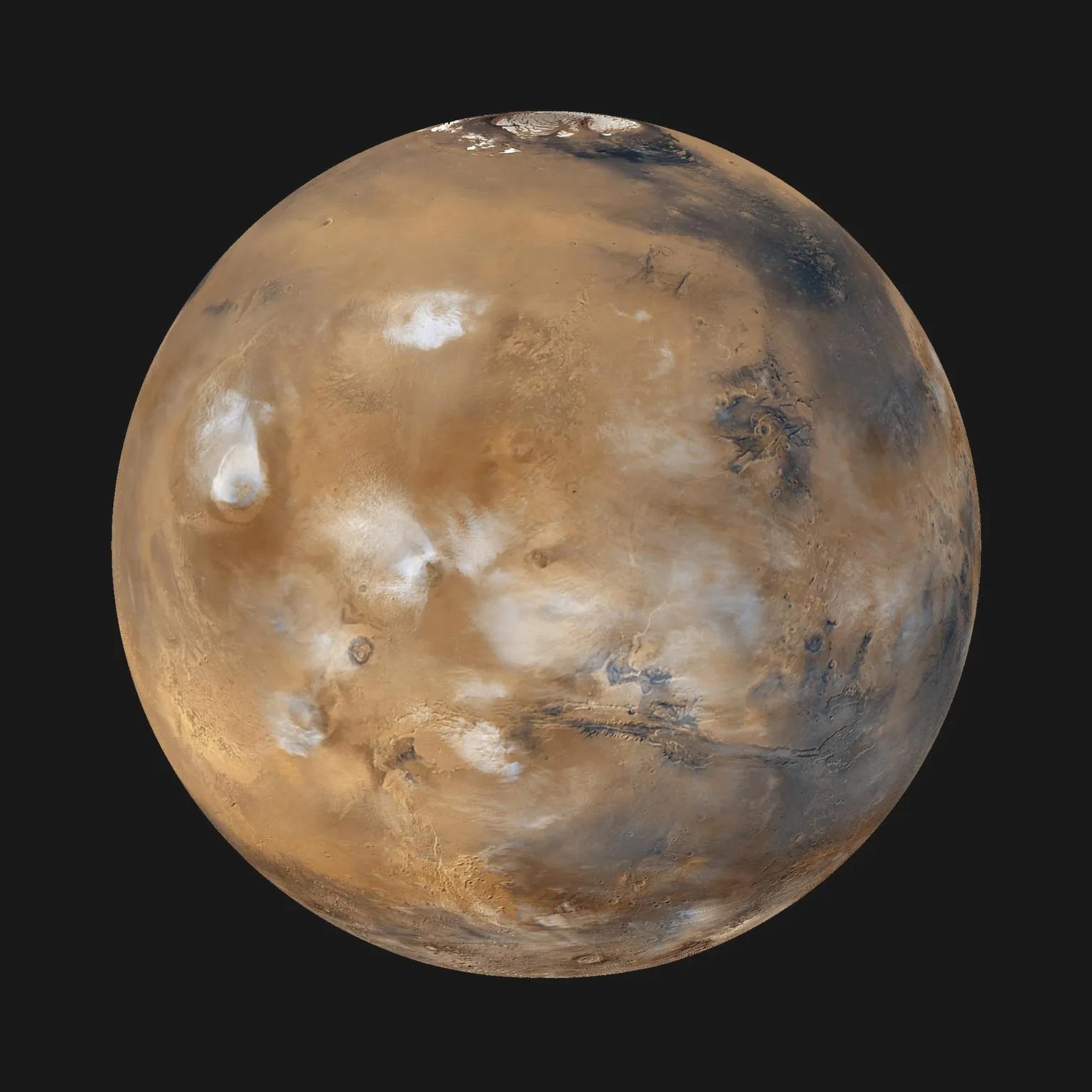
Four thousand Martian days after setting its wheels in Gale Crater on Aug. 5, 2012, NASA’s Curiosity rover remains busy conducting exciting science. The rover recently drilled its 39th sample then dropped the pulverized rock into its belly for detailed analysis. To study whether ancient Mars had the conditions to support microbial life, the rover has been gradually ascending the base of 3-mile-tall (5-kilometer-tall) Mount Sharp, whose layers formed in different periods of Martian history and offer a record of how the planet’s climate changed over time.

Cornell University: “‘Jurassic Worlds’ Might be Easier to Spot than Modern Earth

Things may not have ended well for dinosaurs on Earth, but Cornell University astronomers say the “light fingerprint” of the conditions that enabled them to emerge here provide a crucial missing piece in our search for signs of life on planets orbiting alien stars. Their analysis of the most recent 540 million years of Earth’s evolution, known as the Phanerozoic Eon, finds that telescopes could better detect potential chemical signatures of life in the atmosphere of an Earth-like exoplanet more closely resembling the age the dinosaurs inhabited than the one we know today.

UC Riverside: “Giant Planets Cast a Deadly Pall

Jupiter, by far the biggest planet in our solar system, plays an important protective role. Its enormous gravitational field deflects comets and asteroids that might otherwise hit Earth, helping create a stable environment for life. However, giant planets elsewhere in the universe do not necessarily protect life on their smaller, rocky planet neighbors. A new Astronomical Journal paper details how the pull of massive planets in a nearby star system are likely to toss their Earth-like neighbors out of the “habitable zone.” This zone is defined as the range of distances from a star that are warm enough for liquid water to exist on a planet’s surface, making life possible.