Pic of the Week: Launch of the PACE Mission

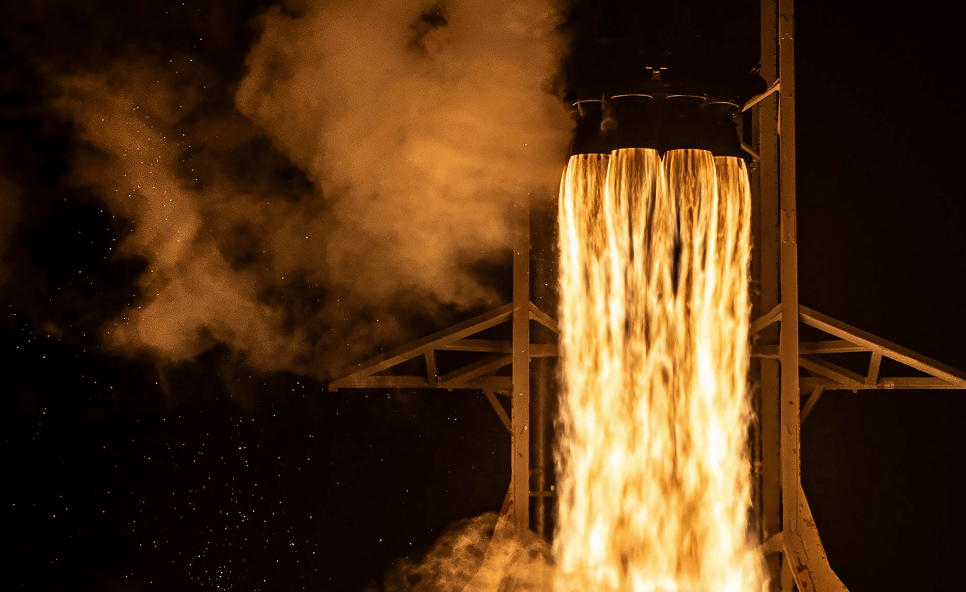
Image (Credit): Engines of the SpaceX rocket carrying the PACE spacecraft into orbit. (SpaceX)

This week’s image is from SpaceX, which launched NASA’s Plankton, Aerosol, Cloud, ocean Ecosystem (PACE) mission into orbit earlier today (the Falcon 9 rocket engines are shown above). 

The spacecraft is designed to monitor the Earth from orbit. NASA explains the mission is this way:

Information collected throughout PACE’s mission will benefit society in the areas of ocean health, harmful algal bloom monitoring, ecological forecasting, and air quality. PACE also will contribute new global measurements of ocean color, cloud properties, and aerosols, which will be essential to understanding the global carbon cycle and ocean ecosystem responses to a changing climate.

The PACE’s mission is designed to last at least three years, though the spacecraft is loaded with enough propellant to expand that timeline more than three times as long.

Space Stories: Preparing for a Commercial Space Station, Ukraine Protests New ISS Crew, and Metal 3D Printing in Space

Image (Credit): Artist’s rendering of the Starlab commercial space station in orbit. (Starlab Space)

Here are some recent stories of interest related to space stations.

SpaceNews: Starlab Commercial Space Station to Launch on Starship

Starlab Space, the joint venture developing the Starlab commercial space station, has selected SpaceX’s Starship to launch the station on a single flight. Starlab Space, a joint venture of Voyager Space and Airbus Space and Defence, announced Jan. 31 it reached an agreement with SpaceX to launch the Starlab station on Starship. The companies did not disclose terms of the agreement or a projected launch date, although a spokesperson for Starlab Space said the company was confident that Starlab would be launched before the decommissioning of the International Space Station, currently scheduled for 2030.

Kyiv Post: Ex-Russian Military Officer Joins NASA for ISS Mission; Ukrainian Outrage Follows

Alexander Grebenkin, a former Russian military officer and current Roscosmos cosmonaut, is set to travel to the International Space Station as part of the NASA team, as announced on the NASA website, where Ukrainians have commented their outrage. NASA, in collaboration with SpaceX, plans to launch Crew-8 to the International Space Station no earlier than Thursday, Feb. 22.

Aviation Week Network: European Space Agency Launches ‘First’ Metal 3D Printer To ISS

The European Space Agency (ESA) has launched what it says is the “first metal 3D printer” to be hosted on the International Space Station (ISS). While plastic 3D printers have been used aboard the ISS since 2014, a machine that prints stainless steel would be new and could allow astronauts greater self-sufficiency, including the ability to make complex metallic structures in orbit, as well as at future Moon and Mars bases, ESA said Jan. 30.

The ISS is Getting Pretty Crowded

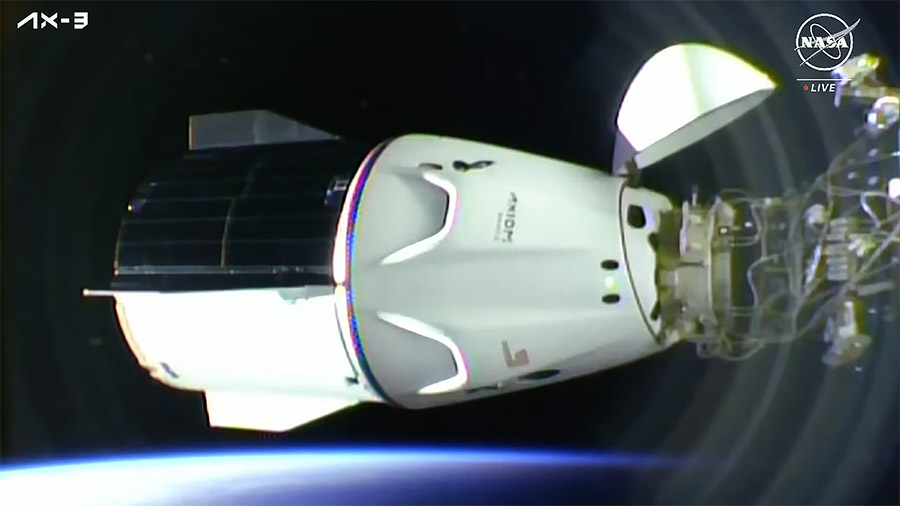
Image (Credit): The SpaceX Dragon Freedom spacecraft, which is carrying four Axiom Mission 3 crew members, docking to the space station shortly after an orbital sunrise. (NASA TV)

The seven real astronauts on the International Space Station (ISS) are now playing host to four visitors for the next two weeks after the Axiom Mission 3 crew came aboard the station earlier today.

Unlike the last two Axiom missions, all three paying members of the Axiom Mission crew are being supported by various European governments:

  • Marcus Wandt, member of the European Space Agency’s (ESA) astronaut reserve (ticket paid by ESA and the Swedish National Space Agency);
  • Walter Villadei, a member of the Italian air force (ticket paid by the Italian air force); and
  • Alper Gezeravcı, a fighter pilot with the Turkish air force (ticket paid by the Turkish government).

At the price of $55 million per seat, I am hoping the governments and space agencies feel they are getting their money’s worth versus being part of the normal 6-month astronaut rotation.

Supposedly, the extra hands will be working on 30 experiments that the normal crew did not have time for, though I would imagine they would be the less important experiments if they would otherwise not be performed at all.

If all of this is truly important work, then I expect such demand will justify the need for commercial space stations down the line to continue the work of the ISS. However, I expect a good chuck of future space interest will come from the tourist side.

In the meantime, I just hope the toilets on board the ISS can deal with the extra passengers.

Note: So as not to give all the attention to the visitors, the current Expedition 70 crew members aboard station are:

  • NASA astronauts Jasmin Moghbeli and Loral O’Hara;
  • ESA astronaut Andreas Mogensen;
  • JAXA (Japan Aerospace Exploration Agency) astronaut Furukawa Satoshi; and
  • Roscosmos cosmonauts Konstantin Borisov, Oleg Kononenko, and Nikolai Chub.

Space Quote: Another View of Elon and Drugs

“If we’re going to link performance to attitudes about drugs, maybe Musk should be setting the tone for NASA. Perhaps a microdosing schedule would get federal employees out of their ruts and set their creative juices flowing.”

-Statement by J.D. Tuccille in his Reason magazine article, “Let Elon Musk Enjoy Drugs.” The libertarian magazine has some strong views on drug laws and government operations, as the quote indicates. The article does note that Mr. Musk would be violating federal rules as the head of SpaceX if the reports of drug use are true, but also notes that only SpaceX can get Americans to the International Space Station. I guess Reason is all in favor of situational morality, something that seems to be gaining favor these days with those who deem themselves above the law.

Musk and the Drug Issue, Again

You might think a company would love to be on the front page of the Wall Street Journal, and that is generally true, but not when the headline is this one: “Some Tesla, SpaceX Leaders Worried by Musk Drug Use.”

The article states:

…they fear the Tesla and SpaceX chief executive’s drug use could have major consequences not just for his health, but also the six companies and billions in assets he oversees…The world’s wealthiest person has used LSD, cocaine, ecstasy and psychedelic mushrooms…

That is not a story that investors, nor Uncle Sam, wants to be reading with the morning oatmeal.

NASA is already dealing with one Moon-size disaster today. It does not need the frat antics of a CEO to further damage the move towards a more commercial-oriented space program.

Note: The online version of the story cited above was released earlier and had a modified title.