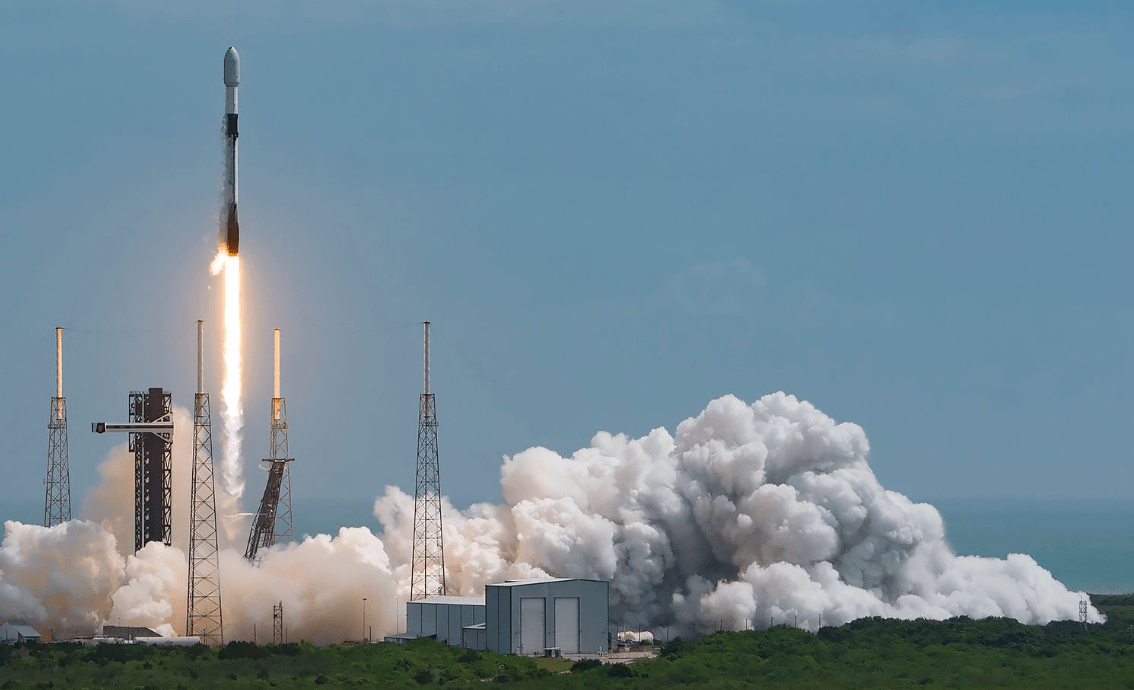
Image (Credit): Successful launch of a SpaceX Falcon 9 on August 4, 2024 sending supplies to the ISS. (SpaceX)
The weather cleared enough in Florida on Sunday for the SpaceX launch to take place, sending the Northrop Grumman Cygnus cargo spacecraft towards the International Space Station (ISS) after some earlier delays.
At 11:02 am ET, SpaceX’s Falcon 9 launched Northrop Grumman’s 21st Commercial Resupply Services mission (NG-21) to the ISS from Space Complex 40 (SLC-40) at Cape Canaveral Space Force Station in Florida.
The spacecraft will intercept the ISS on Tuesday, August 6. With the extra Starliner astronauts on board awaiting permission from Boeing to return to Earth, it is likely that the supplies will be very welcome.
Another three astronauts will be launched to the ISS on August 18 as part of the normal crew rotation. Hence, it will get even more crowded at the station by mid-August.
Update: The next crewed mission to the ISS was moved to “no earlier than” September 24 to give the Starliner more time to return to Earth.
Image (Credit): Northrop Grumman’s Cygnus cargo spacecraft as seen from the ISS. (Northrop Grumman)
The weather in Florida has delayed today’s Northrop Grumman resupply mission to the International Space Station (ISS). In fact, SpaceX is launching the payload for Grumman from the Cape Canaveral Space Force Station rather than the typical launch facility in Virginia. The Northrop Grumman Cygnus cargo spacecraft with its 8,200 pounds of supplies will probably need to sit on the launch pad for a few more days until the weather clears.
Why is SpaceX launching a Grumman resupply mission, you might ask? Doesn’t Grumman have its own rocket? Yes, and no. It has launches most of its resupply missions on its own Antares rocket, but the newest version of the rocket, the Antares 330, is still being finalized and is not expected to be ready until next year. As a result, Grumman procured three flights from SpaceX.
The ability of the commercial parties to support one another’s missions is encouraging, just as the European Space Agency dependied on SpaceX while it developed a new generation of its Ariane rocket.
SpaceX is always there to help (at a cost, of course) as other rocket companies prepare for the challenges ahead. In the case of Northrop Grumman, it needed to move away from its reliance on Ukrainian/Russian rockets and create a more reliable supply chain.
Two astronauts aboard Boeing’s Starliner remain stuck in space as the mission exceeded its 45-day battery window being docked at the International Space Station. The capsule, which arrived at the space station on June 6, was initially approved to stay for up to 45 days but with no return date set, the astronauts’ stay has been “extended indefinitely,” NBC affiliate WESH reported. NASA and Boeing said the capsule’s batteries are performing well despite the extended stay. Tuesday marked 47 days since they’ve been at the ISS.
NASA says its next spacewalk will be delayed indefinitely until engineers understand more about what caused a coolant leak on June 24. Tracy Dyson, a NASA astronaut, had a brief spacesuit leak a month ago while still in the hatch of the International Space Station (ISS). She and Mike Barrett had just opened the door for a 6.5-hour spacewalk for maintenance activities, when showers of ice particles erupted from a spacesuit connection to the ISS. The spacewalk was suspended, but the astronauts were never in any danger, NASA has emphasized.
Two years after stating there were no plans to save artifacts from the destructive end of the International Space Station (ISS), NASA is now in the early stages of identifying what small parts of the orbiting laboratory to preserve. Agency officials on Wednesday (July 17) shared the preliminary details during a media briefing about the space station’s end of life in 2030 and the selection of SpaceX to build the vehicle that will move the massive complex out of orbit such that it mostly burns up in Earth’s atmosphere and plunge any surviving fragments into a remote area of the ocean.
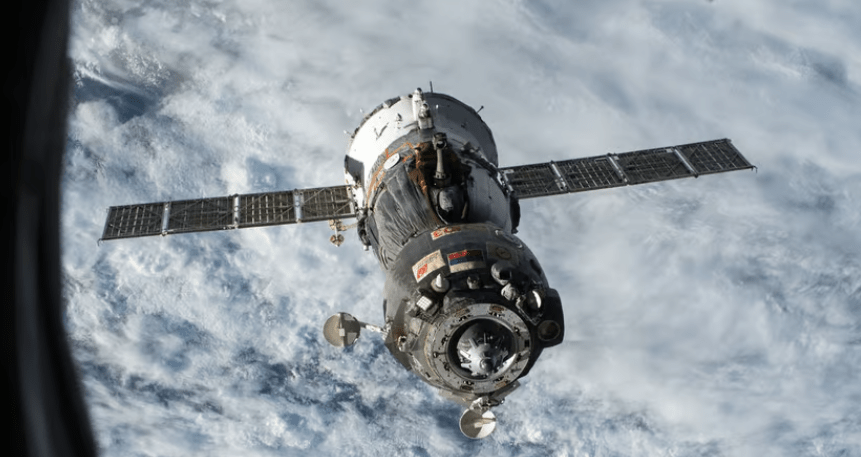
Image (Credit): A Russian Soyuz spacecraft outside the ISS. (NASA)
Well, the U.S. now has one space company with its manned spacecraft stranded at the International Space Station (ISS) while a second space company responsible for manned flights to the ISS has been grounded following a rocket mishap.
So where does this leave the ISS? Dependent on the Russians for manned flights to the ISS until the SpaceX problem can be investigated. Of course, SpaceX was also one solution for returning the Boeing crew to Earth if the Starliner problem could not be timely resolved. So much for that at the moment.
Both the Boeing and SpaceX issues could be resolved in the next few weeks, but this shows how quickly the situation can change on the ground and in space. While the Russians have certainly had their own issues with the Soyuz spacecraft as well, at least the men and women on the station have one option available to them.
Let’s hope Boeing gets its act together and the SpaceX mishap can be resolved quickly.
“Selecting a U.S. Deorbit Vehicle for the International Space Station will help NASA and its international partners ensure a safe and responsible transition in low Earth orbit at the end of station operations. This decision also supports NASA’s plans for future commercial destinations and allows for the continued use of space near Earth…The orbital laboratory remains a blueprint for science, exploration, and partnerships in space for the benefit of all.”
–Statement by Ken Bowersox, associate administrator for Space Operations Mission Directorate at NASA Headquarters in Washington, regarding NASA announcement that SpaceX has been selected to develop and deliver the U.S. Deorbit Vehicle under a contract worth $843 million. This expensive Deorbit Vehicle should help to avoid problems on the ground as well as orbiting debris impacting space missions, as was the case on the International Space Station (ISS) a few days ago. The ISS is expected to continue operation until 2030.