Starship’s 13th Test a Needed Success

Credit: SpaceX

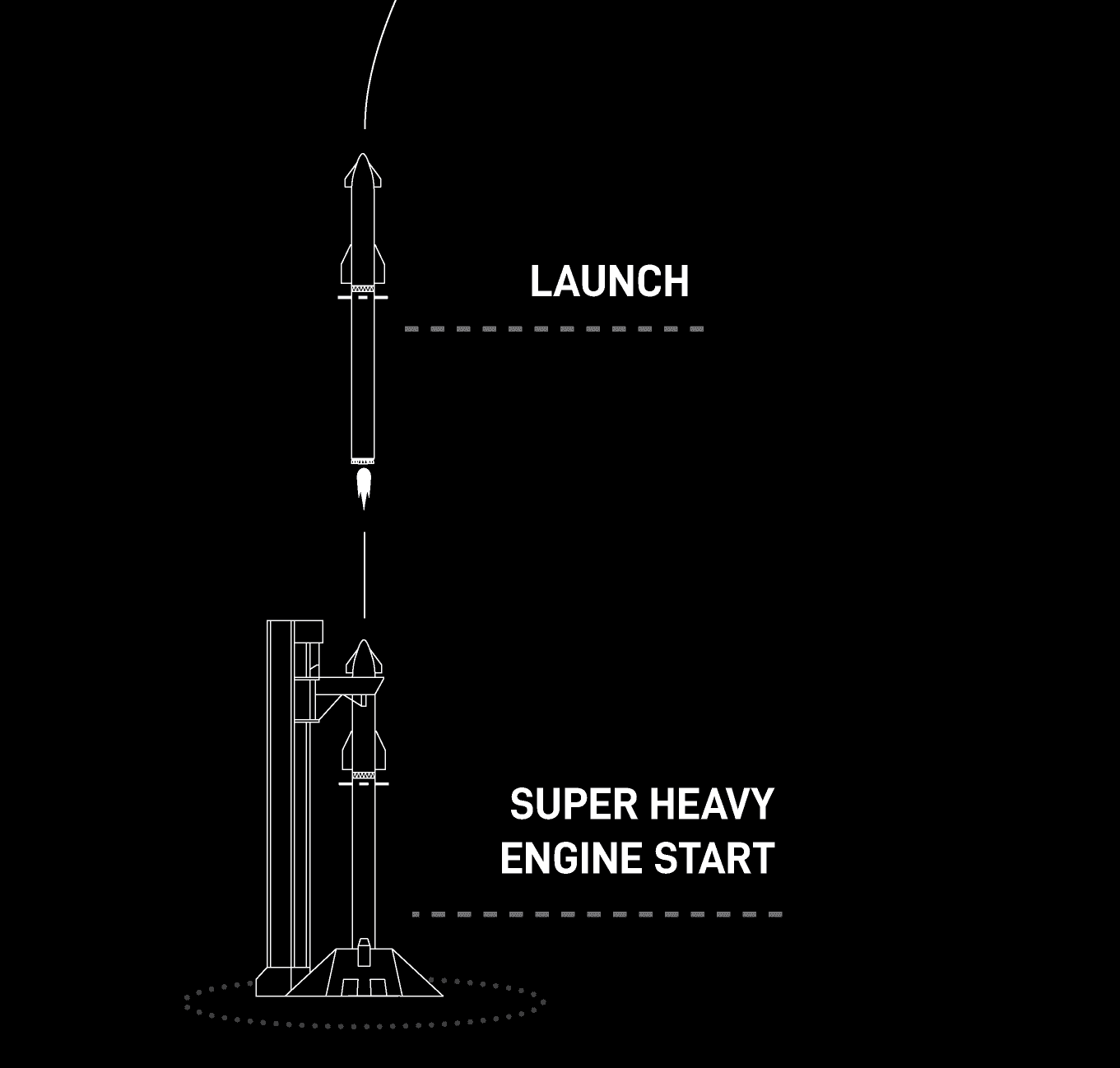
After some delays, SpaceX’s Starship rocket is back in testing mode, with yesterday’s 13th launch a success. The rocket met the milestones set for the mission, and even launched a batch of satellites. This should give SpaceX and NASA some breathing room, as well as the new investors in SpaceX.

Mr. Musk had a bad week with both Tesla and SpaceX stock struggling. While SpaceX stock fell approximately 7 percent during the five days preceding the launch, the market should be somewhat more confident on Monday morning following the successful test.

Reuters reported last week that short sellers betting against SpaceX are making a fortune to the tune of about $8.7 billion. Mr. Musk may not like this, but if you want to be part of the marketplace then you need to understand how the market works.

In stocks, what goes up can often come down, and it can be painful to watch. As a rocket man, Mr. Musk should be familiar with this.

Maybe his success with Starship on Friday will turn some of that around.

Space Quote: Dealing with Off-Planet Real Estate

Image (Credit): One artist’s version of a Martian base. (NASA/JPL-Caltech/MSSS)

“So, who should have the right to acquire property in space? My answer: those who have the financial means to get there, develop, and use the land. For instance, if SpaceX succeeds in reaching Mars and starts to build permanent settlements on the red planet, then the ownership of land should go to SpaceX first. Not of the entire planet, of course, but of a practicable area, for example the size of Singapore. The surface area of Mars is 200,000 times that of Singapore, so SpaceX would initially only own 0.0005 percent of Mars. That would be enough to develop multiple settlements, but not so many that others would no longer have a chance.”

-Statement by Rainer Zitelmann, a historian and sociologist, in his Reason magazine article titled “Why You Can’t Settle Mars or Colonize the Moon Without Real Property Rights.” You do not need to agree with his conclusion, but he discusses a timely topic. The Moon Agreement and Outer Space Treaty may need to be revisited now that the idea of permanent settlements on the Moon and Mars are not simply science fiction, as they were in the 1960s and 1970s when these provisions were agreed to (and not by all nations, keep in mind).

China Also Has a Reusable Rocket

Image (Credit): The Long March 10b rocket’s first stage returning to a floating pad earlier today. (CCTV)

Earlier today China successfully recovered the first stage of its Long March 10b rocket (as shown above and also in a CNN video). The rocket was launched from Hainan island in southern China. 

Up to this point, only SpaceX and Blue Origin have been able to accomplish this feat. This means China is joining the U.S. in terms of reusable rockets at a time when it is also making strides in the race to the Moon.

The rocket test was also successful in putting a satellite into low-Earth orbit.

The Long March 10b rockets was built by a state-owned company and is an essential part of China’s plans to send a crew to China. It is also said to be part of China’s plans to put internet satellites into orbit, similar to SpaceX’s Starlink.

One interesting part of the recovery was the use of a large net on the platform. Chen Muye from the China Aerospace Science and Technology Corporation (the state-owned company) stated:

Net-based recovery simplifies the onboard structure, reduces weight and boosts payload capacity.

Maybe the US commercial space sector has a few things to learn from the Chinese.

Space Stories: Starliner Beats SpaceX on Costs, NASA Administrator Ignores Regulators, and Blue Origin Rebuilding Beyond Impressive

Here are some recent NASA-related stories of interest.

—Florida Sentinel: “Boeing Starliner Costly But Cheaper for NASA Than SpaceX Switch, Audit Says“

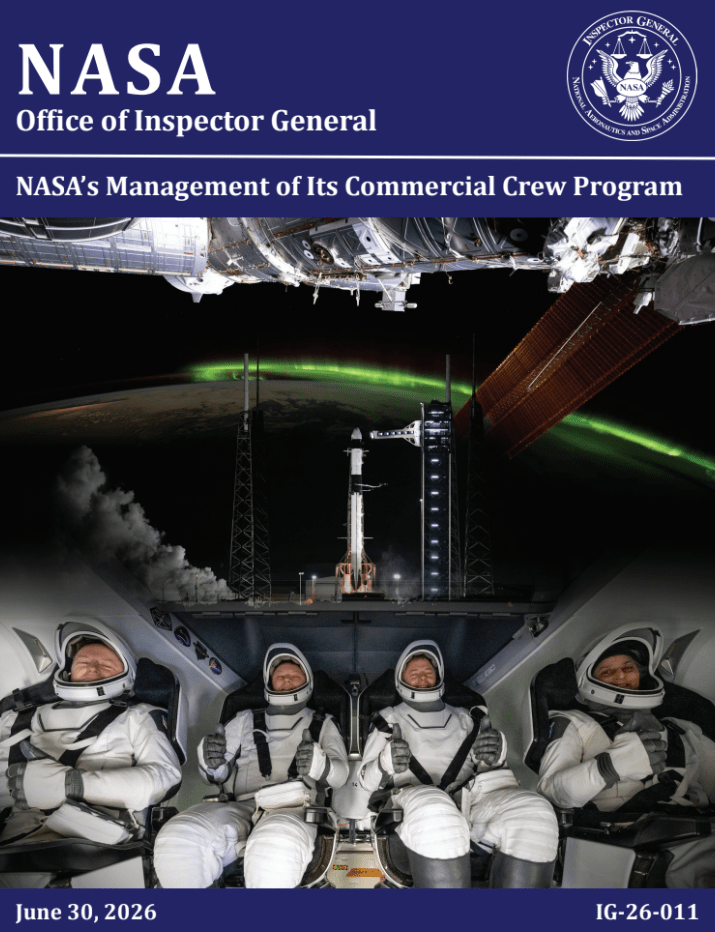
Boeing’ Starliner costs and delays remain the target of the latest audit from NASA’s Office of the Inspector General, but remains a cheaper option for the agency than relying solely on SpaceX for its commercial crew needs. The audit releasedJune 30 dinged the beleaguered spacecraft’s tumultuous and still uncertain path toward certification and wars that the timetable for its use to ferry astronauts to and from the International Space Station is running short.

—Newser: “NASA Chief Defies FAA With ‘High-Risk’ Flight“

NASA chief Jared Isaacman took to the skies over Washington in a vintage fighter jet on July 4, even after federal regulators flagged the plan as too risky. The Federal Aviation Administration rejected a request on June 30 to let four 1970s-era Northrop F-5 Tiger II jets participate in the National Mall flyover for America’s 250th birthday, calling the aircraft “very high-risk” and citing concerns about flight controls, ejection scenarios, and past crashes, the Wall Street Journal reports.

—Benzinga: “NASA’s Jared Isaacman Says Blue Origin’s New Glenn Recovery Is ‘Beyond Impressive’“

NASA Administrator Jared Isaacman said Blue Origin has devoted significant resources to cleaning up and rebuilding its launch pad after a late-May explosion of a New Glenn rocket, as the agency weighs how the setback could affect lunar missions tied to the Artemis program. “Blue Origin’s response to the situation is almost beyond impressive, and that’s not just a NASA assessment,” Isaacman told reporters Wednesday afternoon, according to Ars Technica. He said U.S. Space Force officials also have been deeply involved in Blue Origin’s planning since the May 28 test anomaly damaged New Glenn’s only operational launch pad.

Note: Here is the podcast version of this post.

Artemis III Has a Crew

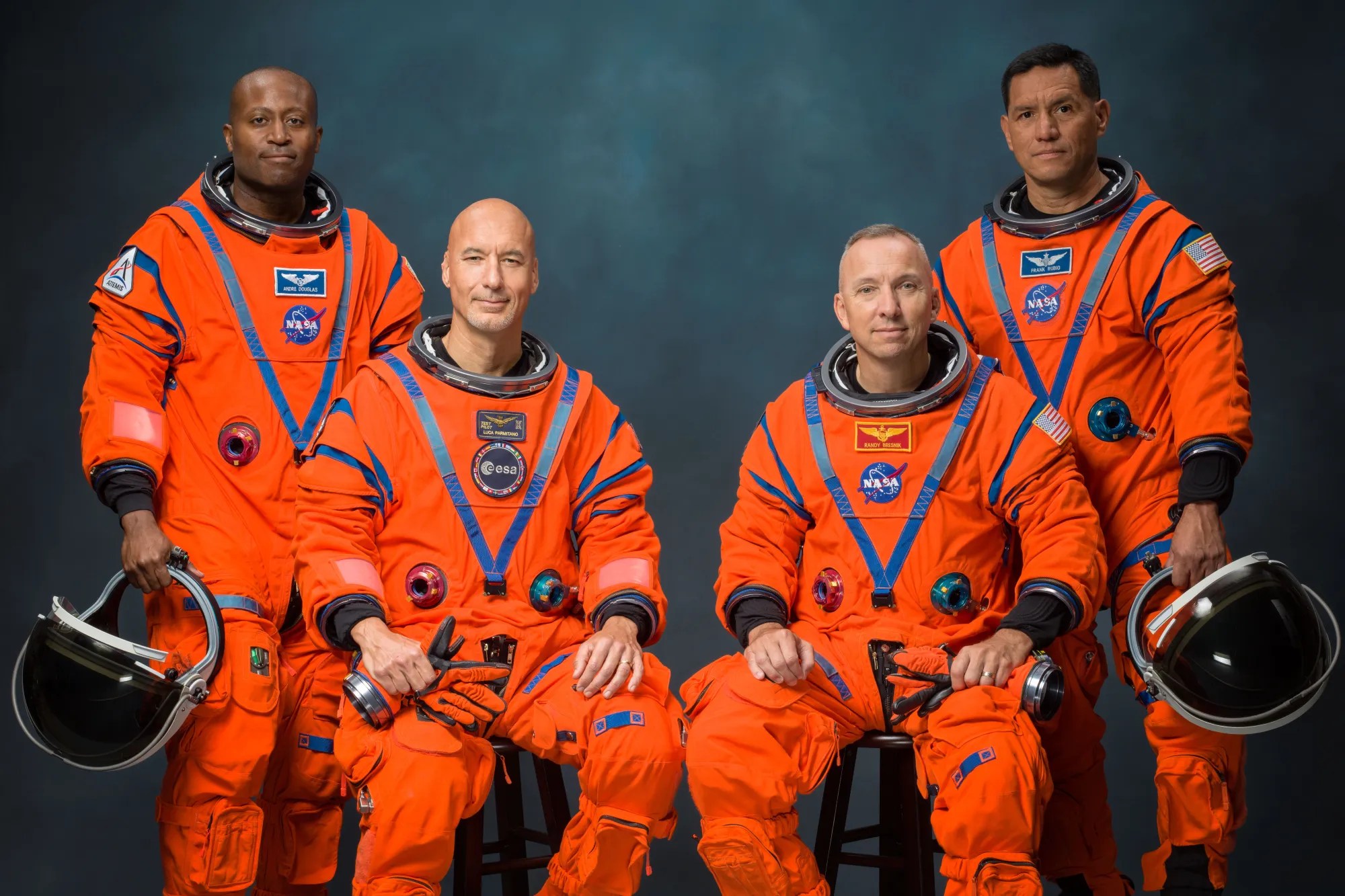
Image (Credit): The Artemis III crew members (from left: Andre Douglas, Luca Parmitano, Randy Bresnik, Frank Rubio). (NASA/Bill Stafford)

Earlier today NASA announced its new four-member crew for the next set of Artemis tests. The two week long Artemis III mission will test spacecraft in low Earth orbit in preparation for Artemis IV, which will entail an actual crewed mission to the surface of the Moon.

The new crew are three NASA astronauts and one European Space Agency (ESA) astronaut from Italy. NASA has a full profile of each crew member, but here are the basics:

NASA may have a crew, but does it have any partners that are really ready for a lunar landing?

To date, the only fully operational spacecraft is the Orion capsule, which will be sent aloft via the Space Launch System. Both SpaceX and Blue Origin plan to send up demonstration lunar landers that will not contain all of the necessary components for humans preparing for a Moon landing. This sounds a little dangerous given that the real reason for Artemis III is a dry-run in space. It sounds more like a dry-run for a dry-run, but NASA may not have time to complete a true test.

In additon to lunar lander delays, SpaceX is busy trying to make a fortune with its IPO, while Blue Origin is still licking its wounds after the recent explosion at Cape Canaveral.

These four astronauts may be the best news out of NASA for some time to come, so it may be best to raise a toast to the four of them and then simply hope for the best.