Upcoming Hearing on NASA Nominee

The process continues to bring on a new NASA Administrator, even as Elon Musk and his DOGE team do all they can to cripple the agency.

The nomination hearing for Jared Isaacman, announced earlier today by the Senate Committee on Commerce, Science, and Transportation, will take place next Wednesday, April 9, at 10am. The hearing will be streamed live via the Committee’s website as well as YouTube.

The same hearing will also discuss the nomination of Olivia Trusty to be a Member of the Federal Communications Commission, so it is not clear how much time will be dedicated to the NASA piece. Generally, the nominee reads from a prepared statement and the Senators who show up that day pepper the nominee with a few questions.

These hearings are usually pretty tame, but that may not be the case if Mr. Isaacman’s ties with Elon Musk become a topic. A recent Wall Street Journal story stated that Mr. Isaacman was hand-picked by Mr. Musk, which followed Mr. Isaacman paying SpaceX an undisclosed amount to go into orbit last year.

It has also been reported that Mr. Isaacman’s own companies may come under scrutiny because of their DEI initiatives, a big no-no with the White House and the ever-destructive DOGE.

Maybe it will be an interesting hearing.

Space Stories: More Space Tourists, Chinese Maglev Rocket Launches, and New Hubble Findings on Uranus

Image (Credit): Launch of the Fram2 mission earlier this week. (SpaceX)

Here are some recent stories of interest.

South China Morning Post: SpaceX Launches Fram2: 4 Astronauts Seek to Make Historic Flight Over Earth’s Poles

A SpaceX spacecraft carrying four international astronauts is on a pioneering journey circling Earth over its poles after launching Monday night from Florida…Fram2 follows in the footsteps of other commercial spaceflight ventures, including Inspiration4 and Polaris Dawn – two missions also bankrolled and led by billionaire Jared Isaacman. In fact, the Fram2 crew is now traveling on the same Dragon spacecraft that the Polaris Dawn crew rode to orbit in September for a five-day mission in which they completed a historic spacewalk.

South China Morning Post: China in Bid to Challenge SpaceX by Deploying Maglev Rocket Launch Pad by 2028

In a bid to disrupt the United States’ long-held dominance in space exploration, China is quietly advancing a radical new rocket launch system – powered not by roaring engines but by electromagnetic force – that could propel satellites into orbit with unprecedented speed and efficiency. At the heart of the ambitious project is Galactic Energy, a private aerospace company that plans to debut the world’s first electromagnetic rocket launch pad by 2028, a project that could redraw the competitive lines of the global space industry.

Space Telescope Science Institute: 20-Year Hubble Study of Uranus Yields New Atmospheric Insights

Halfway through its fourth decade, Hubble’s long life has proven invaluable for studying the atmosphere of the mysterious ice giant Uranus. By repeatedly training Hubble on the distant cyan planet over the course of 20 years, researchers chronicled a two-decade story of seasonal changes. These astronomers have gained new understanding of the atmospheric dynamics of Uranus, which can serve as a proxy for studying exoplanets of similar size and composition.

What’s Next for Boeing’s Starliner?

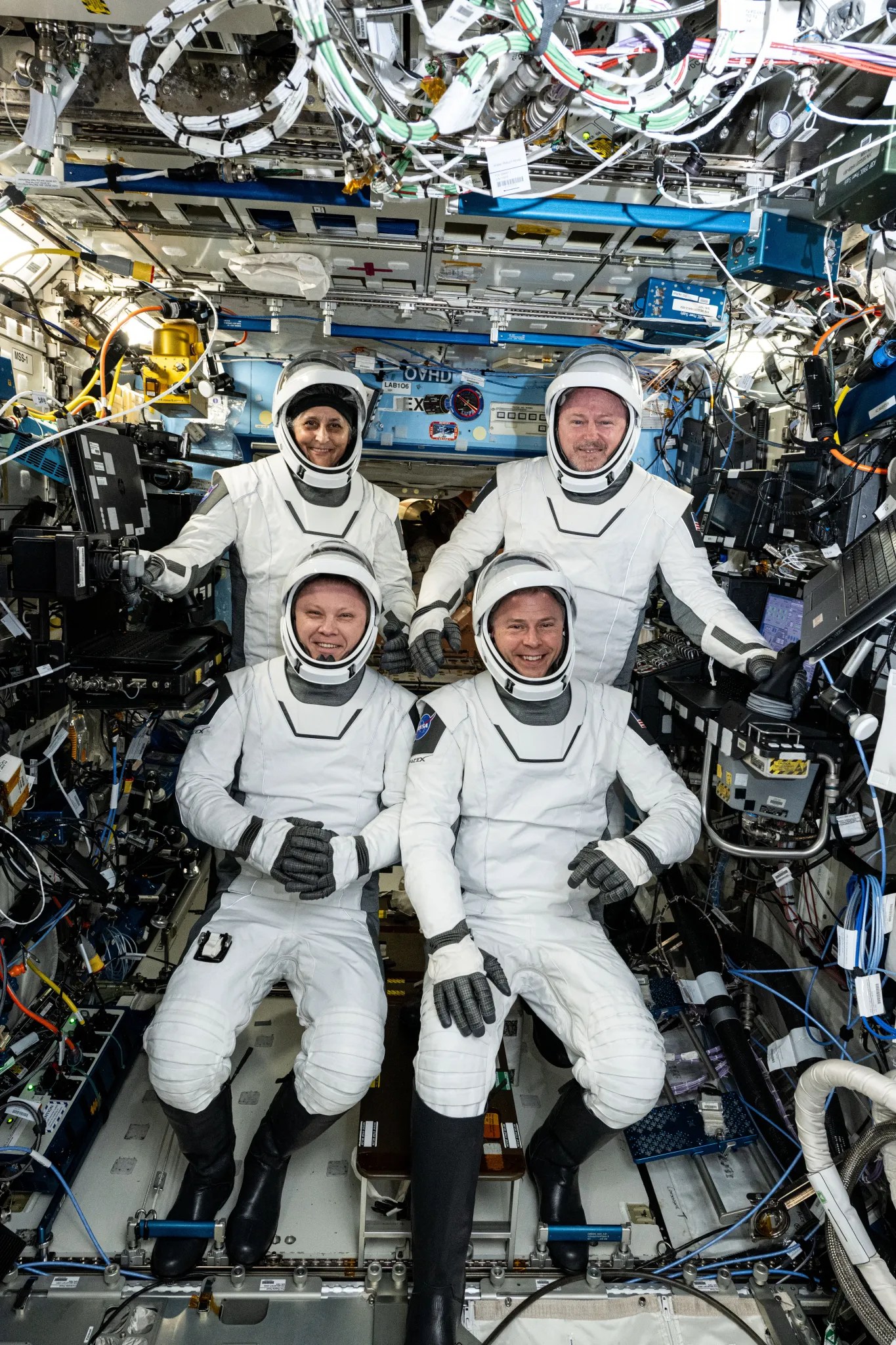
Image (Credit): NASA’s Crew-9 prior to departing the ISS earlier this week. Top left, NASA astronauts Suni Williams and Butch Wilmore, followed by bottom left, Roscosmos cosmonaut Aleksandr Gorbunov and NASA astronaut Nick Hague. (NASA)

With the first Boeing Starliner crew now back on Earth after an extended stay on the International Space Station (ISS), it is time to ask whether there will be a third Starliner attempt.

According to Reuters, NASA is currently considering a third uncrewed attempt. Steve Stich, chief of NASA’s Commercial Crew Program, stated the following yesterday:

We’re … looking at some options for Starliner, should we need to, of flying it uncrewed…When we look forward, what we’d like to do is that one flight, and then get into a crew rotation flight.

That sounds like a safe bet to convince everyone that the Starliner is ready, even though it did return to Earth safely while the crew remained on the ISS.

Boeing has both the ISS and future space missions to consider. Walking away now would abandon the field to SpaceX just as private sector space stations are the hot topic.

Regardless of all the chaos on Earth right now regarding the future of NASA, it is still a safe bet that the U.S. will continue to build a space industry in need of reliable partners to bring cargo and crew into Low Earth Orbit and beyond.

Crew-10 Members Heading to ISS

Image (Credit): The SpaceX Falcon 9 rocket standing ready earlier in the week to launch the Crew-10 members to the ISS. (SpaceX)

Yesterday saw the launch of the Crew-10 members from NASA’s Kennedy Space Center in Cape Canaveral. The Crew-10 members heading to the International Space Station (ISS) are NASA astronauts Anne McClain and Nichole Ayers, JAXA (Japan Aerospace Exploration Agency) astronaut Takuya Onishi, and Roscosmos cosmonaut Kirill Peskov.

This new crew will relieve the current ISS crew, which includes two astronauts (Suni Williams and Butch Wilmore) who arrived at the station last year on the Boeing Starliner only to stay longer than anticipated.

NASA has shown innovation by integrating Williams and Wilmore into the Expedition 72 crew and keeping them busy. Both of their attitudes have been positive throughout this process, regardless of all the drama back on Earth started by Elon Musk about a “rescue.”

NASA doesn’t do drama. We can expect a safe and professional transition of crews.

Update: The new crew arrived at the ISS safely Sunday morning.

Second Update: As of yesterday, March 8, the Crew-9 members, including NASA astronauts Butch Wilmore and Suni Williams, returned safely to Earth.

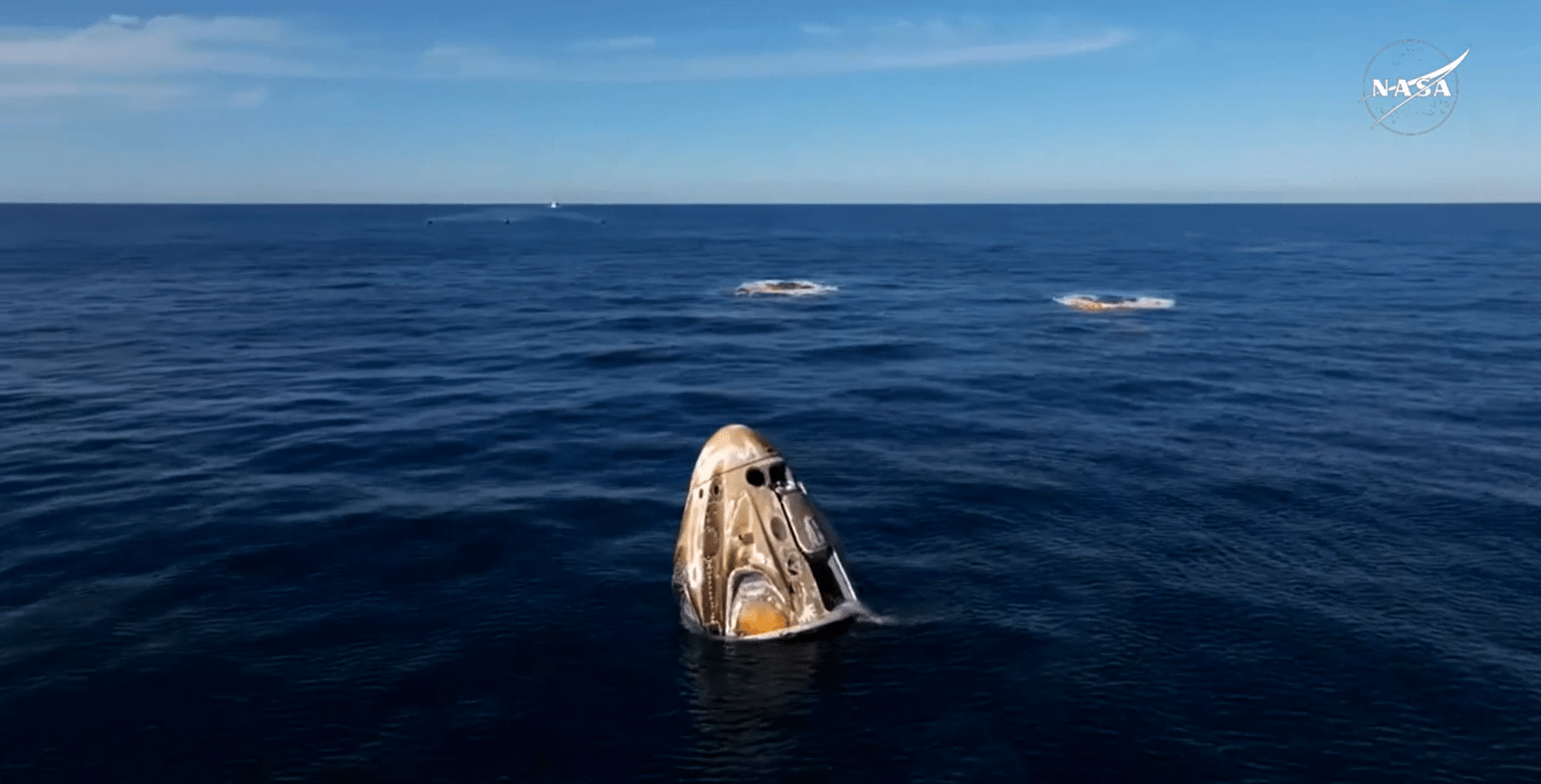
Image (Credit): The SpaceX Dragon Freedom spacecraft after it splashed down in the Gulf of America yesterday, returning Crew-9 to Earth. (NASA)

A Very Mixed Week in Space

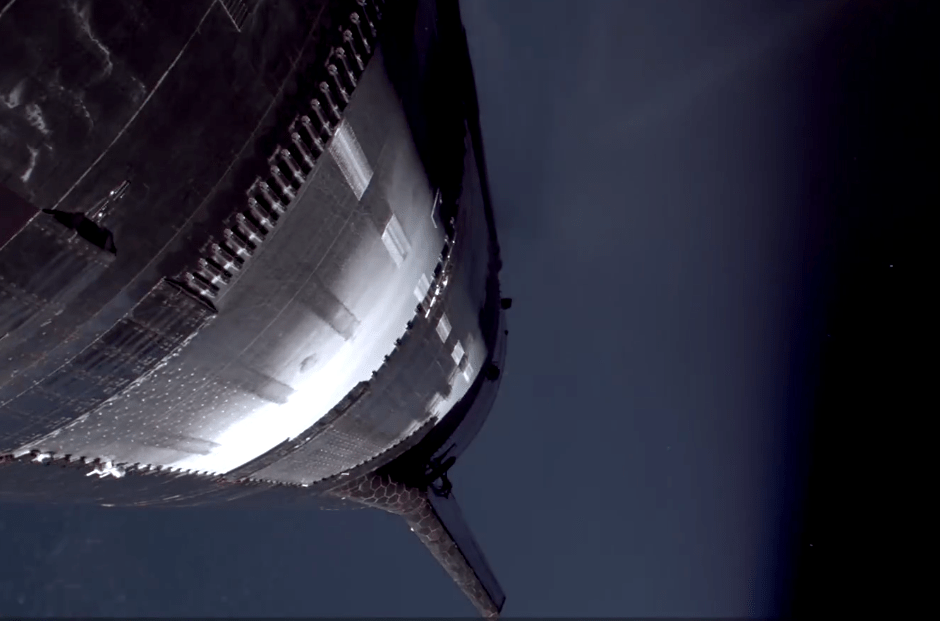
Image (Credit): One of the last images of the eighth Starship flight on Thursday right before the rocket exploded. (SpaceX)

Let’s start with the good news. This past week two U.S. commercial space companies put landers on the Moon. Both Firefly’s Blue Ghost and Intuitive Machines’ Athena are now residents of the Moon. This is a terrific accomplishment for these relatively new players.

Now the bad news. Athena landed incorrectly and cannot carry out its mission. In fact, it died after only one day on the lunar surface. In addition, the Lunar Trailblazer that accompanied Athena on this mission with plans to orbit and map the Moon also appears to be a lost cause. And finally, SpaceX’s eighth test of its Starship ended with a fiery explosion over the Caribbean, much like its seventh test.

Add to this the potential dismantling of NASA should rumors of a 50 percent cut be true, and you have a very mixed week with too little good news (much like the stock market).

One common element in at least two of the stories – Starship explosion and NASA cuts – relates to Mr. Musk. One wonders whether more attention to SpaceX and less time ransacking the federal government might have led to better outcomes this week. I’m not a rocket scientist, but that seems to make some sense to me.