“If SpaceX is behind, but Blue Origin can do it before them, good on Blue Origin…But … we’re not going to wait for one company. We’re going to push this forward and win the second space race against the Chinese.”
–Statement by acting NASA Administrator Sean Duffy regarding ongoing delays with SpaceX’s Starship, which was given a $2.9 billion contract in 2021 for a lunar landing vehicle as part of Artemis III. As a result, NASA may reopen to lunar lander contract. Blue Origin is working on its own lunar lander called Blue Moon. As noted in yesterday’s post, Mr. Musk has been distracted this year, so it may make sense to have a solid back up.
Update: Mr. Musk was not pleased with the news. In reference to acting NASA Administrator Duffy, Mr. Musk commented, “The person responsible for America’s space program can’t have a 2 digit IQ.” The man certainly knows how to make friends.
Now that Mr. Musk is done with his misadventures in Washington, DC, everyone was hoping he would start to focus more on SpaceX and the Starship tests that are critical to NASA’s Artemis mission. That may be too reasonable.
First, we see that Mr. Musk is getting involved in British politics again. That has never been a good thing for the Brits or his ignored companies. I agree with the UK’s Energy Secretary Ed Miliband when he states,
We have a message for Elon Musk. Get the hell out of our politics and our country.
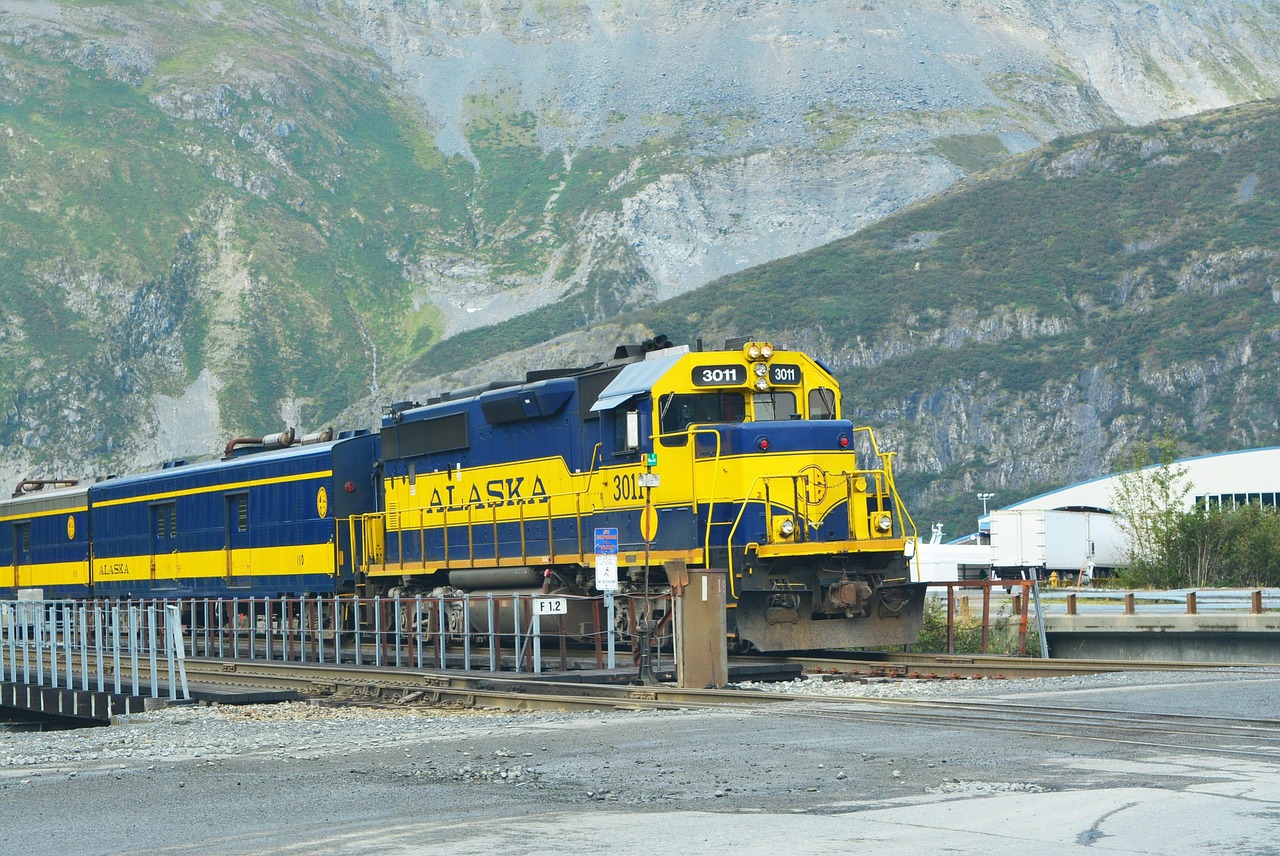
And now we read that the Russians are interested in a rail tunnel between Alaska and Russia, with Musk’s Boring Company taking the lead. President Trump said he is considering it.
It sounds like a ruse to me. President Putin is ten times smarter than Mr. Musk when it comes to foreign affairs, so it is likely this is something he can dangle in front of Musk to distract him and maybe even bring him over to his side on the Ukranian issue where Starlink is still a critical resource. President Putin’s Chinese friends will also be very happy for the distraction if it delays U.S. ambitions related to the Moon.
None of this makes a lot of sense. Russia’s main export is energy, which is more economical by ship (and Alaska is not looking for any competition with its oil industry). Plus, the Russian side of the tunnel is underdeveloped and not ready for the inflows the tunnel would bring. Besides, I thought we were trying to restrict Russian trade.
It all sounds like a pipe dream (or tunnel dream) with no real purpose other than to play the trade card for Trump while making Musk feel like an important piece of the puzzle.
Both President Trump and Mr. Musk have trouble focusing unless they see themselves personally benefiting, and the Russians know this.
NASA needs to drum up a Moon tunnel real quick for Mr. Musk’s company if it wants to regain his attention.
Every major objective of the flight test was achieved, providing valuable data as we prepare the next generation of Starship and Super Heavy...Focus now turns to the next generation of Starship and Super Heavy, with multiple vehicles currently in active build and preparing for tests. This next iteration will be used for the first Starship orbital flights, operational payload missions, propellant transfer, and more as we iterate to a fully and rapidly reusable vehicle with service to Earth orbit, the Moon, Mars, and beyond.
I like that ending, which sounds like something you would hear on the airport bus as you approach the rental lot, “…with service to Earth orbit, the Moon, Mars, and beyond.”
Let’s just hope this bus can get NASA to its next destination on time.
“Jonathan McDowell, an astronomer at the Harvard–Smithsonian Center for Astrophysics in the US, recorded an average of between one to two Starlink satellites deorbiting each day in 2025. That figure is expected to rise to around five per day as SpaceX continues to grow its space internet constellation.”
-Statement in the UK’s Independent newspaper regarding SpaceX’s Starlink satellites burning up in the Earth’s atmosphere. Given that the satellites are only expected to last 5 years and there are already 8,500 in orbit, this should come as no surprise. Fortunately, the satellites are designed to burn up after their useful life space. Of course, that does not necessarily mean that burning debris and the related pollutants are welcome. It will only get worse once Amazon and China start pumping even more satellites into orbit.
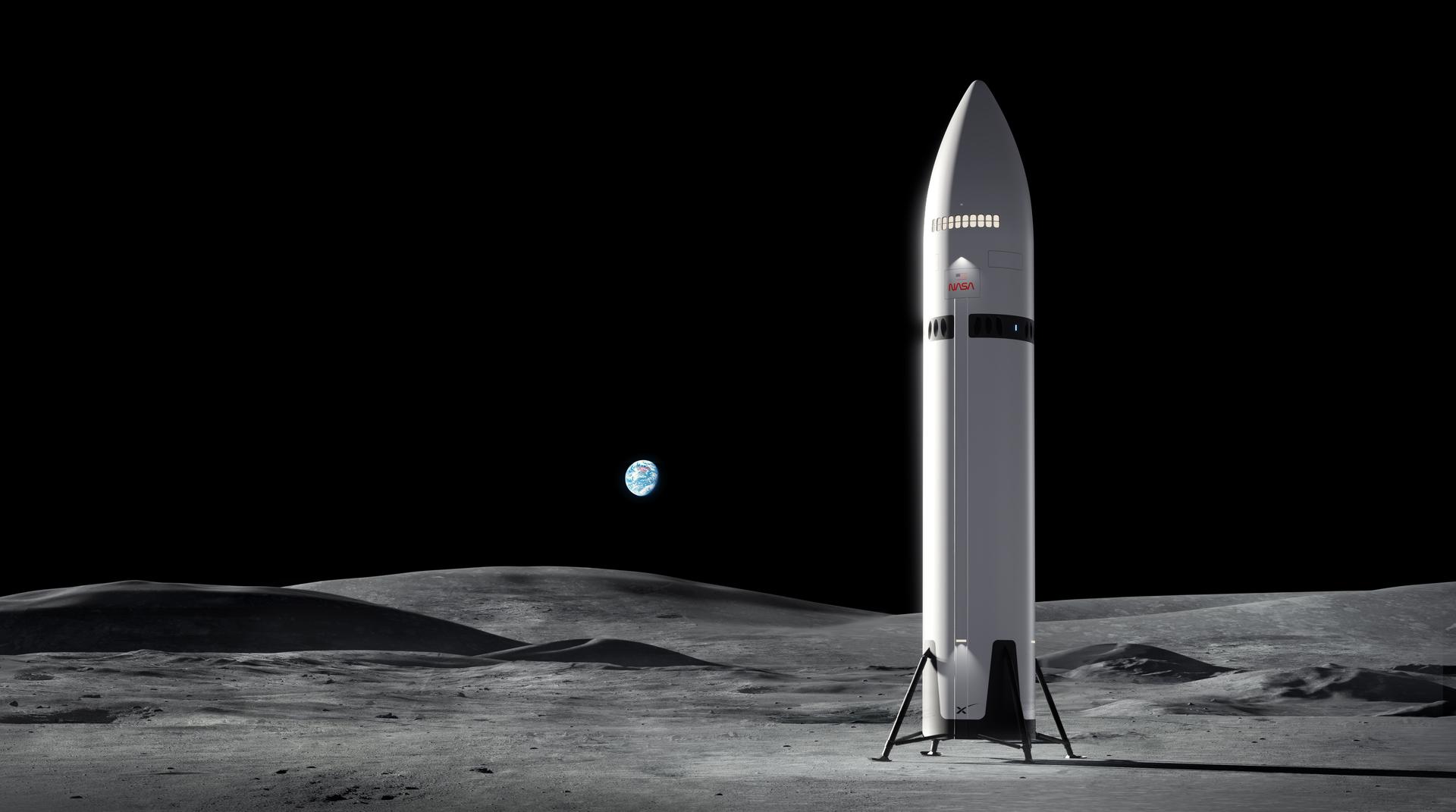
Image (Credit): Artist’s rendering of SpaceX’s Starship HLS on the Moon. (SpaceX)
“The HLS schedule is significantly challenged and, in our estimation, could be years late for a 2027 Artemis 3 moon landing.”
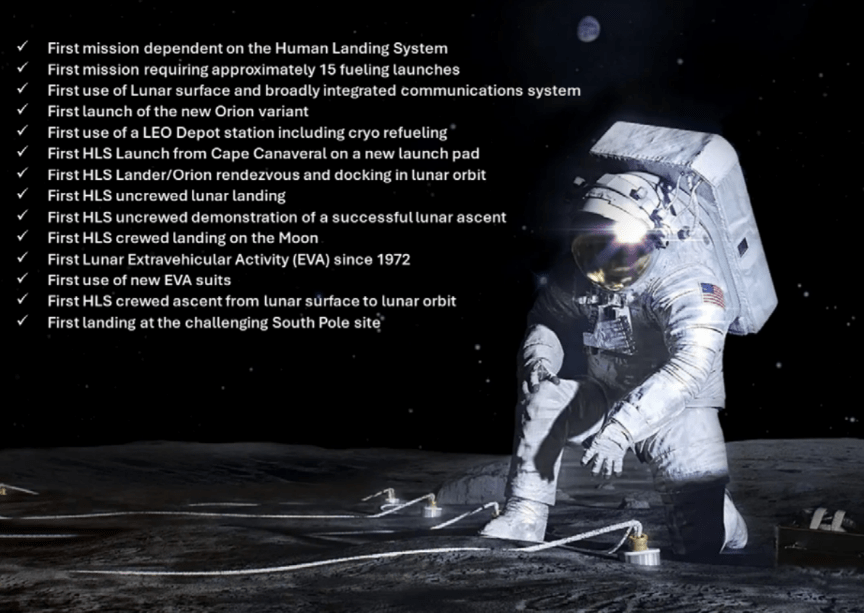
-Statement by Aerospace Safety Advisory Panel (ASAP) member Paul Sean Hill, as quoted by Space News. NASA contracted with SpaceX to develop the Human Landing System (HLS) for the astronauts landing on the Moon as part of Artemis III and later missions. While Blue Origin has also been tapped by NASA to assist with later missions, SpaceX was expected to provide the initial HLS. Maybe NASA should have picked two companies to provide the initial HLS, with the second in place still assisting with later landings. The ASAP’s 2024 Annual Report highlighted the many risks related to Artemis III, including several related to the HLS (shown below). Everyone knew this was going to be difficult, and no one wants to be asked to answer “Who Lost the Moon?” Also, it is good we still have a few advisory panels left after the recent purge.
Image (Credit): Figure 1, “First-time milestones for the Artemis III mission,” contained in the ASAP’s 2024 Annual Report. (ASAP)