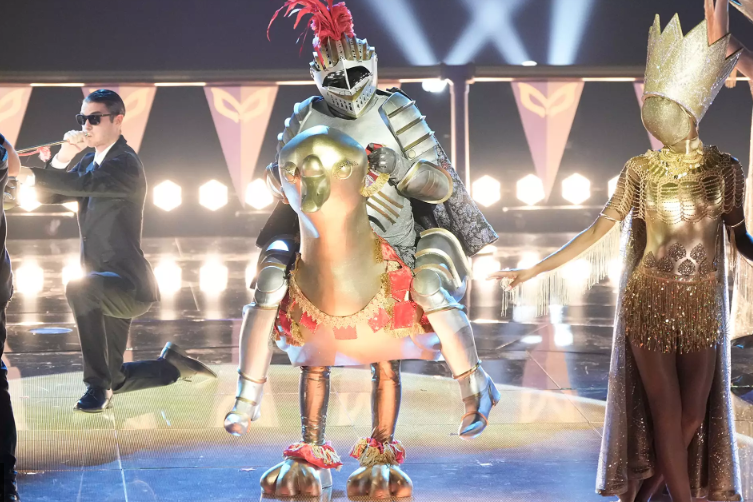
Image (Credit): The Knight performs on season eight of The Masked Singer. (Fox)
“The Masked Singer is the most extraordinary experience I’ve ever had. Well, I mean, the wardrobe was impossible. You can’t see, you can’t breathe, you can’t hear, you can’t think. There was no oxygen in there. I had a panic thinking, “Wait a minute, I can’t breathe. And I’m supposed to sing.” You know how you sing? You take a breath and air comes out. That’s how you sing, and I couldn’t get a breath. It was incredible.”
-William Shatner’s response to a question from EntertainmentWeekly Entertainment, “Speaking of your busy schedule, in the last year, you went to space and appeared on The Masked Singer. Be honest, which experience was wilder for you?” Jeff Bezos may not be too happy to hear this after he flew Mr. Shatner to the edge of space last year on one of his Blue Origin rockets. Maybe he should have added a Karaoke machine to the flight.
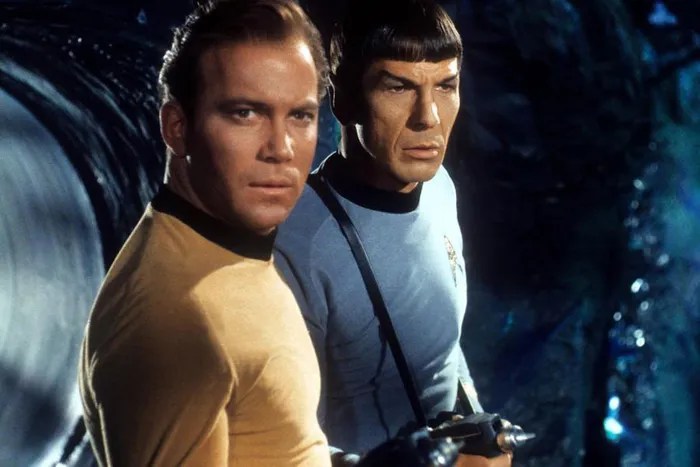
Image (Credit): Captain Kirk and Mr. Spock from Star Trek. (Paramount Pictures)
On this day in 1966, NBC television broadcast the first episode of Star Trek. The new series lasted for three seasons. It was the beginning of a “cultural phenomena,” to quote Leonard Nimoy from the 1991 television special, Star Trek 25th Anniversary Special.
While it may not technically meet the definition of astronomy, it definitely impacted many astronomers and other scientists. In 2016, NASA wrote about the technology and ideas in the Star Trek series that later matched up with reality or might exist someday. Here are two examples:
Communicators: Like Star Trek communicators, cell phones are ubiquitous now, to an annoying extent, and images and videos made with them are now collected and exchanged obsessively. Landing parties in past Star Trek shows only gave verbal reports, and did not send back images and videos, as today’s people would.
Impulse Engines: These are rocket engines based on the fusion reaction. We don’t have the technology for them yet – they are far ahead of our present chemical-fueled rockets – but they are within the bounds of real, possible future engineering.
Some Star Trek episodes also mentioned ion drive. In recent decades, Russian, U.S., European, and Japanese spacecraft have used ion drive engines, known as Hall thrusters. They are much more efficient than the usual chemical rockets and have been capable of propelling probes to asteroids and comets in our solar system.
Theoretical physicist and cosmologist Lawrence Krauss, writer of The Physics of Star Trek, also shared his insights on the influence of Star Trek in this video, Trek Talks: Lawrence Krauss on Star Trek and Science. He is among many who have seen the beneficial role of science fiction.
Fortunately, the Star Trek television and movie universe is going strong and can continue influencing young minds ready to explore this universe of ours.
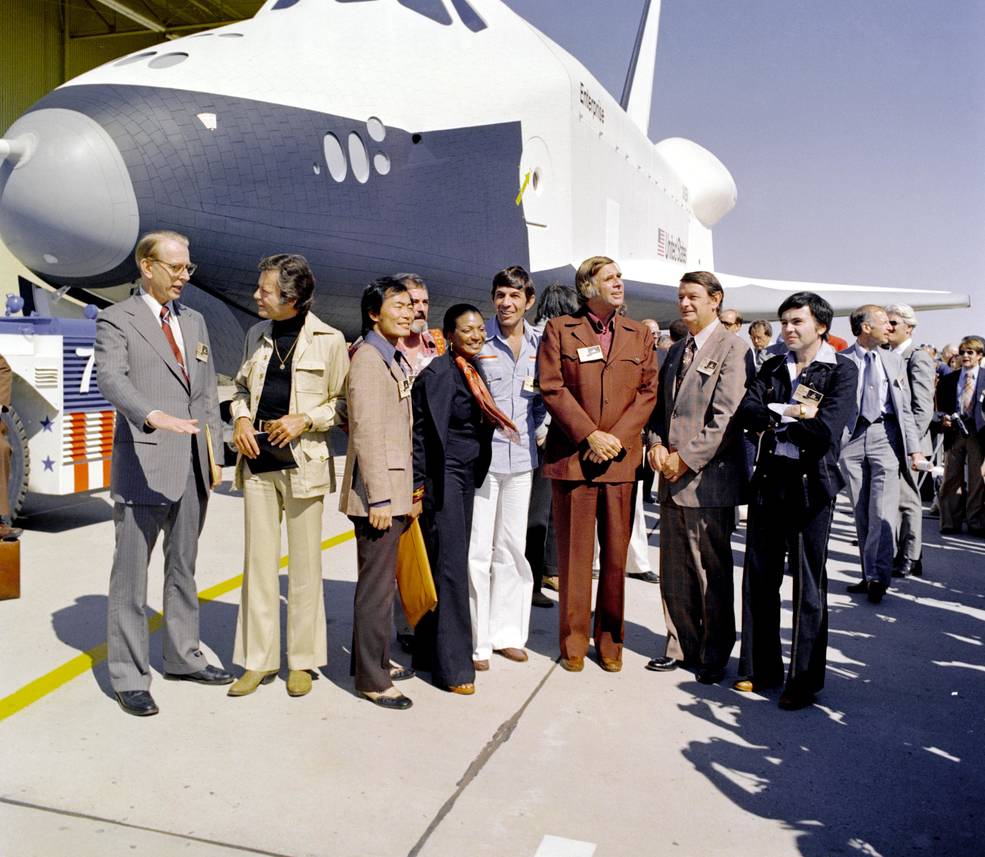
Image (Credit): In 1976, NASA’s space shuttle Enterprise rolled out of the Palmdale manufacturing facilities and was greeted by NASA officials and cast members from the Star Trek television series. From left to right they are: NASA Administrator Dr. James D. Fletcher; DeForest Kelley, who portrayed Dr. “Bones” McCoy on the series; George Takei (Mr. Sulu); James Doohan (Chief Engineer Montgomery “Scotty” Scott); Nichelle Nichols (Lt. Uhura); Leonard Nimoy (Mr. Spock); series creator Gene Roddenberry; U.S. Rep. Don Fuqua (D.-Fla.); and, Walter Koenig (Ensign Pavel Chekov). (NASA)
Extra: The pilot episode of Star Trek was named “The Man Trap.” It was not really the pilot but instead an episode in the wrong order, and the original pilot was dropped, but that is beside the point. The point is that it was bad. Really bad. You can read all about it in this article from Entertainment Weekly, “Star Trek Turns 50: A Look Back at the Desperately Sad First Episode.”
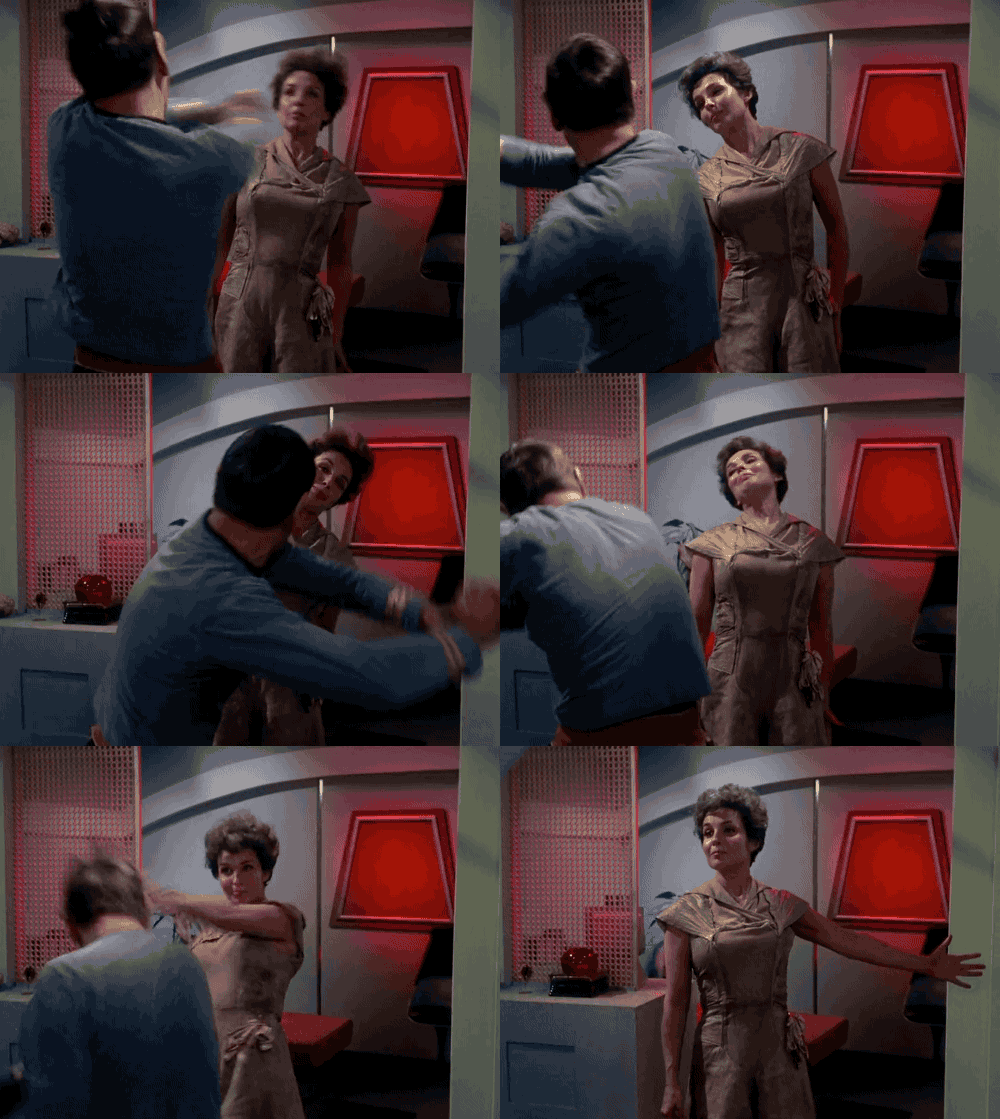
Image (Credit): Spock and Nancy in Star Trek’s “The Man Cage.” (Paramount Pictures)
United Launch Alliance has announced that it will be sending the remains of Nichelle Nichols, also known as Star Trek’s Lt. Uhura, into space on a Vulcan Centaur rocket later this year in conjunction with the Celestis memorial program. About 150 memorial capsules in all with be part of what is named the “Enterprise Flight” (see the mission logo above). Others joining Ms. Nichols’ capsule include capsules for Star Trek creator Gene Roddenberry and his wife, as well as James Doohan, who played Scotty on the original Star Trek series.
The Enterprise Flight will launch from Cape Canaveral in Florida, with the capsules going more that 250 million miles into space. The Celestis website notes that more missions are being planned and memorial prices start at $2,495. However, if you want to be on the same flight as Lt. Uhura, prices start at $12,500 and you need to make your reservation by September 15th.
Mr. Roddenberry and others have been similarly honored as part of NASA’s space program. For instance, back in 1992 the remains of Gene Roddenberry were carried into space on Space Shuttle Columbia and later returned to Earth. It is not clear whether these same remains are now part of the Celestis mission. And let’s not forget the Carl Sagan Memorial Station on Mars, named back in 1997 (see below).
Image (Credit): NASA Mars Pathfinder mission site on Mars named the Carl Sagan Memorial Station. (NASA)
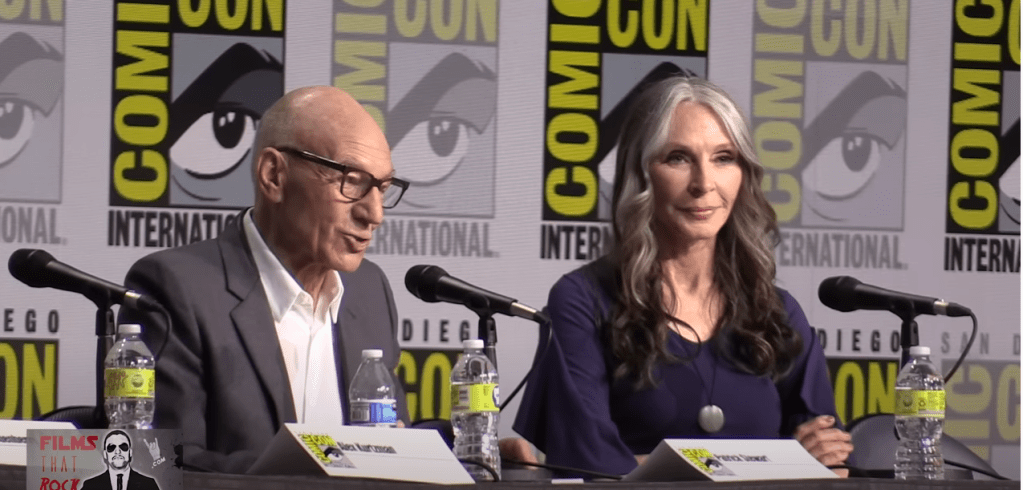
Image (Credit):Star Trek panel at the San Diego Comic Con in July 2022. (Films that Rock)
This week’s image shows Patrick Stewart (Captain Picard) and Gates McFadden (Dr. Beverly Crusher) discussing Star Trek at the 2022 Comic Con in San Diego, CA. You can watch the full panel discussion here. You can also watch the season three (and final season) trailer for Star Trek: Picardhere, indicating our favorites from The Next Generation will be returning one more time.
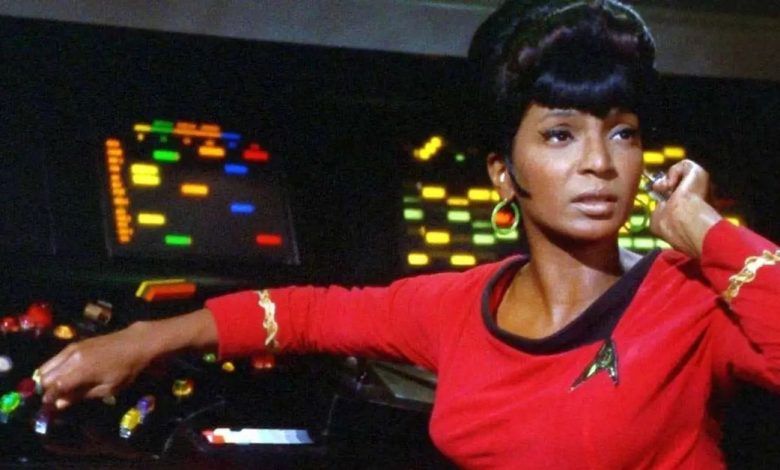
Image (Credit): Lt. Nyota Uhura on the deck of the U.S.S. Enterprise. (Paramount)
This weekend we lost actress Nichelle Nichols, who played Lt. Nyota Uhura on the original Star Trek television series. She was 89.
Back in 1966, her role as part of the crew on the U.S.S. Enterprise was a risky and eye-opening move by creator Gene Roddenberry in a nation divided by race (as well as many other issues – sound familiar?). In an NPR interview, Mr. Nichols noted how civil rights leader Martin Luther King, Jr. encouraged her to remain with the Star Trek series at a time she was considering leaving:
He complimented me on the manner in which I’d created the character. I thanked him, and I think I said something like, Dr. King, I wish I could be out there marching with you. He said, no, no, no. No, you don’t understand. We don’t need you on the – to march. You are marching. You are reflecting what we are fighting for. So, I said to him, thank you so much. And I’m going to miss my co-stars.
And his face got very, very serious. And he said, what are you talking about? And I said, well, I told Gene just yesterday that I’m going to leave the show after the first year because I’ve been offered – and he stopped me and said: You cannot do that. And I was stunned. He said, don’t you understand what this man has achieved? For the first time, we are being seen the world over as we should be seen. He says, do you understand that this is the only show that my wife Coretta and I will allow our little children to stay up and watch. I was speechless.
An impressive endorsement.
The last time I saw Ms. Nichols was on the History Channel special on the television series: The Center Seat: 55 Years of Star Trek. I enjoyed listening to her stories about her time with the television series and related movies. I recommend the program as a way to learn more about Ms. Nichols as well as the other actors associated with the Star Trek phenomena.



 Our Awesome Universe