Space Stories: New Lunar Water Estimates, Coronal Mass Ejection, and Oxygen on Mars

Image (Credit): Shadows on the Moon’s south pole. (NASA)

Here are some recent stories of interest.

Southwest Research Institute: “New Findings Suggest Moon May Have Less Water Than Previously Thought

A team recently calculated that most of the Moon’s permanently shadowed regions (PSRs) are at most around 3.4 billion years old and can contain relatively young deposits of water ice. Water resources are considered key for sustainable exploration of the Moon and beyond, but these findings suggest that current estimates for cold-trapped ices are too high.

Scientific American: “Massive Sun Outburst Smacks NASA Spacecraft

NASA’s Parker Solar Probe was built to withstand the ravages of the environment near our sun—and with good reason. The car-size spacecraft has now flown through a giant solar outburst of charged particles called a coronal mass ejection (CME). If that CME had it hit Earth instead, it may have caused vast, continent-wide blackouts, scientists say. Some of those searing particles whipped through space at about three million miles per hour.

BGR: “NASA Successfully Generated Oxygen on Mars

NASA’s Perseverance rover has done the unthinkable. Or, at least, a small device on the rover has. According to a tweet and article shared by NASA’s Perseverance team on Twitter, a device known only as MOXIE has proven that we can generate oxygen on Mars using the planet’s CO2-concentrated atmosphere. This tech is a huge boon, and the success of this story could help pave the way for future oxygen generation on the Red Planet, something that would make long-term exploration of the planet far more feasible.

India Has Been Busy – It Now Heads for the Sun

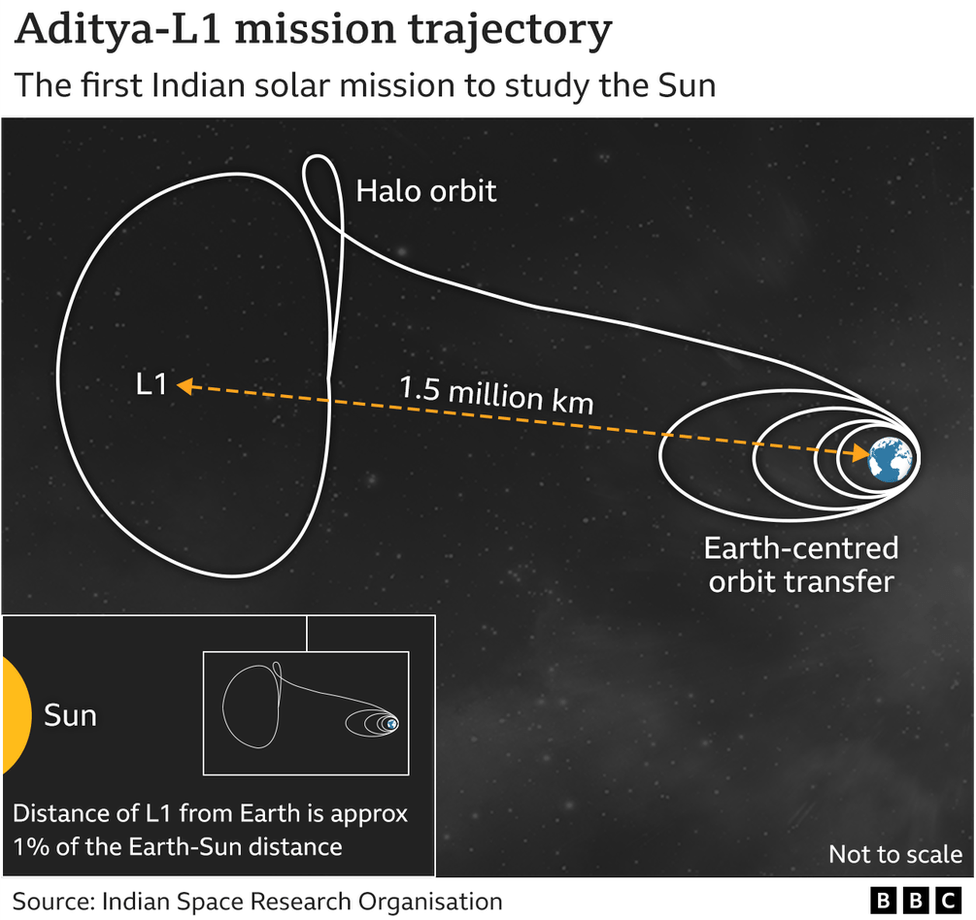
Over the weekend, India launched another important space mission. The mission of the Aditya-L1 spacecraft is to spend four months studying the outer layers of the Sun.

The Indian Space Research Organisation (ISRO) is overseeing the mission, which will come to rest at the L1 Lagrange point from where it will observe the Sun.

For more details on the mission, check out the ISRO website where you can find details about the spacecraft’s objectives and scientific equipment.

This latest mission comes right after India’s successful landing on the Moon, showing all of us that it is not resting on its laurels. The country clearly wants to be in the forefront of the space and science race.

Pic of the Week: Solar Flare X1 from AR2994 in ‘Motion’

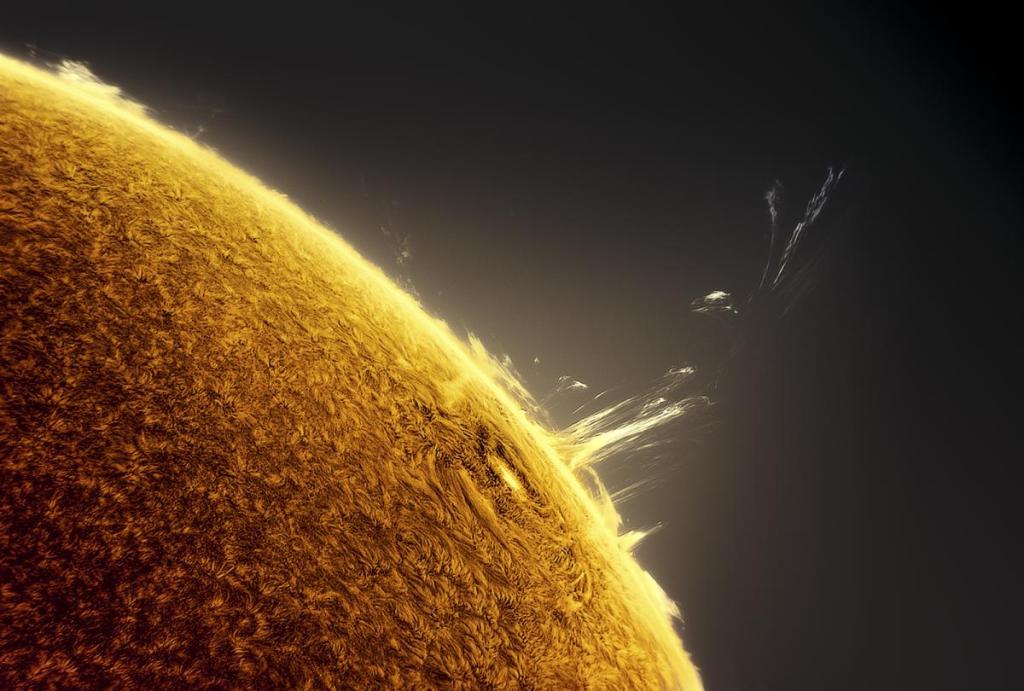
Image (Credit): Solar Flare X1 from AR2994 in ‘Motion.’ (Miguel Claro)

This week’s image is one of the finalist photos in the 2023 Astronomy Photographer of the Year shortlist held by the Royal Museums Greenwich. Check out the site for other fascinating finalist images.

Here is a little more about this solar flare image from photographer Miguel Claro taken in the Dark Sky Alqueva region, Évora district, Portugal:

“I was testing my new camera from Player One Apollo-M Max and photographing another region of the Sun, when I was notified by the SpaceWeatherLive app that an eruption was ongoing at 13.47 (UTC, Universal Time) with the release of an extraordinary X1-class solar flare [X class flares are the largest],” Miguel says.

“I had to immediately change my initial plans and pointed the telescope as quickly as possible to the limb where the flare departed from sunspot AR2994, already hidden behind the edge of the Sun. According to SpaceWeatherLive, ‘the explosion produced enough radiation for a strong shortwave radio blackout over the mid-Atlantic ocean and Europe’. Conditions were unstable, but I managed to make a short timelapse of about 27 minutes.”

Space Stories: Launch of the Euclid Space Telescope, Mercury Flyby, and a Super Hot Brown Dwarf

Image (Credit): Artist’s rendering of the ESA’s Euclid Space Telescope. (ESA, CC BY-SA 3.0 IGO)

Here are some recent stories of interest.

NASA/JPL: “NASA to Provide Coverage for Launch of ESA ‘Dark Universe’ Mission

The ESA (European Space Agency) and SpaceX are targeting no earlier than 11:11 a.m. EDT (8:11 a.m. PDT) Saturday, July 1, to launch the Euclid spacecraft. Euclid is an ESA mission with contributions from NASA that will shed light on the nature of dark matter and dark energy, two of the biggest modern mysteries about the universe.

Sky&Telescope: “BepiColombo Mission Makes Third Mercury Flyby

An intrepid space mission had another brief glimpse of its final destination this week, as the European Space Agency’s BepiColombo flew past Mercury for a third time. The team confirms that the spacecraft is in good health post flyby, and that all instruments performed as planned. “Everything went very smoothly with the flyby and the images from the monitoring cameras taken during the close-approach phase of the flyby have been transmitted to the ground,” said Ignacio Clerigo (ESA) in a recent press release. “While the next Mercury flyby isn’t until September 2024, there are still challenges to tackle in the intervening time.”

Phys.org: “Discovery of a Brown Dwarf Hotter than the Sun

An international team of astronomers has discovered a planet-like object that is hotter than the sun. Their report has been accepted for publication in the journal Nature Astronomy and is currently available on the arXiv pre-print server. Brown dwarfs are sometimes called failed stars and do not qualify for the category of either a planet or a star. In this new effort, the researchers have identified one that orbits a star so closely that its temperature is hotter than our sun.

Pic of the Week: The ISS Transiting the Sun

Image (Credit): The ISS before the Sun. (Thierry Legault)

This week’s image was taken by French astrophotographer Thierry Legault. It shows the  International Space Station (ISS) transiting the Sun on June 9th. The other three dark objects are sun spots.

At the time this image was taken, two NASA astronauts, Stephen Bowen and Warren “Woody” Hoburg, were installing a new solar array on the station.