Movie: The Mandalorian and Grogu

Credit: Lucasfilm Ltd.

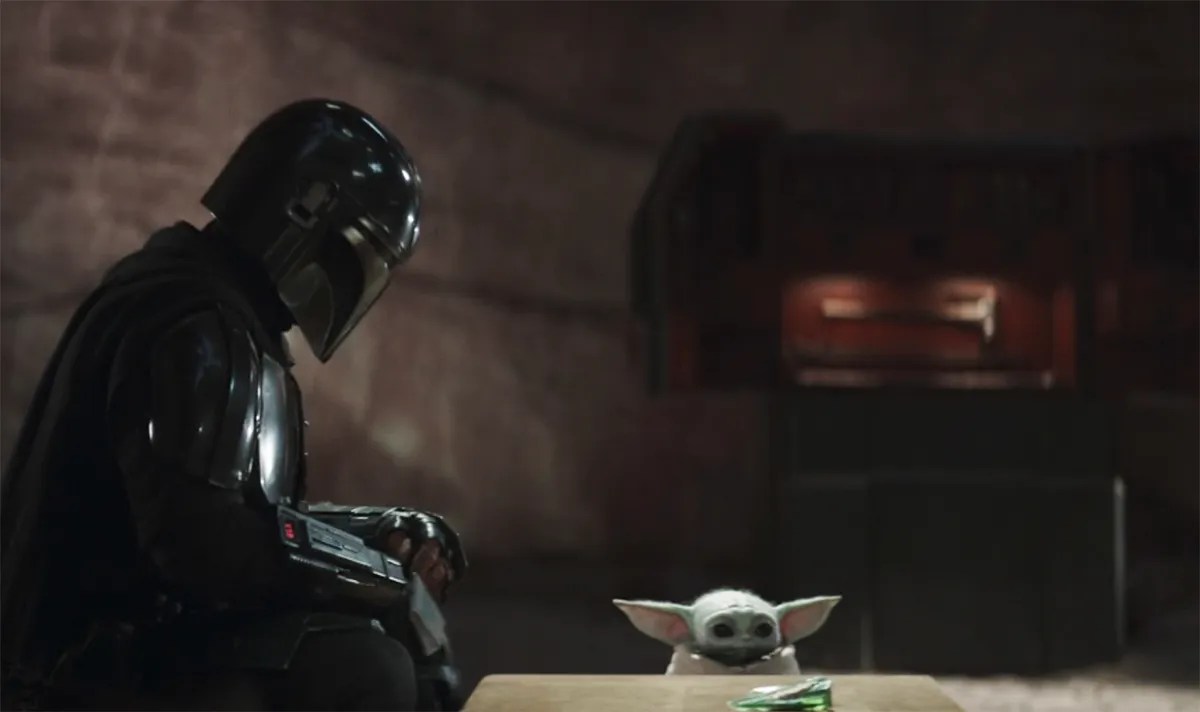
On May 22, The Mandalorian will go from our TV screens to the movie screens with the premiere of The Mandorian and Grogu.

Overall, this is the story in the film (and this trailer helps to visualize it all):

The evil Empire has fallen, and Imperial warlords remain scattered throughout the galaxy. As the fledgling New Republic works to protect everything the Rebellion fought for, they have enlisted the help of legendary Mandalorian bounty hunter Din Djarin (Pedro Pascal) and his young apprentice Grogu.

Not too descriptive, but basically the movie is a mash up of the old Star Wars icons, such as TIE fighters, Jabba the Hutt, and All Terrain Armored Transports (or AT-AT walkers), as well as the unique creations of the TV series, including our green friend Grogu.

I would have liked to see the Andor series brought to the big screen as well, but it may be a bit too cerebral for today’s movie goers. The Mandalorian and Grogu has the feeling of the many comic book superhero films filling the theaters these days, but it is still a little more than that.

In describing Disney’s new Mandalorian series back in 2020, a Guardian critic stated:

First, this is a western. Second, Pascal can do a fair bit with dialogue and movement. He is a badass, for sure, but he is also cynical and purposeful, with a weary wit. He is Robocop. He is Clint Eastwood. He is Ryan Gosling in Drive. He is not messing about and neither is the series, as an over-the-odds, off-the-books job takes our man to a secret bunker crawling with black-and-white stormtroopers, which feels like walking into an underground club in 50s Paris and finding it full of uniformed Nazis. 

This is a fair assessment of what we saw in the three TV seasons. If the movie can maintain this energy, with its usual tinge of humor, it will be worth the ticket price, and more.

Television: Starfleet Academy to End After Two Seasons

Credit: Paramount+

Nothing gold can stay, Robert Frost once wrote. Just enjoy it while it is here.

And so it goes with Star Trek as well. The new television series Starfleet Academy will last for only two seasons and then disappear. While I had originally thought that promising a second season before the first one aired was premature, it turns outs it was brilliant given the fickle habits of today’s viewers. Now the series has a chance to bring some closure.

I have enjoyed the first season. While it was not perfect, it was finding its way to tell a new story to a new generation of Star Trek viewers. At a time that Star Wars seems to have run out of steam, the new series showed that Star Trek still had more to say with a whole new cast of characters rather than endlessly recycling the past. I am hopeful that it can continue to do so even with this ending.

The series co-showrunners and executive producers, Alex Kurtzman and Noga Landau, wrote a few words that also quoted this bit from Gene Roddenberry that says a lot in these times:

Star Trek was an attempt to say that humanity will reach maturity and wisdom on the day that it begins not just to tolerate, but take a special delight in differences in ideas and differences in life forms. […] If we cannot learn to actually enjoy those small differences, to take a positive delight in those small differences between our own kind, here on this planet, then we do not deserve to go out into space and meet the diversity that is almost certainly out there.

Television: Season Five of For All Mankind

Credit: Apple TV

If you thought last season of For All Mankind was hair-raising with the disasters and battles on Mars, wait until you see what happens this season.

This trailer from Apple TV gives you a taste of the drama coming to your television on March 27th. We see the return of many of our favorite characters (those who survived) as well as a few new ones.

The season picks up years after the “Martians” hijack an asteroid intended for Earth, thereby giving the Martian economy plenty of mining revenue. Apple TV states:

Happy Valley has grown into a thriving colony with thousands of residents and a base for new missions that will take us even further into the solar system. But with the nations of Earth now demanding law and order on the Red Planet, friction continues to build between the people who live on Mars and their former home.

It did not take long for the new Martians to seek independence. We may want to keep that in mind as we continue to allow Mr. Musk to be the spokesperson for the colonization of Mars. He does not play well with others on this planet, so good luck with him running the show on Mars.

Anyway, the series offered plenty of ideas regarding a space race for a lunar base followed by a space race for Mars. The only odd part of this series is that while the USSR and North Korea are present on Mars, we hear almost nothing about China and its space program.

As NASA contemplates a whole new approach to the Moon and Mars (as highlighted just today), it’s fun to watch a show where the space travel timetable is faster and the private sector is more engaged with its own separate mission to Mars. Again, I can picture this happening with SpaceX, where Blue Origin takes the lead on the Moon and Musk takes all of his marbles so he can proceed to Mars on his own.

One thing we can bet on with our expansion into space, regardless of the timetable, is that mankind’s foibles will be front and center in any of these space missions. The hardware issues will be easy to solve compared to dealing with the egos and emotions of space-bound humanity.

In the meantime, while we await the real thing, sit back and enjoy Apple TV’s version of our future in space.

Note: Apple TV announced earlier today that the sixth season of the series will be the last.

Another Take on NASA’s Ability to Maneuver an Asteroid

Credit: Random House

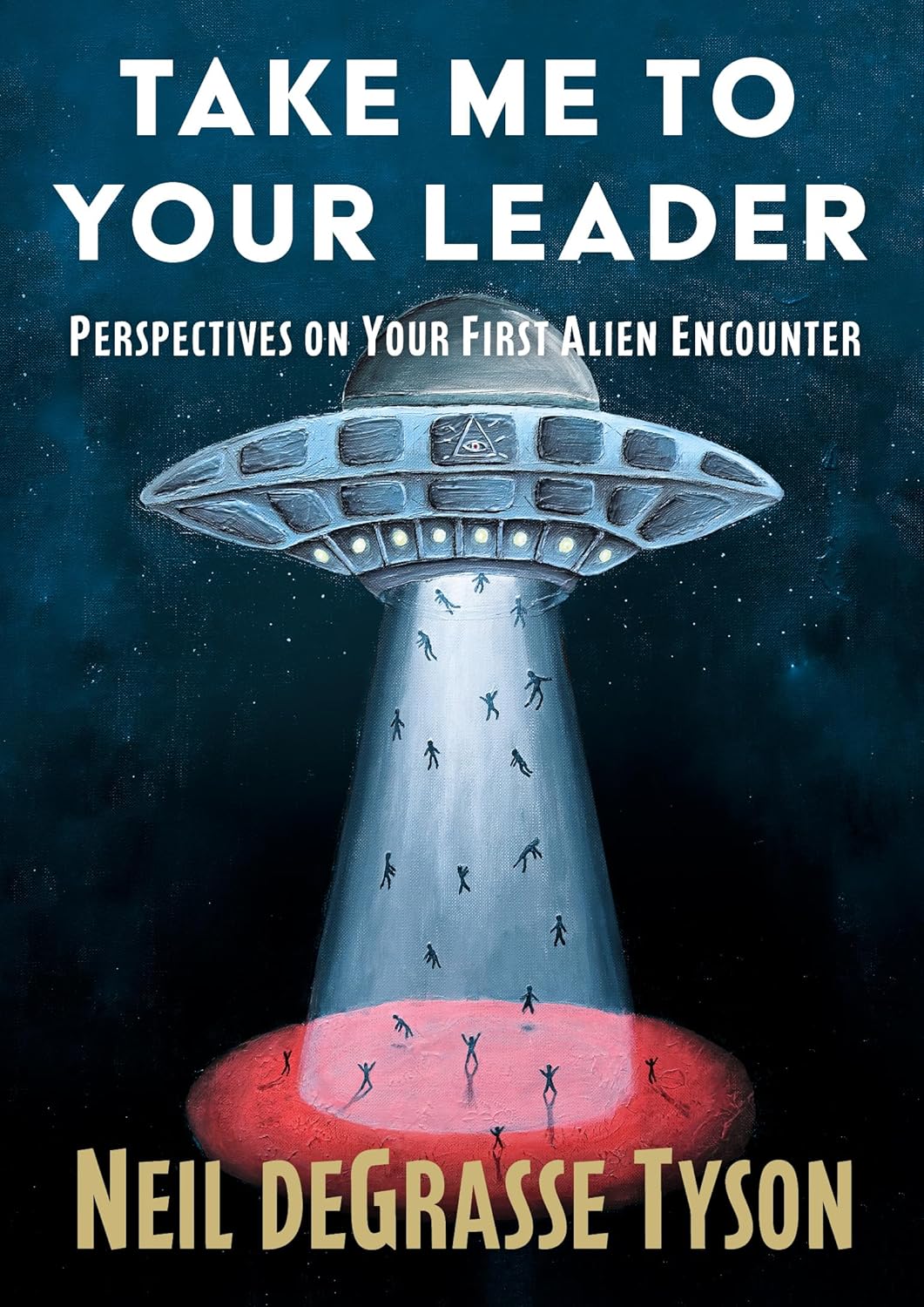
While everyone is pretty excited about NASA’s ability to nudge a distant asteroid via its Double Asteroid Redirection Test (DART) mission, there is more than one way to look at this event. While many see this as a new tool to protect the Earth from approaching peril, Carl Sagan saw this it more as a double-edged sword.

In his 1994 book Pale Blue Dot: A Vision of the Human Future in Space, Dr. Sagan wrote:

Can we humans be trusted with civilization-threatening technologies? If the chance is almost one in a thousand that much of the human population will be killed by an impact in the next century, isn’t it more likely that asteroid deflection technology will get into the wrong hands in another century—some misanthropic sociopath like a Hitler or a Stalin eager to kill everybody, a megalomaniac lusting after “greatness” and “glory,” a victim of ethnic violence bent on revenge, someone in the grip of unusually severe testosterone poisoning, some religious fanatic hastening the Day of Judgment, or just technicians incompetent or insufficiently vigilant in handling the controls and safeguards? Such people exist. The risks seem far worse than the benefits, the cure worse than the disease.

You might also remember the stealth asteroids directed at Earth by terrorists in the fifth season of the television series The Expanse. Yes, it is science fiction, but so wasn’t the idea of landing humans on the Moon until it was a fact.

As we watch the Middle East burn again, it is not hard to imagine a battle involving sociopaths, ethnic violence victims, leaders with severe testosterone poisoning, religious fanatics, or even incompetent individuals without guardrails making more of a mess of the Earth and its surroundings.

It’s just a thought.

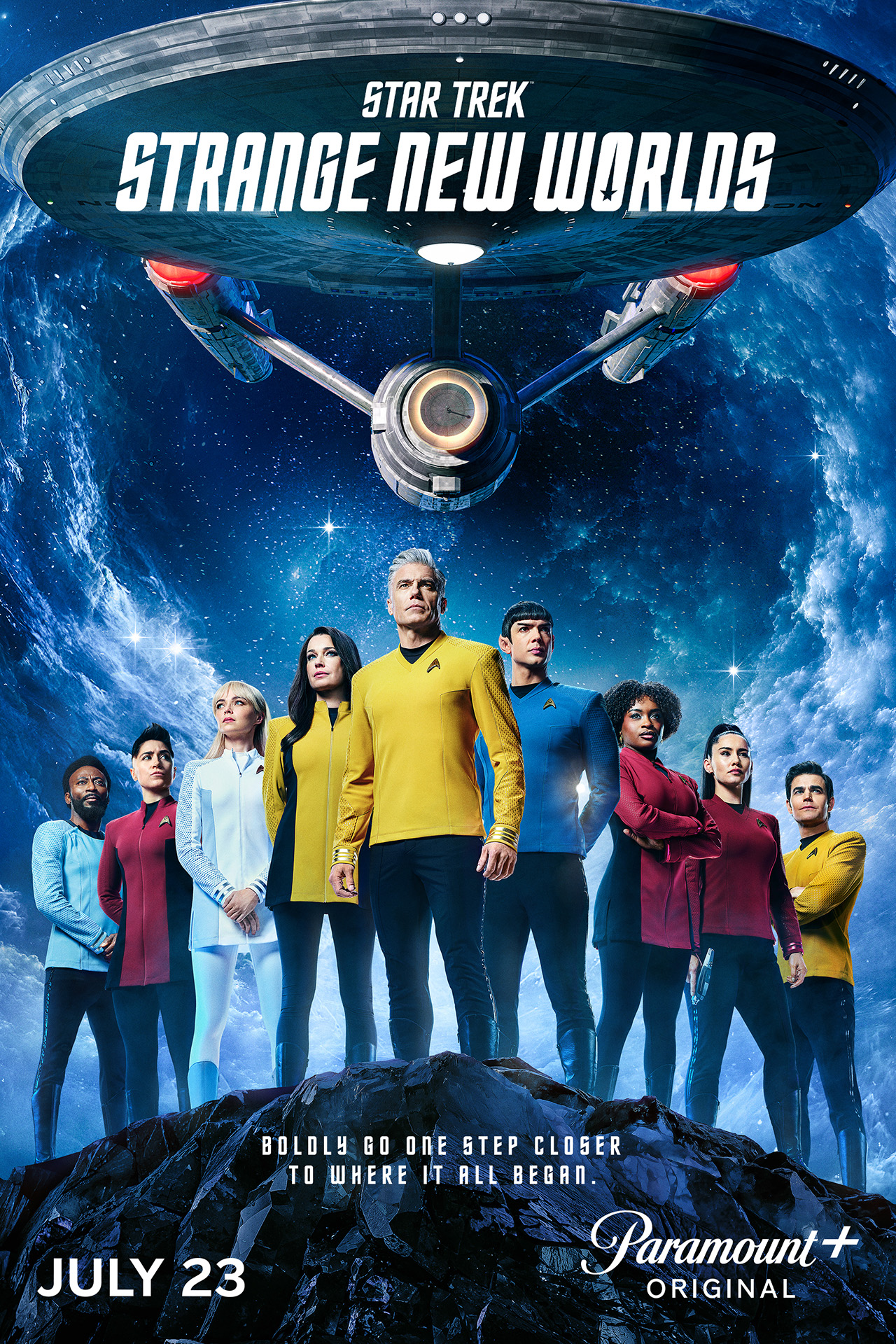
Television: Star Trek’s Starfleet Academy is a Solid Addition to the Franchise

Credit: Paramount+

I am happy to say that the creators of Star Trek have done it again with the latest series Star Trek: Starfleet Academy. It is a worthy addition to that ongoing saga.

The first six episodes of the first season form a good story arc that starts with Nahla Ake (Holly Hunter) and Nus Braka (Paul Giamatti) coming together in the initial episode, then leaves aside their drama for four episodes, and finally brings them back together for a memorable sixth episode. In the meantime, we watch the new cadets grow together at the academy under the tutelage of Nahla Ake, chancellor of Starfleet Academy.

In terms of what works versus what needs more work, let’s start with the positives:

  • Nahla Ake is a very likable and long-living character (half-Lanthanite) who becomes the mother-like figure overseeing cadet Caleb Mir. She has a cat-like way of sitting and a dog-like loyalty to the academy mission that make her the glue of the show.
  • The mix of instructors and cadets keep the show interesting, be it our well known Doctor from Star Trek: Voyager or the transformative Khionian cadet Darem Reymi. We have time to learn many of the character’s origin stories, including why a holographic doctor ages. This gives the show greater depth as we uncover the diversity of the academy.
  • The show has a light touch with plenty of humor. My favorite character is probably Lura Thok, who is a Klingon/Jem’Hadar serving as first officer of the starship Athena. She is married to Tig Notaro’s Jett Reno. Lura Thok is that ever-present drill sergeant who seems to terrorize the cadets while amusing the chancellor. She adds the perfect amount of levity to the show.

In terms of the negatives, there are quite a few, but none of them permanently hurt my overall impression of the show:

  • In the first episode, Paul Giamatti’s Nus Braka, part-Klingon and part-Tellarite, was a little over the top. I know the first episode has to capture the viewer’s attention, but Giamatti was chewing the scenery with his performance. He may have been having fun, but he was channeling Jack Nicholson from The Shining. It was good that he disappeared for a while to let the other characters shine.
  • Starfleet Academy looks more like a Miami mall than a Federation facility. And when you add in the annoying robots scurrying around the corridors as well as the floating traffic jams that reminded me of the Star Wars planet of Coruscant, it was all a little overwhelming as well as silly.
  • The fact that language has not changed in 1,000 years is odd. The cadets still say “bite me” while Nus Braka is stating “payback is a bitch.” Maybe this is how you attract new viewers, but does Star Trek really need to sound like every other teenage show?

Overall, it is a well done and expensive-appearing television series that breathes life back into Star Trek, thereby hopefully creating new Trekkies. This is something that the Star Wars franchise has tried as well, but almost all of the spin-offs leaned too heavily on key characters from the past or did a horrible job representing teens of the future (think of that Boba Fett series). That may be why Star Trek has two strong television series on the air this year and Star Wars apparently has only the second season of Ahsoka, which is a weak imitation of the original movies, and that’s saying a lot given that the last three Star Wars movies were a weak imitation of the first three movies.

I am glad we have at least one more season of Starfleet Academy ahead of us, and I expect many more it the creators can maintain the quality (and resolve some of the bumps) that we see in the first six episodes.