More on those Chinese Balloons

Image (Credit): Chinese balloon details from the leaked Pentagon documents. (The Daily Mail)

The Chinese balloons that causes so much trouble a few months back appear to be nothing new, according to recently leaked Pentagon documents. The Chinese have been using them for years to spy on American military positions. And on closer inspection, the contraption being carried by these balloons looks a lot like a normal satellite, with solar panels, antenna, sensors, and more (see the image above).

So why use balloons and not normal satellites? As noted in earlier press stories, the balloons are cheaper, easier to launch, more difficult for US intelligence to detect when launched, fly closer to targets, and linger longer over those targets. These are many of the same reason the US and many other countries continue to use balloons for scientific reasons as well.

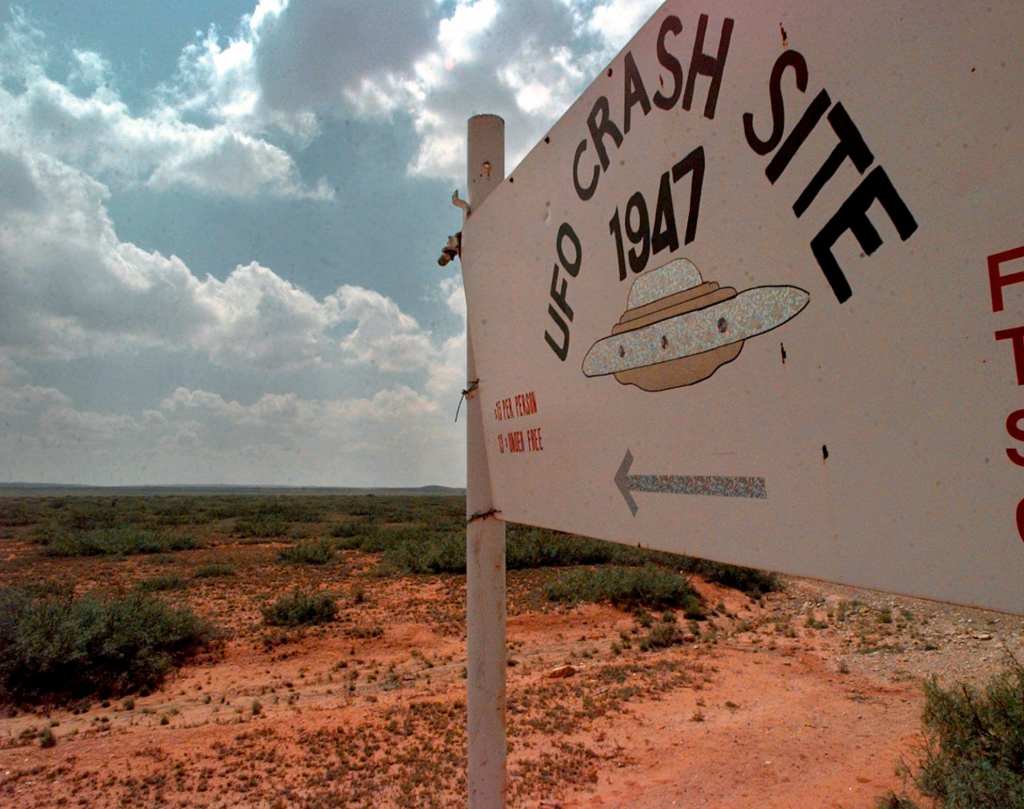
The leaked documents are simply confirming what we already know. UFOs are all over and as far as we know to date man-made. I know it is still hard for many to believe that the crashed object in Roswell, New Mexico back in the 1947 was just a US military surveillance balloon. Real life can be boring at times.

Space Quote: Dandelion-Like Space Probes?

Credit: Swansons Nursery.

“Nevertheless, the coincidences between some orbital parameters of ‘Oumuamua and IM2 inspires us to consider the possibility that an artificial interstellar object could potentially be a parent craft that releases many small probes during its close passage to Earth, an operational construct not too dissimilar from NASA missions. These “dandelion seeds” could be separated from the parent craft by the tidal gravitational force of the Sun or by a maneuvering capability. A small ejection speed far away could lead to a large deviation from the trajectory of the parent craft near the Sun. The changes would manifest both in arrival time and distance of closest approach to Earth. With proper design, these tiny probes would reach the Earth or other Solar system planets for exploration, as the parent craft passes by within a fraction of the Earth-Sun separation – just like ‘Oumuamua did.”

-Statement in a March 7, 2023 draft paper, Physical Constraints on Unidentified Aerial Phenomena, written by Harvard astronomer Abraham (Avi) Loeb and US Department of Defense Director Sean M. Kirkpatrick. The paper makes reference to both the interstellar object ‘Oumuamuaa and the meter-size interstellar meteor (IM2) that collided with Earth on March 9, 2023. This research was supported in part by Galileo Project at Harvard University and conducted in partnership with the Department of Defense, All-domain, Anomaly Resolution Office.

Study Findings: Acceleration of 1I/‘Oumuamua from Radiolytically Produced H2 in H2O Ice

Image (Credit): Artist’s concept of interstellar object1I/2017 U1 (‘Oumuamua) as it passed through the solar system after its discovery in October 2017. (European Southern Observatory / M. Kornmesser)

Nature abstract:

In 2017, 1I/‘Oumuamua was identified as the first known interstellar object in the Solar System. Although typical cometary activity tracers were not detected, ‘Oumuamua showed a notable non-gravitational acceleration. So far, there has been no explanation that can reconcile these constraints. Owing to energetic considerations, outgassing of hyper-volatile molecules is favoured over heavier volatiles such as H2O and CO2. However, there are theoretical and/or observational inconsistencies with existing models invoking the sublimation of pure H2, N2 and CO. Non-outgassing explanations require fine-tuned formation mechanisms and/or unrealistic progenitor production rates. Here we report that the acceleration of ‘Oumuamua is due to the release of entrapped molecular hydrogen that formed through energetic processing of an H2O-rich icy body. In this model, ‘Oumuamua began as an icy planetesimal that was irradiated at low temperatures by cosmic rays during its interstellar journey, and experienced warming during its passage through the Solar System. This explanation is supported by a large body of experimental work showing that H2 is efficiently and generically produced from H2O ice processing, and that the entrapped H2 is released over a broad range of temperatures during annealing of the amorphous water matrix. We show that this mechanism can explain many of ‘Oumuamua’s peculiar properties without fine-tuning. This provides further support that ‘Oumuamua originated as a planetesimal relic broadly similar to Solar System comets.

Citation: Bergner, J.B., Seligman, D.Z. Acceleration of 1I/‘Oumuamua from radiolytically produced H2 in H2O ice. Nature 615, 610–613 (2023).
https://doi.org/10.1038/s41586-022-05687-w

Study-related stories:

Note: Harvard astronomer Avi Loeb, who has written a book about Oumuamua, raised some concerns the about new study in this EarthSky article.

A UFO Over California?

Image (Credit): Night sky over Sacramento, CA on March 17, 2023. (Associated Press)

UFOs came up again last week pertaining to lights over Sacramento, California. As fireballs streaked across the night sky, a few citizens thought they might be watching fireworks or even the arrival of distant visitors to celebrate St. Patrick’s Day.

The explanation for the lights was interesting, but not because it was a UFO. It turns out the International Space Station (ISS) dumped a 683 pounds of Japanese communications equipment back in 2020. It took that long for the equipment to return towards Earth as a molten mass. The US Space Force later confirmed this explanation.

As noted in an earlier post, this ISS debris is not unusual, and can contain huge objects such as a cargo capsule.

The BBC recently noted that your chance of being struck by space debris is one in a trillion. So you can look up, but don’t worry about covering your head.

Television: UFOs and Star Trek

Image (Credit): Promotion for UFOs: Investigating the Unknown. (National Geographic)

With all the ongoing media chatter about unidentified flying objects (UFO), National Geographic has perfect timing with its new series UFOs: Investigating the Unknown. The new series started on February 13th. You can watch it on Hulu, Disney+, and ESPN+.

National Geographic promises that this new five-part series will explore the government’s decades long investigations into UFOs. It seems those investigations just expanded into new areas with the U.S. Air Force recently firing missiles at objects in Canada and the United States. Maybe the new series can help to explain some of these sightings.

If the whole UFO issue has bored you, then tag along with Captain Picard for the third and last season of Star Trek: Picard. The series returned on February 16th. You get to see some of your old favorites joining the cast this season, including Geordi La Forge, Worf, William Riker, Dr. Beverly Crusher, and Deanna Troi.

Here is the basic plot from Paramount+:

In the epic, thrilling conclusion of Star Trek: Picard, a desperate message from a long-lost friend draws Starfleet legend Admiral Jean-Luc Picard into the most daring mission of his life, forcing him to recruit allies spanning generations old and new. This final adventure sets him on a collision course with the legacy of his past and explosive, new revelations that will alter the fate of the Federation forever.

I know, the plot reads like a cover letter on a resume promising everything. That said, I think I will start with Star Trek: Picard and continue to follow UFOs in the daily news. That will be enough drama for me these days.

Image (Credit): Promotional poster for Star Trek: Picard’s third season. (Paramount+)