We Need More Ukrainian Initiative in the Space Industry

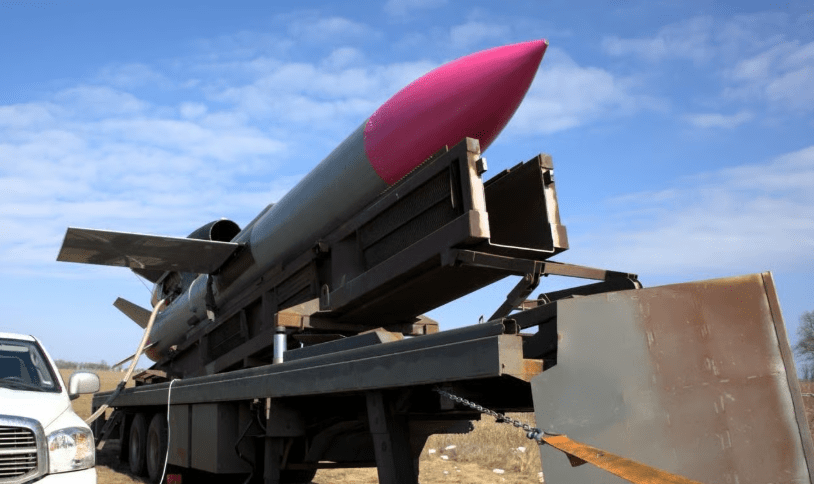
Image (Credit): The Ukrainian Flamingo cruise missile. (Fire Point)

It is a sad truth that war can create some useful items that propel mankind forward. Maybe these inventions would have occurred anyway, but the desire to survive can certainly stimulate the mind.

Ukraine is a perfect example. Recent stories about its Flamingo cruise missile indicate that the same Ukranian know-how that created the drones was also used to design a cruise missile that costs $500,000 a piece and can penetrate deep into Russian territory. Such quick innovation by Fire Point, the Ukrainian defense firm that created the new cruise missile, puts even Elon Musk to shame (remember, Musk tried to start SpaceX with old Russian rockets).

Ukraine has already knocked about 20 percent of Russia’s petroleum producing capacity offline, and now this. With a range of approximately 1,800 miles, the Flamingo has plenty of military targets that can severely damage Russia’s war-making capabilities.

Just think if all of this ingenuity had been put towards a peaceful space program. Of course, this war too shall end, and Ukraine may have some promising industries that can be quickly retooled for a space program.

Ukraine had a strong space industry when it was part of the USSR, and these latest foolhardy efforts by Putin to reestablish that Soviet empire may instead only reestablish the Ukranian space industry.

Russia Has One Less Space Asset

Image (Credit): Earlier photo of the RT-70 radio telescope. (PickPic)

The Urania newspaper Euromaiden Press recently noted the success of its navy in taking out Russian assets, including:

  • the Utios-T radar system;
  • the RT-70 radio telescope;
  • the GLONASS satellite navigation system in its dome;
  • the coastal radar station MR-10M1 “Mys” M1; and
  • the 96L6-AP radar of the S-400 missile system.

One of those items is not like the others, that being the Yevpatoria RT-70 radio telescope.

This Soviet-era radio telescope was one of the largest in the world, assisted with the study of Mars and Venus, and was used for messaging extraterrestrial intelligence, also known as METI.

Now it is rubble due to the ongoing war between Ukraine and Russia (the destroyed radio telescope is located in Russian-occupied Ukrainian territory).

We saw World War II introduce the power of rocket technology that sent us around the solar system, and now we are watching another war show how all that we have built can quickly crumble.

Podcast: Winter is Coming? I Hope Not

If you missed this podcast three years ago, you will want to catch it now. I listened to it again and enjoyed it just as much as last time.

The Startalk podcast episode it titled “Nuclear Winter with Ann Druyan and Brian Toon” was first broadcast on August 9, 2022, but it was shared again this past July 4th.

Here is a summary of what you will hear:

Are advanced civilizations doomed to destroy themselves? On this episode, Neil deGrasse Tyson and co-host Chuck Nice explore the Cold War, The Drake Equation, and Carl Sagan’s work on the nuclear winter hypothesis with producer of Cosmos and Carl Sagan’s widow Ann Druyan and atmospheric scientist Brian Toon.

Learn about the Future of Life award (details here) and how scientists came up with the nuclear winter hypothesis. How close to annihilation were we? Ann tells us about working with Carl Sagan on Cosmos and his research on this world and others. Find out how Carl Sagan’s research on the climate of Venus inspired work on the runaway greenhouse effect in our own atmosphere. Are scientists always supposed to be dispassionate?

What are the long-term consequences of nuclear war? How did they discover nuclear winter? Find out about volcanic eruptions and how the asteroid that killed the dinosaurs helped spark the idea of a nuclear winter. What happened after the US dropped atomic bombs on Hiroshima and Nagasaki? We learn about what smoke does to the atmosphere and what a post-nuclear world would look like. Why haven’t we seen any other advanced civilizations in the universe? Where are they? We talk about the Drake Equation, the fate of the Earth, and the current state of weapons of mass destruction. How much food would be needed to save up to survive a nuclear winter? Is there anywhere that would be safe?

What was the public’s reaction to nuclear winter? How did it impact geopolitics? Discover how Carl Sagan publicized the hypothesis to US and Russian politicians. Has the global amount of nuclear weapons gone down? We discuss the role of science communication and the concerning instability in the world today. Finally, are we safe?

I don’t want to repeat myself here, so you can read my comments in my earlier post.

Given the continued nasty war between Ukraine and Russia, as well as the recent bombing of nuclear sites in Iran, this episode is still sadly relevant. The discussion about the Reagan administration trying to block scientific inquiry also seems all too familiar today as the Trump administration guts our science programs, including NASA.

I just hope we are in a better place three years from now, both domestically and overseas.

Star Wars: Another Political Take on the Empire

Image(Credit): Senator Amidala from Star Wars: Revenge of the Sith. (Starwars.com)

While the libertarians at Reason magazine have their view of the imperial story-line in the Star Wars television series Andor, the liberal folks at Mother Jones magazine have a whole different take on the Star Wars universe.

In an article last month titled “How Star Wars Reveals Conservatives’ Authoritarian Fantasies,” we read about how some Republicans are showing support for the brutality of the Dark Side as illustrated in Andor. For instance, it quotes former Mitch McConnell adviser and GOP operative Scott Jennings defending the Empire’s elimination of Alderaan in the original Star Wars movie, stating:

I think some could argue that it was warranted, given their rebellious activities. I mean, he defended the Empire against unelected hippies and violent protesters.

You can see the entire Mother Jone’s YouTube clip here.

This is not an encouraging thought at this point in history. In an interview, George Lucas himself said the rebel alliance came from his reading of history and his understanding of the Viet Cong battle against the American empire. He saw the rebels as anti-authoritarian. He also thought of the American rebels as they fought Great Britain, the largest empire in the world.

Supporting the Evil Empire is more or less the same as voicing support for the wannabee Russian empire as it attacks democratic Ukraine. I think we all can do much better than to stoop that low.

Either that, or soon we will also be quoting the line “So this is how liberty dies.”

Is Russia Making a Separate Peace with Russia?

Image (Credit): The planet Mars. (NASA)

While the current White House discussions with Russia regarding its invasion of Ukraine has already raised some eyebrows, the Ukrainian newspaper The Kyiv Independent has reported that Russia appears to be making a separate offer to Elon Musk.

The newspaper reports that Russia has offered Mr. Musk a “small-sized nuclear power plant” for a future mission to Mars. Kirill Dmitriev, head of the Russian Direct Investment Fund, called Mr. Musk a “great visionary.”

The newspaper also notes that Mr. Dmitriev has plans for a set of separate talks with Mr. Musk, stating:

Russia seeks cooperation with Musk’s SpaceX company in developing Russia’s space agency, Roscosmos, and state-run nuclear energy company Rosatom.

Given that both President Trump and Mr. Musk need constant praise, it seems the Russians know who to push the buttons of both men. Of course, the Starlink system assisting the Ukranian military has been a Russian irritant from the very beginning, so you can assume any offer to Mr. Musk will come with a price tag.

Of course, maybe it makes sense to send Mr. Musk and his DOGE team to Russia now to assist with the restructuring of Roscosmos. That may be the best way to save NASA from his “vision” while ensuring Russia will not be a competitor for a very long time.