Podcast: Winter is Coming? I Hope Not

If you missed this podcast three years ago, you will want to catch it now. I listened to it again and enjoyed it just as much as last time.

The Startalk podcast episode it titled “Nuclear Winter with Ann Druyan and Brian Toon” was first broadcast on August 9, 2022, but it was shared again this past July 4th.

Here is a summary of what you will hear:

Are advanced civilizations doomed to destroy themselves? On this episode, Neil deGrasse Tyson and co-host Chuck Nice explore the Cold War, The Drake Equation, and Carl Sagan’s work on the nuclear winter hypothesis with producer of Cosmos and Carl Sagan’s widow Ann Druyan and atmospheric scientist Brian Toon.

Learn about the Future of Life award (details here) and how scientists came up with the nuclear winter hypothesis. How close to annihilation were we? Ann tells us about working with Carl Sagan on Cosmos and his research on this world and others. Find out how Carl Sagan’s research on the climate of Venus inspired work on the runaway greenhouse effect in our own atmosphere. Are scientists always supposed to be dispassionate?

What are the long-term consequences of nuclear war? How did they discover nuclear winter? Find out about volcanic eruptions and how the asteroid that killed the dinosaurs helped spark the idea of a nuclear winter. What happened after the US dropped atomic bombs on Hiroshima and Nagasaki? We learn about what smoke does to the atmosphere and what a post-nuclear world would look like. Why haven’t we seen any other advanced civilizations in the universe? Where are they? We talk about the Drake Equation, the fate of the Earth, and the current state of weapons of mass destruction. How much food would be needed to save up to survive a nuclear winter? Is there anywhere that would be safe?

What was the public’s reaction to nuclear winter? How did it impact geopolitics? Discover how Carl Sagan publicized the hypothesis to US and Russian politicians. Has the global amount of nuclear weapons gone down? We discuss the role of science communication and the concerning instability in the world today. Finally, are we safe?

I don’t want to repeat myself here, so you can read my comments in my earlier post.

Given the continued nasty war between Ukraine and Russia, as well as the recent bombing of nuclear sites in Iran, this episode is still sadly relevant. The discussion about the Reagan administration trying to block scientific inquiry also seems all too familiar today as the Trump administration guts our science programs, including NASA.

I just hope we are in a better place three years from now, both domestically and overseas.

Star Wars: Another Political Take on the Empire

Image(Credit): Senator Amidala from Star Wars: Revenge of the Sith. (Starwars.com)

While the libertarians at Reason magazine have their view of the imperial story-line in the Star Wars television series Andor, the liberal folks at Mother Jones magazine have a whole different take on the Star Wars universe.

In an article last month titled “How Star Wars Reveals Conservatives’ Authoritarian Fantasies,” we read about how some Republicans are showing support for the brutality of the Dark Side as illustrated in Andor. For instance, it quotes former Mitch McConnell adviser and GOP operative Scott Jennings defending the Empire’s elimination of Alderaan in the original Star Wars movie, stating:

I think some could argue that it was warranted, given their rebellious activities. I mean, he defended the Empire against unelected hippies and violent protesters.

You can see the entire Mother Jone’s YouTube clip here.

This is not an encouraging thought at this point in history. In an interview, George Lucas himself said the rebel alliance came from his reading of history and his understanding of the Viet Cong battle against the American empire. He saw the rebels as anti-authoritarian. He also thought of the American rebels as they fought Great Britain, the largest empire in the world.

Supporting the Evil Empire is more or less the same as voicing support for the wannabee Russian empire as it attacks democratic Ukraine. I think we all can do much better than to stoop that low.

Either that, or soon we will also be quoting the line “So this is how liberty dies.”

Is Russia Making a Separate Peace with Russia?

Image (Credit): The planet Mars. (NASA)

While the current White House discussions with Russia regarding its invasion of Ukraine has already raised some eyebrows, the Ukrainian newspaper The Kyiv Independent has reported that Russia appears to be making a separate offer to Elon Musk.

The newspaper reports that Russia has offered Mr. Musk a “small-sized nuclear power plant” for a future mission to Mars. Kirill Dmitriev, head of the Russian Direct Investment Fund, called Mr. Musk a “great visionary.”

The newspaper also notes that Mr. Dmitriev has plans for a set of separate talks with Mr. Musk, stating:

Russia seeks cooperation with Musk’s SpaceX company in developing Russia’s space agency, Roscosmos, and state-run nuclear energy company Rosatom.

Given that both President Trump and Mr. Musk need constant praise, it seems the Russians know who to push the buttons of both men. Of course, the Starlink system assisting the Ukranian military has been a Russian irritant from the very beginning, so you can assume any offer to Mr. Musk will come with a price tag.

Of course, maybe it makes sense to send Mr. Musk and his DOGE team to Russia now to assist with the restructuring of Roscosmos. That may be the best way to save NASA from his “vision” while ensuring Russia will not be a competitor for a very long time.

The USAID OIG Review of Starlink

While Elon Musk has done everything he can to make the U.S. Agency for International Development (USAID) disappear based upon fabricated tales, he has yet to eliminate USAID’s Office of the Inspector General (OIG). In fact, it is the OIG that may be real threat to Mr. Musk given that it initiated a review of Space’s Starlink program in Ukraine.

Back on May 14, 2024, the USAID OIG announced the following review – Inspection of USAID’s Oversight of Starlink Terminals Provided to the Government of Ukraine. The review is to determine how (1) the Government of Ukraine used the USAID-provided Starlink terminals, and (2) USAID monitored the Government of Ukraine’s use of USAID-provided Starlink terminals.

OIG’s perform a variety of reviews over high profile programs to ensure they are working as required. In this case, USAID and Starlink worked together to provide about 5,000 Starlink terminal to Ukraine during its war with Russia. A review does not mean there are problems with a program. Instead, it is simply a review to ensure all is well.

So far, while USAID has disappeared from the Internet, the USAID OIG site is still operating just fine. It should be noted that the IG at USAID has also avoided being unjustly fired by President Trump, something his peers in other agencies cannot say. So maybe things will work out.

Maybe, but when you have outlandish elimination of federal agencies based on fabricated stories, as well as the illegal firing of IGs across the government for no stated reason, I would not want to be the auditors on this team.

If this administration had any interest in improving the federal government, it would have seen the OIGs as an ally to identify fraud, waste, and abuse. That is why the OIGs were created back in the 1970s after the abuses of the Nixon Administration.

What we are seeing now is a whole different game that appears to have nothing to do with improving government. One can only wonder what fraud, waste, and abuse will occur under this administration now that the auditors have been eliminated or scared away.

Update: Well, that did not take long. On February 11, President Trump fired Paul Martin, the IG at USAID, after his office issued an audit critical of recent cuts at the agency. The audit report, Oversight of USAID-Funded Humanitarian Assistance Programming Impacted by Staffing Reductions and Pause on Foreign Assistance, concluded:

USAID OIG’s independent oversight of USAID’s humanitarian assistance programs over the years has identified significant challenges and offered recommendations to improve Agency programming to prevent fraud, waste, and abuse. Our longstanding concerns about existing USAID oversight mechanisms persist. However, recent widespread staffing reductions across the Agency, particularly within BHA, coupled with uncertainty about the scope of foreign assistance waivers and permissible communications with implementers, has degraded USAID’s ability to distribute and safeguard taxpayer-funded humanitarian assistance.

In other words, while Elon Musk’s Department of Government Efficiency (DOGE) did not really detect any fraud, waste, or abuse in USAID’s programs, USAID is now exposed to an increased risk of rampant fraud, waste, and abuse because DOGE illegally shuttered the agency. Are U.S. taxpayers paying attention?

Note: I saved the report below just in case it disappears in the same way all of USAID has disappeared from the Internet.

Russia Assists Iranian Space Program

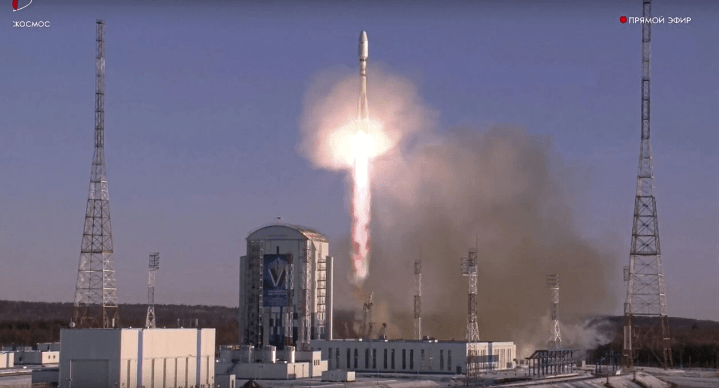
Image (Credit): Russia’s launch of the Kowsar and Hodhod satellites from Vostochny launch-pad in far eastern Russia. (Roscosmos)

While Americans are contemplating this week’s election, the Russians were up to more mischief this week. I am not talking about North Korean soldiers being used to attack Ukraine. I am referring to the Russians launching two Iranian satellites via a Soyuz rocket on Tuesday (yes, the same date as the US election).

One of the satellites is the Kowsar, a high-resolution imaging satellite, and the second the Hodhod, which is a small communications satellite. Both are said to be private sector cubic satellites, representing the first private sector Iranian satellites to be launched to date. Tehran Times states that both satellites are being used for agricultural purposes.

Hassan Salarieh, the head of the Iranian Space Agency stated:

Achieving significant goals in this field is unattainable without robust participation from private enterprises. We believe that the private sector should enter this field in a competitive environment, considering market criteria.

The partnership between Russia and Iran regarding potentially dual-use space technology, at a time when both nations are involved in military actions against their neighbors, is not good news for peace.