Image (Credit): Replica of the Soviet Union’sVernera 8 landing capsule launched towards Venus. (European Space Agency)
“As this is a lander that was designed to survive passage through the Venus atmosphere, it is possible that it will survive reentry through the Earth atmosphere intact, and impact intact.”
-Statement by Marco Langbroek, an expert on Space Situational Awareness at Delft Technical University in the Netherlands, pertaining to the Venera 8 probe that was to be sent to Venus by the Soviets more than 50 years ago. However, the probe, renamed Kosmos 482, never left Earth orbit. Only now is it ready to return to the Earth’s surface tonight, though the exact location is unknown.
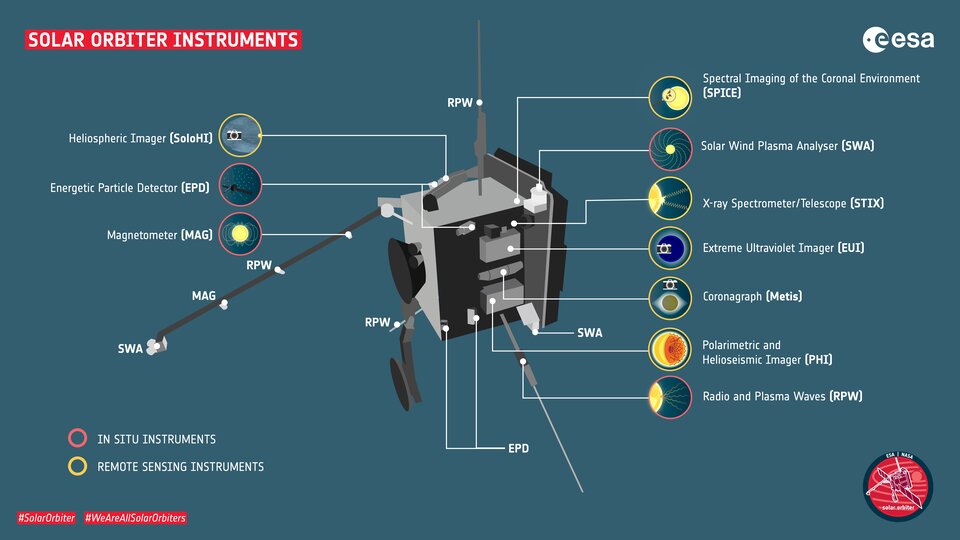
The European Space Agency (ESA) is ready to guide the ESA/NASA Solar Orbiter spacecraft through its closest encounter with Venus so far. Today’s flyby will be the first to significantly ‘tilt’ the spacecraft’s orbit and allow it to see the Sun’s polar regions, which cannot be seen from Earth. Studying the Sun’s poles will improve our understanding of solar activity, space weather, and the Sun-Earth connection.
Among the roughly 10 billion white dwarf stars in the Milky Way galaxy, a greater number than previously expected could provide a stellar environment hospitable to life-supporting exoplanets, according to astronomers at the University of California, Irvine. In a paper published recently in The Astrophysical Journal, a research team led by Aomawa Shields, UC Irvine associate professor of physics and astronomy, share the results of a study comparing the climates of exoplanets at two different stars. One is a hypothetical white dwarf that’s passed through much of its life cycle and is on a slow path to stellar death. The other subject is Kepler-62, a “main sequence” star at a similar phase in its evolution as our sun.
The space telescope Gaia has created the largest three-dimensional map of the Milky Way ever. On January 15, 2025, Gaia shut down after 11 years in space. But the research on data Gaia collected will continue for many years to come. Gaia is a space telescope onboard a satellite that has orbited the sun for 11 years. With the help of astrometry, which is a technique to measure the positions, distances and movements of stars and other heavenly bodies, Gaia has been able to measure distances and luminosities for up to 2 billion stars, which is about 1% of all stars in the Milky Way.
Image (Credit): Wolf-Rayet 124 (WR 124), a hot star just about to go supernova, as captured by the James Webb Space Telescope. (NASA, ESA, CSA, STScI, Webb ERO Production Team)
Fast forward to now, and Zwicky’s namesake, the Zwicky Transient Facility (ZTF)—a National Science Foundation-funded sky survey that began operations in 2017 using the 48-inch telescope—has detected about a hundred thousand supernovae. These detections, in turn, have led to the spectroscopic classification and confirmation of more than 10,000 supernovae, making ZTF the largest supernova survey to date. “There are trillions of stars in the universe, and about every second, one of them explodes. Reaching 10,000 classifications is amazing, but what we truly should celebrate is the incredible progress we have made in our ability to browse the universe for transients, or objects that change in the sky, and the science our rich data will enable,” says Christoffer Fremling, a staff astronomer at Caltech. Fremling leads the Bright Transient Survey (BTS), ZTF project that discovers and classifies new supernovae.
Dry river channels and lake beds on Mars point to the long-ago presence of a liquid on the planet’s surface, and the minerals observed from orbit and from landers seem to many to prove that the liquid was ordinary water. Not so fast, the authors of a new Perspectives article in Nature Geoscience suggest. Water is only one of two possible liquids under what are thought to be the conditions present on ancient Mars. The other is liquid carbon dioxide (CO2), and it may actually have been easier for CO2 in the atmosphere to condense into a liquid under those conditions than for water ice to melt.
In the next decade, researchers will start probing the atmosphere of planets as small as Earth and Venus orbiting nearby stars. But although these two solar system planets are similar in size and bulk density—so that some call them “twins”—their atmospheres are nothing alike. Would scientists be able to set them apart if seen from light-years away?A team led by the Institute of Astrophysics and Space Sciences (IA) pretended Venus was faraway in another planetary system—an exoplanet—and asked what kind of information they could extract. The results were published in an article in the journal Atmosphere and prove that techniques being used to study large hot exoplanets can be effectively applied to those with a diameter 10 times smaller.
The story of the inner early Solar System goes something like this: Billions of years ago, there were three rocky worlds with oceans of liquid water. Perhaps all three could have been primed for life. But as Mars lost its atmosphere and Venus’ atmosphere experienced a runaway greenhouse effect, only Earth could support life by the end. But a trio of researchers at the University of Cambridge, U.K., have a different view — that all those billions of years ago, Venus was already too hot to support oceans. There was water vapor (we still see evidence of this today), but it never had the chance to condense into oceans. Instead, Venus was a steam world, one that could reach surface temperatures as high as 1,340 degrees Fahrenheit (727 degrees Celsius). By most metrics, this means the surface of Venus was already a hellish, inhospitable world — and it never got much better.
Imagine the formation of a black hole and you’ll probably envision a massive star running out of fuel and collapsing in on itself. Yet the chaotic conditions of the early universe may have also allowed many small black holes to form long before the first stars. These primordial black holes have been theorized for decades and could even be ever-elusive dark matter, the invisible matter that accounts for 85% of the universe’s total mass. Still, no primordial black hole has ever been observed. New research co-led by the University at Buffalo proposes thinking both big and small to confirm their existence, suggesting that their signatures could range from very large — hollow planetoids in space — to minute — microscopic tunnels in everyday materials found on Earth, like rocks, metal and glass.
Six years ago, NASA’s Dawn mission communicated with Earth for the last time, ending its exploration of Ceres and Vesta, the two largest bodies in the asteroid belt. Since then, Ceres —a water-rich dwarf planet showing signs of geological activity— has been at the center of intense debates about its origin and evolution. Now, a study led by IAA-CSIC, using Dawn data and an innovative methodology, has identified eleven new regions suggesting the existence of an internal reservoir of organic materials in the dwarf planet. The results, published in The Planetary Science Journal, provide critical insights into the potential nature of this celestial body.
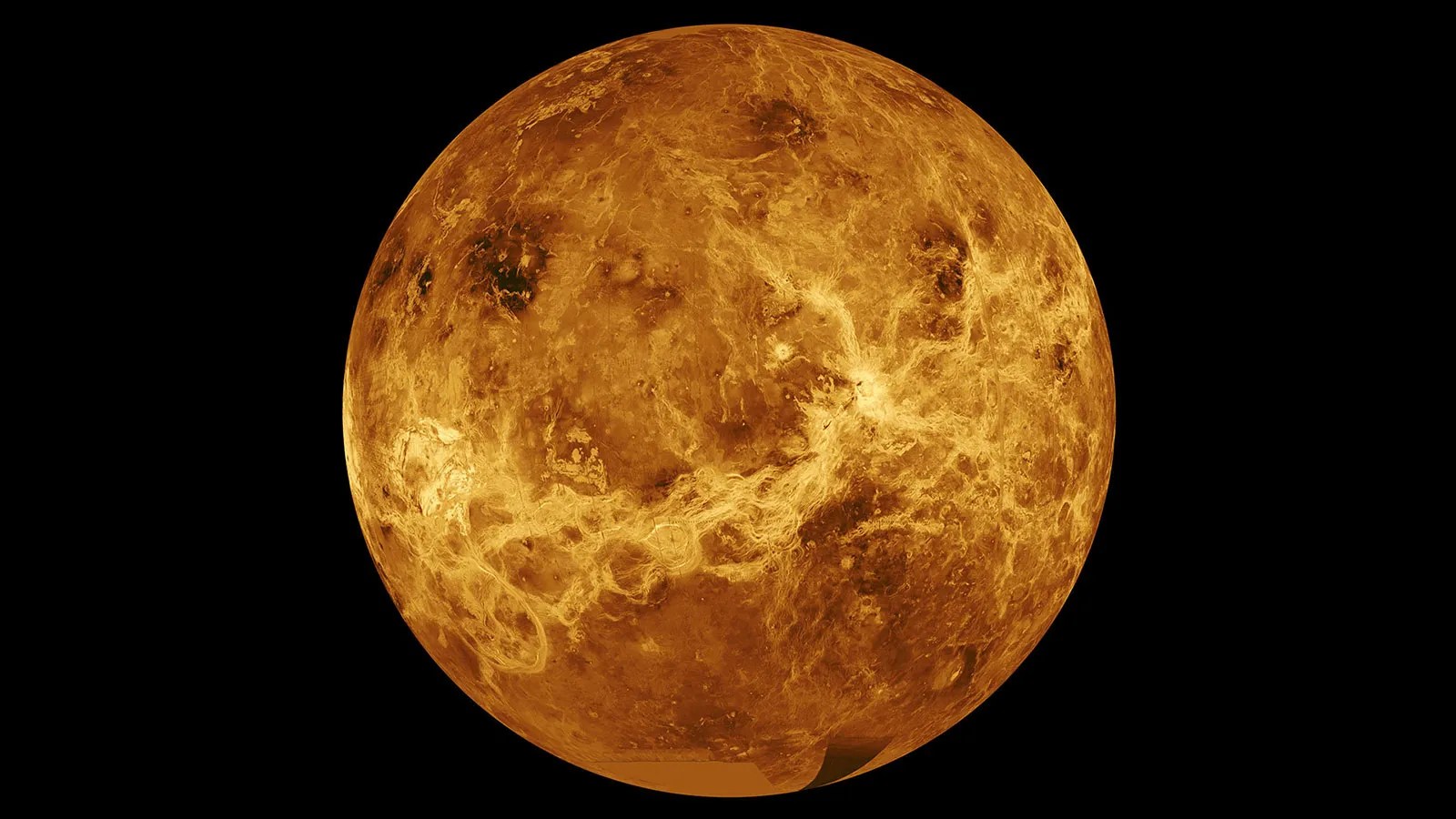
Planetary scientists at the University of Colorado Boulder have discovered how Venus, Earth’s scalding and uninhabitable neighbor, became so dry.The new study fills in a big gap in what the researchers call “the water story on Venus.” Using computer simulations, the team found that hydrogen atoms in the planet’s atmosphere go whizzing into space through a process known as “dissociative recombination” — causing Venus to lose roughly twice as much water every day compared to previous estimates.
Does another undetected planet languish in our Solar System’s distant reaches? Does it follow a distant orbit around the Sun in the murky realm of comets and other icy objects? For some researchers, the answer is “almost certainly.” The case for Planet Nine (P9) goes back at least as far as 2016. In that year, astronomers Mike Brown and Konstantin Batygin published evidence pointing to its existence. Along with colleagues, they’ve published other work supporting P9 since then. Now, they’ve published another paper along with colleagues Alessandro Morbidelli and David Nesvorny, presenting more evidence supporting P9. It’s titled “Generation of Low-Inclination, Neptune-Crossing TNOs by Planet Nine.” It’s published in The Astrophysical Journal Letters.
Data from the James Webb Space Telescope (JWST) has shown that an exoplanet around a star in the constellation Leo has some of the chemical markers that, on Earth, are associated with living organisms. But these are vague indications. So how likely is it that this exoplanet harbours alien life? …The planet in question is named K2-18b. It’s so named because it was the first planet found to orbit the red dwarf star K2-18.




 Our Awesome Universe