Video: The Eschatian Hypothesis

Credit: Image by Jazella from Pixabay

I recommend you check out the latest Cool Worlds Labs video for an intriguing new theory about mankind’s contact with an alien civilization. British astronomer and associate professor at Columbia University David Kipping narrates this new idea, called the Eschatian Hypothesis, in his latest video titled “Our First Contact with Aliens Will Be Their Last Words.”

He discusses how the early detection of hot Jupiters dominated the early discussion about exoplanets, even though we later learned that they are found around less than 1 percent of stars with exoplanets. He attributes this to detection bias, or Malmquist bias, because they were so easy to detect. The same applies to stars in their giant phase, which represents only 1 percent of all stars but about 1/3 of the stars we can see with the naked eye.

In this sense, the first contact with an alien civilization will probably follow this pattern as well. Hence, an alien civilization in disequilibrium will become louder and thereby more detectable by us. At the same time, the more advanced civilizations in balance with nature will be harder to detect.

As a result, the Eschatian Hypothesis contends that the more detectable alien civilizations will be the less stable ones. This is certainly a unique twist on the Fermi principle.

View the video for the full story.

Video: Reasons to Settle Mars

If you are interested in the idea of settling Mars, and the book A City on Mars has not scared you away, then you should plan on tuning into the upcoming 25-part video series by the Mars Society.

In a news release, the Mars Society defines the new series in this way:

Created for a broad public audience, each video offers a clear, accessible look at how Mars exploration drives scientific discovery, technological innovation, economic growth, and long-term planetary resilience.

I recommend you view the series, but also read the book cited above. The authors of that book seem to think we should have a Mars plan that will settle humans in the next few centuries rather than they next few decades. Or maybe we should be settling on a space station or asteroid, as suggested in the book The Giant Leap, though I expect that a society with “Mars” in its name might disagree.

I’m just trying to keep an open mind.

Stay tuned.

Video: Cool Worlds Discusses Interstellar Comet 3I/ATLAS 

With all the ongoing stories about interstellar comet 3I/ATLAS, you may enjoy an earlier video from Cool World Labs titled “Could 3I/ATLAS Be Technological?” Columbia University Associate Professor David Kipping looks at the claims by Harvard Professor Avi Loeb that the comet is not only from another solar system, but it may in fact be a spacecraft.

Professor Kipping focuses his discussion on an earlier paper by Professor Loeb titled Is the Interstellar Object 3I/Atlas Alien Technology? The points discussed in the video are broken down into three categories: (1) trajectory, (2) speed, and (3) excessive size. In each case, he provides plenty of technical points, but the main point seems to be that the evidence is often arbitrary or contradictory. Professor Kipping also notes those occasions where the paper goes “off the rails” to make the idea of a spacecraft possible.

All of these points continue to bounce around as we learn more about the comet, but it is interesting to see the scientific community represented here by Professor Kipping doing a great job of parsing the evidence while keeping all of it professional. He made it clear throughout the video that he has great respect for Professor Loeb’s work over the years, even if this particular theory about a spacecraft does not seem plausible.

Check it out for yourself.

Video: Plans for the First Commercial Space Station

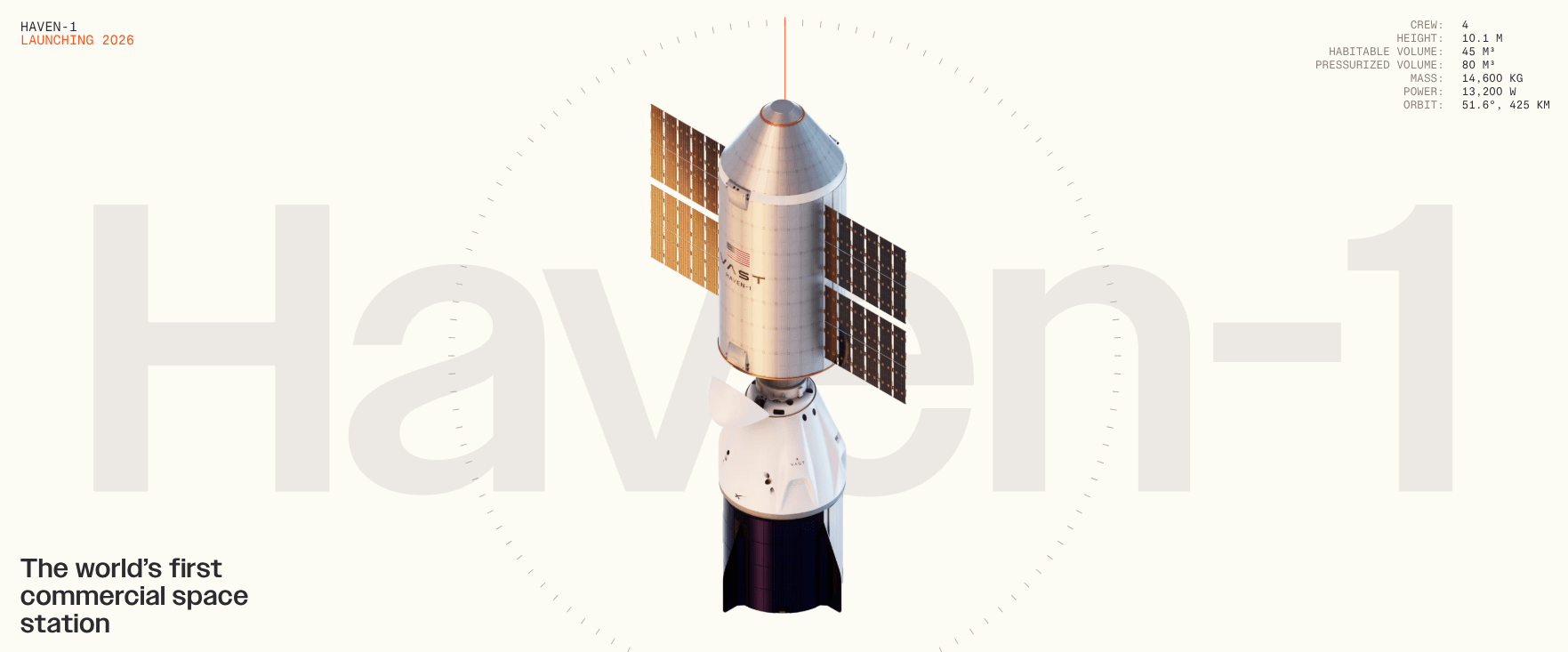
If you are eager to understand what comes after the International Space Station (ISS), you might enjoy Vast’s video showing plans for the Haven-1 and Haven-2 missions as well as other future projects.

Vast’s Haven-1 is a single-module station expected to be launched in May 2026. Once Haven-1 is in orbit, four crew members will be launched to the Haven-1 station via a SpaceX Dragon for a two-week mission. This will be the first real test of the new commercial space station module, which is expected to stay in orbit for three years so three additional crews can visit and conduct research and even manufacture in space.

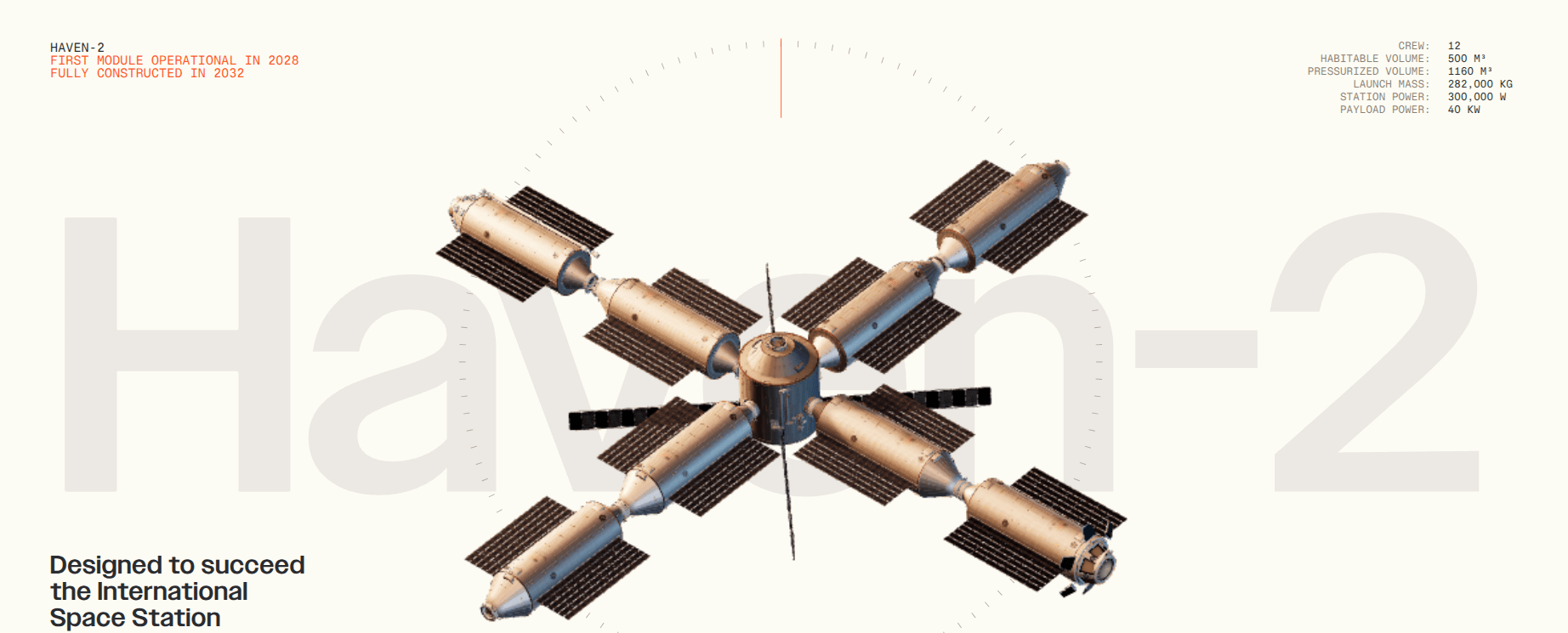
Haven-2 will follow with a larger module. The plan is to link a series of modules to create an expanded station (see image below). The construction of Haven-2 is expected to be underway while the ISS goes out of service in 2030.

Vast is one of numerous companies hoping to fill the gap left by the departing ISS. Whether it is selling seats to NASA scientists, commercial entities, or space tourists, this American company based in California sees a future in space stations.

Watching NASA on Netflix

Credit: NASA

I’m glad to hear that NASA is working with Netflix to expand the amount of space stories available to the public.

This summer Netflix will make NASA+ live programming available to its customers, meaning more of the public can watch interviews with astronauts, the launch of space missions, and the happenings aboard the International Space Station (ISS). NASA also has plenty of entertaining videos about astronomy, various space missions, and more.

For example, Netflix customers will have access to content such as the launch of Russia’s Progress 92 Cargo Craft from the Baikonur Cosmodrome in Kazakhstan to the ISS on July 3rd, as well as the docking of this cargo craft with the ISS on July 5th . Or how about NASA videos, such as “Other Worlds: Europa“?

Of course, all of this is already available to the public for free on NASA’s website, but maybe this can draw in those eager viewers searching around for something to watch and not already aware of the website.

Any attempts to bring more attention to NASA’s amazing science and ongoing discoveries is good publicity as well as great programming.