If you are a student looking for an opportunity to be part of the space program, you have until September 22nd to provide NASA with plans to design, build, and launch high-powered rockets containing a scientific or engineering payload. This is part of the 2026 Student Launch challenge. The challenge is open to students from middle school, high school, and college. The final launches of these rockets are scheduled for April 25, to be held at Bragg Farms in Toney, Alabama.
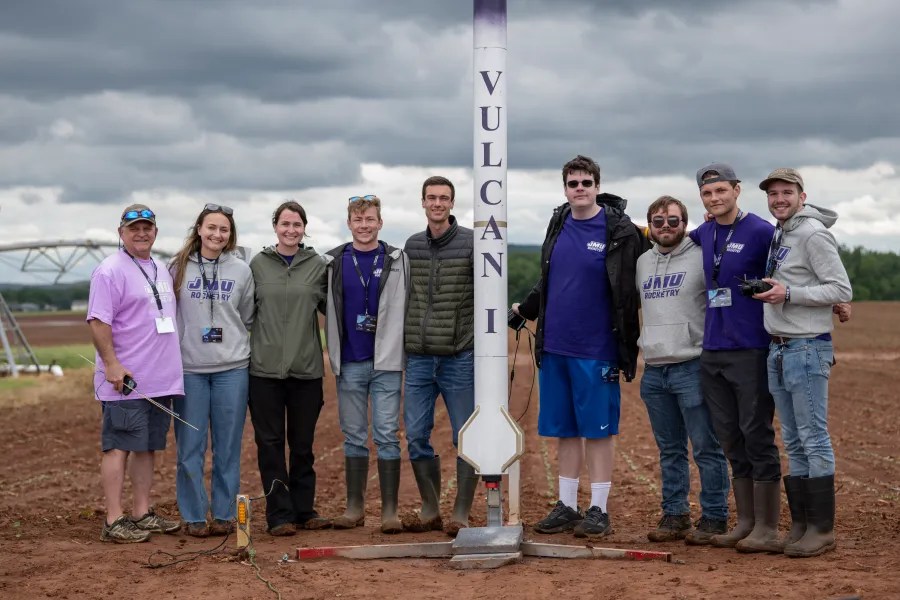
First started in 2000, the competition in 2025 brought together almost 1,000 students. The winning team came from James Madison University (pictured below), closely followed by North Carolina State University and The University of Alabama in Huntsville.
This is a great opportunity for those with a love of space rockets. All of the details for entry can be found on NASA’s competition website.
Image (Credit): 2025 winning team participants from James Madison University with their high-powered rocket prior to launch. (NASA/Krisdon Manecke)
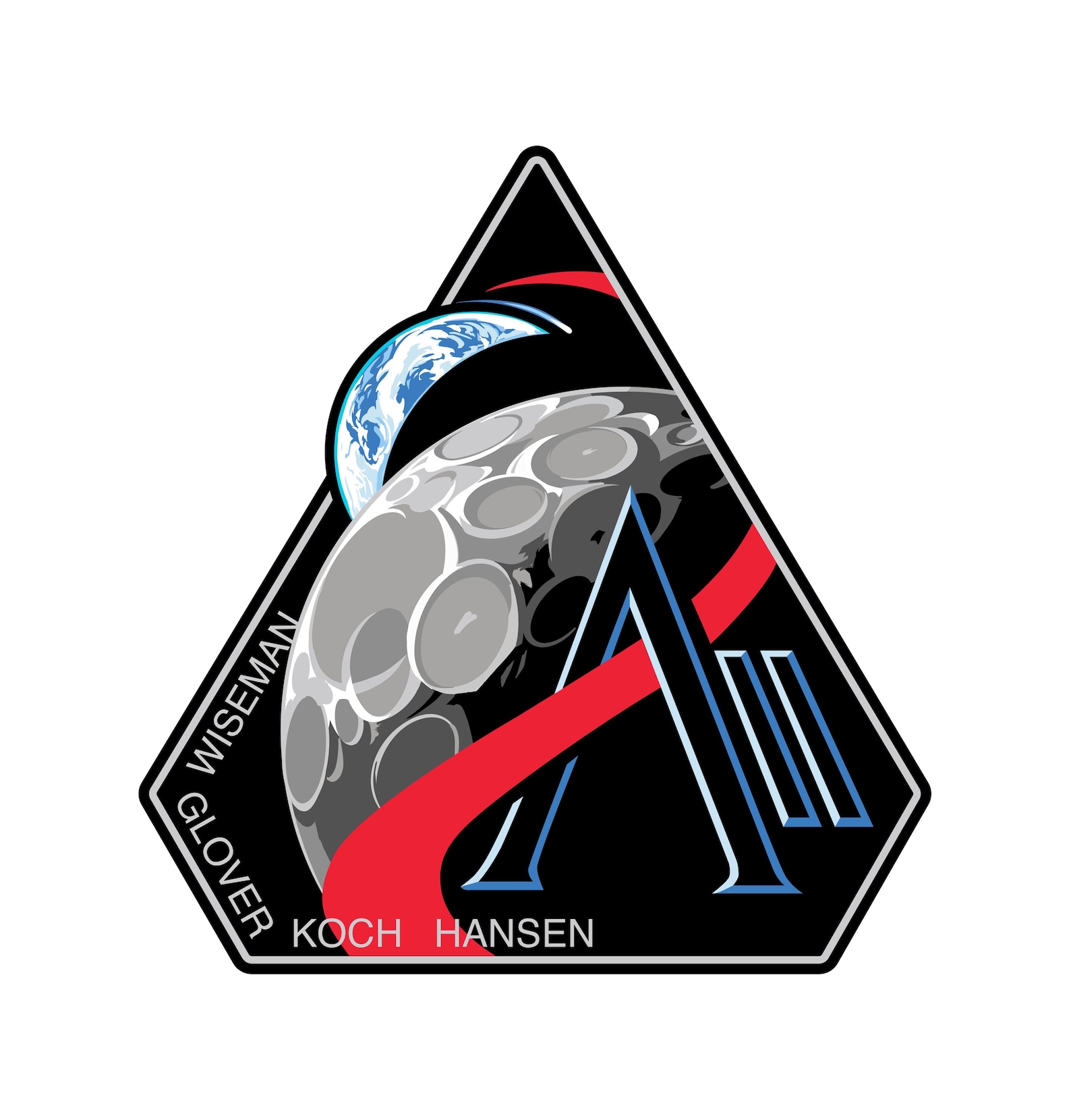
Image (Credit): Artemis II mission crew patch. (NASA)
NASA is looking for volunteers to assist next year’s Artemis II mission, which is expected to take place in April 2026. The volunteers will help track of the Artemis II Orion crewed spacecraft as it travels around the Moon.
The volunteers will monitor Orion’s signal using their respective ground antennas to help track and measure changes in the radio waves transmitted by the spacecraft. Volunteers similarly assisted with uncrewed Orion tracking during Artemis I.
This is a unique opportunity for international space agencies, academic institutions, commercial companies, nonprofit entities, and even private citizens to be part of the Artemis II mission.
If you have a little bit of time left in your day, maybe you want to help NASA classify a few galaxies captured by the James Webb Space Telescope. The NASA site has more than 500,000 that need to be classified, and volunteers can make this process faster. For instance, you can help determine if a galaxy is round or has spiral arms.
While a lot of this classification work can be accomplished with artificial attention (AI), the program bumps into numerous images where human eyes can really help. Plus, you will be training the AI as you go.
If this sounds like fun, check out the site. You may be the first human to set eyes on a new galaxy. That sounds like a fun way to end the day.
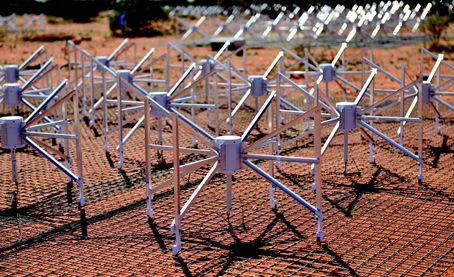
The SETI Institute, the Berkeley SETI Research Center and the International Centre for Radio Astronomy Research announced a groundbreaking study using the Murchison Widefield Array (MWA) in Western Australia. Led by Dr. Chenoa Tremblay of the SETI Institute and Prof. Steven Tingay of Curtin University, this research is the first to search for signs of alien technology in galaxies beyond our own, focusing on low radio frequencies (100 MHz).
This innovative study used the MWA’s large field of view (FOV), allowing the team to cover about 2,800 galaxies in one observation, of which 1300 we know the distance to. Usually, the search for extraterrestrial intelligence (SETI) has focused on signals within our galaxy. This new approach goes further, looking at distant galaxies. This new approach looks at distant galaxies, making it one of the most detailed searches for super civilizations—those more advanced than ours. To send a signal from another galaxy, a civilization would need technology powerful enough to use the energy of their sun or several stars in their galaxy.
NASA needs some help with frozen liquid. As part of the space agency’s planned trip to the moon as part of the Artemis mission, NASA is looking for a way to store “super-chilled” propellants for months on end. They’re asking college students for help. Announced earlier this month, NASA’s 2025 Human Lander Challenge (HuLC) is open for submissions. The competition, now in its second year, is asking for students to develop innovative methods for “in-space cryogenic liquid storage.”
A citizen science project, which invites members of the public to take part in identifying cosmic explosions, has already identified 20 new astronomical discoveries. Over 2,000 volunteers across 105 different countries have worked on 600,000 classifications over a six-month period. The project ‘Kilonova Seekers’ aims to find kilonovae – the cosmic explosions of neutron stars and black holes colliding in distant galaxies. Volunteers are asked to play ‘spot the difference’ using data from the two Gravitational-wave Optical Transient Observer (GOTO) telescopes, which are located on opposite sides of the planet – on La Palma, in Spain’s Canary Islands, and Australia’s Siding Spring Observatory.
NASA’s Backyard Worlds: Planet 9 program allows interested volunteers to search earlier data to potentially locate an extra planet or new brown dwarfs near our solar system. Well, one of these volunteers found something unusual – an object with a mass similar to or less than that of a small star that was traveling fast enough to eventually escape the Milky Way’s gravity and enter intergalactic space. This object was clocked at approximately 1 million miles per hour.
You can read about this object and other efforts by visiting this NASA link. You might want to look into becoming part of the citizen scientists looking for more interesting objects.