Image (Credit): NASA video coverage of the Starliner pulling away from the ISS earlier today. (NASA)
The Boeing CST-100 Starliner capsule has started its journey back to Earth from the International Space Station (ISS). Soon we will learn whether the spacecraft is operating as expected and could have returned the two astronauts safely.
The extra caution is not unexpected, and this does not spell doom for Boeing, but it is a setback. The real question will be the rate at which the Starliner’s issues can be resolved and another launch attempted.
Boeing remains confident in the Starliner spacecraft and its ability to return safely with crew. We continue to support NASA’s requests for additional testing, data, analysis and reviews to affirm the spacecraft’s safe undocking and landing capabilities. Our confidence is based on this abundance of valuable testing from Boeing and NASA. The testing has confirmed 27 of 28 RCS thrusters are healthy and back to full operational capability. Starliner’s propulsion system also maintains redundancy and the helium levels remain stable. The data also supports root cause assessments for the helium and thruster issues and flight rationale for Starliner and its crew’s return to Earth.
Let’s hope Boeing is correct and the company is back on the launch pad with an improved Starliner shortly.
Update: NASA reported that the uncrewed Starliner capsule safely landed at 10:01 p.m. MDT on Friday, September 6, at White Sands Space Harbor in New Mexico.
Image (Credit): Hubble’s view of spiral galaxy IC 4709. (ESA/Hubble & NASA, M. Koss, A, Barth)
This week’s image comes from the Hubble Space Telescope. It shows an almost too perfect spiral galaxy that might have come from AI software, but it is a real image from NASA and ESA. You are looking at spiral galaxy IC 4709, which is about 240 million light-years away.
Its view here is studded with stars, many of which appear particularly large and bright thanks to their nearby locations in our own galaxy, and which feature the characteristic diffraction patterns caused by Hubble’s optics. Much further away — around 240 million light-years distant in fact, in the southern constellation Telescopium — is the spiral galaxy IC 4709. Its swirling disc filled with stars and dust bands is beautifully captured, as is the faint halo surrounding it. The compact region at its core might be the most remarkable sight, however: this is an active galactic nucleus (AGN).
Image (Credit): Artist’s rendering of the Europa Clipper above Europa. (NASA)
NASA has decided to move forward with the Europa Clipper mission even though there have been some questions about its ability to withstand the moon’s radiation. The launch is set for an October 10 aboard a SpaceX Falcon Heavy rocket from Launch Complex 39A at NASA’s Kennedy Space Center in Florida.
NASA is also moving forward with the return of the empty Starliner capsule currently attached to the International Space Station. This Friday, September 6, Boeing’s CST-100 Starliner will disconnect from the station and land at White Sands Space Harbor in New Mexico. If all goes well, NASA can continue to study the capsule and learn more about what went wrong.
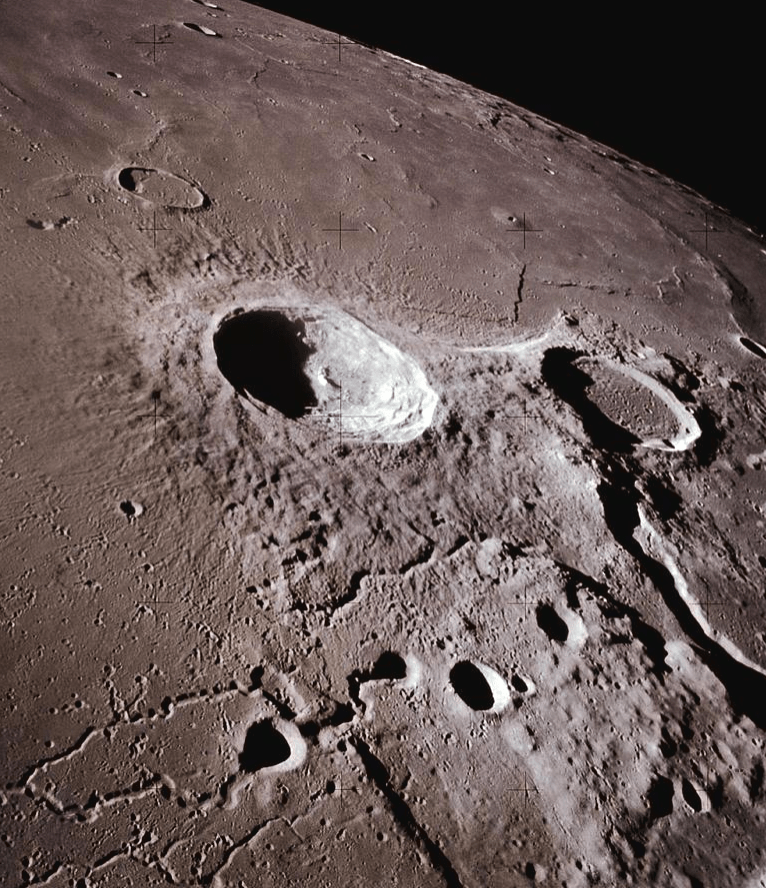
ESA’s Prospect package, including drill and a miniaturised laboratory, will fly to the Moon’s South Polar region in search of volatiles, including water ice, as part of NASA’s Commercial Lunar Payload Services initiative…NASA has selected Intuitive Machines for a flight opportunity in 2027 that will deepen our understanding of the Moon and answer key questions about where and how volatiles can be found on the lunar surface.V olatiles, such as water ice, are chemical components that easily evaporate or vaporise under certain conditions. Prospect is a suite of instruments that will drill up to at least one metre depth beneath the lunar surface, extract samples, and process them in a mini lab. The combination of robotic drill and sample analysis package aims to identify volatiles trapped beneath the surface at extremely cold temperatures down to –150 °C.
The universe may seem static, only capable of being captured in still frames, but that is far from the truth. It is actually ever-changing, just not on timescales clearly visible to humans. NASA’s upcoming Roman Space Telescope will bridge this gap in time, opening the way to the dynamic universe. RINGS, the Roman Infrared Nearby Galaxy Survey, will specifically uncover the dynamic universe by searching galaxies for fossils of their formation history. RINGS will also lead scientists to clues about the true nature of dark matter, the mysterious substance that makes up the majority of the mass in our universe. Roman will launch in 2027, prepared to revolutionize how scientists understand our universe and give them access to the vision of the universe as it truly is: changing.
The James Webb Space Telescope has spotted six likely rogue worlds — objects with planet-like masses but untethered from any star’s gravity — including the lightest ever identified with a dusty disk around it. The elusive objects offer new evidence that the same cosmic processes that give birth to stars may also play a common role in making objects only slightly bigger than Jupiter.
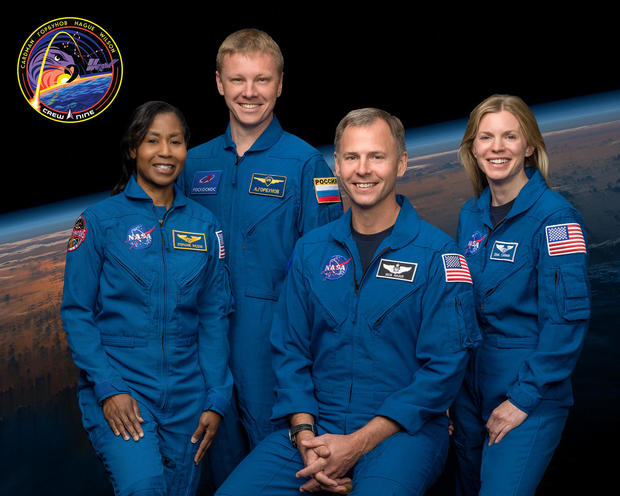
Image (Credit): Initial crew 9 portrait (left to right): Stephanie Wilson, cosmonaut Alexander Gorbunov, pilot Nick Hague and commander Zena Cardman. (NASA)
NASA astronauts Zena Cardman and Stephanie Wilson will not make the September 24 flight, but they are most likely going to go on later missions.
While we await their future flights, NASA has a profile page on each of them that you can review (as well as the other NASA astronauts, Nick Hague, who remains on this month’s flight):
– Zena Cardman: Zena Cardman was selected by NASA as a member of the 2017 “Turtles” Astronaut Class. The Virginia native holds a Bachelor’s of Science in Biology and a Master’s of Science in Marine Sciences from the University of North Carolina, Chapel Hill. Her research focused primarily on geobiology and geochemical cycling in subsurface environments, from caves to deep sea sediments. Cardman’s experience includes multiple Antarctic expeditions.
–Nick Hague: Col. Tyler N. Hague was selected by NASA as an astronaut in 2013. The Kansas native earned a Bachelor of Science in astronautical engineering from the United States Air Force Academy in 1998, and a Master of Science in aeronautical and astronautical engineering from the Massachusetts Institute of Technology in 2000. Selected as an astronaut by NASA in 2013, Hague completed astronaut candidate training in July 2015. During his first mission to the International Space Station in 2018, he and his crewmate Alexey Ovchinin, of the Russian space agency Roscosmos, experienced a catastrophic rocket booster malfunction that resulted in the launch abort of their Soyuz MS-10. In 2019, Hague launched on Soyuz MS-12 and served as Flight Engineer on the International Space Station for 203 days during Expedition 59 and 60. During 2020-2022, Hague completed a developmental rotation with the United States Space Force, serving as the new military service’s Director of Test and Evaluation at The Pentagon in Washington D.C. He returned to NASA in August 2022 to work on the Boeing Starliner Program. Hague is currently training for his second spaceflight, where he will serve as commander for NASA’s SpaceX Crew-9 mission.
–Stephanie Wilson: Stephanie D. Wilson is a veteran of three spaceflights, STS-121 in 2006, STS-120 in 2007, and STS-131 in 2010 and has logged more than 42 days in space. Born in Boston, she attended high school in Pittsfield, Massachusetts, earned her Bachelor of Science in Engineering Science from Harvard University in 1988, and earned her Master of Science in Aerospace Engineering in 1992 from the University of Texas at Austin. Wilson has served as the Space Station Integration Branch Chief from 2010 to 2012, the Mission Support Crew Branch Chief from 2018 to 2020, and Deputy of the Assigned Crew Branch from 2021-2023. In 2013, she completed a 9-month detail to NASA’s Glenn Research Center as the Acting Chief of Program and Project Integration in the Spaceflight Systems Directorate.
Delays and changes seem to be the norm at NASA, but there are plenty of missions coming up that should keep all of the astronauts busy.
The good news is that the crewed resupply flight this month will also be supplying the two stuck astronauts with supplies, including clothing and pressure suits. I hope their families were also able to throw in a few fun items as well to keep their spirits up.