A Day in Astronomy: Birth of Wernher von Braun

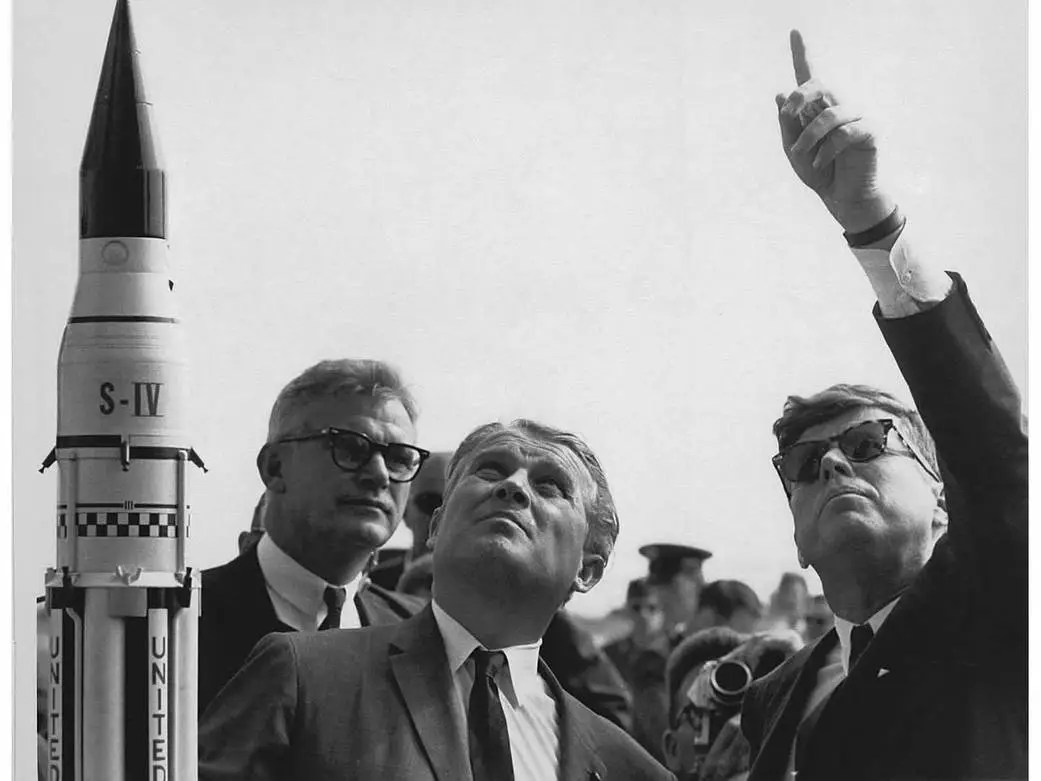
Image (Credit): Wernher von Braun (center) with President John F. Kennedy discussing the Saturn Launch System. (NASA)

On this day in 1912, Wernher Magnus Maximilian, Freiherr von Braun was born in Wyrzysk (once German, now Polish). He became an aerospace engineer for both the Germans during World War II as well as the Americans following the war.

Wernher von Braun designed the V-2 rocket that terrorized Great Britain during the war. He used that knowledge to assist NASA with the Saturn V rocket that became the backbone of the Apollo Moon missions.

In a speech on the eve of the Apollo 11 launch, he stated:

If our intention had been merely to bring back a handful of soil and rocks from the lunar gravel pit and then forget the whole thing, we would certainly be history’s biggest fools. But that is not our intention now—it never will be. What we are seeking in tomorrow’s [Apollo 11] trip is indeed that key to our future on earth. We are expanding the mind of man. We are extending this God-given brain and these God-given hands to their outermost limits and in so doing all mankind will benefit. All mankind will reap the harvest…. What we will have attained when Neil Armstrong steps down upon the moon is a completely new step in the evolution of man.

This was only 24 years after the end of World War II. He came a long way from his days of bombing his fellow citizens in Europe.

More than 50 after the last Apollo launch we are still trying to “reap the harvest” started by those earlier missions.

You Knew It Was Coming – NASA Modifies Artemis Language

Credit: Image by Zoltán Szűcs from Pixabay.

As I had noted earlier, the Trump administration’s deconstruction of DEI was bound to lead to a change in the Artemis mission language.

Here is the old language from the NASA site (from the time of the first Trump administration):

And now the new language on today’s page:

See any differences? That last sentence discussing the first woman, the first person of color, and the first international partner astronaut has been zapped, as noted by the media.

Was it human intervention or AI intervention? We will probably never know, but the types of items being remove from the federal web pages, such as the Enola Gay, is pretty dumb.

Any space-faring civilization will be wise to avoid us for now. We do not really meet the definition of “intelligent life” at the moment.

Television: Murderbot is Almost Here

Credit: Apple TV+

After all the speculation, the Murderbot television series from Apple TV+ premieres on May 16.

If you are a fan of The Murderbot Diaries books by Martha Wells, you know what you are in for. And if you are new to this story, you have missed out on some great storytelling. I can only hope this new television series can do justice to the books.

Apple TV+ has this description:

“Murderbot” is a sci-fi thriller/comedy about a self-hacking security construct who is horrified by human emotion yet drawn to its vulnerable clients. Played by Skarsgård, Murderbot must hide its free will and complete a dangerous assignment when all it really wants is to be left alone to watch futuristic soap operas and figure out its place in the universe.

That is a very small part of what makes this series tick. The most important part of the books is the murderbot’s internal dialogue second guessing every move and cursing itself every time it helps bumbling humans.

The writing is both quick and fun, yet may be difficult to bring to the screen.

I will not miss this television series. Of course, I will also be the first to criticize it (or murder it) if it ruins the magic of the books.

Pic of the Week: Very Different Neighborhoods

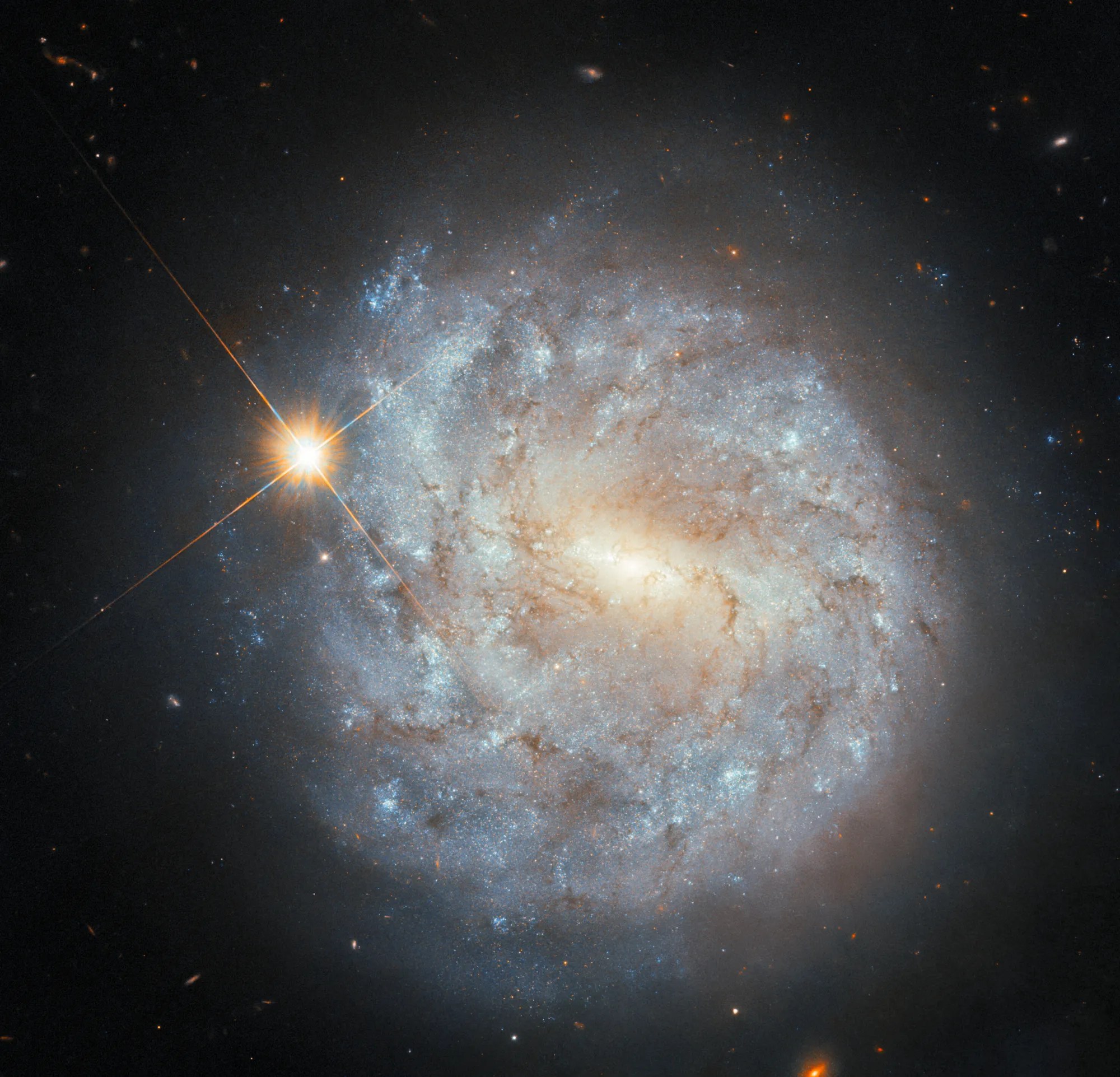
Image (Credit): Hubble Space Telescope image of a sparkling spiral galaxy paired with a prominent star, both in the constellation Virgo. (ESA/Hubble & NASA, S. J. Smartt, C. Kilpatrick)

This week’s image is from the NASA/ESA Hubble Space Telescope. It shows what appears to be two close neighbors – a star and a galaxy – but looks can be deceiving.

Here is more from NASA about this image:

This NASA/ESA Hubble Space Telescope image features a sparkling spiral galaxy paired with a prominent star, both in the constellation Virgo. While the galaxy and the star appear to be close to one another, even overlapping, they’re actually a great distance apart. The star, marked with four long diffraction spikes, is in our own galaxy. It’s just 7,109 light-years away from Earth. The galaxy, named NGC 4900, lies about 45 million light-years from Earth.

This image combines data from two of Hubble’s instruments: the Advanced Camera for Surveys, installed in 2002 and still in operation today, and the older Wide Field and Planetary Camera 2, which was in use from 1993 to 2009. The data used here were taken more than 20 years apart for two different observing programs — a real testament to Hubble’s long scientific lifetime.

What’s Next for Boeing’s Starliner?

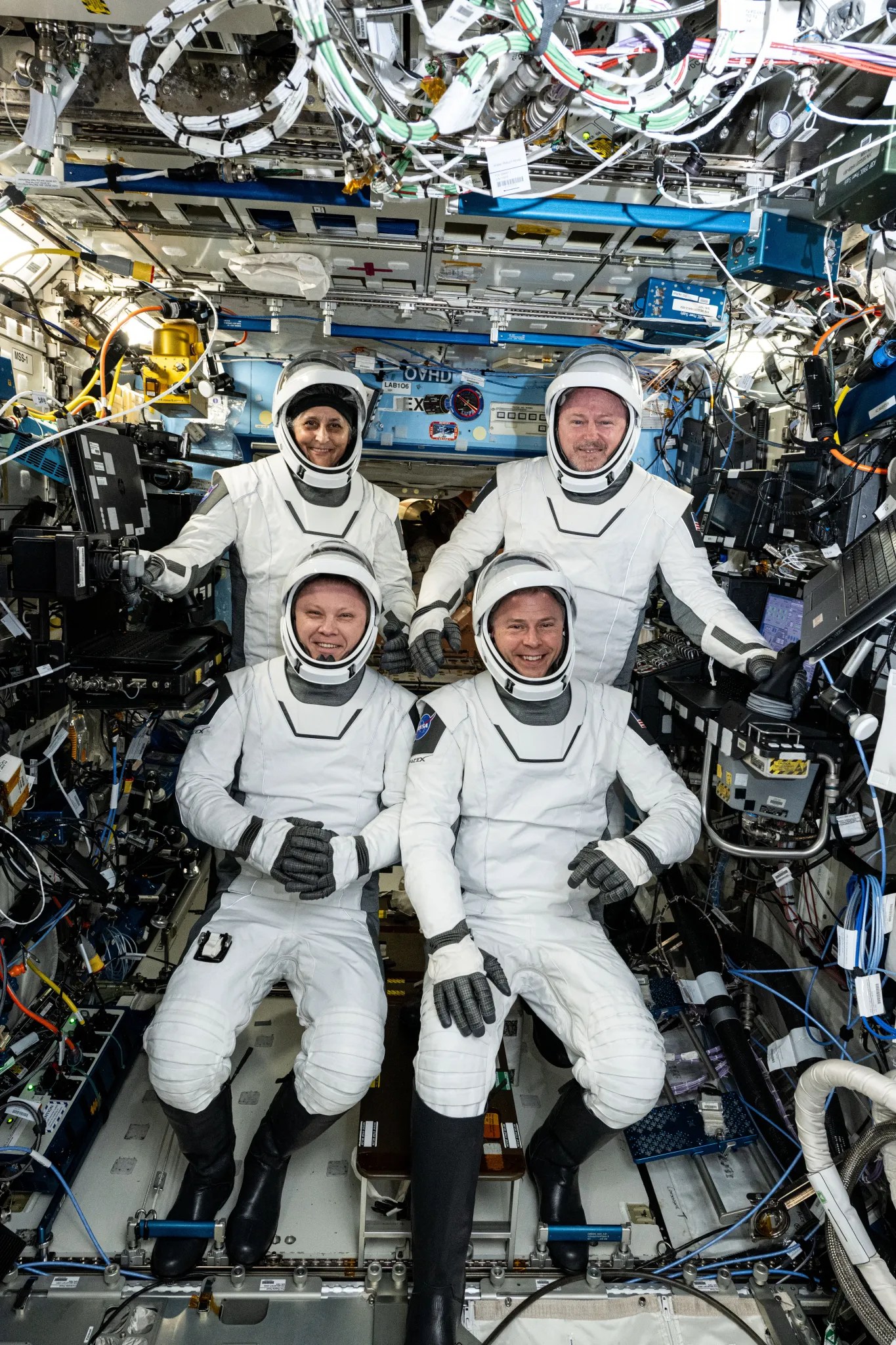
Image (Credit): NASA’s Crew-9 prior to departing the ISS earlier this week. Top left, NASA astronauts Suni Williams and Butch Wilmore, followed by bottom left, Roscosmos cosmonaut Aleksandr Gorbunov and NASA astronaut Nick Hague. (NASA)

With the first Boeing Starliner crew now back on Earth after an extended stay on the International Space Station (ISS), it is time to ask whether there will be a third Starliner attempt.

According to Reuters, NASA is currently considering a third uncrewed attempt. Steve Stich, chief of NASA’s Commercial Crew Program, stated the following yesterday:

We’re … looking at some options for Starliner, should we need to, of flying it uncrewed…When we look forward, what we’d like to do is that one flight, and then get into a crew rotation flight.

That sounds like a safe bet to convince everyone that the Starliner is ready, even though it did return to Earth safely while the crew remained on the ISS.

Boeing has both the ISS and future space missions to consider. Walking away now would abandon the field to SpaceX just as private sector space stations are the hot topic.

Regardless of all the chaos on Earth right now regarding the future of NASA, it is still a safe bet that the U.S. will continue to build a space industry in need of reliable partners to bring cargo and crew into Low Earth Orbit and beyond.