“Audiences are sophisticated these days, and you have to tell a good story — you don’t do this merely to surprise the audience — but one of the reasons why “Breaking Bad” or “Game of Thrones” is so exciting is they broke some of the conventions of storytelling by killing off lead characters. So I said, “What would be the most exciting thing?” And the most exciting thing would be if we end the season at a place where you think, “How can the show even survive after this? How can the Foundation prevail?”
-Statement by David S. Goyer, the executive producer of Apple TV+’s Foundation in an interview with The Wrap. Mr. Goyer discusses the third season final episode (with plenty of spoilers) while also noting that he will be leaving the show. The episode is mind-blowing as it destroys worlds (with a black hole Death Star) and key characters. It is a must see episode that turns the series upside down. I doubt even Hari Seldon could predict all of this mayhem.
Image (Credit): Russia’sProgress 93 cargo spacecraft launches from the Baikonur Cosmodrome in Kazakhstan. (NASA+)
Even with the recent Russian drones invading Polish airspace, things are on schedule at the International Space Station (ISS). A Russian Soyuz rocket successfully launched the Progress 93 cargo spaceship into orbit yesterday to resupply the ISS on Saturday.
Things may still be a bit crazy here on Earth, but the ISS mission continues.
Update: The Grumman Cygnus XL cargo spacecraft safely launched on Sunday, September 14. The spacecraft is scheduled to dock with the ISS on Wednesday, September 17.
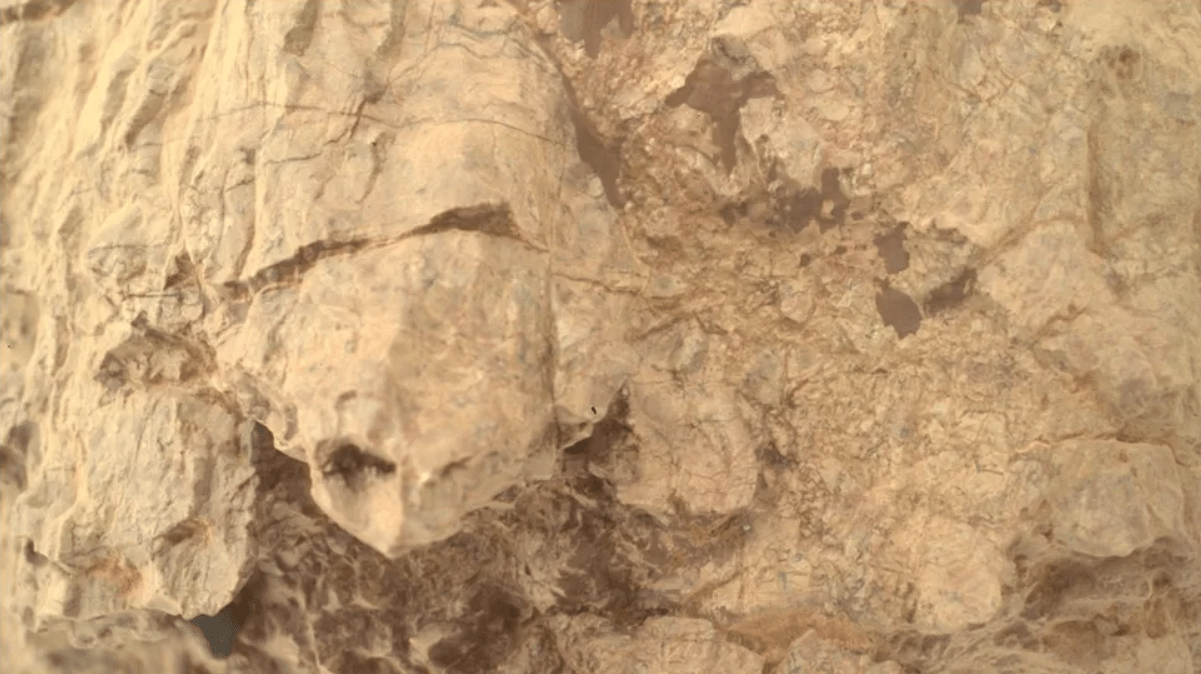
Image (Credit): Turtle-like Martian rock formation in Jezero Crater photographed by the Preservation rover. (NASA/JPL-Caltech)
While the Preservation rover on Mars has been busy looking for signs of life in Jezero Crater, it still had time to take a few fun photos as well, including the turtle image above (see the outline of the turtle below if you cannot find it). The rover captured the picture on August 31.
Image (Credit): Outline of turtle-like Martian rock formation in Jezero Crater photographed by the Preservation rover. (NASA/JPL-Caltech)
Image (Credit): The Martian rock nicknamed “Cheyava Falls” found in Jezero Crater last year. (NASA/JPL-Caltech/MSSS)
““The discovery of a potential biosignature, or a feature or signature that could be consistent with biological processes, but that requires further work and study to confirm a biological origin is something that we’re sharing with you all today that grows from years of hard work, dedication and collaboration between over 1,000 scientists and engineers here at the (NASA) Jet Propulsion Laboratory and our partner institutions around the country and internationally.”
–Statement by Katie Stack Morgan, Perseverance project scientist at the Jet Propulsion Laboratory (JPL), at a news conference earlier on Wednesday. The rock in question, found in an ancient dry riverbed in Jezero Crater, was sampled by the Perseverance rover last year. For more on the findings you can visit the NASA site here.
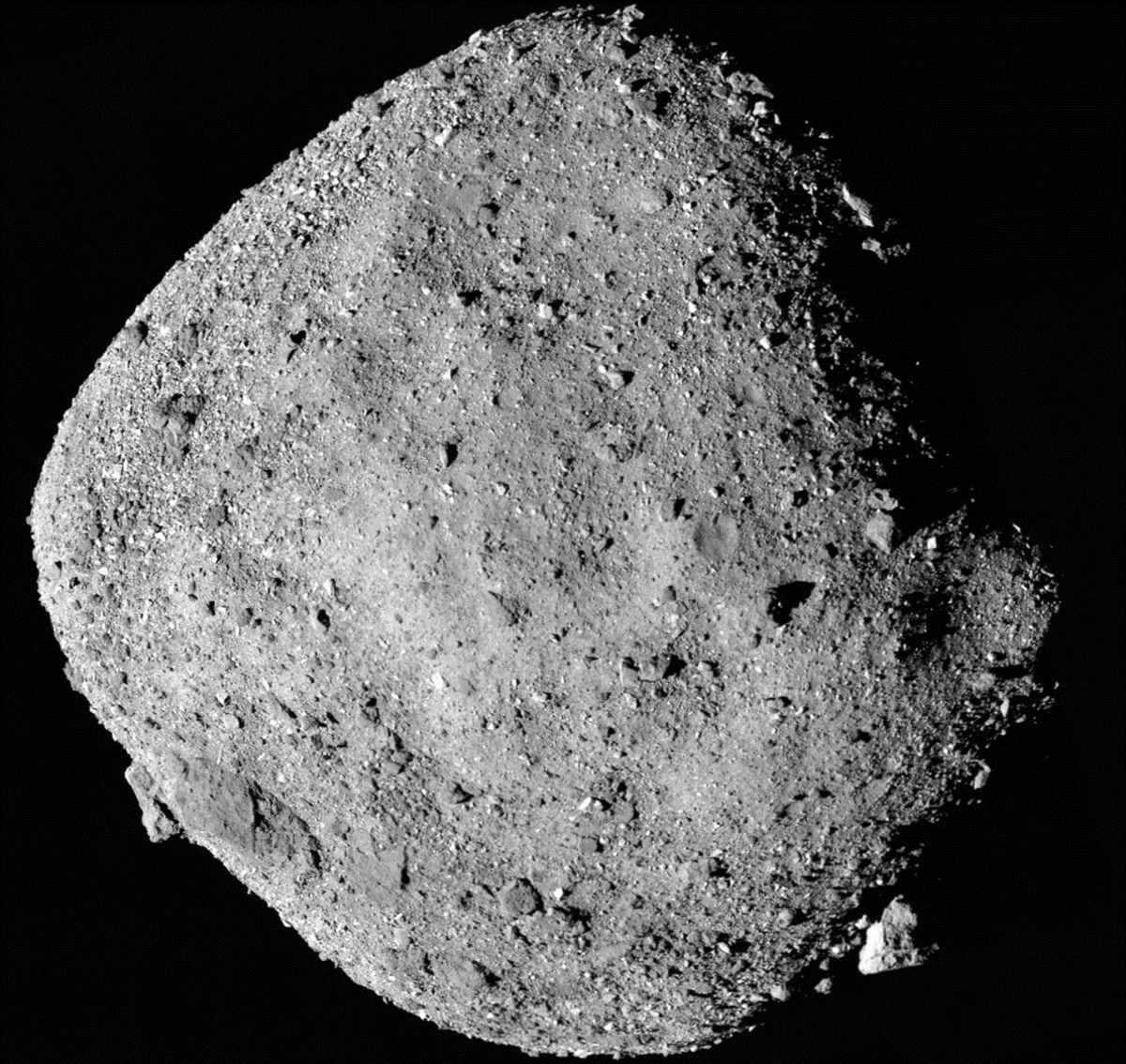
The first bodies to form in the Solar System acquired their materials from stars, the presolar molecular cloud and the protoplanetary disk. Asteroids that have not undergone planetary differentiation retain evidence of these primary accreted materials. However, geologic processes such as hydrothermal alteration can dramatically change their bulk mineralogy, isotopic compositions and chemistry. Here we analyse the elemental and isotopic compositions of samples from asteroid Bennu to uncover the sources and types of material accreted by its parent body. We show that some primary accreted materials escaped the extensive aqueous alteration that occurred on the parent asteroid, including presolar grains from ancient stars, organic matter from the outer Solar System or molecular cloud, refractory solids that formed close to the Sun, and dust enriched in neutron-rich Ti isotopes. We find Bennu to be richer in isotopically anomalous organic matter, anhydrous silicates, and light isotopes of K and Zn than its closest compositional counterparts, asteroid Ryugu and Ivuna-type (CI) carbonaceous chondrite meteorites. We propose that the parent bodies of Bennu, Ryugu and CI chondrites formed from a common but spatially and/or temporally heterogeneous reservoir of materials in the outer protoplanetary disk.
Citation: Barnes, J.J., Nguyen, A.N., Abernethy, F.A.J. et al. The variety and origin of materials accreted by Bennu’s parent asteroid. Nat Astron (2025).