Final Update to my Top Astronomy Stories in 2022

Image (Credit): Singing in the “Domino” episode on The Orville: New Horizons. (Hulu)

I cannot let January end without making one update to my “Top Astronomy Stories in 2022” list. I really need to add Hulu’s The Orville: New Horizons as number 11 on the list. The third season has been much more polished and enjoyable than the first two. After jumping to Hulu and renaming itself, the show has really found its way to being a great addition to the scifi universe.

The last two episodes in particular – “Domino” and “Future Unknown” – were the best of the season. We go through war, sacrifice, death, reconciliation, and even marriage with a crew that is now part of our family. I am still not sure what I think about the role of Dolly Parton in the series, but the Orville’s crew singing in episode 9 (“Flowers Never Bend with the Rainfall” by Simon & Garfunkel) and episode 10 (“Secret o’ Life” by James Taylor) are reason enough to watch these last two episodes.

So what happens next? Do we see a fourth season? It is unclear, even to creator and actor Seth MacFarlane, who had this to say about the future of the series to Den of Geeks:

If we’re lucky, The Orville reaches a stage where we do multiple uninterrupted seasons, and we can end the season knowing that we’re moving into the next. But this was designed to be a wrap up for the season – a bit of an open-ended piece of narrative that allows the various characters any possible number of futures. At the same time, we wanted to tie things up in a nice little bow as much as we could in case we didn’t get picked up.

I hope we can see a fourth season, but as they said in the very title of the last episode – Future Unknown.
Television: SyFy’s New Series The Ark

Credit: SyFy

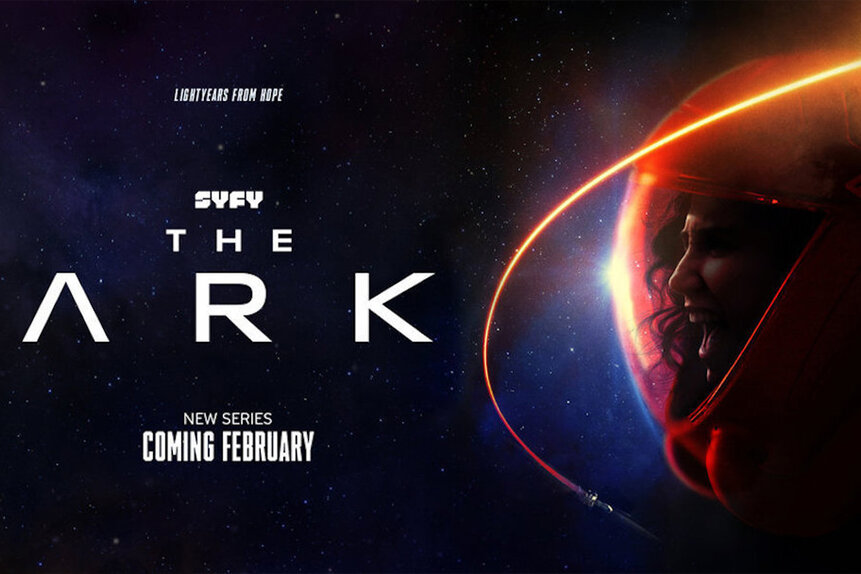
If you are looking for a new space series beyond the Star Trek and Star Wars iterations, then SyFy’s The Ark may be for you. Premiering February 1st, it has all of the necessary elements: a long space mission, something going wrong, everyone’s fate hanging in the balance, and a heroic effort saving the day. I hope I did not give anything away.

Here is the full story from SyFy:

The Ark takes place 100 years in the future when planetary colonization missions have begun as a necessity to help secure the survival of the human race. The first of these missions on a spacecraft known as Ark One encounters a catastrophic event causing massive destruction and loss of life. With more than a year left to go before reaching their target planet, a lack of life-sustaining supplies and loss of leadership, the remaining crew must become the best versions of themselves to stay on course and survive.

And don’t miss the trailer, which clearly points out that the ship is off course and the captain is dead. The last space series I watched with with this set up was HBO Max’s Avenue 5, but those passengers were only traveling around the solar system. Here the stakes are more like those in Kim Stanley Robinson’s scifi novel Aurora, which involves a multi generation trip to a distant planet. I recommend both the HBO series and novel, but I will need to wait on the roll-out of The Ark to say more about this new series.

I am looking for my next Expanse series, so I will watch The Ark and hope for the best.

Update: My hopes were dashed. The pilot was so bad that I watched the second episode just to be sure. That episode was bad as well. You cannot look at the crew of the Ark and think this is the best hope for humanity. Throughout both episodes all you had was yelling and dysfunctional behavior. Clearly there was no vetting for this crew. If this is the way we ran out submarine fleet then I would expect every sub to be on the bottom of the sea (about three days after launch). The show even has a turtle-necked founder of the Ark mission chatting away as a hologram. I thought we saw this in the movie Don’t Look Up and basically every other movie after that when you need a stand-in villain. I might have continued if SyFy simply billed the TV show as a comedy, yet even that would have problems since no one on the show can act. Oh well, I will await the next series and hope again. I am not giving up.

Credit: Orbit

Exoplanet TOI-700e Could Sustain Life

Image (Credit): Artist’s rendering of exoplanet TOI-700e. (NASA/JPL-Caltech/Robert Hurt)

The search for another Earth continues, and a professor from Michigan State may have found a perfect candidate. Joey Rodriguez, an assistant professor in MSU’s Department of Physics and Astronomy, was working with researchers involved with NASA’s Transiting Exoplanet Survey Satellite (TESS) when the discovery was made. Since being launched in 2018, the TESS spacecraft is surveying 200,000 stars looking for exoplanets that transit in front of their parent star and thereby periodically block part of the star’s light.

Back in 2020, the TESS team spotted the 100 light-year distant solar system and three exoplanets, but the latest finding includes Earth-size TOI-700e, which orbits in the habitable zone around parent star TOI-700. Its orbit is closer to that of Venus than Earth, yet still within the habitable zone.

In the Lansing State Journal article reporting the finding, Emily Gilbert, a postdoctoral fellow at NASA’s Jet Propulsion Laboratory in Southern California leading the project, stated:

This is one of only a few systems with multiple, small, habitable-zone planets that we know of,…That makes the TOI-700 system an exciting prospect for additional follow-up.

A closer look at the planet’s atmosphere will tell scientists more about the likelihood of life on the surface. Maybe this will be another candidate for the James Webb Space Telescope (JWST). The JWST has already probed other exoplanets to learn more about their atmosphere.

You can learn more about the new exoplanet at this NASA link.

Space Quote: More From Uncle Sam on UFOs (or UAPs)

Credit: Getty/The Atlantic

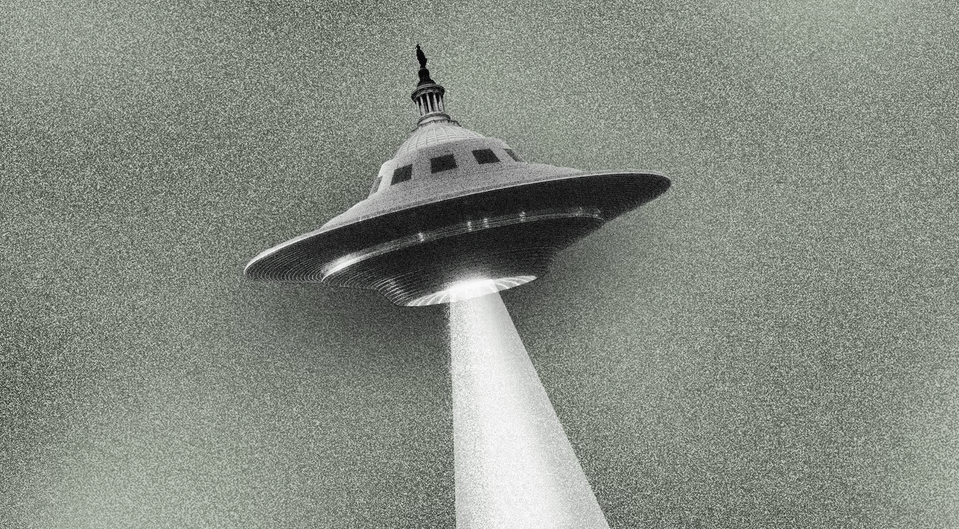
“Since the publication of the ODNI preliminary assessment in June 2021, UAP reporting has increased, partially due to a concentrated effort to destigmatize the topic of UAP and instead recognize the potential risks that it poses as both a safety of flight hazard and potential adversarial activity. Whereas there were previously 144 UAP reports covered during the 17 years of UAP reporting included in the ODNI preliminary assessment on UAP, there have been 247 more UAP reports during the 17 months since. Combined with another 119 reports either discovered or reported late that fell within the original 17 year period but were not included in the preliminary assessment, a total of 510 UAP reports are currently catalogued.”

-Statement from the 2022 Annual Report on Unidentified Aerial Phenomena (UAP), published earlier this week by the Office of the Director of National Intelligence (ODNI). It seems that with greater awareness comes greater reporting, but that does not necessarily equate with green aliens. What is interesting is the source of these reports. They are not your neighbor standing on his deck in his pajamas. Instead, we read, “The majority of new UAP reporting originates from U.S. Navy and U.S. Air Force aviators and operators who witnessed UAP during the course of their operational duties…” Very interesting.

Another Rocket Setback, This Time in Alaska

Credit: ABL Space Systems

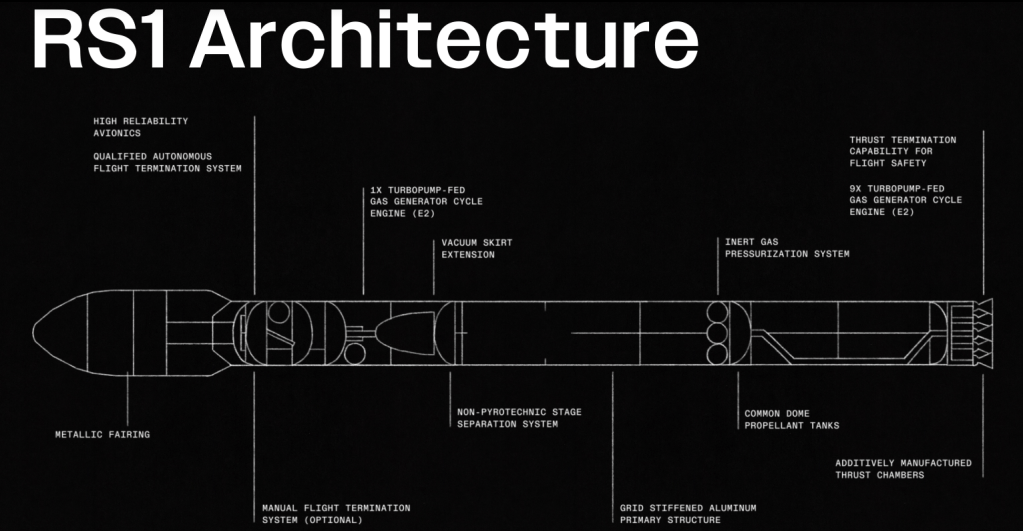
Virgin orbit is not the only rocket company having a bad week. CNN reports that on Tuesday U.S. rocket company ABL Space Systems ran problems off the Alaska coast when its RS1 rocket shut down prematurely during its maiden launch. The rocket and the two satellites it was carrying were lost.

It was a bad week, but the space industry is growing and persistence will pay off. It is also important to have deep pockets to cover early failures. SpaceX and Blue Origin benefited from billionaire backers, and ABL is lucky to have Lockheed Martin in its corner. With an initial order of 58 rocket launches, Lockheed Martin has every reason to encourage continued progress.

Update: As of earlier today, ABL Space Systems has not issued a press release on the Alaska incident, but in a Tweet the company stated:

As expected in this scenario, there is damage to the launch facility. All personnel are safe, and fires have subsided. We’ll plan our return to flight after investigations are complete. Thanks to our stakeholders and the space community for the expressions of support.

The Pacific Spaceport Complex – Alaska, earlier called the Kodiak Launch Complex, is a dual-use (commercial/government) facility owned and operated by the Alaska Aerospace Corporation, which is a public corporation of the State of Alaska. Opened in 1998, the spaceport complex is located on Kodiak Island in Alaska.