Another Delay, But Boeing Aims for Crewed Launch to ISS

Image (Credit): Artist’s rendering of Boeing’s Starliner capsule. (Boeing)

So what is the status of Boeing’s Starliner? Last May, an uncrewed Starliner capsule safely arrived at the International Space Station (ISS). So when will we see a crewed mission? The latest plan was for an April launch after some technical issues back in February.

However, in a tweet on Thursday, Kathy Lueders, who serves as NASA’s human spaceflight chief, stated:

Boeing We’re adjusting the @Space_Station schedule including the launch date for our Boeing Crew Flight Test as teams assess readiness and complete verification work. CFT now will launch following Axiom Mission 2 for optimized station operations…Target launch dates for Ax-2, still planned in early May, and Starliner will be shared soon. We’ll plan a media update after we have the space station schedule set. As always, we will fly when we are ready.

So first the private Ax-2 mission (also called space tourism) needs to occur, and then NASA can fit in another Starliner mission in May or later so that we have greater redundancy in our travel to the ISS, which was the purpose of NASA’s Commercial Crew Program. Given the issues with recent Russian Soyuz mission, this extra capacity cannot come soon enough. I just hope Starliner “technical issues” and not space tourism is responsible for this latest delay.

Study Findings: Acceleration of 1I/‘Oumuamua from Radiolytically Produced H2 in H2O Ice

Image (Credit): Artist’s concept of interstellar object1I/2017 U1 (‘Oumuamua) as it passed through the solar system after its discovery in October 2017. (European Southern Observatory / M. Kornmesser)

Nature abstract:

In 2017, 1I/‘Oumuamua was identified as the first known interstellar object in the Solar System. Although typical cometary activity tracers were not detected, ‘Oumuamua showed a notable non-gravitational acceleration. So far, there has been no explanation that can reconcile these constraints. Owing to energetic considerations, outgassing of hyper-volatile molecules is favoured over heavier volatiles such as H2O and CO2. However, there are theoretical and/or observational inconsistencies with existing models invoking the sublimation of pure H2, N2 and CO. Non-outgassing explanations require fine-tuned formation mechanisms and/or unrealistic progenitor production rates. Here we report that the acceleration of ‘Oumuamua is due to the release of entrapped molecular hydrogen that formed through energetic processing of an H2O-rich icy body. In this model, ‘Oumuamua began as an icy planetesimal that was irradiated at low temperatures by cosmic rays during its interstellar journey, and experienced warming during its passage through the Solar System. This explanation is supported by a large body of experimental work showing that H2 is efficiently and generically produced from H2O ice processing, and that the entrapped H2 is released over a broad range of temperatures during annealing of the amorphous water matrix. We show that this mechanism can explain many of ‘Oumuamua’s peculiar properties without fine-tuning. This provides further support that ‘Oumuamua originated as a planetesimal relic broadly similar to Solar System comets.

Citation: Bergner, J.B., Seligman, D.Z. Acceleration of 1I/‘Oumuamua from radiolytically produced H2 in H2O ice. Nature 615, 610–613 (2023).
https://doi.org/10.1038/s41586-022-05687-w

Study-related stories:

Note: Harvard astronomer Avi Loeb, who has written a book about Oumuamua, raised some concerns the about new study in this EarthSky article.

The Test of a 3D Rocket in Florida

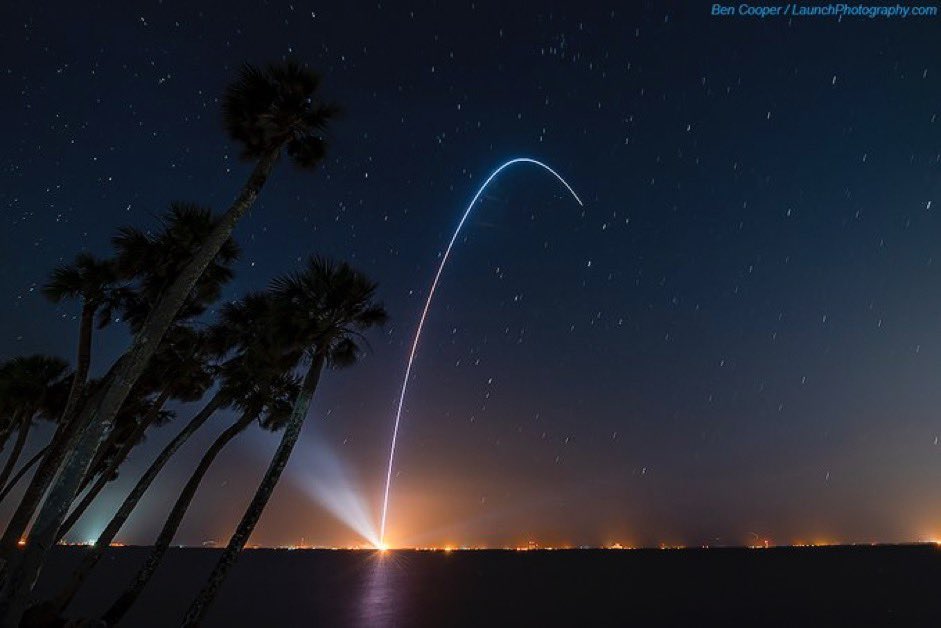
Image (Credit): Launch of the Terran-1 rocket launch from Cape Canaveral in Florida. (Relativity Space)

We have heard about the possibility of 3D printing on the Moon and even Mars someday to build habitats, but what about 3D rockets to get us there as well? That is also a possibility, but not just yet.

This past Wednesday, the US private company Relativity Space tested its 3D-printed rocket. However, the Terran-1 rocket lasted for only a few minutes before falling back to Earth. It appeared to be an issue with the second stage of the rocket. You can watch a video of the entire launch and flight here.

In a tweet, Relativity Space still called it a win:

Today’s launch proved Relativity’s 3D-printed rocket technologies that will enable our next vehicle, Terran R. We successfully made it through Max-Q, the highest stress state on our printed structures. This is the biggest proof point for our novel additive manufacturing approach. Today is a huge win, with many historic firsts. We also progressed through Main Engine Cutoff and Stage Separation. We will assess flight data and provide public updates over the coming days.

This was a test flight, so no real payloads were were lost due to the second stage issue. This was smart, unlike some earlier initial rocket flights that lost important payloads.

Kudos to Relativity Space for trying something new and demonstrating some initial successes. This is a good first step for the entire space industry.

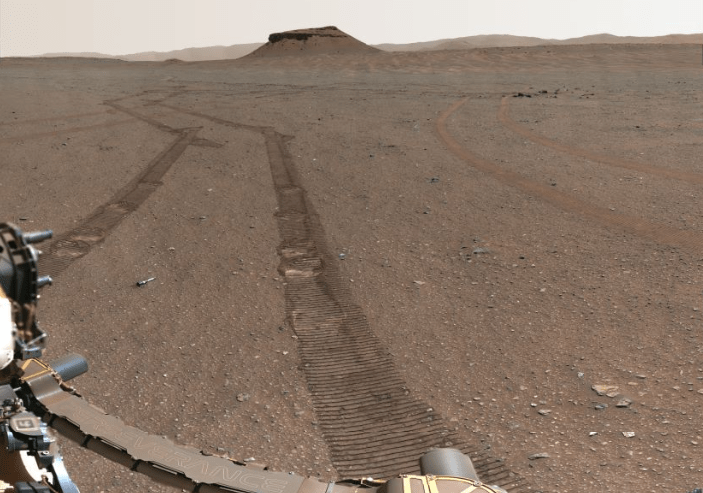
Pic of the Week: Martian Sample Depot

Image (Credit): NASA’s Perseverance Mars rover captured this portrait of its recently completed sample depot on Jan. 31, 2023. (NASA/JPL-Caltech/ASU/MSSS)

This week’s image shows the Perseverance Mars rover looking back on its work – the depositing of 10 titanium sample tubes on the surface of the Red Planet should they be needed as backups (see image below marking the sample locations). The rover is carrying the official samples, but this depot was set up just in case something happens to the rover.

Here is a little more from NASA:

Eight of those tubes are filled with rock and regolith (broken rock and dust), while one is an atmospheric sample and one is a “witness” tube...

The depot represents a backup collection of samples that could be recovered in the future by the Mars Sample Return campaign, a joint effort between NASA and ESA (European Space Agency) that aims to bring Mars samples to Earth for closer study. The rover began building the depot on Dec. 21, 2022, precisely spacing the tubes in case they need to be retrieved at a future date.

The primary tubes reside in the belly of Perseverance, which would pass them, along with future samples taken during the mission to a Sample Retrieval Lander as part of the campaign. If anything were to happen to the rover to prevent it from delivering tubes directly to the lander, samples could be retrieved from the depot instead. (Learn more about all 18 samples taken so far.)

Image (Credit): NASA’s Perseverance Mars rover captured this portrait of its recently completed sample depot on Jan. 31, 2023. The locations of the 10 samples are clearly marked. (NASA/JPL-Caltech/ASU/MSSS)

A Day in Astronomy: The Birth of Kim Stanley Robinson

On this day in 1952, science fiction writer Kim Stanley Robinson born in Waukegan, Illinois. As a writer, he has won numerous awards, including the Hugo Award for Best Novel, the Nebula Award for Best Novel and the World Fantasy Award

Some of his works include:

  • Mars Trilogy
  • Aurora
  • The Ministry of the Future
  • 2312
  • New York 2140
  • The Years of Rice and Salt
  • Three Californias Triptych

You can learn a lot more about the man and his work at this Kim Stanley Robinson reference site.

You might also enjoy this podcast, Crafting with Ursula : Kim Stanley Robinson on Ambiguous Utopias, where Mr. Robinson discusses his encounters with science fiction author Ursula LeGuin as well as his ideas about utopian novels.